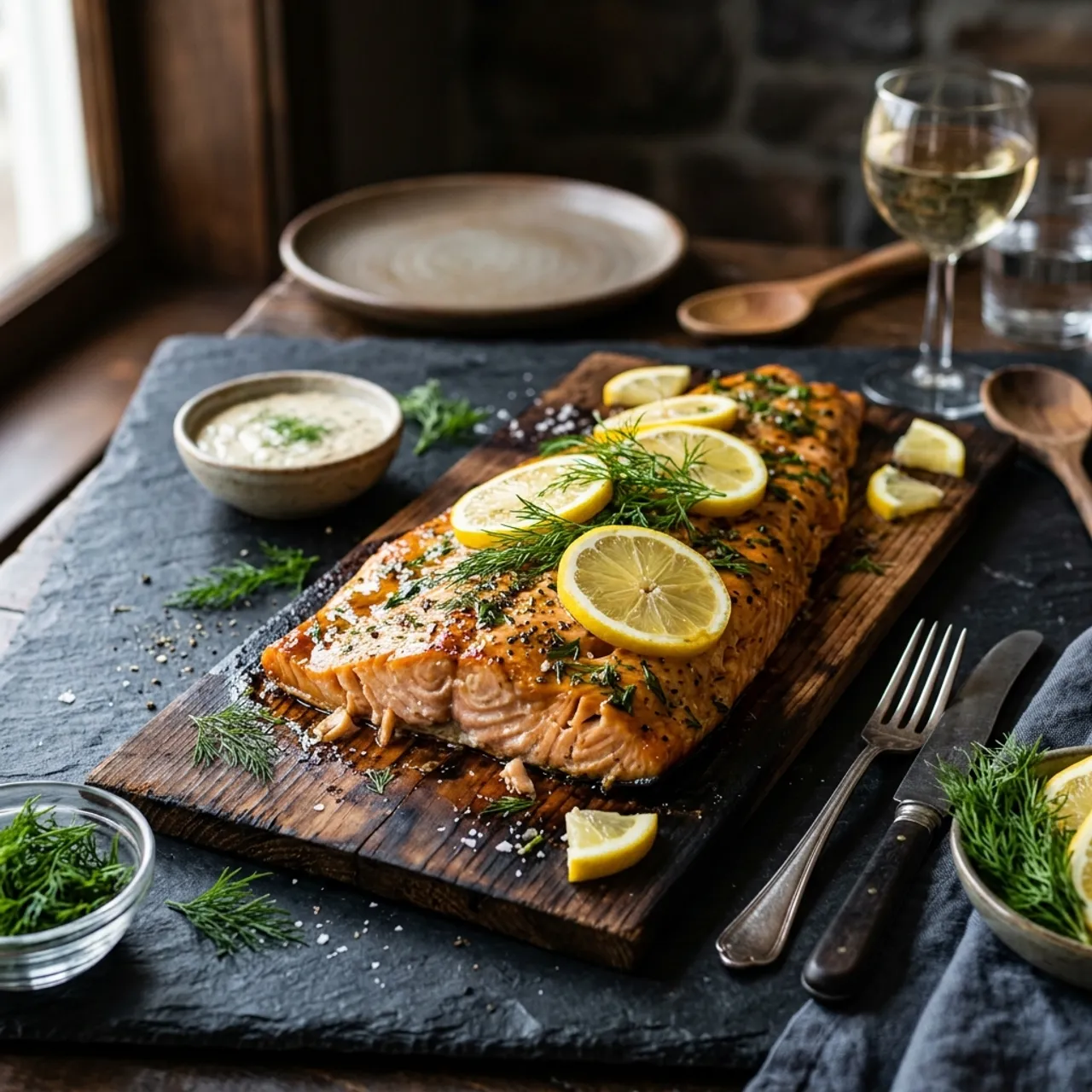
 Seafood Images are for illustrative purposes only, may be inaccurate, and do not guarantee the presence or absence of specific ingredients.
 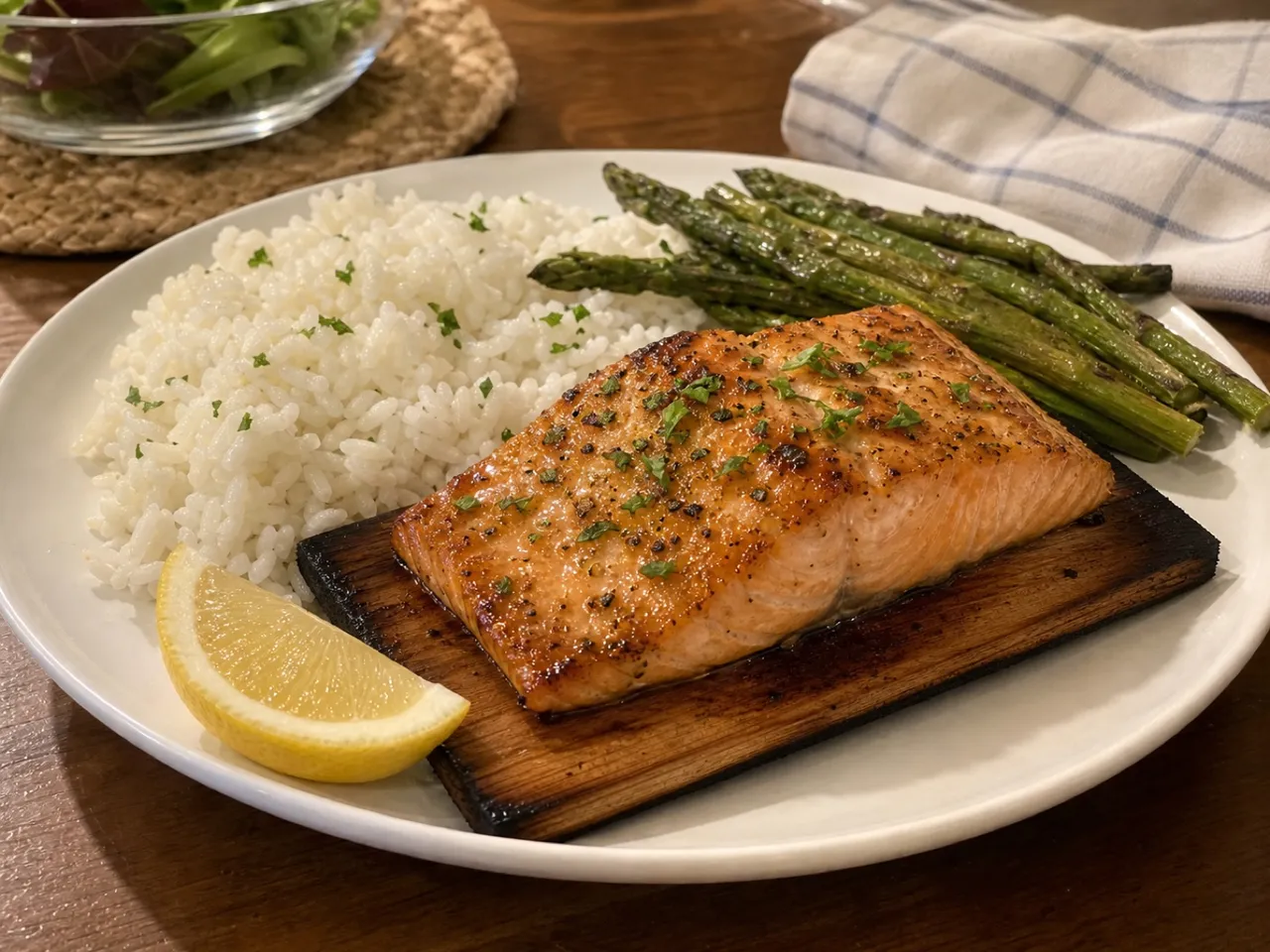 Serving Images are for illustrative purposes only, may be inaccurate, and do not guarantee the presence or absence of specific ingredients.
 Cedar-Plank Salmon
A salmon fillet grilled on a soaked cedar plank that infuses the fish with woodsy smoke while keeping it moist under a sweet maple and Dijon glaze.
Contains common allergens
In the app, Listahan checks these against your household automatically.
Instructions
6 steps- 1
Soak the cedar plank in water for at least 1 hour so it smolders rather than burns on the grill.
- 2
Whisk together the maple syrup, Dijon mustard, garlic, and olive oil to make the glaze.
- 3
Season the salmon with salt and pepper, then brush the flesh side generously with the maple-Dijon glaze.
- 4
Heat the grill to medium-high, place the soaked plank on the grates until it begins to smoke and crackle, then set the salmon skin-side down on the plank.
- 5
Close the lid and grill until the salmon flakes easily and reaches 125 to 130 degrees Fahrenheit, about 15 to 20 minutes.
- 6
Top with lemon slices and serve the salmon straight off the smoky plank.
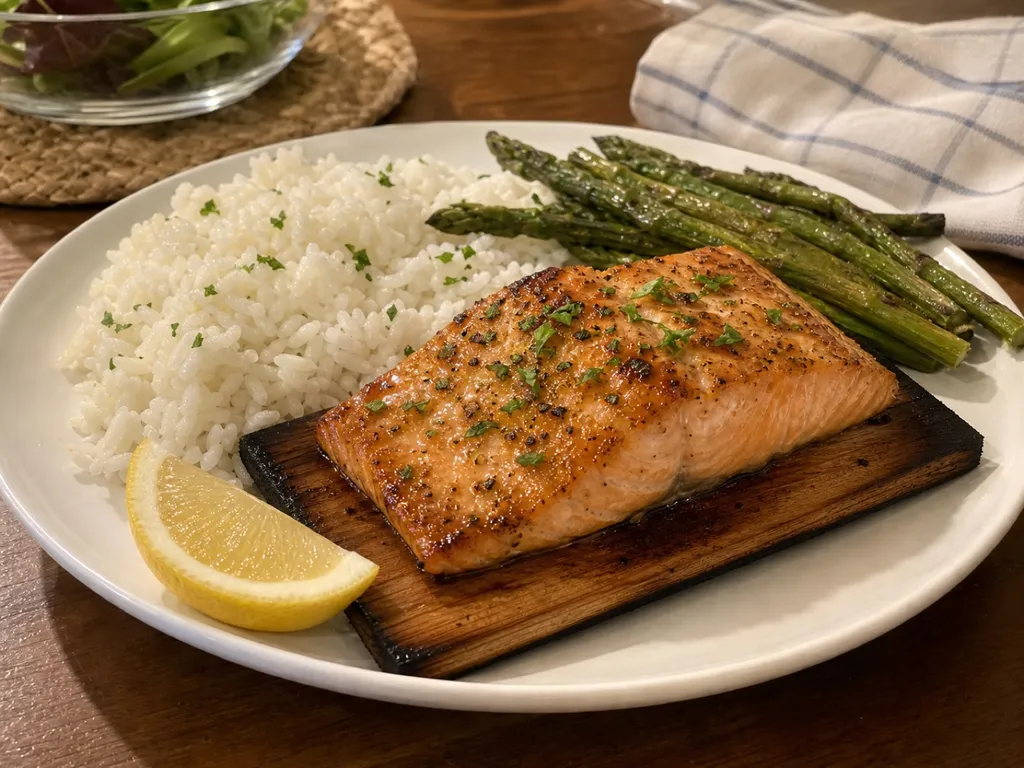 Images are for illustrative purposes only, may be inaccurate, and do not guarantee the presence or absence of specific ingredients.
 Listahan Family Score™
60/100
Works for many families
Score reflects how well this recipe fits a typical busy household. In the app, your Family Score is personalized to your household's allergens, kids, and pantry.
Nutrition
per serving155
Calories
9 g
Protein
9 g
Carbs
9 g
Fat
Estimated per serving. Actual values depend on the brands and portions you use.
Listahan cooking guide
Chef notes & practical guide
Technique notes, ingredient swaps, serve-alongside ideas, storage guidance, and equipment for this recipe.
Cultural context
Cooking salmon on a cedar plank traces back to the Indigenous peoples of the Pacific Northwest, who lashed split fish to cedar boards and angled them beside an open fire. The wood does double duty: it shields the fish from direct flame so it cooks gently, while the smoldering surface perfumes the flesh with a resinous, campfire aroma. Modern grill cooks adopted the technique because it turns an ordinary fillet into something that tastes unmistakably of the outdoors.
Listahan note
This version keeps the seasoning deliberately simple so the cedar smoke and the salmon itself stay in the foreground. It leans on a soaked plank and a covered grill to do the heavy lifting, which makes it forgiving even if you rarely cook fish.
Technique cues
- Soak the plank for at least an hour before grilling so it smolders and steams instead of catching fire, which is what carries the smoke into the fish.
- Leave the skin on and place the fillet skin-side down on the plank, since the skin acts as a buffer that keeps the delicate flesh from sticking and overcooking.
- Pull the salmon at 125 to 130F in the thickest part and let carryover heat finish it, because the line between silky and chalky is only a few degrees.
Kitchen flow
- Parallel prep
- Start the plank soaking and the grill heating first, then season the fish and slice the lemon while the board absorbs water.
- Make-ahead
- Soak the plank and season the fillet up to a few hours ahead, keeping the fish covered in the fridge until the grill is ready.
- Leftover move
- Flake cold leftover salmon into a grain bowl or fold it through scrambled eggs the next morning.
- Cleanup rhythm
- Let the spent plank cool completely on the grill, then discard it; the fish lifts cleanly off so there is little to scrub.
Ingredient brief
Role, handling, and swap guidance for each key ingredient.
Salmon fillet, skin-on
the centerpiece
Purpose: A center-cut fillet of even thickness cooks at one rate, so no part dries out while the middle catches up.
Handling: Pat the surface dry and bring it to room temperature for 15 minutes so it cooks evenly.
Adaptation: Steelhead trout or arctic char behave almost identically and work on the plank without any change.
Cedar grilling plank
smoke source and heat shield
Purpose: The wet board smolders under the lid, releasing cedar aromatics while protecting the fish from direct flame.
Handling: Submerge it in water for at least one hour, weighting it down so it stays under.
Adaptation: An untreated alder or maple plank gives a milder smoke if cedar is too assertive for your table.
Olive oil
moisture and adhesion layer
Purpose: A thin coat helps seasoning cling and keeps the surface from drying as the smoke works in.
Handling: Brush a light film over the flesh side just before seasoning.
Adaptation: Avocado oil handles the grill's heat just as well with a more neutral flavor.
Lemon
brightener
Purpose: A squeeze of acid at the end cuts the richness of the fish and lifts the smoky notes.
Handling: Slice half into thin rounds to lay over the fish and reserve half for squeezing at the table.
Adaptation: Lime or a splash of white wine vinegar gives a similar brightening lift.
Fresh dill
herbal accent
Purpose: Dill's grassy, slightly anise note is a classic match for salmon and reads clean against the smoke.
Handling: Roughly chop and scatter over the fillet in the last minutes of cooking.
Adaptation: Tarragon or flat-leaf parsley both pair well if dill is not on hand.
Technique notes
- Preheat the empty plank on the grates for two to three minutes until it just starts to crackle, then flip it and lay the fish on the warmed side for a faster, more even start.
- Keep the lid down the entire cook so the trapped smoke surrounds the fish; lifting it to peek releases the aromatics you spent an hour building.
- If flames flare from the plank edges, mist them with a spray bottle of water rather than moving the fish, which keeps the smoke going without scorching.
Ingredient swaps
- Weeknight shortcut
- Skip the plank and cook the seasoned fillet on a sheet of foil over the grill or under the broiler for a faster, smoke-free version.
- Lower-sodium direction
- Season with the herbs, lemon, and a little smoked paprika instead of salt to keep the flavor without the sodium.
- Dairy-free option
- This dish is already dairy-free; finish with a drizzle of olive oil rather than a butter baste to keep it that way.
Serve alongside
- Grilled asparagus with lemon
- Wild rice pilaf with toasted almonds
- Cucumber and dill yogurt salad
- Charred corn on the cob
- Dry Riesling or unoaked Chardonnay
- Sparkling water with cucumber and lime
- Crisp pale ale
Serving suggestions only — check pairings for your household's allergens.
Storage & reheating
- Refrigerate leftover salmon in an airtight container for up to three days. Reheat gently in a covered pan over low heat or eat it cold, since high heat will dry the flesh and dull the smoke. Cooked salmon freezes for up to two months; thaw overnight in the fridge before using.
Equipment
- Cedar grilling plank
- Charcoal or gas grill with a lid
- Instant-read thermometer
- Fish or wide offset spatula
Make this household-aware
Listahan Pro checks this recipe against your household's allergens, finds pantry-aware swaps, builds the shopping list, and helps you plan the week around it.
Plan it in Listahan
Add Cedar-Plank Salmon to your week, check it against your household's allergens, and build the shopping list automatically.
More Seafood recipes
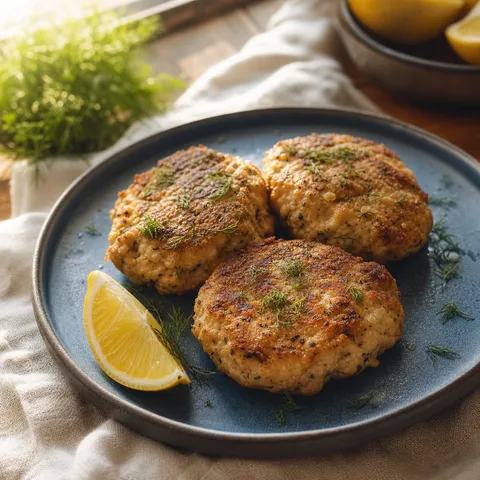 Seafood Lens Verified Images are for illustrative purposes only, may be inaccurate, and do not guarantee the presence or absence of specific ingredients.
 Pan-Fried Gefilte Fish
Traditional Ashkenazi poached fish patties made from ground whitefish, served chilled with horseradish — a seder-table classic.
 Seafood Lens Verified Images are for illustrative purposes only, may be inaccurate, and do not guarantee the presence or absence of specific ingredients.
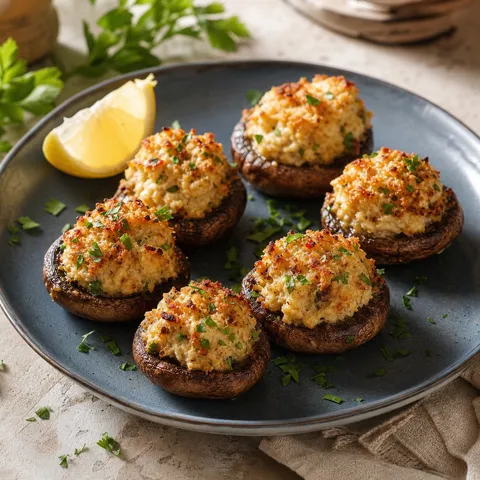
 Crab-Stuffed Mushrooms
Large mushroom caps filled with a creamy, cheesy crabmeat stuffing and baked until golden and bubbling.
 Seafood Lens Verified Images are for illustrative purposes only, may be inaccurate, and do not guarantee the presence or absence of specific ingredients.
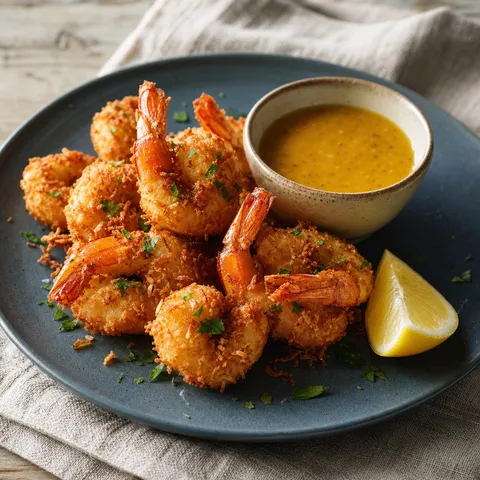
 Coconut Shrimp With Orange Mustard Sauce
Crispy beer-battered shrimp coated in coconut and fried golden, served with a sweet-and-tangy orange Dijon dipping sauce.