 Food Lens Images are for illustrative purposes only, may be inaccurate, and do not guarantee the presence or absence of specific ingredients.
 Food Lens · Recipe ingredients
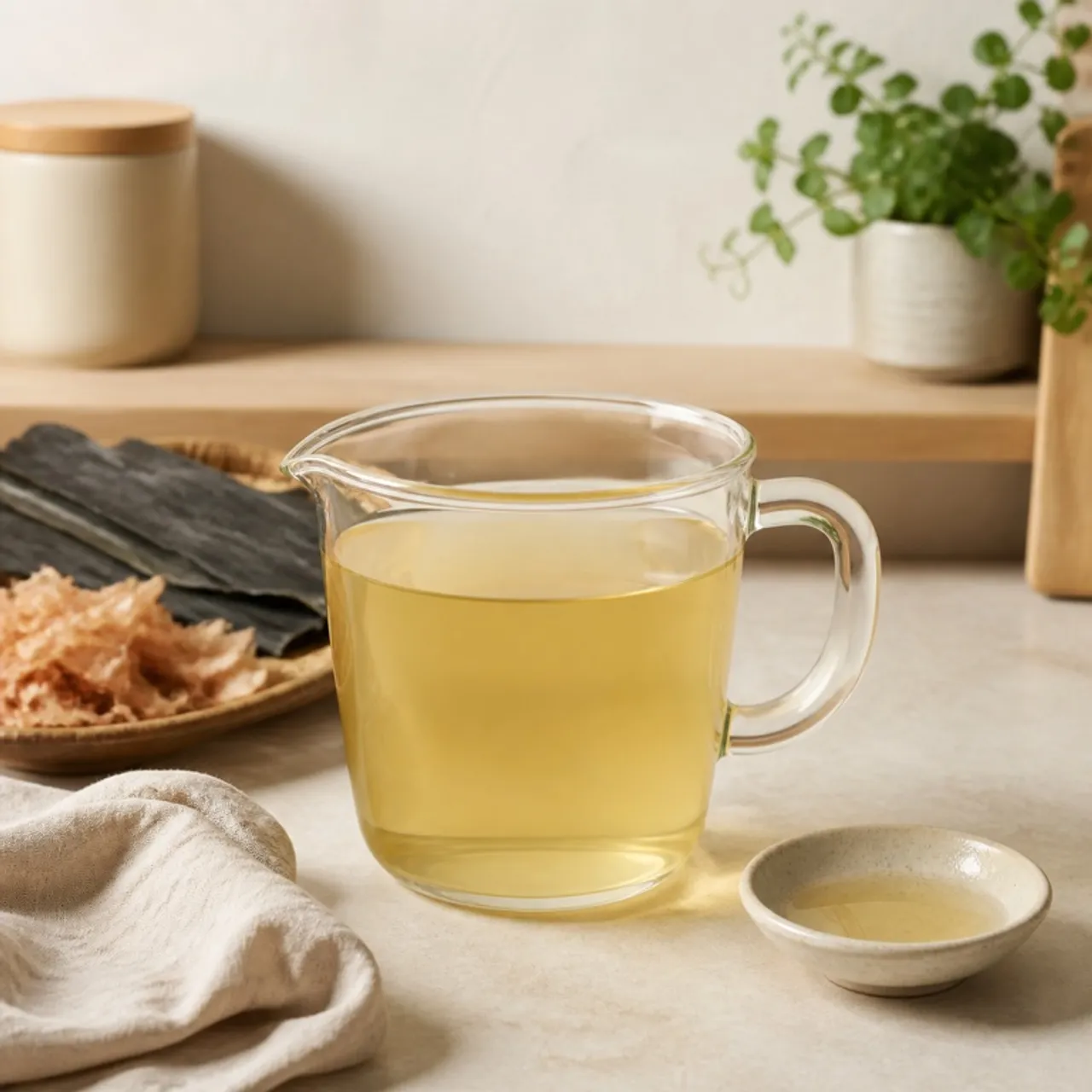
Awase Dashi
Clean, light-bodied, and savory with a gentle oceanic quality. The flavor is simultaneously subtle and complex — the kombu contributes a smooth glutamate sweetness while the katsuobushi adds a smoky, marine depth. The finish is long and satisfying without any heaviness or fishiness.
Lens VerifiedAwase dashi is the foundational Japanese soup stock made by combining kombu (dried kelp) and katsuobushi (dried bonito flakes) in hot water. It is the invisible backbone of Japanese cuisine — the broth that carries the deep, clean savory quality known as umami through miso soup, noodle broths, simmered dishes, and dipping sauces. Its character is subtle yet irreplaceable: light in color but profound in depth.
Where it comes from
Awase dashi emerged in Japanese culinary tradition over centuries, combining kombu from Hokkaido's cold northern seas with katsuobushi developed in fishing communities along Japan's Pacific coast.
Varieties — Ichiban dashi (first dashi) is the delicate, premium extraction used in clear soups and fine cooking. Niban dashi (second dashi) is a longer extraction from the same spent ingredients, fuller-bodied and used for everyday simmered dishes and heartier preparations. Instant dashi granules and liquid concentrates are widely used in modern Japanese households.
Dashi is to Japanese cooking what a well-made veal or chicken stock is to French cuisine — the essential foundation that distinguishes home cooking from institutional cooking. Japanese culinary philosophy holds that dashi should be clear, fragrant, and lightly golden, with no heaviness. Its preparation is considered a fundamental skill.
In a modern kitchen — Western chefs increasingly use awase dashi as a building block outside Japanese cuisine — stirring it into butter sauces, risotto, or vegetable braises for an umami lift that reads as depth rather than a clearly identifiable flavor. Dashi packets (teabag-style portions of kombu and katsuobushi) make home preparation nearly as quick as instant granules while retaining fresh, nuanced flavor.
Buying it
For homemade awase dashi, buy broad, thick kombu with a dusty white bloom (natural glutamates) and tightly packed katsuobushi with a pink-amber color and clean, smoky aroma. For convenience, look for dashi packets from Japanese specialty brands — they yield clean stock without straining. Avoid instant granules that list MSG as the first ingredient if seeking authentic flavor.
Storing it
Keep dashi powder or packets sealed in a cool, dry pantry spot away from humidity, which causes clumping. Reseal tightly after opening and use within a few months for the best flavor.
Keeps about 1 year in the pantry.
Out of awase dashi? Good swaps
General cooking guidance — always check the labels on the products you use. Listahan’s allergen checks run automatically when you plan a recipe in the app. Not medical advice.
Recipes that use awase dashi
Common questions about awase dashi
What can I use instead of awase dashi?
Good swaps include , , , . Each behaves a little differently — see the swaps above for notes, and always check labels for allergens.
How do I store awase dashi?
Keep dashi powder or packets sealed in a cool, dry pantry spot away from humidity, which causes clumping. Reseal tightly after opening and use within a few months for the best flavor. It keeps about 1 year in the pantry.
More recipe ingredients
See all


Make awase dashi about your kitchen — with Listahan Pro
Everything above is free, forever. Pro adds the Household Lens — the same food, seen for your family:
-
Checked for each member
Flags awase dashi per person against your household's allergies and school rules — not just a generic "contains" tag.
-
Pantry-aware
Knows whether you already have it, what is running low, and the best swap from what is in your kitchen tonight.
-
What it costs near you
A real price from the Presyo community index, so you can plan the budget — not guess.
-
Your household memory
Who likes it, plus your own private notes — brand, where you keep it, who skips it.
Allergen safety is always free — Pro adds the automation, never the safety.
Cook with awase dashi — safely
Plan a recipe in Listahan and the household allergen check runs automatically — every plan, every swap, every lunchbox. Safety is never paywalled.