 Food Lens Images are for illustrative purposes only, may be inaccurate, and do not guarantee the presence or absence of specific ingredients.
 Food Lens · Produce
Butternut squash
Sweet, nutty, and faintly earthy with a rich, dense flesh that turns creamy and almost buttery when cooked. The flavor deepens and caramelizes with roasting. Raw, it is firm and relatively bland; heat transforms it entirely.
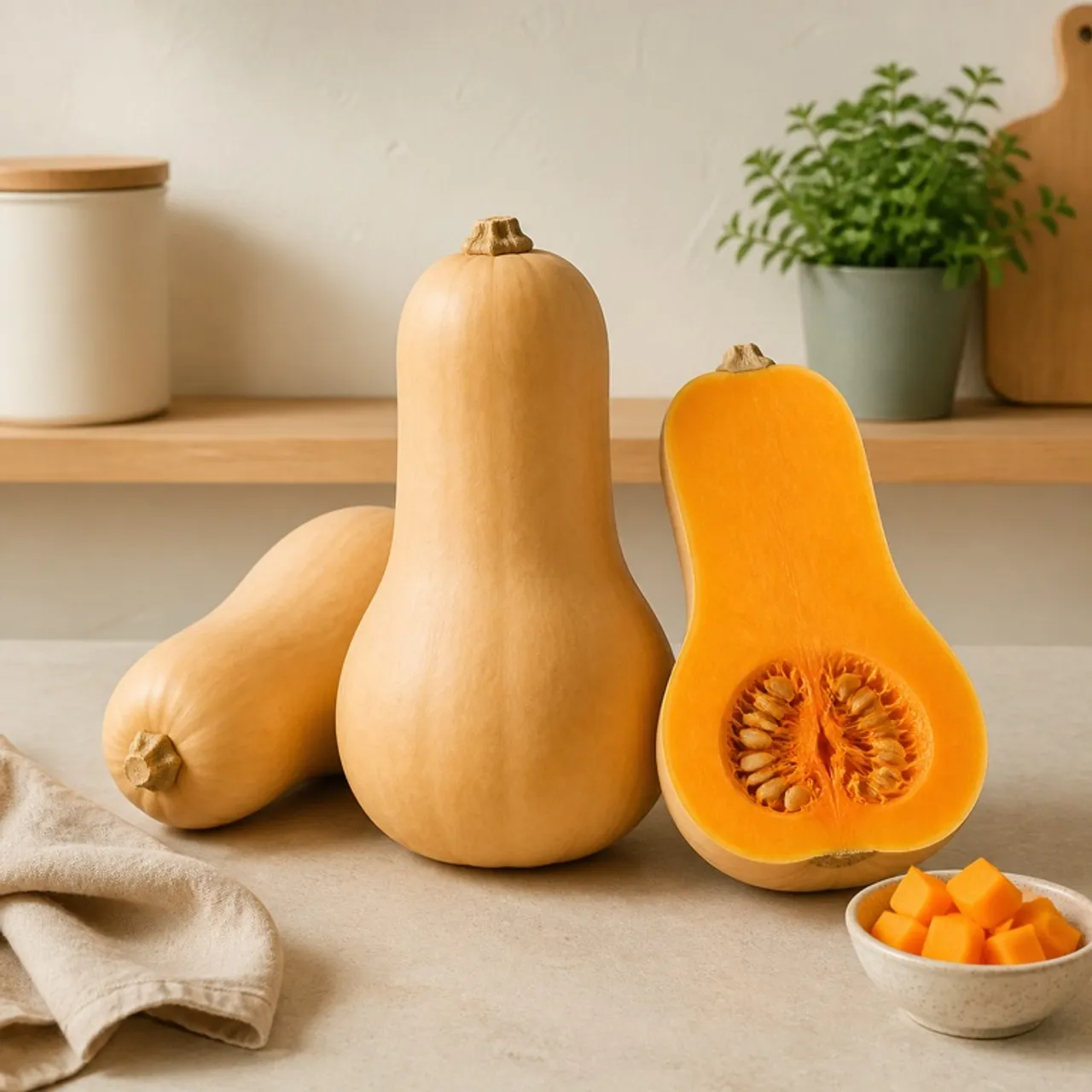
Lens VerifiedButternut squash is a winter squash with a tan, bell-shaped exterior and deep orange, sweet flesh that becomes extraordinarily silky when roasted or pureed. It is one of the most beloved vegetables of autumn and winter cooking, celebrated for its natural sweetness, long shelf life, and versatility across soups, sides, pastas, and desserts. Its dense flesh holds up well to high-heat roasting and caramelizes beautifully.
Where it comes from
Cultivated from a species native to the Americas for thousands of years, the modern butternut squash variety was specifically developed in Massachusetts in the 1940s as a sweeter, more manageable winter squash.
Varieties — The standard butternut is the most widely available, but honeynut squash — a smaller, more intensely flavored hybrid — has gained popularity in recent years. Kabocha and delicata are culinary relatives with different skin colors and textures.
Winter squashes have been a staple of Indigenous North American cooking for millennia as part of the 'Three Sisters' agriculture system alongside corn and beans. Today butternut squash is grown worldwide and is particularly prominent in British, Italian, and American autumn cooking.
In a modern kitchen — Pre-cut butternut squash sold in grocery stores saves considerable prep time, though it oxidizes faster than whole squash. Roasting it at high heat (200°C/400°F) cut-side-down on a lightly oiled sheet pan produces the deepest caramelization and flavor.
Buying it
Choose squash that feel heavy for their size with a uniformly tan, matte skin — shiny skin can indicate under-ripeness. Avoid any with soft spots, cuts, or greenish patches. The stem should be intact and dry. Whole butternut squash can be stored at room temperature for up to 3 months.
In season
Peak season is September–December, though it's available year-round.
Butternut squash is harvested mainly in fall, and storage crops keep it available through much of the year.
Out of butternut squash? Good swaps
General cooking guidance — always check the labels on the products you use. Listahan’s allergen checks run automatically when you plan a recipe in the app. Not medical advice.
Recipes that use butternut squash
Common questions about butternut squash
Is butternut squash vegan?
Butternut squash is generally plant-based and suitable for a vegan diet, but brands differ — confirm on the label.
What can I use instead of butternut squash?
Good swaps include , , , . Each behaves a little differently — see the swaps above for notes, and always check labels for allergens.
More produce
See all


Make butternut squash about your kitchen — with Listahan Pro
Everything above is free, forever. Pro adds the Household Lens — the same food, seen for your family:
-
Checked for each member
Flags butternut squash per person against your household's allergies and school rules — not just a generic "contains" tag.
-
Pantry-aware
Knows whether you already have it, what is running low, and the best swap from what is in your kitchen tonight.
-
What it costs near you
A real price from the Presyo community index, so you can plan the budget — not guess.
-
Your household memory
Who likes it, plus your own private notes — brand, where you keep it, who skips it.
Allergen safety is always free — Pro adds the automation, never the safety.
Cook with butternut squash — safely
Plan a recipe in Listahan and the household allergen check runs automatically — every plan, every swap, every lunchbox. Safety is never paywalled.