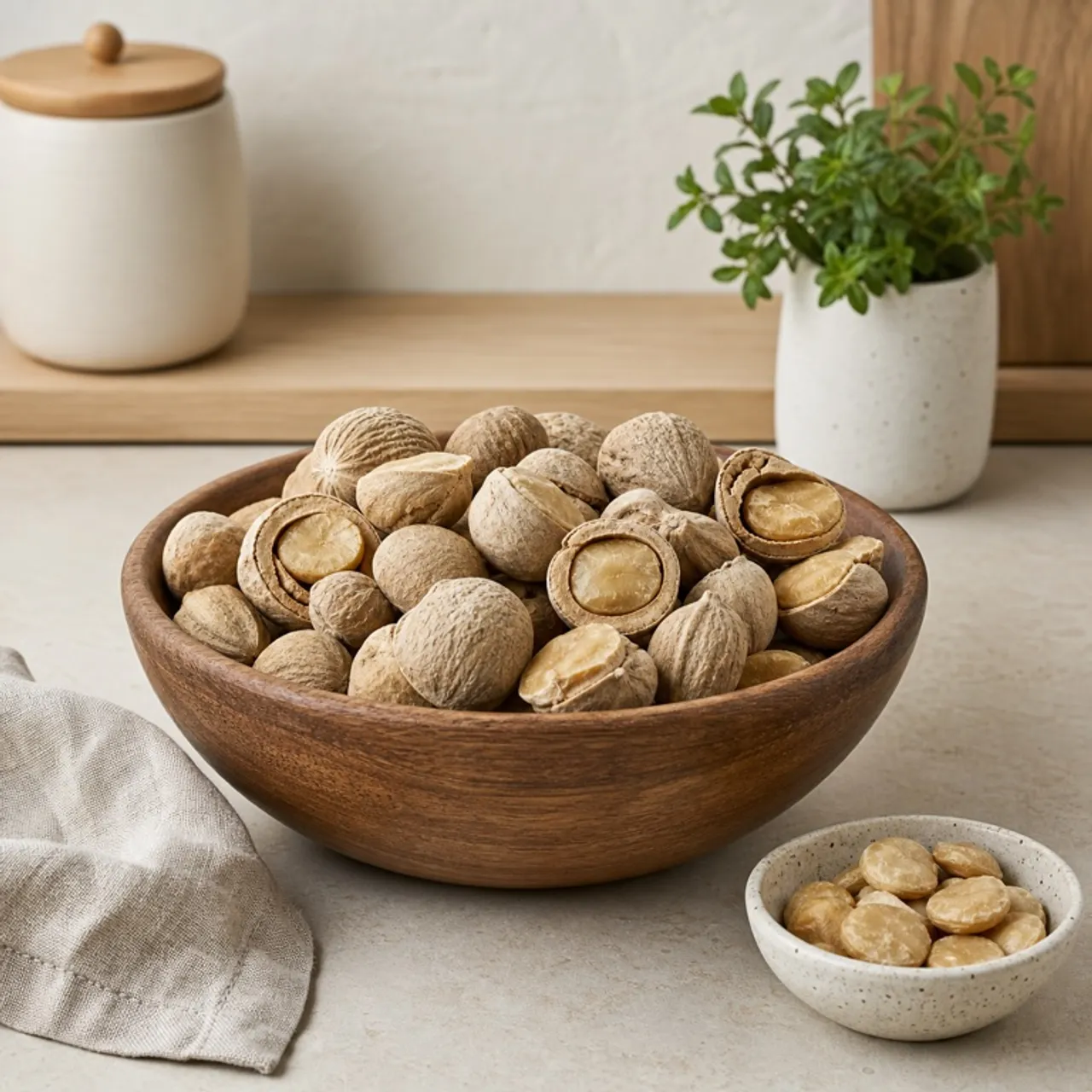
 Food Lens Images are for illustrative purposes only, may be inaccurate, and do not guarantee the presence or absence of specific ingredients.
 Food Lens · Recipe ingredients
Ehuru
Warm, earthy, and aromatic with nutmeg-like overtones, a subtle smokiness, and a mild bitterness that rounds out rich soups and stews. Less sweet than true nutmeg, with deeper, more resinous undertones.
Lens VerifiedEhuru, also called African calabash nutmeg or African nutmeg, is the dried seed of Monodora myristica, a tree native to West and Central Africa. The seeds deliver a warm, aromatic, slightly smoky spice note that is distinct from true (Myristica fragrans) nutmeg, though they share some flavor kinship. Ehuru is a foundational spice in Nigerian, Ghanaian, and Cameroonian cooking.
Where it comes from
Ehuru originates in the tropical forests of West and Central Africa, where the Monodora myristica tree has been harvested for its aromatic seeds as a cooking spice for centuries.
Varieties — Sold whole in the hard pod or as loose dried seeds; sometimes found ground, though freshly ground seeds have far more aroma and potency. The seeds rattle inside a dry, melon-like pod when ripe.
In Igbo cooking culture, ehuru is considered one of the essential spices that defines authentic pepper soup and palm nut soup. It carries ceremonial and cultural significance in some communities, appearing in traditional foods prepared for naming ceremonies, funerals, and celebrations.
In a modern kitchen — As interest in West African cuisines grows globally, ehuru is beginning to appear in diaspora-focused spice blends and specialty food shops outside Africa. Adventurous cooks are experimenting with it in dry rubs, spiced oils, and even baked goods seeking warm, exotic spice depth.
Buying it
Buy whole seeds in the pod when possible — they retain aroma far better than pre-ground powder. Look for seeds that are heavy, intact, and have a strong, pleasant aroma when cracked. Source from West African grocery stores or online specialty spice retailers.
Storing it
Keep whole ehuru seeds in a sealed container in a cool, dry pantry spot, away from light. Whole seeds hold their aroma far longer than ground — grate or grind only what you need.
Keeps about 1 year in the pantry.
Out of ehuru? Good swaps
General cooking guidance — always check the labels on the products you use. Listahan’s allergen checks run automatically when you plan a recipe in the app. Not medical advice.
Recipes that use ehuru
Common questions about ehuru
Is ehuru vegan?
Ehuru is generally plant-based and suitable for a vegan diet, but brands differ — confirm on the label.
What can I use instead of ehuru?
Good swaps include , . Each behaves a little differently — see the swaps above for notes, and always check labels for allergens.
How do I store ehuru?
Keep whole ehuru seeds in a sealed container in a cool, dry pantry spot, away from light. Whole seeds hold their aroma far longer than ground — grate or grind only what you need. It keeps about 1 year in the pantry.
More recipe ingredients
See all


Make ehuru about your kitchen — with Listahan Pro
Everything above is free, forever. Pro adds the Household Lens — the same food, seen for your family:
-
Checked for each member
Flags ehuru per person against your household's allergies and school rules — not just a generic "contains" tag.
-
Pantry-aware
Knows whether you already have it, what is running low, and the best swap from what is in your kitchen tonight.
-
What it costs near you
A real price from the Presyo community index, so you can plan the budget — not guess.
-
Your household memory
Who likes it, plus your own private notes — brand, where you keep it, who skips it.
Allergen safety is always free — Pro adds the automation, never the safety.
Cook with ehuru — safely
Plan a recipe in Listahan and the household allergen check runs automatically — every plan, every swap, every lunchbox. Safety is never paywalled.