 Food Lens Images are for illustrative purposes only, may be inaccurate, and do not guarantee the presence or absence of specific ingredients.
 Food Lens · Recipe ingredients
Katsuobushi
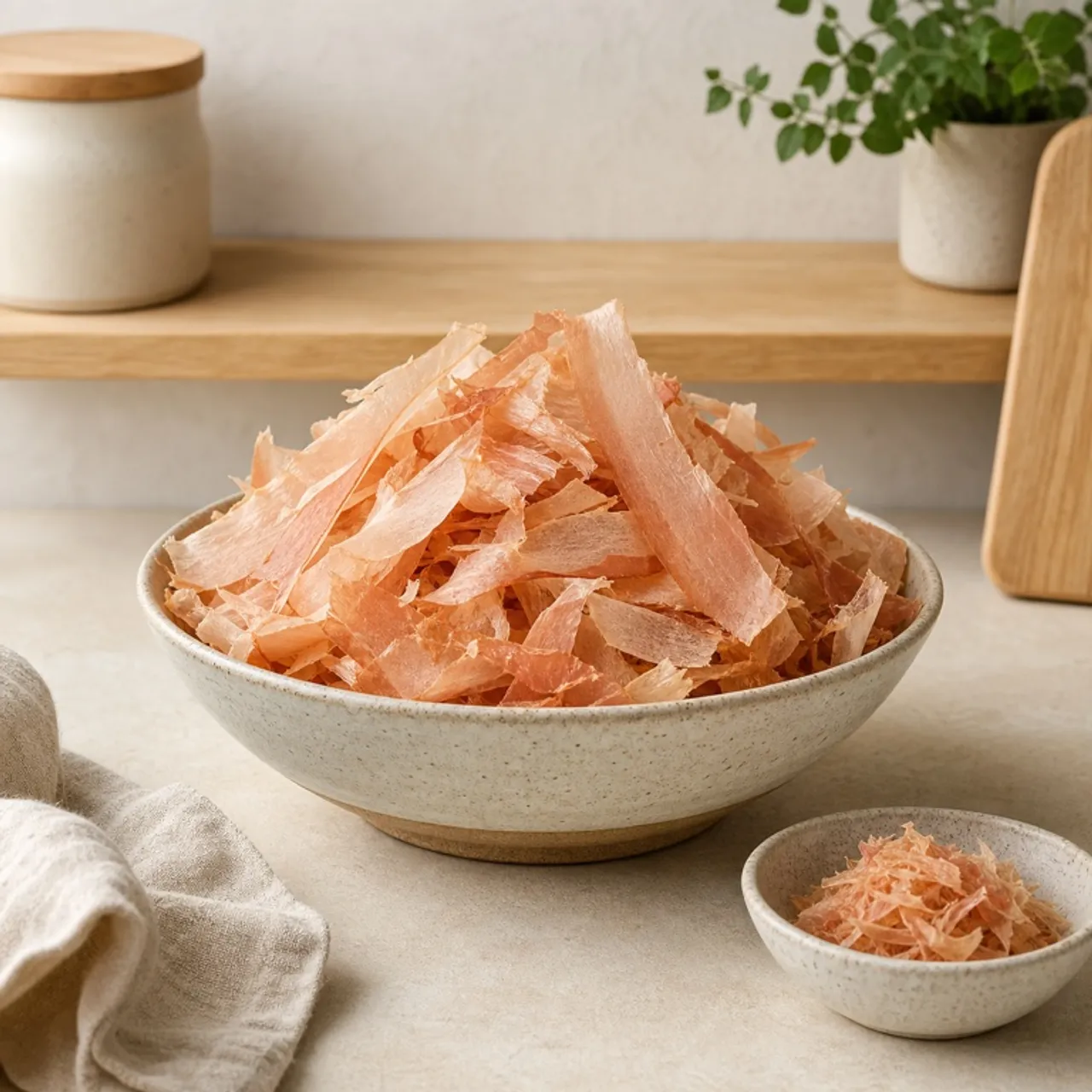
Intensely savory and smoky with a clean, oceanic depth and a pleasant, lingering finish. The aroma is distinctly smoky-fishy in raw form but transforms into a more subtle, rounded savory quality when steeped in dashi. Thin flakes used as garnish have a crisp, papery texture that softens almost immediately on warm food.
Lens VerifiedKatsuobushi is dried, fermented, and smoked skipjack tuna (bonito) that has been aged to extraordinary hardness — a block of katsuobushi is literally the hardest food in Japan. Shaved into delicate, paper-thin flakes, it is one of the two pillars of dashi stock and a prized finishing garnish that dances visibly from the heat rising off a dish. Its flavor is intensely savory, smoky, and deeply oceanic.
Where it comes from
Katsuobushi production evolved along Japan's Pacific coast, particularly in Kochi and Kagoshima prefectures, where bonito fishing communities developed multi-stage smoking and fermentation techniques over several centuries.
Varieties — Arabushi is the standard smoked and dried bonito without mold curing — widely used for everyday dashi. Karebushi (or honkarebushi) undergoes repeated mold-curing cycles and is the premium product, with deeper, more complex flavor. Flake size matters: thick flakes (atsukezuri) for robust broths and long-simmered dishes; thin shavings (hanakatsuo) for finishing and delicate dashi.
Katsuobushi carries deep cultural significance in Japan and is considered one of the country's most important culinary gifts. The phrase 'katsuo' shares pronunciation with 'katsu' (victory), making it a food associated with auspicious occasions. In Kagoshima and Kochi, the production of aged katsuobushi is a revered craft, with master producers maintaining generational knowledge of fermentation and smoking technique.
In a modern kitchen — Outside Japan, katsuobushi has been embraced by chefs seeking umami intensity without heaviness. It appears in compound butters, vinaigrettes, and as a finishing element on dishes far beyond Japanese cuisine. The flakes are increasingly used as a salt substitute in low-sodium cooking due to their ability to heighten perceived savoriness.
Buying it
Buy katsuobushi in resealable bags and check for a clean, smoky aroma with no off or rancid notes. Freshly shaved flakes are superior — look for pale pink to amber color. Pre-shaved flakes lose aroma quickly; smaller packages used promptly are better than large bags stored long. For premium dashi, seek thick-cut blocks or specialty karebushi from Japanese grocery stores.
Storing it
Store katsuobushi in an airtight container in a cool, dark pantry spot, away from moisture that dulls its flavor. Once opened, flavor fades with air exposure, so reseal tightly and use it up before too long.
Keeps about 1 year in the pantry.
Out of katsuobushi? Good swaps
General cooking guidance — always check the labels on the products you use. Listahan’s allergen checks run automatically when you plan a recipe in the app. Not medical advice.
Recipes that use katsuobushi
Common questions about katsuobushi
What can I use instead of katsuobushi?
Good swaps include , , , . Each behaves a little differently — see the swaps above for notes, and always check labels for allergens.
How do I store katsuobushi?
Store katsuobushi in an airtight container in a cool, dark pantry spot, away from moisture that dulls its flavor. Once opened, flavor fades with air exposure, so reseal tightly and use it up before too long. It keeps about 1 year in the pantry.
More recipe ingredients
See all


Make katsuobushi about your kitchen — with Listahan Pro
Everything above is free, forever. Pro adds the Household Lens — the same food, seen for your family:
-
Checked for each member
Flags katsuobushi per person against your household's allergies and school rules — not just a generic "contains" tag.
-
Pantry-aware
Knows whether you already have it, what is running low, and the best swap from what is in your kitchen tonight.
-
What it costs near you
A real price from the Presyo community index, so you can plan the budget — not guess.
-
Your household memory
Who likes it, plus your own private notes — brand, where you keep it, who skips it.
Allergen safety is always free — Pro adds the automation, never the safety.
Cook with katsuobushi — safely
Plan a recipe in Listahan and the household allergen check runs automatically — every plan, every swap, every lunchbox. Safety is never paywalled.