 Japanese Images are for illustrative purposes only, may be inaccurate, and do not guarantee the presence or absence of specific ingredients.
  Serving Images are for illustrative purposes only, may be inaccurate, and do not guarantee the presence or absence of specific ingredients.
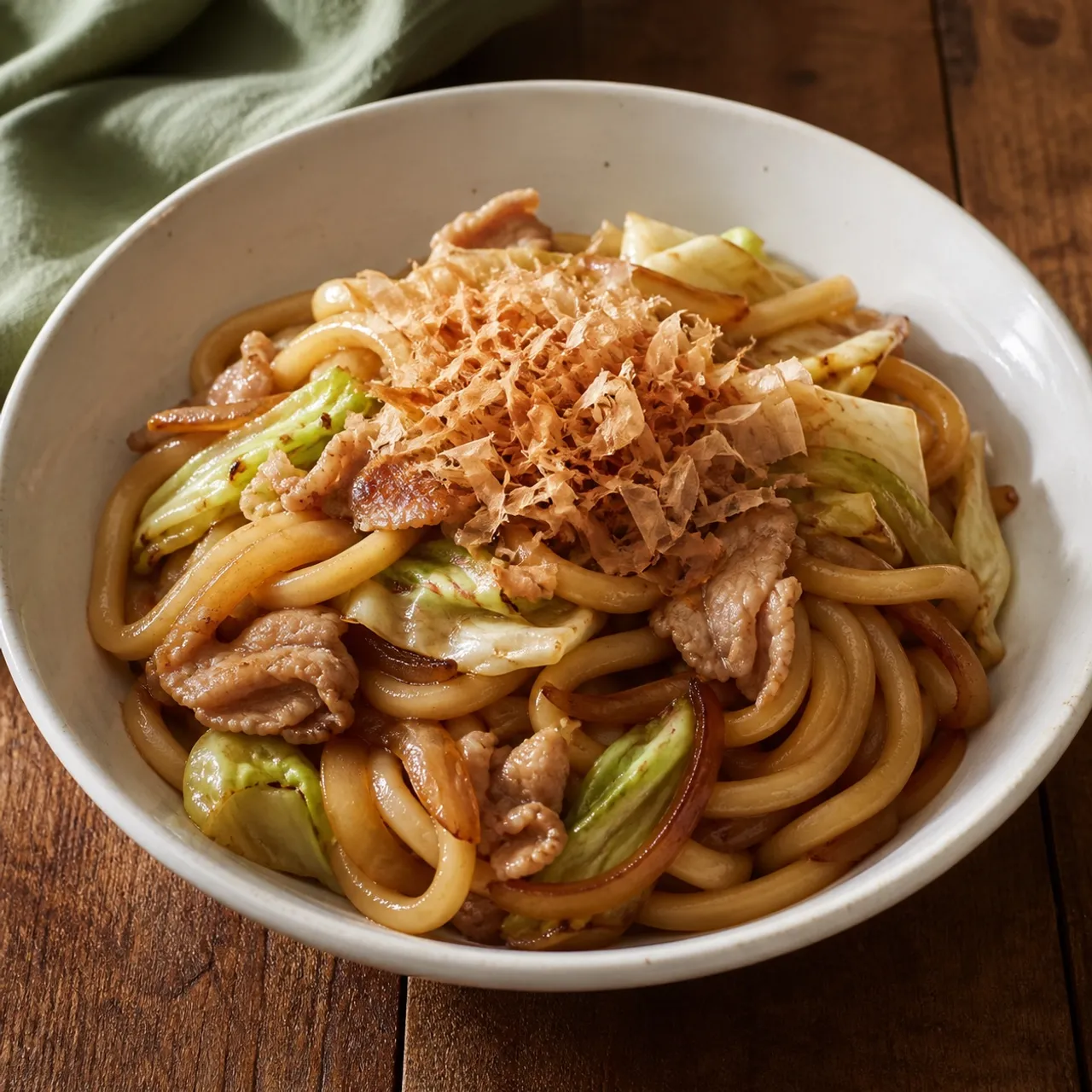
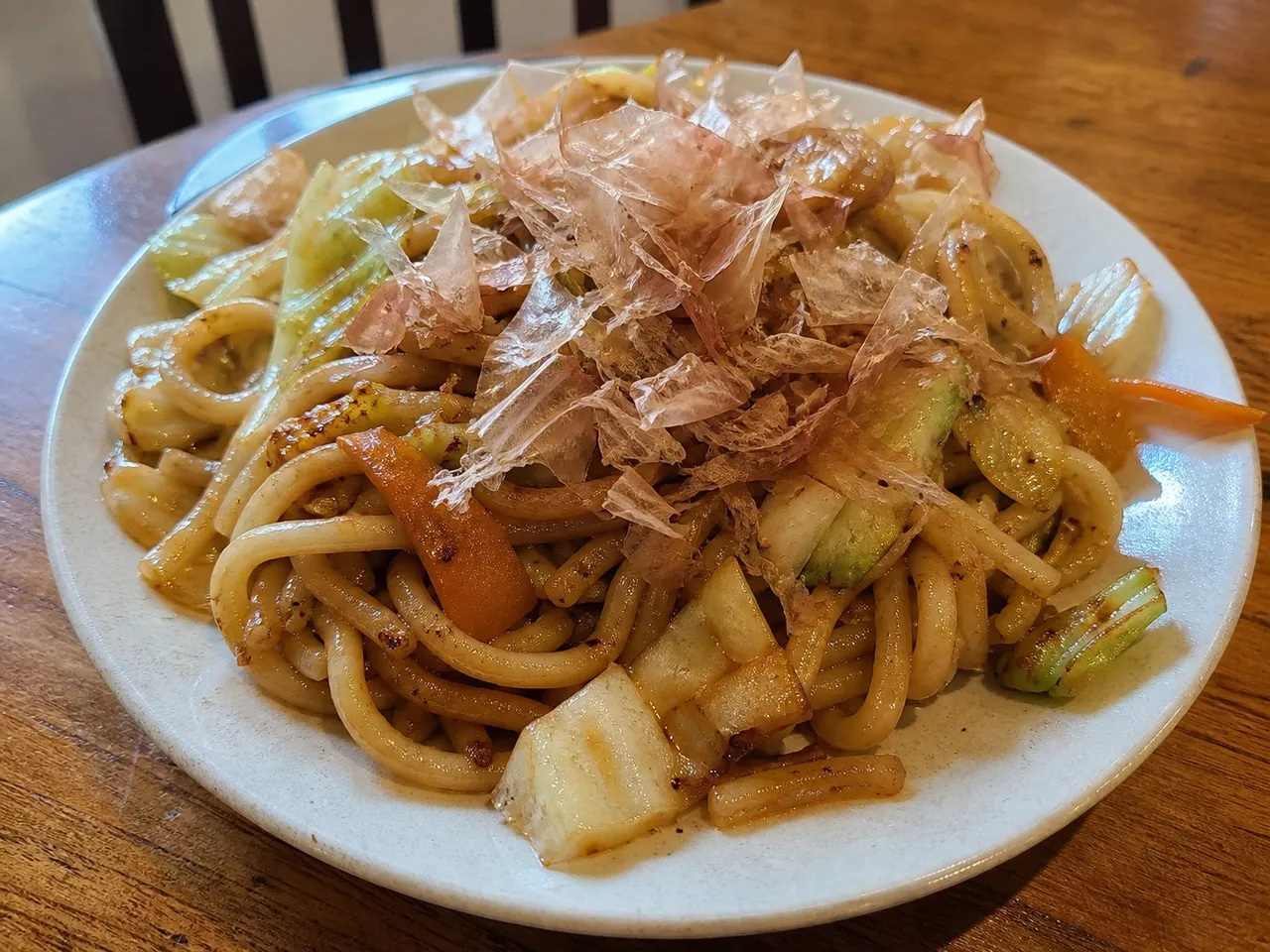
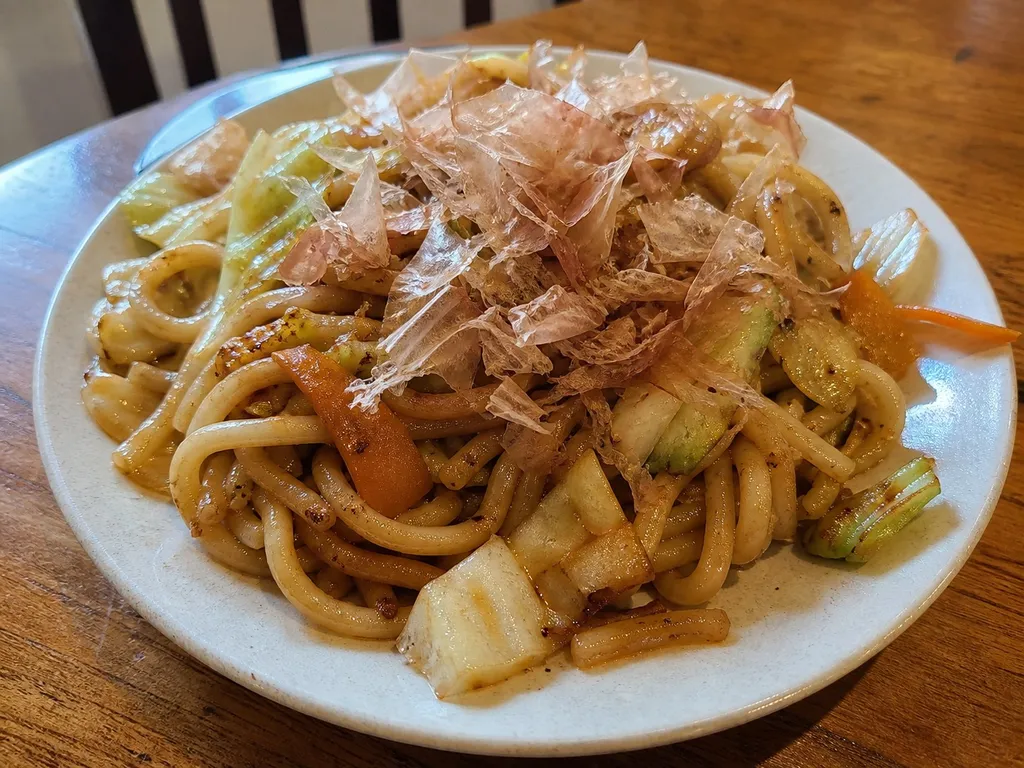
 Yaki Udon
Stir-fried thick udon noodles with meat and vegetables in a soy-based sauce.
Contains common allergens
In the app, Listahan checks these against your household automatically.
Good to know
- Ready in under 30 minutes
Matched from this dish's own ingredients and timing. Browse more: 30-minute meals
Instructions
6 steps- 1
Boil the frozen udon noodles for exactly 1 minute just to thaw and separate them. Drain immediately and thoroughly.
- 2
In a small bowl, mix the soy sauce, oyster sauce, and mirin to create the seasoning sauce.
- 3
Heat a large skillet or wok over high heat. Add the sliced pork belly and fry for 2-3 minutes until the fat renders and the meat is slightly crispy.
- 4
Add the sliced onions and cabbage to the pork fat, stir-frying aggressively for 3-4 minutes until the vegetables are tender but still crisp.
- 5
Add the drained udon noodles to the pan and toss everything together to combine.
- 6
Pour the seasoning sauce over the noodles. Stir-fry constantly for 1-2 minutes until the sauce reduces, caramelizes, and coats every thick strand of udon. Garnish with a handful of bonito flakes.
 Images are for illustrative purposes only, may be inaccurate, and do not guarantee the presence or absence of specific ingredients.
 Listahan Family Score™
63/100
Works for many families
Score reflects how well this recipe fits a typical busy household. In the app, your Family Score is personalized to your household's allergens, kids, and pantry.
Nutrition
per serving200
Calories
18 g
Protein
13 g
Carbs
8 g
Fat
Estimated per serving. Actual values depend on the brands and portions you use.
Listahan cooking guide
Chef notes & practical guide
Technique notes, ingredient swaps, serve-alongside ideas, storage guidance, and equipment for this recipe.
Cultural context
Yaki udon is stir-fried thick udon with pork and vegetables in a savory soy-and-oyster sauce, a quick one-pan meal said to have arisen in Kitakyushu as a soba-noodle shortage stand-in. It is the chewier, soy-forward cousin of yakisoba.
Listahan note
This version barely boils the frozen udon, just to separate it, then lets the sauce caramelize onto the thick strands over high heat.
Technique cues
- Boil the frozen udon only about a minute to loosen it; over-boiled udon turns mushy in the stir-fry.
- Render the pork belly first so its fat flavors the vegetables and noodles.
- Add the sauce at the end and toss over high heat until it reduces and coats every thick strand.
Kitchen flow
- Parallel prep
- Mix the sauce and slice everything before heating the pan; the stir-fry moves fast over high heat.
- Make-ahead
- Best fresh, but it reheats better than most noodle dishes; prep components ahead for a fast dinner.
- Leftover move
- Reheat in a hot pan with a splash of water, or eat cold as a quick noodle lunch.
- Cleanup rhythm
- Soak the pan right away so the reduced sauce does not bake on.
Ingredient brief
Role, handling, and swap guidance for each key ingredient.
Frozen udon noodles
The body
Purpose: Thick, chewy udon is the substance of the dish and holds up to aggressive tossing.
Handling: Boil about 1 minute just to thaw and separate, then drain well.
Adaptation: Fresh or vacuum-packed udon work; rice noodles change it but keep it gluten-free.
Pork belly
Flavor and fat
Purpose: Its rendered fat seasons the whole pan and crisps for texture.
Handling: Fry first until the fat renders and the edges crisp.
Adaptation: Chicken, shrimp, or mushrooms work; adjust added oil if leaner.
Cabbage and onion
The vegetables
Purpose: They add sweetness and bulk, staying slightly crisp.
Handling: Stir-fry in the pork fat until tender-crisp.
Adaptation: Carrot, bell pepper, or bean sprouts all fit.
Soy sauce, oyster sauce, mirin
The seasoning
Purpose: This trio gives yaki udon its savory, faintly sweet, soy-forward glaze.
Handling: Mix and add at the end to reduce onto the noodles.
Adaptation: Use tamari and a gluten-free oyster-style sauce for gluten-free; a mushroom sauce keeps it vegetarian.
Technique notes
- High heat and a brief noodle boil are the two keys; low heat steams instead of stir-fries and over-boiled udon goes soft.
- Let the noodles sit a moment against the hot pan between tosses so the sauce caramelizes.
- Garnish with bonito flakes off the heat so they flutter on the warm noodles.
Ingredient swaps
- Gluten-free direction
- Use rice noodles, tamari, and a gluten-free oyster-style sauce.
- Vegetarian direction
- Use mushrooms in place of pork and a mushroom-based oyster-style sauce; skip the bonito.
- Seafood-free direction
- Replace the oyster sauce with extra soy and a pinch of sugar, and skip the bonito flakes.
Serve alongside
- Miso soup
- Edamame
- Japanese pickles
- Quick cucumber salad
- Cold lager
- Barley tea
- Green tea
Serving suggestions only — check pairings for your household's allergens.
Storage & reheating
- Refrigerate up to 3 days in a sealed container.
- Reheat in a hot pan with a splash of water to loosen the noodles.
- Freezing is not ideal; the udon texture softens.
Equipment
- Large skillet or wok
- Two spatulas or tongs
- Pot for the noodles
- Small bowl for the sauce
Make this household-aware
Listahan Pro checks this recipe against your household's allergens, finds pantry-aware swaps, builds the shopping list, and helps you plan the week around it.
Plan it in Listahan
Add Yaki Udon to your week, check it against your household's allergens, and build the shopping list automatically.
More Japanese recipes
 Japanese Lens Verified Images are for illustrative purposes only, may be inaccurate, and do not guarantee the presence or absence of specific ingredients.
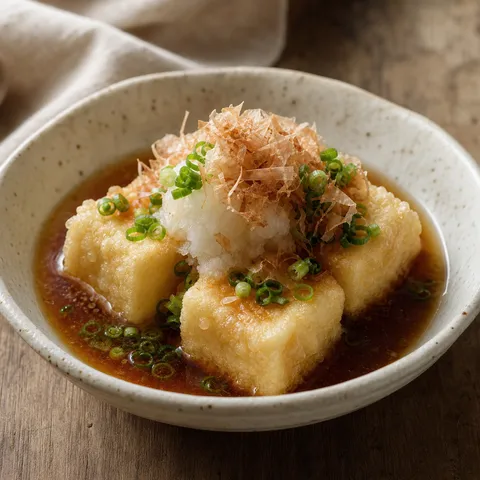
 Agedashi Tofu
Lightly fried tofu dusted in potato starch and served in a warm dashi-soy-mirin broth, topped with grated daikon and bonito flakes, a classic Japanese izakaya starter.
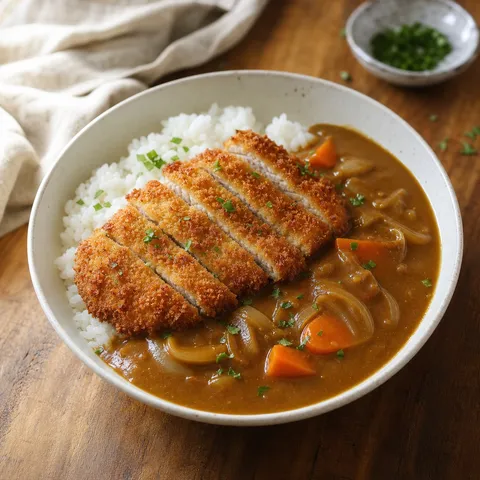 Japanese Lens Verified Images are for illustrative purposes only, may be inaccurate, and do not guarantee the presence or absence of specific ingredients.
 Katsu Curry
A Japanese recipe: Katsu Curry.
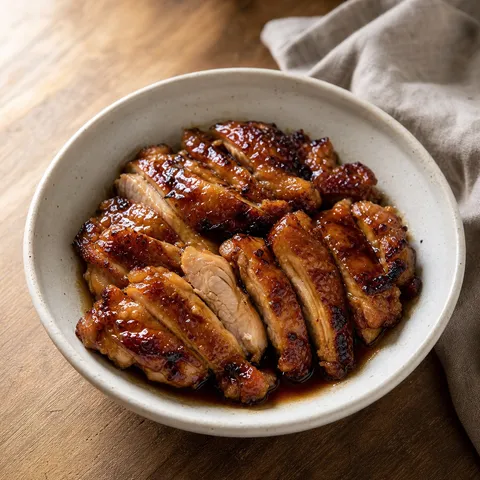 Japanese Lens Verified Images are for illustrative purposes only, may be inaccurate, and do not guarantee the presence or absence of specific ingredients.
 Chicken Teriyaki
Enjoy tender, juicy chicken glazed in a deeply flavorful, glossy sweet soy sauce, perfectly caramelized to sticky perfection.