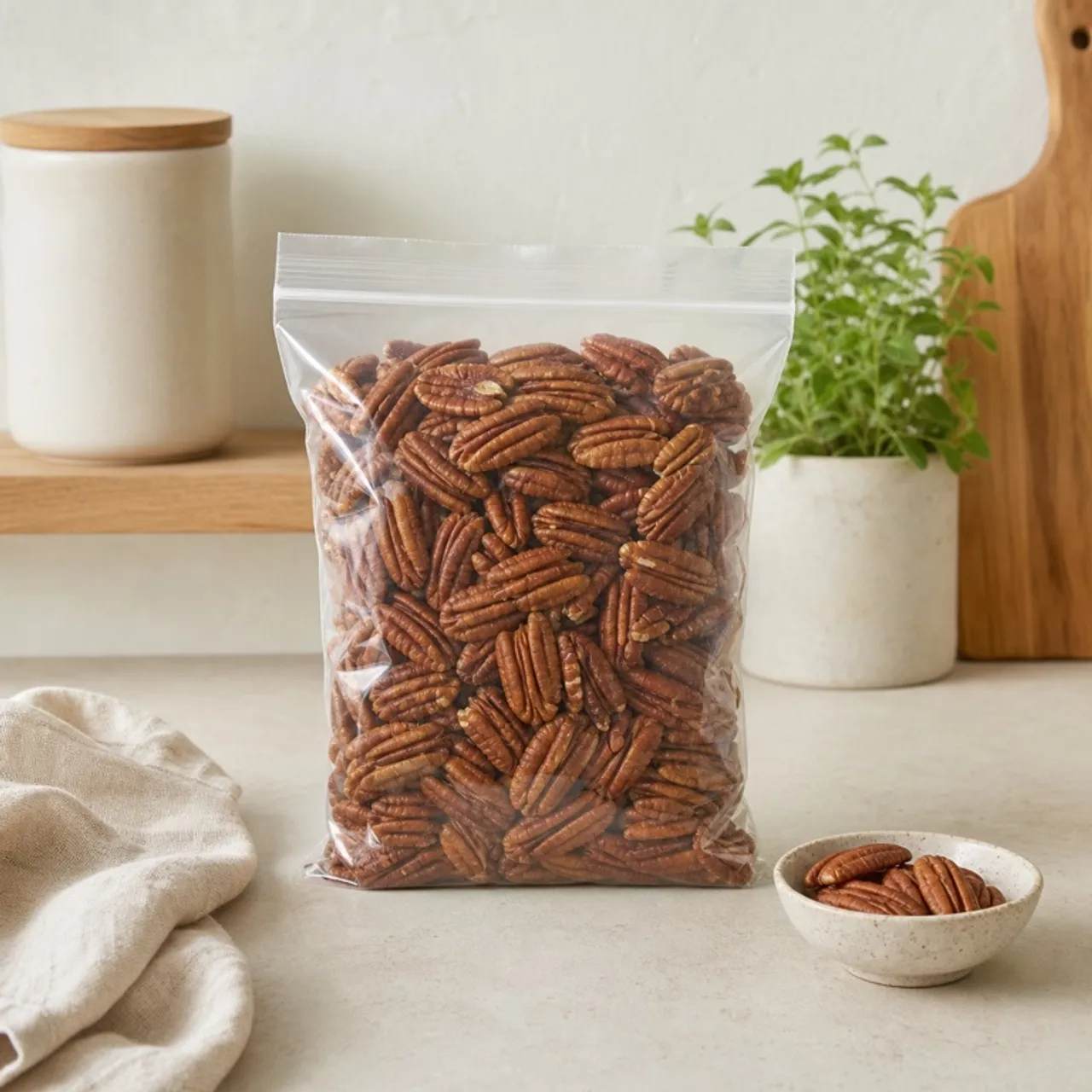
 Food Lens Images are for illustrative purposes only, may be inaccurate, and do not guarantee the presence or absence of specific ingredients.
 Food Lens · Recipe ingredients
Pecan Halves
Rich, buttery, and mildly sweet with a hint of vanilla and gentle bitterness at the finish; the texture is dense and slightly crisp when toasted.
Lens VerifiedPecan halves are the split, unbroken meat of the pecan nut, prized for their buttery richness and elegant appearance. They hold their shape through baking, making them ideal for pie toppings, salads, and decorative finishes. A light toast in a dry skillet deepens their nutty, caramel-like flavor significantly. They are native to North America and remain one of the most celebrated nuts in Southern cooking.
Where it comes from
Born in the river bottoms of the American South, the pecan half is the jewel of the nut world — buttery, stately, and built for the top of a pie.
Varieties — Most commercial pecans are papershell varieties bred for thin shells and large, intact halves. Southern states like Georgia, Texas, and New Mexico lead production, each yielding slightly different flavor profiles.
Pecans are deeply woven into Southern American food traditions, appearing at Thanksgiving tables in pies and as holiday gifts in gift tins. Pecan pralines are an iconic New Orleans confection tied to Creole culinary heritage.
In a modern kitchen — Store pecan halves in the freezer to keep their oils fresh and prevent rancidity for up to two years.
Buying it
Choose plump, uniform halves with a golden-tan color and no shriveling or dark spots. Vacuum-sealed or airtight bags signal better freshness. Give them a sniff — fresh pecans smell sweet and buttery, not musty or rancid.
Storing it
Keep in a sealed container in a cool, dark pantry for near-term use; their high oil content means they turn rancid faster than most nuts. Refrigerate or freeze for longer storage and taste before using if unsure.
Keeps about 1 year in the pantry.
Out of pecan halves? Good swaps
- walnut halves — Similar shape and richness; slightly more bitter and earthy
- cashews — Milder and creamier; good in salads but won't replicate pecan pie character
- hazelnuts — Toasted hazelnuts echo the buttery depth; best in baked applications
General cooking guidance — always check the labels on the products you use. Listahan’s allergen checks run automatically when you plan a recipe in the app. Not medical advice.
Recipes that use pecan halves
Common questions about pecan halves
Is pecan halves vegan?
Pecan Halves is generally plant-based and suitable for a vegan diet, but brands differ — confirm on the label.
What can I use instead of pecan halves?
Good swaps include walnut halves, cashews, hazelnuts. Each behaves a little differently — see the swaps above for notes, and always check labels for allergens.
How do I store pecan halves?
Keep in a sealed container in a cool, dark pantry for near-term use; their high oil content means they turn rancid faster than most nuts. Refrigerate or freeze for longer storage and taste before using if unsure. It keeps about 1 year in the pantry.
More recipe ingredients
See all


Make pecan halves about your kitchen — with Listahan Pro
Everything above is free, forever. Pro adds the Household Lens — the same food, seen for your family:
-
Checked for each member
Flags pecan halves per person against your household's allergies and school rules — not just a generic "contains" tag.
-
Pantry-aware
Knows whether you already have it, what is running low, and the best swap from what is in your kitchen tonight.
-
What it costs near you
A real price from the Presyo community index, so you can plan the budget — not guess.
-
Your household memory
Who likes it, plus your own private notes — brand, where you keep it, who skips it.
Allergen safety is always free — Pro adds the automation, never the safety.
Cook with pecan halves — safely
Plan a recipe in Listahan and the household allergen check runs automatically — every plan, every swap, every lunchbox. Safety is never paywalled.