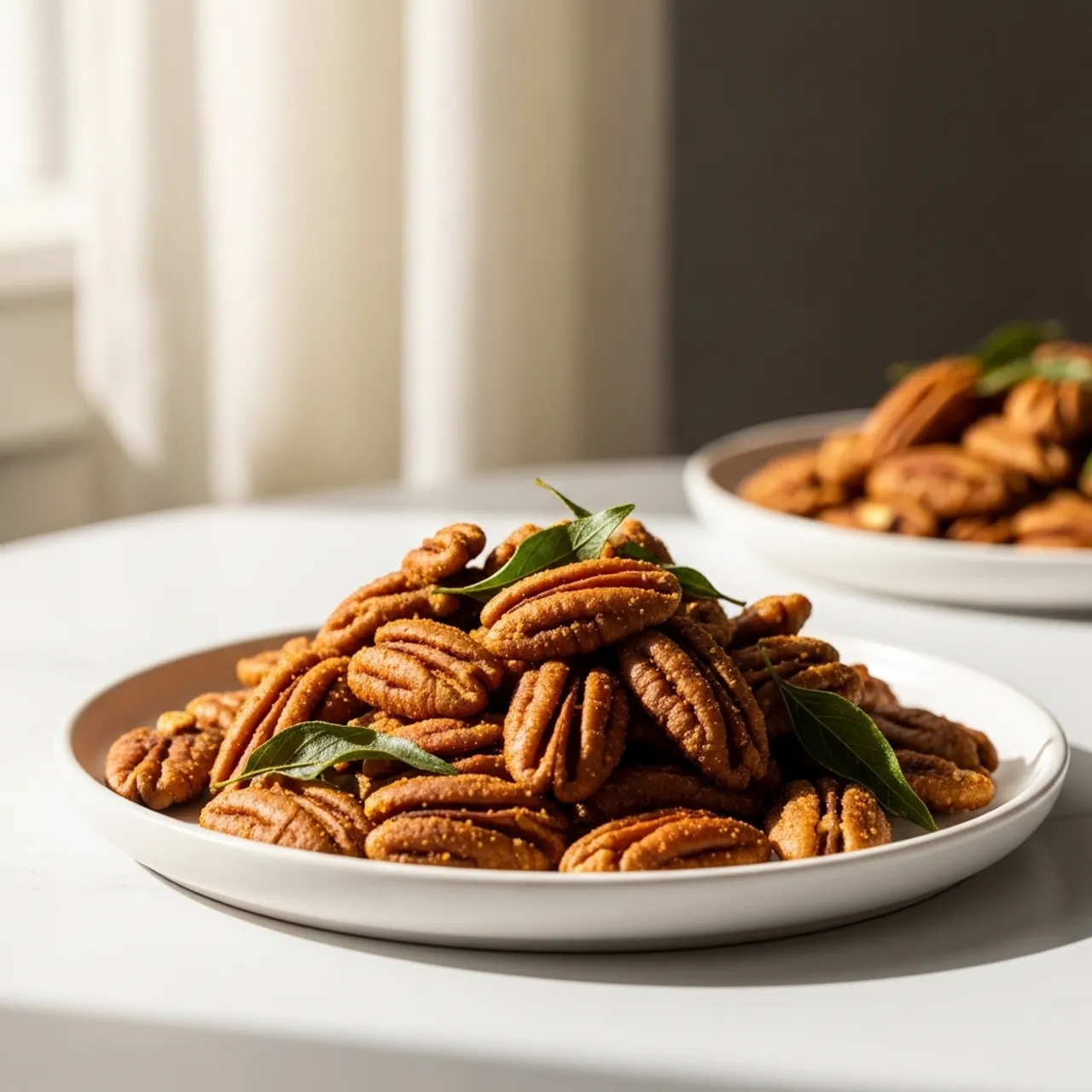
 Cajun & Creole Images are for illustrative purposes only, may be inaccurate, and do not guarantee the presence or absence of specific ingredients.
 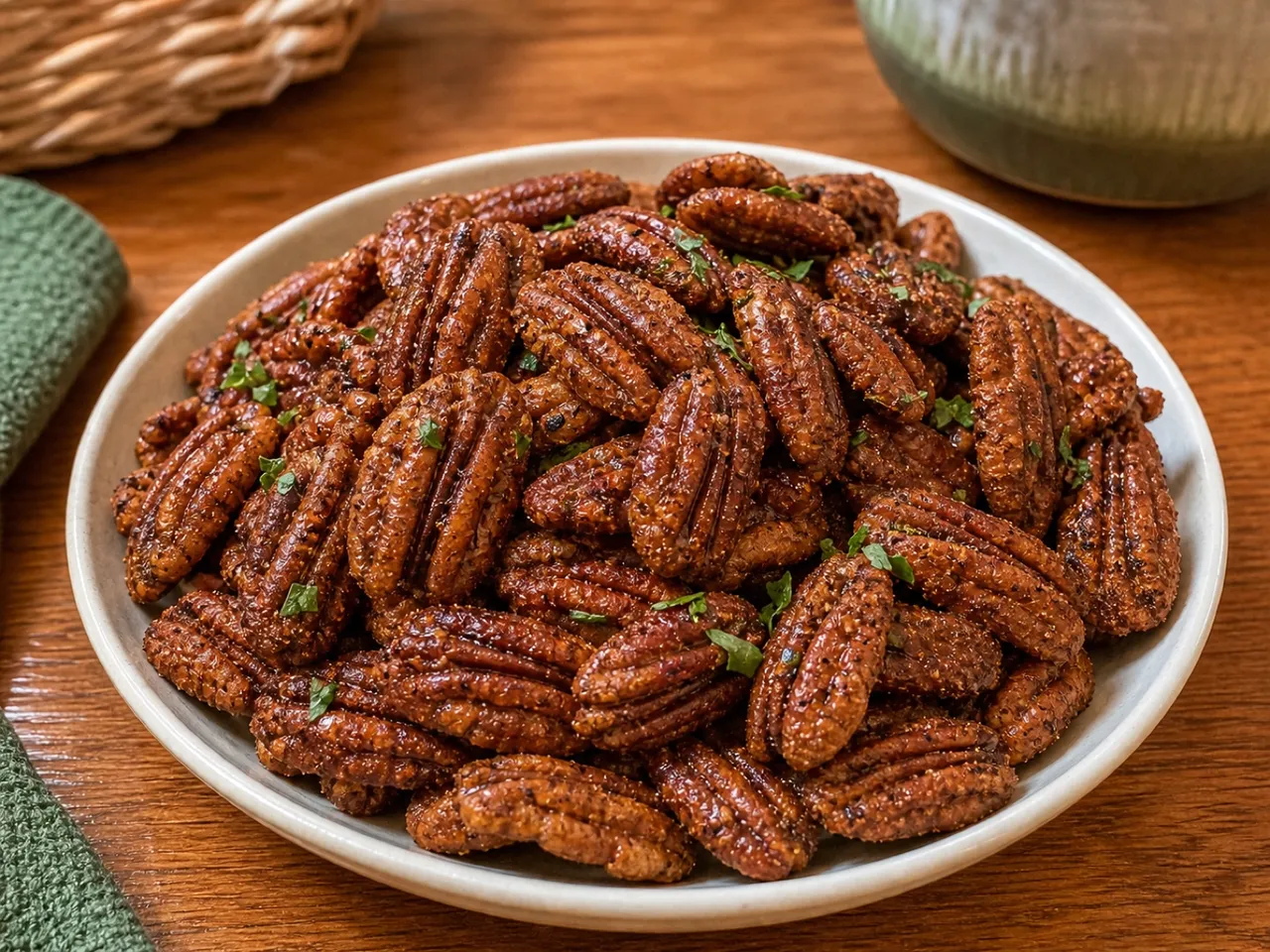 Serving Images are for illustrative purposes only, may be inaccurate, and do not guarantee the presence or absence of specific ingredients.
 Cajun Spiced Pecans
Crunchy Louisiana pecans roasted in cayenne, brown sugar, and butter until gloriously sticky and spiced — impossible to stop snacking on once the bag is open.
Contains common allergens
In the app, Listahan checks these against your household automatically.
Good to know
- Ready in under 30 minutes
Matched from this dish's own ingredients and timing. Browse more: 30-minute meals
Instructions
6 steps- 1
Heat the oven to 325 F (165 C) and line a baking sheet with parchment.
- 2
Toss the pecan halves with the melted butter until evenly coated.
- 3
Sprinkle the Cajun seasoning, brown sugar, cayenne if using, and salt over the pecans and toss again until evenly seasoned.
- 4
Spread the pecans in a single layer on the baking sheet.
- 5
Bake, stirring once halfway through, until fragrant and lightly toasted, 12 to 15 minutes; watch closely as they can burn quickly.
- 6
Let cool completely on the baking sheet before serving; they crisp up as they cool.
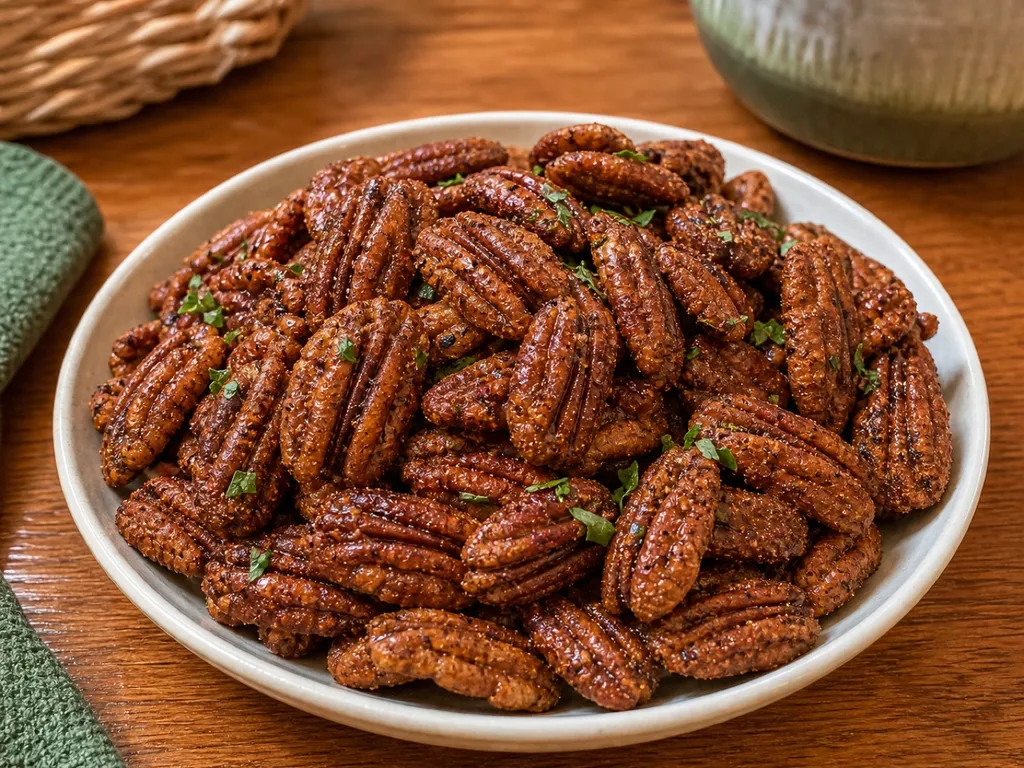 Images are for illustrative purposes only, may be inaccurate, and do not guarantee the presence or absence of specific ingredients.
 Listahan Family Score™
67/100
Works for many families
Score reflects how well this recipe fits a typical busy household. In the app, your Family Score is personalized to your household's allergens, kids, and pantry.
Nutrition
per serving395
Calories
5 g
Protein
8 g
Carbs
42 g
Fat
Estimated per serving. Actual values depend on the brands and portions you use.
Listahan cooking guide
Chef notes & practical guide
Technique notes, ingredient swaps, serve-alongside ideas, storage guidance, and equipment for this recipe.
Cultural context
Pecans are the native nut of the American South, and Louisiana's pecan groves have supplied kitchens and confectioneries across the region for centuries. The Cajun tradition of spicing and roasting pecans emerged from the same impulse that drove Cajun cooking broadly — making humble, abundant ingredients memorable through seasoning and technique. Sweet-and-spicy roasted pecans became a fixture at Louisiana cocktail parties and holiday gatherings, where the balance of sugar, cayenne, and butter made them as hard to stop eating as they were easy to make. The combination of heat, sugar, and toasted fat is now recognized as a distinctly Louisiana bar snack and gift-box staple.
Listahan note
This version leans into the sweet-heat tension — enough cayenne to create a slow back-of-the-throat burn that arrives after the caramelized sweetness, rather than overpowering it up front.
Technique cues
- Spread the coated pecans in a single layer without touching on the baking sheet — overlapping nuts trap steam between them and produce a soggy coating rather than the dry, crackling shell you are after.
- Stir the pecans once halfway through roasting and once again immediately out of the oven while the coating is still fluid; after the second stir, spread them back into a single layer so they set individually rather than clumping.
- The coating firms as it cools, so avoid tasting for crunchiness while warm — pull them when the glaze looks matte rather than shiny, which signals that the sugar has cooked past the sticky stage into a dry shell.
Kitchen flow
- Parallel prep
- Mix the dry spice-sugar blend in a bowl while the oven preheats; the assembly of coating, tossing, and spreading takes under 5 minutes once the oven is ready.
- Make-ahead
- These keep beautifully — cool completely before storing in an airtight container at room temperature for up to 2 weeks, making them one of the best make-ahead snacks or gifts in Cajun cooking.
- Leftover move
- Cajun spiced pecans chopped coarsely make an excellent salad topping over mixed greens with blue cheese and sliced pear, or a textural finish crumbled over a sweet potato soup.
- Cleanup rhythm
- Line the baking sheet with parchment — the sugar coating bonds aggressively to bare metal and is very difficult to clean when baked on; parchment lifts off cleanly.
Ingredient brief
Role, handling, and swap guidance for each key ingredient.
pecan halves
centerpiece
Purpose: Pecan halves have enough surface area to hold the spiced coating and enough oil content to roast evenly without drying out; their buttery, slightly sweet native flavor is a natural partner for both cayenne and sugar.
Handling: Use raw, unsalted pecan halves — pre-roasted or salted nuts will over-season and the coating won't adhere as evenly to an already-cooked surface.
Adaptation: Walnuts or mixed nuts follow the same technique; almonds require a slightly longer roast due to lower fat content.
egg white
coating binder
Purpose: One lightly beaten egg white creates a thin, even glaze that binds the spice and sugar to the nut surface and sets into a dry, crackling shell during roasting without adding fat.
Handling: Whisk until just foamy — not stiff — and toss the pecans until every surface is coated before adding the dry spice mixture.
Adaptation: A tablespoon of melted butter or aquafaba (chickpea brine) can substitute and produces a slightly richer, less crispy shell.
Cajun seasoning
spice base
Purpose: The paprika, cayenne, garlic, and onion in a Cajun blend create layered heat that builds slowly and contrasts with the caramelized sugar rather than competing with it.
Handling: Combine with sugar, salt, and any additional cayenne in a small bowl before adding to the egg-white-coated pecans.
Adaptation: A blend of smoked paprika, cayenne, onion powder, and dried thyme captures the same character without a pre-made blend.
brown sugar
sweetness and caramelization
Purpose: Brown sugar's molasses content gives the coating a deeper, more complex sweetness and caramelizes at a lower temperature than white sugar, helping the coating set without scorching.
Handling: Press out any lumps before combining with dry spices so the coating distributes evenly over every pecan.
Adaptation: White sugar works and produces a slightly crispier, clearer shell; maple syrup (added with the egg white) creates a different but delicious flavor.
cayenne pepper
heat amplifier
Purpose: Beyond whatever cayenne is in the Cajun blend, an additional pinch of cayenne ensures the heat is present and assertive — the hallmark of this snack is its slow burn.
Handling: Add to the dry spice mix; taste the mix before adding to the nuts and adjust to your heat preference.
Adaptation: Chipotle powder adds smoky heat; omit entirely for a sweet-savory version without significant heat.
Technique notes
- The key temperature is 325°F rather than higher — it is hot enough to caramelize the sugar and toast the nuts, but slow enough to avoid scorching the spices, which happen to have lower smoke points than plain sugar.
- Watch the last 5 minutes closely because sugar coatings can go from perfect to burnt very quickly, especially near the edges of the baking sheet where heat concentrates.
- To test doneness, pull one pecan and set it on a cold surface for 30 seconds — if the coating dries firm and matte rather than sticky, they are ready; they will continue to firm as the whole batch cools on the sheet.
Ingredient swaps
- Tree nut allergy direction
- Replace pecans with roasted pumpkin seeds (pepitas) using the same coating; the coating ratio stays the same and the result is a crunchy, nut-free Cajun snack.
- Egg-free direction
- Use 1 tablespoon of aquafaba (the liquid from canned chickpeas) in place of the egg white — it whips and binds similarly and is undetectable in the final product.
- Lower-sugar direction
- Reduce brown sugar by half and add an extra pinch of smoked paprika to compensate for the depth the sugar normally provides; the coating will be less glossy but still flavorful.
- Gift-pack direction
- Double the batch and cool in a single layer, then package in small mason jars or parchment-lined tins — they keep for 2 weeks at room temperature and are one of the most appreciated food gifts from Louisiana kitchens.
Serve alongside
- Charcuterie board with aged cheddar and cured meats
- Brie and fig jam on crostini
- Arugula salad with sliced pear and Gorgonzola
- Bourbon on the rocks or a classic Old Fashioned
- Cold local craft lager
- Sparkling water with a strip of orange peel
Serving suggestions only — check pairings for your household's allergens.
Storage & reheating
- Store in an airtight container at room temperature for up to 2 weeks — the dry sugar shell protects the nut from moisture and keeps the coating crisp.
- Do not refrigerate, as the humidity in a refrigerator will soften the sugar coating and make it sticky; if they become soft, spread on a baking sheet and re-toast at 300°F for 5 minutes.
Equipment
- Rimmed baking sheet lined with parchment paper — prevents the sugary coating from fusing to the pan
- Large mixing bowl — enough room to toss the nuts without spilling the coating
- Silicone spatula or two forks — for stirring mid-bake and separating nuts immediately out of the oven
- Timer — the difference between perfect and scorched is a matter of minutes
Make this household-aware
Listahan Pro checks this recipe against your household's allergens, finds pantry-aware swaps, builds the shopping list, and helps you plan the week around it.
Plan it in Listahan
Add Cajun Spiced Pecans to your week, check it against your household's allergens, and build the shopping list automatically.
More Cajun & Creole recipes
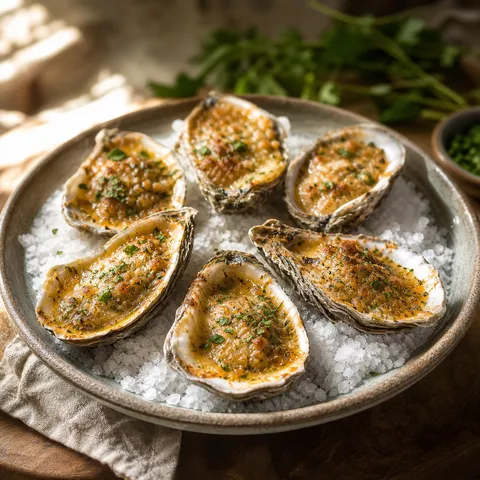 Cajun & Creole Lens Verified Images are for illustrative purposes only, may be inaccurate, and do not guarantee the presence or absence of specific ingredients.
 Oysters Bienville
A classic New Orleans baked oyster dish crowned with a rich shrimp-and-mushroom cream sauce, browned to perfection on the half shell.
 Cajun & Creole Lens Verified Images are for illustrative purposes only, may be inaccurate, and do not guarantee the presence or absence of specific ingredients.
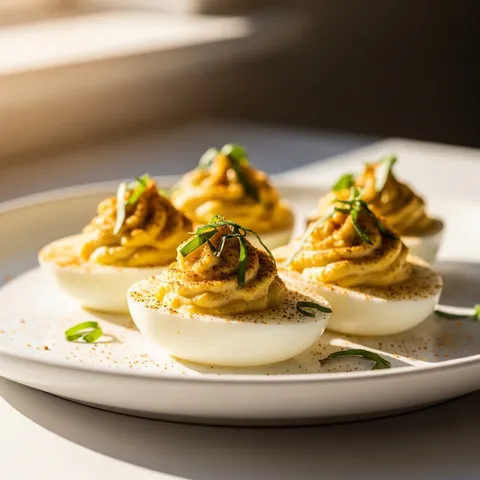
 Cajun Deviled Eggs
Classic deviled eggs with a Louisiana twist — creamy yolk filling spiked with hot sauce, Creole mustard, and cayenne, topped with a sprinkle of smoked paprika.
 Cajun & Creole Lens Verified Images are for illustrative purposes only, may be inaccurate, and do not guarantee the presence or absence of specific ingredients.
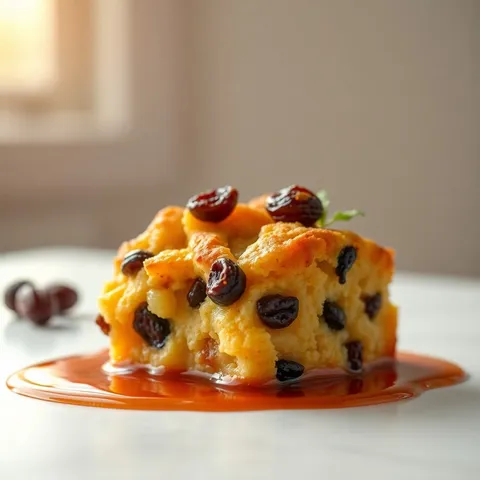
 Creole Bread Pudding
Day-old French bread soaked in a rich custard of cream, eggs, and vanilla, baked golden, then drowned in a warm bourbon-laced whiskey sauce.