 Food Lens Images are for illustrative purposes only, may be inaccurate, and do not guarantee the presence or absence of specific ingredients.
 Food Lens · Produce
Sage
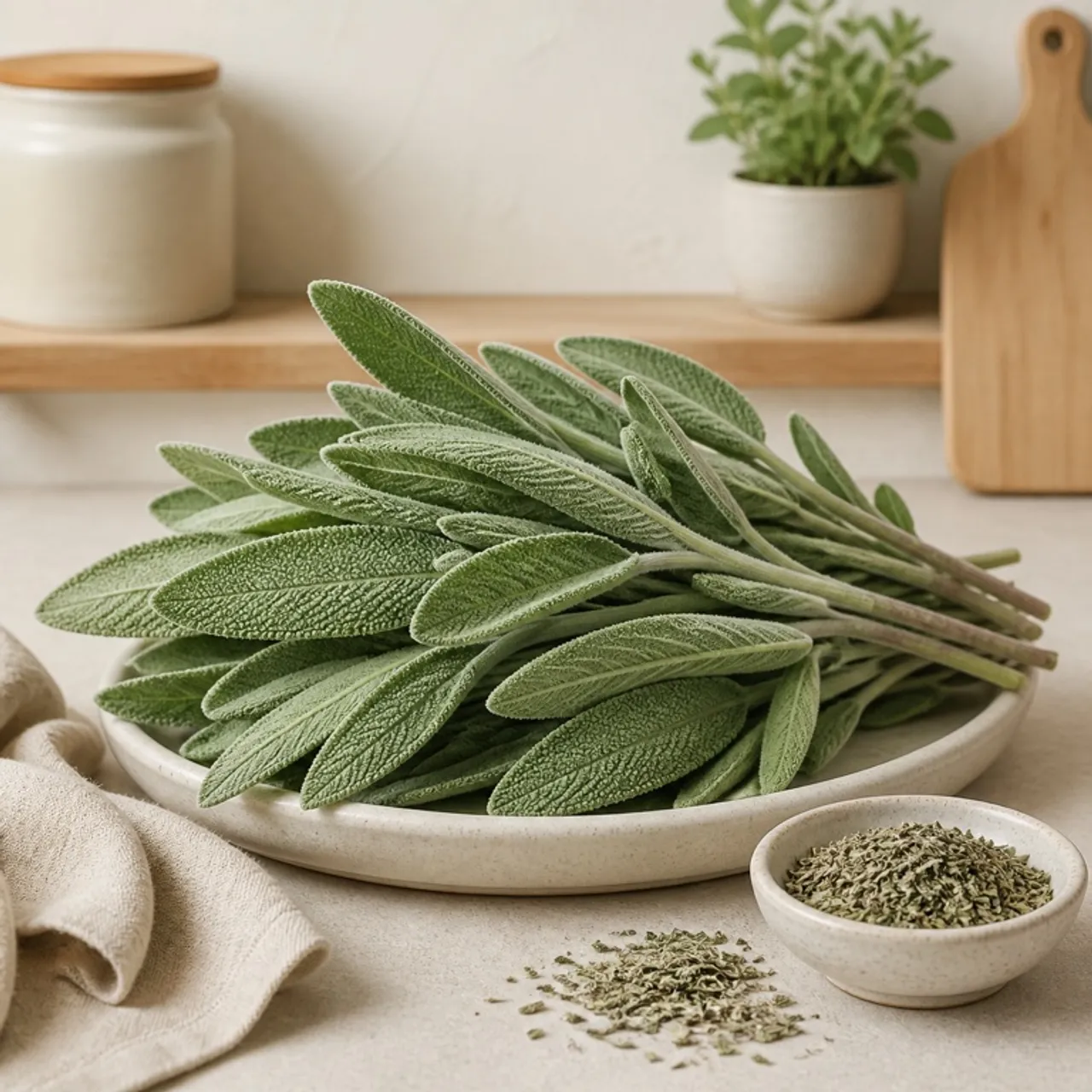
Bold, earthy, and slightly peppery with a warm, musty, almost camphor-like quality. Fresh sage is more floral and bright; dried sage is deeper and more intense. When fried in butter it develops a nutty, savory richness that softens its bitterness.
Lens VerifiedSage (Salvia officinalis) is a perennial Mediterranean herb with soft, silver-green leaves and a bold, earthy, slightly peppery aroma. It is one of the defining herbs of European cooking, particularly across Italy, France, and the British Isles. Its assertive flavor means a little goes a long way, and it has a particular affinity for fatty, rich ingredients like butter, pork, and cheese.
Where it comes from
Sage is native to the northern Mediterranean coast and has been a culinary and medicinal staple since ancient Roman times.
Varieties — Common culinary sage (Salvia officinalis) is the standard variety. Purple sage, golden sage, and tricolor sage are ornamental variants with similar but slightly milder flavor. Pineapple sage (Salvia elegans) has a fruity aroma and is used more as a garnish.
In Italian cuisine, burro e salvia (brown butter and sage) is one of the most celebrated pasta sauces. In British cooking, sage and onion stuffing is a cornerstone of the traditional Sunday roast. Across many cultures sage has also carried symbolic significance, associated with wisdom and preservation.
In a modern kitchen — Crispy fried sage has become a popular garnish in restaurant cooking, adding both flavor and texture to pasta, risotto, squash soup, and charcuterie boards. Sage pairs exceptionally well with butternut and acorn squash dishes in autumn menus.
Buying it
Fresh sage should have firm, unblemished leaves with a strong fragrance — avoid wilted or yellowing bunches. Dried sage loses potency quickly; buy in small quantities and store in an airtight container away from heat and light. Rubbed sage (crumbled dried leaves) is more aromatic than powdered sage for most cooking applications.
Storing it
Keep fresh sage in the fridge, wrapped loosely in a slightly damp paper towel inside a bag, or stems-down in a glass of water like a small bouquet. Leaves should stay soft and fragrant — brown edges or a musty smell mean it's time to toss it.
Keeps about 10 days in the fridge.
In season
Peak season is June–September, though it's available year-round.
Fresh sage grows locally through the warmer months, while packaged herbs keep it available year-round.
Out of sage? Good swaps
General cooking guidance — always check the labels on the products you use. Listahan’s allergen checks run automatically when you plan a recipe in the app. Not medical advice.
Recipes that use sage
Common questions about sage
Is sage vegan?
Sage is generally plant-based and suitable for a vegan diet, but brands differ — confirm on the label.
What can I use instead of sage?
Good swaps include , . Each behaves a little differently — see the swaps above for notes, and always check labels for allergens.
How do I store sage?
Keep fresh sage in the fridge, wrapped loosely in a slightly damp paper towel inside a bag, or stems-down in a glass of water like a small bouquet. Leaves should stay soft and fragrant — brown edges or a musty smell mean it's time to toss it. It keeps about 10 days in the fridge.
More produce
See all


Make sage about your kitchen — with Listahan Pro
Everything above is free, forever. Pro adds the Household Lens — the same food, seen for your family:
-
Checked for each member
Flags sage per person against your household's allergies and school rules — not just a generic "contains" tag.
-
Pantry-aware
Knows whether you already have it, what is running low, and the best swap from what is in your kitchen tonight.
-
What it costs near you
A real price from the Presyo community index, so you can plan the budget — not guess.
-
Your household memory
Who likes it, plus your own private notes — brand, where you keep it, who skips it.
Allergen safety is always free — Pro adds the automation, never the safety.
Cook with sage — safely
Plan a recipe in Listahan and the household allergen check runs automatically — every plan, every swap, every lunchbox. Safety is never paywalled.