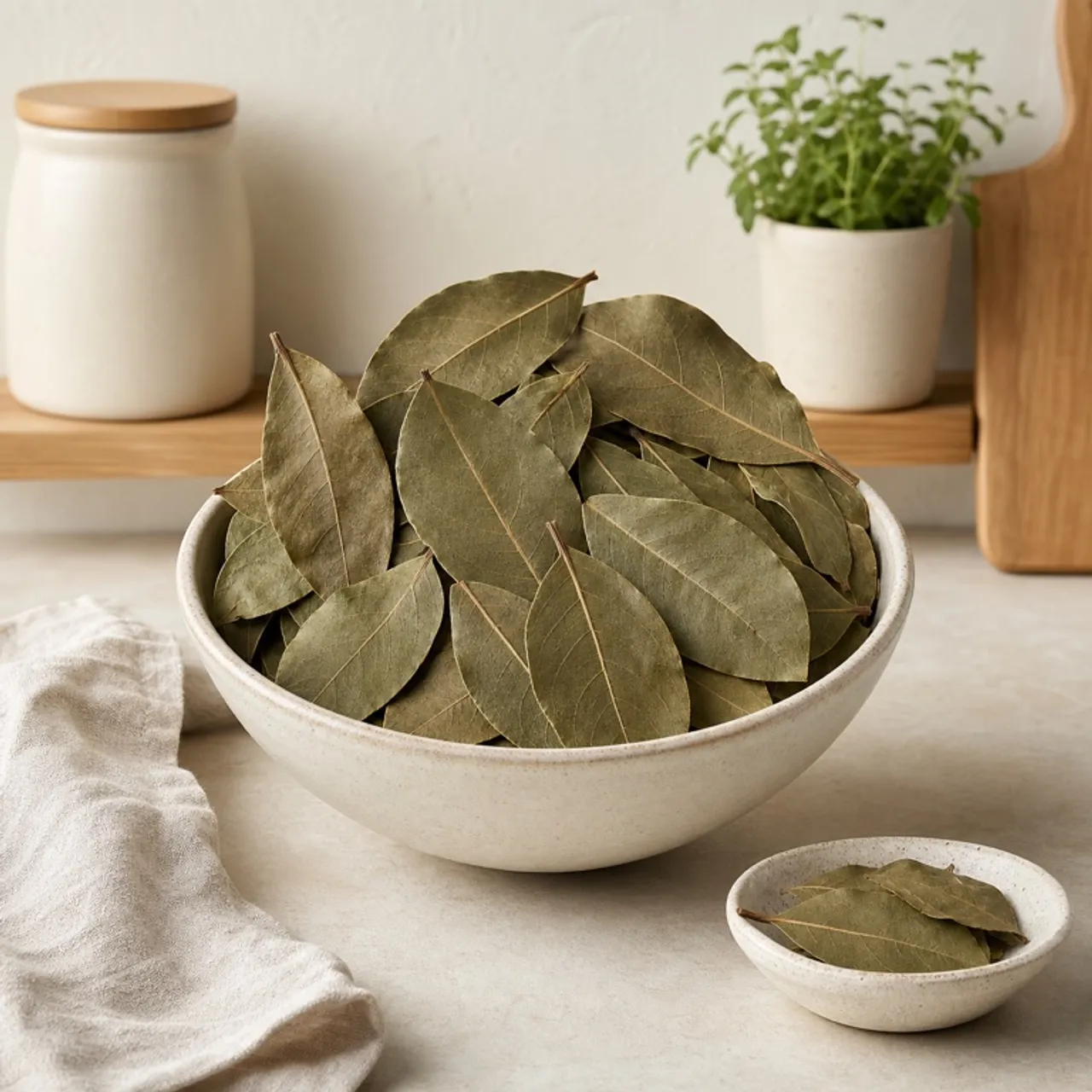
 Food Lens Images are for illustrative purposes only, may be inaccurate, and do not guarantee the presence or absence of specific ingredients.
 Food Lens · Recipe ingredients
Salam Leaves
Subtly herbal and faintly aromatic with a mild, slightly citrusy-floral note; more delicate and less camphor-like than Mediterranean bay.
Lens VerifiedSalam leaves come from the Indonesian bay laurel (Syzygium polyanthum), a tree native to Southeast Asia. They are a defining aromatic in Indonesian curries, rice dishes, and braises, imparting a subtle, complex fragrance quite different from Mediterranean bay.
Where it comes from
Salam leaves come from the Indonesian bay tree and are a quiet but essential aromatic in Indonesian and Malay cooking, perfuming rendang, gulai, and nasi uduk. North American cooks can find them dried in Southeast Asian markets; though sometimes labeled Indonesian bay leaf, their flavor is gentler and more distinct than Mediterranean bay.
Buying it
Fresh salam leaves are rarely found outside Southeast Asia; dried leaves are the most practical form. Look for leaves that are intact, not crumbled, with a greenish-gray color and a faint herbal aroma.
Storing it
Store dried salam leaves in an airtight container in a cool, dark spot for up to one year. Fresh leaves can be refrigerated for up to a week or frozen for longer storage.
Keeps about 1 year in the pantry.
Out of salam leaves? Good swaps
General cooking guidance — always check the labels on the products you use. Listahan’s allergen checks run automatically when you plan a recipe in the app. Not medical advice.
Recipes that use salam leaves
Common questions about salam leaves
Is salam leaves vegan?
Salam Leaves is generally plant-based and suitable for a vegan diet, but brands differ — confirm on the label.
What can I use instead of salam leaves?
Good swaps include Mediterranean bay leaves, Curry leaves. Each behaves a little differently — see the swaps above for notes, and always check labels for allergens.
How do I store salam leaves?
Store dried salam leaves in an airtight container in a cool, dark spot for up to one year. Fresh leaves can be refrigerated for up to a week or frozen for longer storage. It keeps about 1 year in the pantry.
More recipe ingredients
See all


Make salam leaves about your kitchen — with Listahan Pro
Everything above is free, forever. Pro adds the Household Lens — the same food, seen for your family:
-
Checked for each member
Flags salam leaves per person against your household's allergies and school rules — not just a generic "contains" tag.
-
Pantry-aware
Knows whether you already have it, what is running low, and the best swap from what is in your kitchen tonight.
-
What it costs near you
A real price from the Presyo community index, so you can plan the budget — not guess.
-
Your household memory
Who likes it, plus your own private notes — brand, where you keep it, who skips it.
Allergen safety is always free — Pro adds the automation, never the safety.
Cook with salam leaves — safely
Plan a recipe in Listahan and the household allergen check runs automatically — every plan, every swap, every lunchbox. Safety is never paywalled.