 Indonesian & Malaysian Images are for illustrative purposes only, may be inaccurate, and do not guarantee the presence or absence of specific ingredients.
 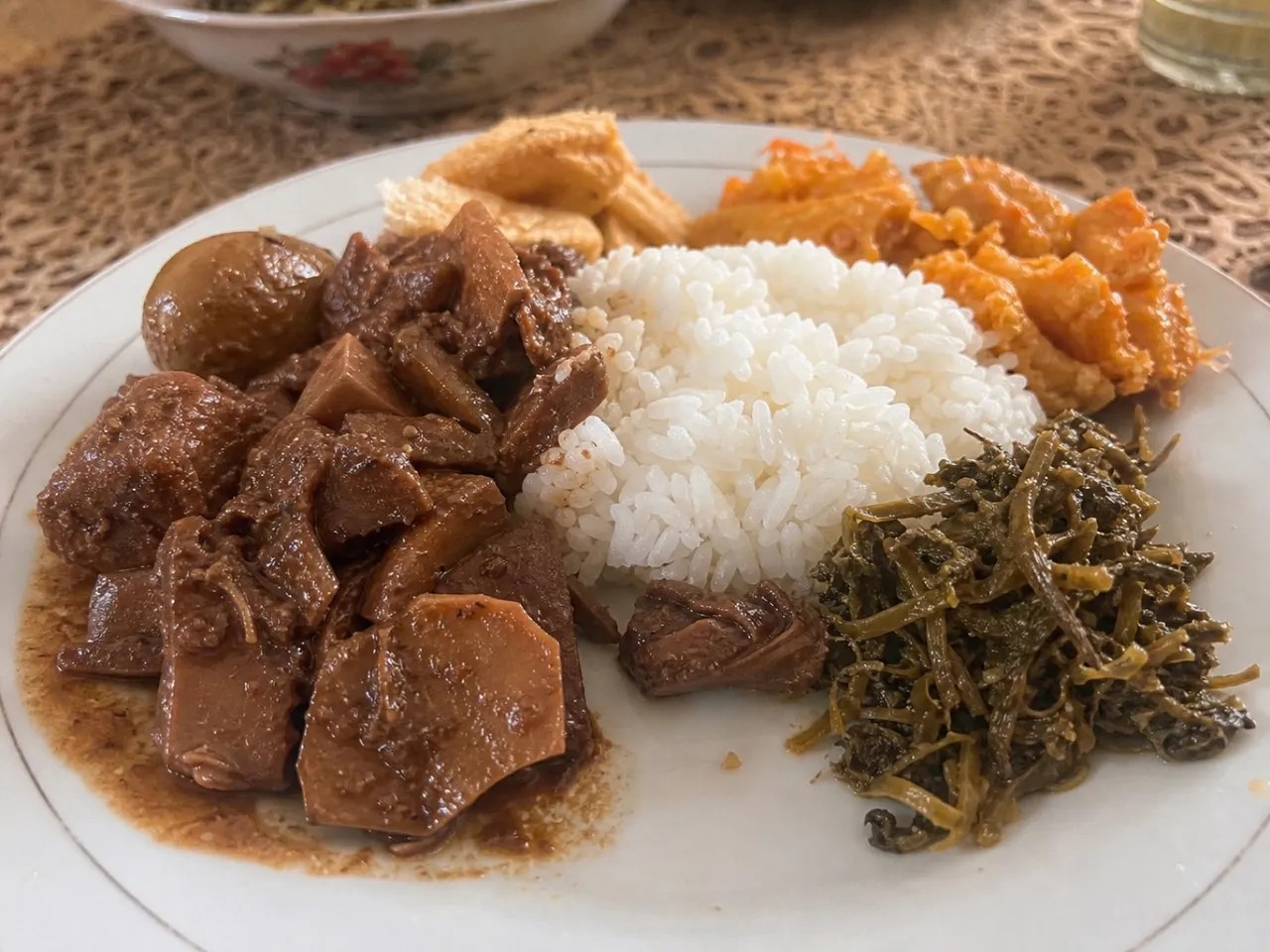 Serving Images are for illustrative purposes only, may be inaccurate, and do not guarantee the presence or absence of specific ingredients.
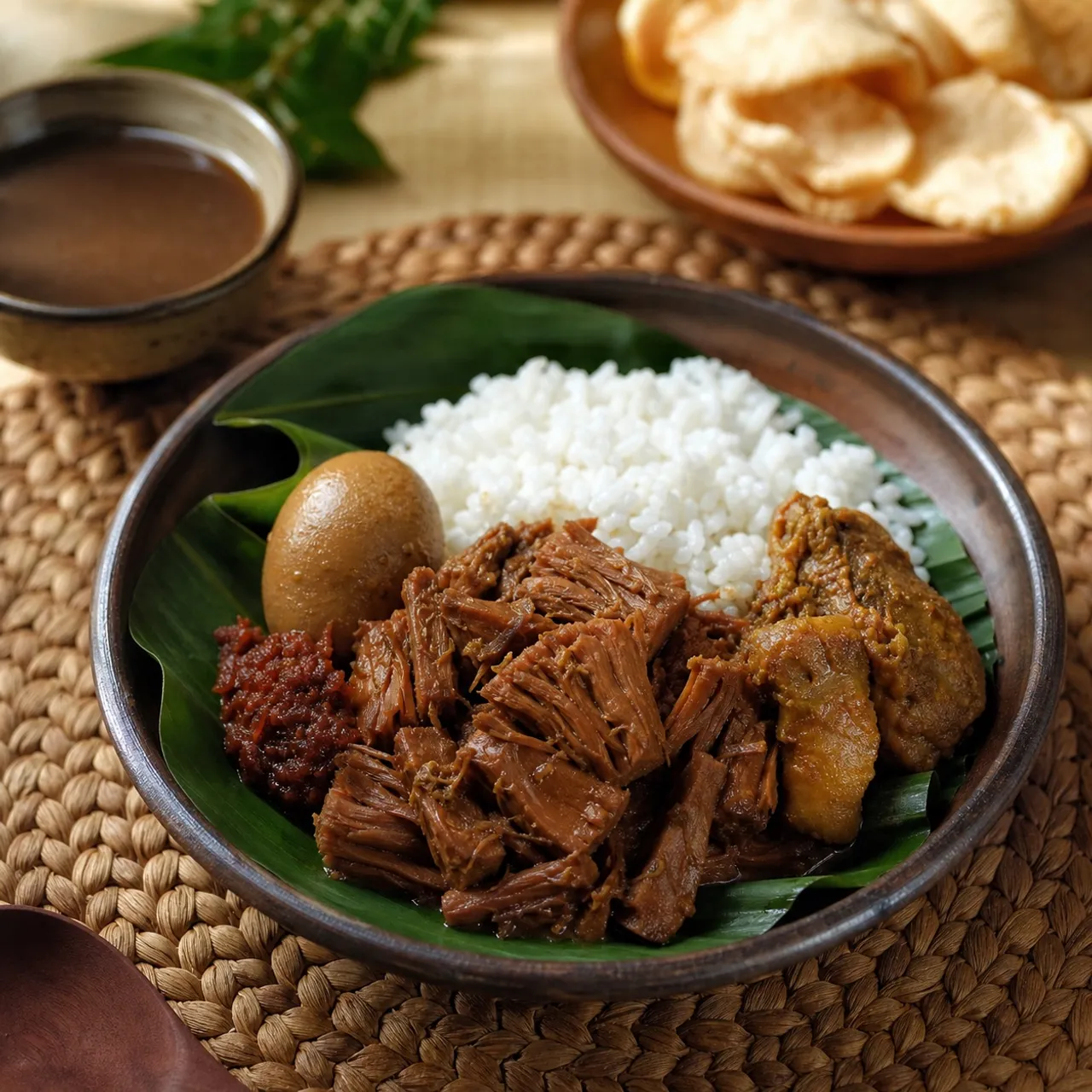
 Gudeg
Yogyakarta's slow-cooked young jackfruit, braised for hours in coconut milk and palm sugar until tender, sweet, and deeply flavored — a Javanese treasure.
No common allergens detected
Based on this recipe's ingredient list. Always verify with your own brands and labels.
Good to know
- One-pot
Matched from this dish's own ingredients and timing. Browse more: one-pot dinners
Instructions
6 steps- 1
Grind shallots, garlic, coriander seeds, and candlenuts into a fine paste.
- 2
In a heavy clay pot or dutch oven, layer the bottom with teak leaves or salam leaves.
- 3
Add the jackfruit chunks, spice paste, and dark palm sugar.
- 4
Pour in the coconut milk and enough water to submerge all ingredients.
- 5
Bring to a boil, then immediately reduce to the lowest heat, cover tightly, and simmer gently for 2 to 3 hours without stirring.
- 6
Continue cooking until the liquid has almost completely evaporated and the jackfruit is tender, dark brown, and infused with sweet, rich flavors.
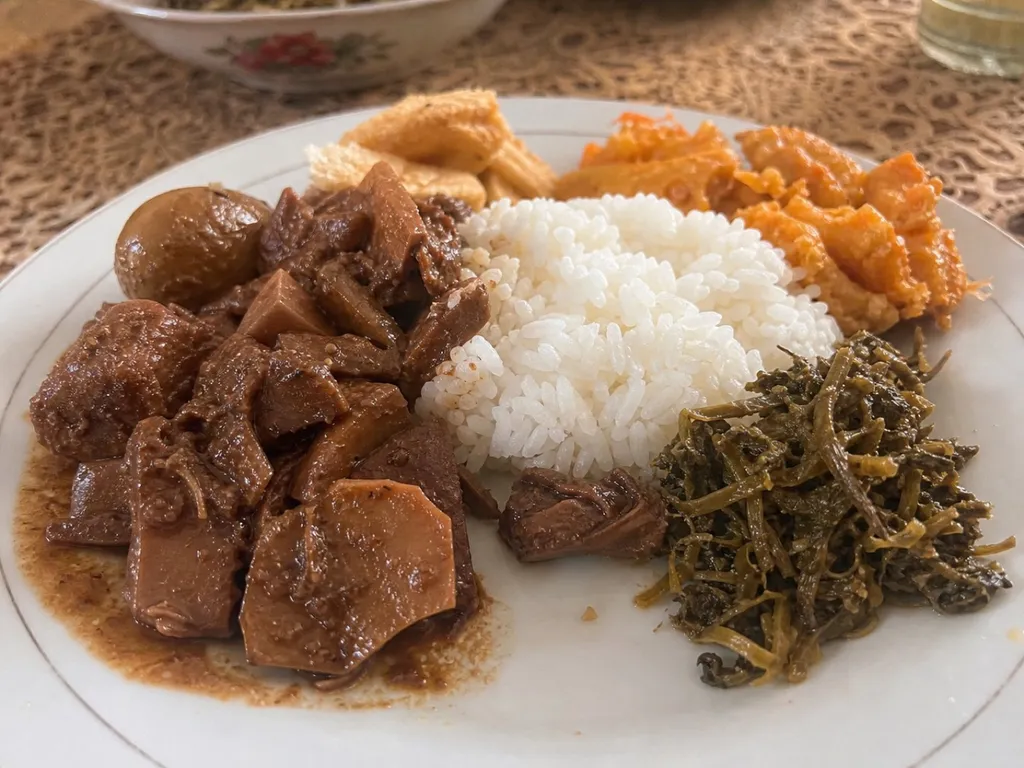 Images are for illustrative purposes only, may be inaccurate, and do not guarantee the presence or absence of specific ingredients.
 Listahan Family Score™
70/100
Good fit for most families
Score reflects how well this recipe fits a typical busy household. In the app, your Family Score is personalized to your household's allergens, kids, and pantry.
Nutrition
per serving405
Calories
3 g
Protein
50 g
Carbs
24 g
Fat
Estimated per serving. Actual values depend on the brands and portions you use.
Listahan cooking guide
Chef notes & practical guide
Technique notes, ingredient swaps, serve-alongside ideas, storage guidance, and equipment for this recipe.
Cultural context
Gudeg is the iconic dish of Yogyakarta in Central Java — young jackfruit braised for hours in coconut milk, palm sugar, and an array of spices until it turns a dark mahogany brown and is completely tender. It is one of the oldest continuously prepared dishes in Javanese court cuisine, and Yogyakarta locals claim a proper gudeg requires cooking through the night over wood fire. The dish is inherently sweet — far sweeter than most Western palates expect from a savory main course — and this sweetness is not a compromise but the defining characteristic of the Yogyakarta style.
Listahan note
This version uses canned young jackfruit (brine-packed) to make the dish accessible and achieves the characteristic dark, sweet braise through slow stovetop cooking rather than overnight wood-fire.
Technique cues
- Young jackfruit must be thoroughly drained and patted dry before braising — excess brine dilutes the coconut milk and prevents the braise from concentrating into the thick, dark sauce that defines gudeg.
- Simmer with the lid slightly ajar for at least 2 hours; the coconut milk must reduce slowly and the jackfruit must absorb the liquid so nothing remains pooled in the pan at the end.
- Palm sugar is not optional — regular sugar does not produce the same deep caramel undertone; dark brown sugar is the closest widely available substitute if palm sugar is unavailable.
Kitchen flow
- Parallel prep
- Hard-boil eggs in a separate pot while the jackfruit starts its braise; both will be ready at different times but can combine in the final 30 minutes.
- Make-ahead
- Gudeg improves dramatically the next day — make 24 hours ahead, refrigerate, and reheat gently; the jackfruit continues to absorb the sauce overnight.
- Leftover move
- Leftover gudeg shredded over steamed rice with a drizzle of sambal is the classic Yogyakarta breakfast — eat it at room temperature with warm rice.
- Cleanup rhythm
- The braise leaves a sticky caramelized residue; fill the pot with water and bring to a boil to dissolve it while you eat.
Ingredient brief
Role, handling, and swap guidance for each key ingredient.
young jackfruit
main braising body
Purpose: Young (unripe) jackfruit has a neutral flavor, meaty texture, and fibrous structure that absorbs the spiced coconut braise and shreds after long cooking much like pulled pork.
Handling: Drain canned jackfruit thoroughly, rinse once, and tear into larger pieces rather than cubing — the irregular shapes hold more sauce.
Adaptation: Green banana cut into chunks is a traditional Javanese alternative when jackfruit is unavailable and requires the same long braise.
coconut milk
braise liquid and fat
Purpose: Full-fat coconut milk is the medium that carries all the aromatic compounds into the jackfruit and then reduces to a thick, coating sauce over hours of slow cooking.
Handling: Use two cans for enough liquid to submerge the jackfruit and allow for evaporation during the long simmer.
Adaptation: No direct substitute in this dish; coconut milk is structural to the final texture and color of authentic gudeg.
palm sugar
primary sweetener
Purpose: Palm sugar's caramel complexity is what turns the braise a deep mahogany brown and gives gudeg its characteristic sweet-savory balance that white sugar cannot replicate.
Handling: Grate or finely chop the sugar block before adding so it dissolves evenly into the braise.
Adaptation: Dark brown sugar at 3/4 the quantity provides some caramel depth; increase slightly during cooking by taste.
galangal
earthy aromatic backbone
Purpose: Galangal's pine-like warmth is one of the key spice notes in gudeg that distinguishes it from generic sweet braises.
Handling: Peel and slice into coins; no need to fine-grind since the long cook time will extract flavor.
Adaptation: Fresh ginger at the same quantity provides warmth but is sharper and less resinous.
hard-boiled eggs
traditional accompaniment
Purpose: Telur pindang — eggs simmered in the gudeg braise — are inseparable from the traditional Yogyakarta presentation and pick up the sweet-savory sauce.
Handling: Hard-boil separately, peel, and add to the gudeg pot in the last 30 minutes to absorb the sauce and develop color.
Adaptation: Firm tofu added the same way creates a vegetarian alternative with the same sauce absorption.
Technique notes
- If the braise looks like it is reducing too quickly before the jackfruit is tender, add a splash of water and lower the heat — rushing the reduction results in burnt sugar on the bottom before the jackfruit softens.
- The finished gudeg should be sweet enough to taste almost dessert-like before adding the savory accompaniments; if it tastes merely pleasant rather than dramatically sweet, cook it longer.
- Serve at room temperature rather than scalding hot — traditional gudeg is sold all morning at stalls from pots that have been off the fire for hours, and the texture and flavor are better slightly cooled.
Ingredient swaps
- Vegan direction
- Omit hard-boiled eggs and replace with firm tofu; every other component of gudeg is plant-based.
- Gluten-free direction
- The recipe is naturally gluten-free; verify any sambal served alongside contains no wheat.
- Weeknight shortcut
- Use a pressure cooker at high pressure for 25 minutes to achieve tender jackfruit, then simmer uncovered on the stovetop for 20 minutes to reduce and darken the sauce.
Serve alongside
- Opor ayam (coconut chicken)
- Sambal goreng krecek (spiced beef skin)
- Steamed rice
- Wedang uwuh (Javanese spiced herbal drink)
- Hot ginger tea
Serving suggestions only — check pairings for your household's allergens.
Storage & reheating
- Refrigerate in an airtight container for up to 5 days; gudeg is one of few dishes that genuinely improves through multiple days of refrigerated storage.
- Freeze for up to 2 months in portions; thaw overnight and reheat gently on the stovetop over low heat, adding a tablespoon of coconut milk if the sauce has become too thick.
Equipment
- Wide heavy-bottomed Dutch oven or clay pot for even heat distribution during the long braise
- Ladle with a long handle for stirring without burning
- Grater or knife for breaking up palm sugar blocks
Make this household-aware
Listahan Pro checks this recipe against your household's allergens, finds pantry-aware swaps, builds the shopping list, and helps you plan the week around it.
Plan it in Listahan
Add Gudeg to your week, check it against your household's allergens, and build the shopping list automatically.
More Indonesian & Malaysian recipes
 Indonesian & Malaysian Lens Verified Images are for illustrative purposes only, may be inaccurate, and do not guarantee the presence or absence of specific ingredients.
 Soto Ayam
A golden, turmeric-spiced Indonesian chicken soup with glass noodles, crispy shallots, and lime — light, herbal, and deeply comforting.
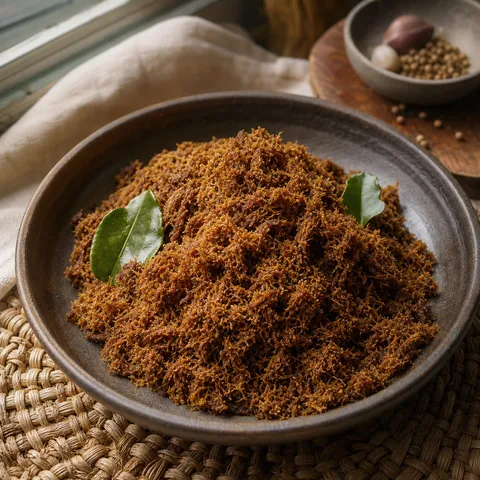 Indonesian & Malaysian Lens Verified Images are for illustrative purposes only, may be inaccurate, and do not guarantee the presence or absence of specific ingredients.
 Beef Serunding
Dry-fried spiced beef floss toasted with coconut and lemongrass until golden and fragrant — a rich, crumbly condiment that transforms plain rice.
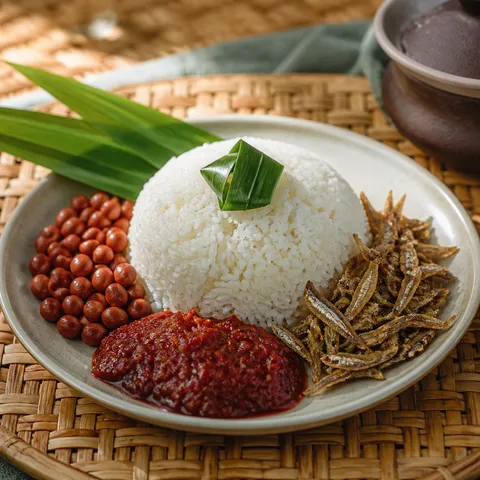 Indonesian & Malaysian Lens Verified Images are for illustrative purposes only, may be inaccurate, and do not guarantee the presence or absence of specific ingredients.
 Nasi Lemak
Malaysia's national comfort dish — fragrant coconut rice paired with sambal, crispy anchovies, roasted peanuts, and a soft-boiled egg.