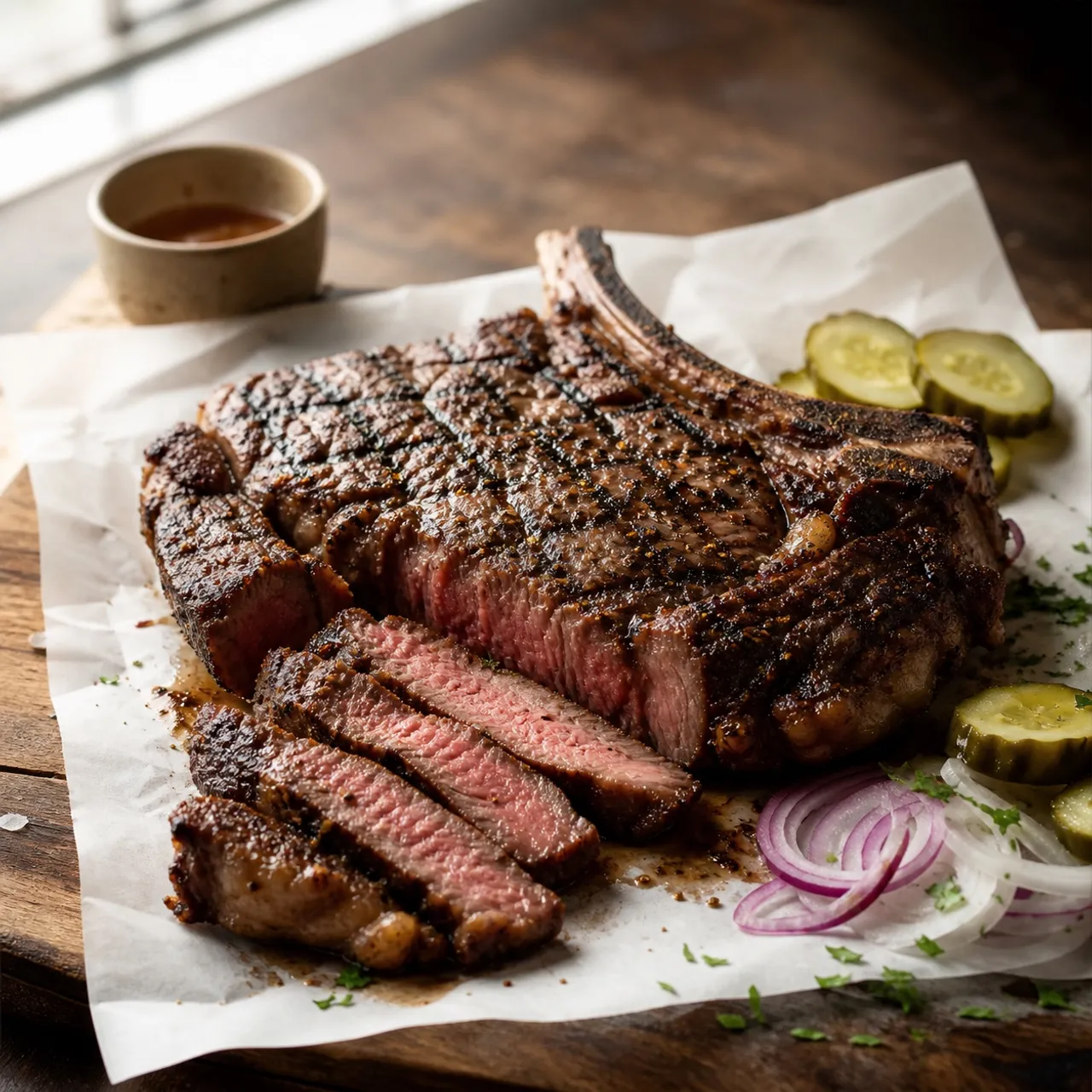
 Bbq Images are for illustrative purposes only, may be inaccurate, and do not guarantee the presence or absence of specific ingredients.
 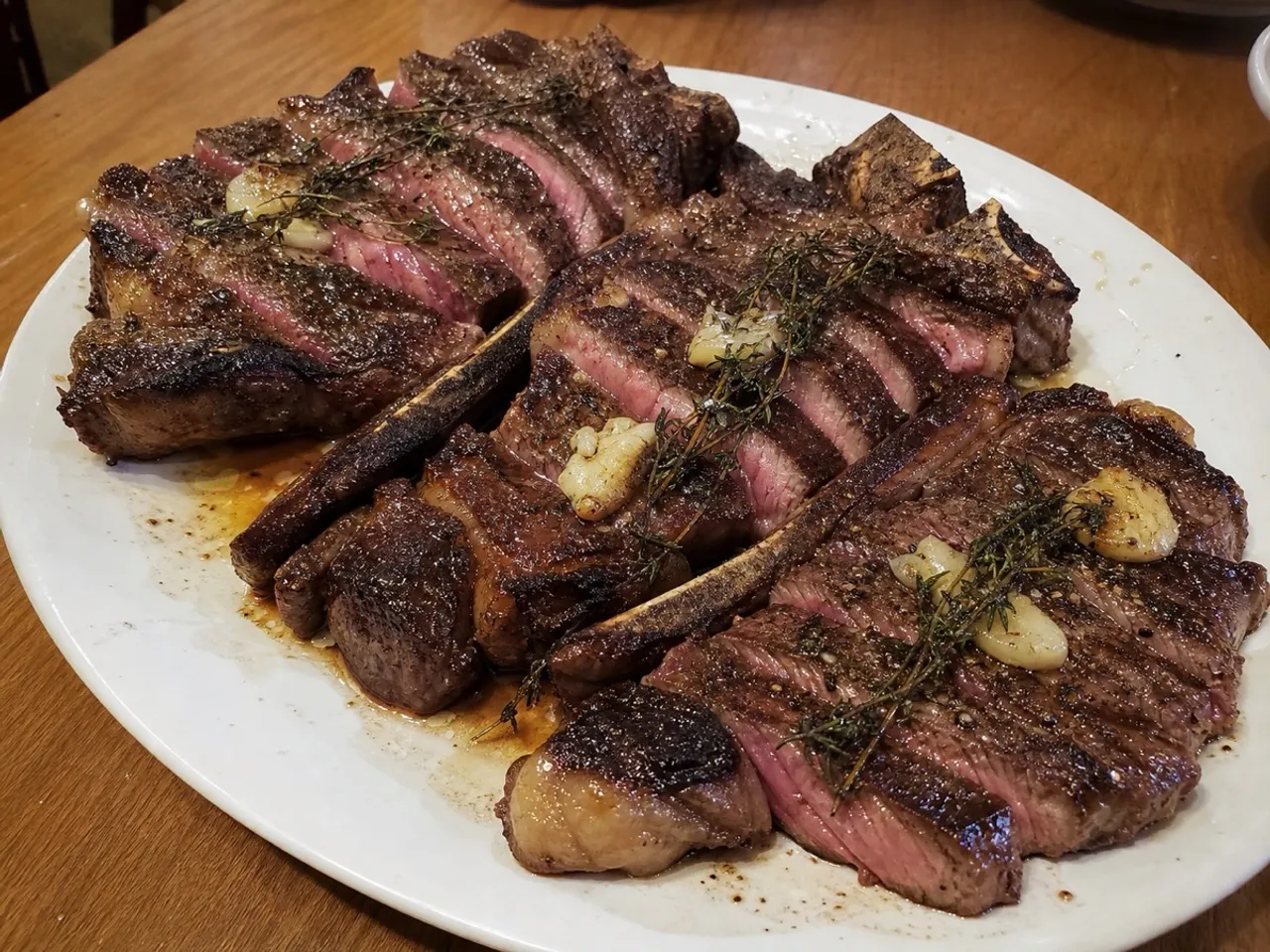 Serving Images are for illustrative purposes only, may be inaccurate, and do not guarantee the presence or absence of specific ingredients.
 Grilled Ribeye Steaks
Thick-cut ribeye steaks seared hot and fast over live fire for a charred crust and juicy, buttery center.
Contains common allergens
In the app, Listahan checks these against your household automatically.
Good to know
- Ready in under 30 minutes
Matched from this dish's own ingredients and timing. Browse more: 30-minute meals
Instructions
8 steps- 1
Remove steaks from the refrigerator 30 minutes before grilling to come to room temperature.
- 2
Pat steaks dry and rub with olive oil, kosher salt, and black pepper.
- 3
Preheat grill to high heat, about 500°F, with one zone for direct heat.
- 4
Sear steaks directly over the flame for 4-5 minutes per side for medium-rare.
- 5
Move steaks to a cooler part of the grill, top each with butter, garlic, and thyme, and close the lid for 2-3 minutes.
- 6
Check internal temperature reaches 130-135°F for medium-rare.
- 7
Rest steaks on a cutting board for 5-8 minutes before serving.
- 8
Slice against the grain if desired and serve with pan juices spooned over.
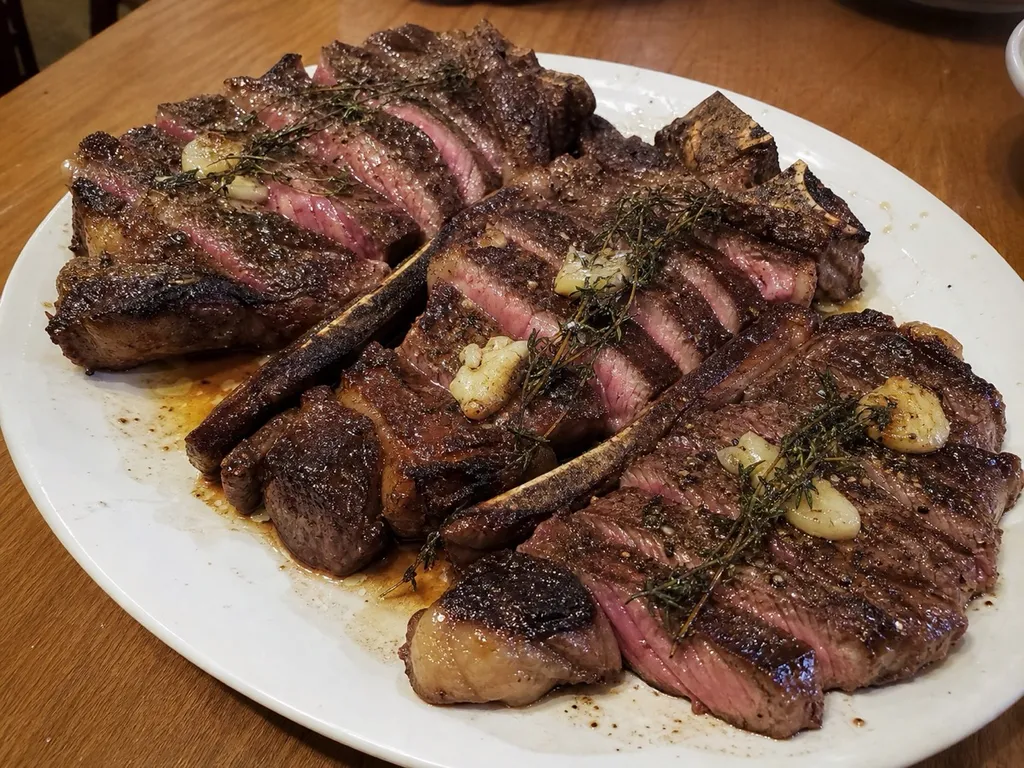 Images are for illustrative purposes only, may be inaccurate, and do not guarantee the presence or absence of specific ingredients.
 Listahan Family Score™
70/100
Good fit for most families
Score reflects how well this recipe fits a typical busy household. In the app, your Family Score is personalized to your household's allergens, kids, and pantry.
Nutrition
per serving140
Calories
0 g
Protein
1 g
Carbs
15 g
Fat
Estimated per serving. Actual values depend on the brands and portions you use.
Listahan cooking guide
Chef notes & practical guide
Technique notes, ingredient swaps, serve-alongside ideas, storage guidance, and equipment for this recipe.
Cultural context
Ribeye is a classic North American steakhouse and backyard-grill cut because it comes from the rib section, where generous marbling gives the meat a buttery texture when cooked over high heat. In barbecue culture, this kind of steak sits on the grilling side rather than the low-and-slow smoking side: quick sear, strong fire, short rest, and very little sauce.
Listahan note
This version keeps the seasoning simple so the grill, the ribeye fat, and the garlic-thyme butter do the work. The method prioritizes a hard sear first, then a brief covered finish so the butter melts into the crust without overcooking the center.
Technique cues
- Patting the steaks dry matters more than adding extra oil. Surface moisture delays browning, while a dry steak can pick up char quickly over direct heat.
- A bone-in ribeye cooks a little unevenly by design: the meat near the bone may stay slightly less done than the outer edge. Resting helps the heat settle before slicing.
- Butter goes on after the sear, not before. If it hits the hottest part of the grill too early, it can scorch before the steak has finished cooking.
Kitchen flow
- Parallel prep
- Heat the grill while the steaks sit out, then prep the garlic, thyme, butter, board, and serving platter before the meat goes on.
- Make-ahead
- Season the steaks up to a few hours ahead and keep them chilled, then bring them out 30 minutes before grilling.
- Leftover move
- Slice cold steak thinly for a steak sandwich, breakfast hash, or a quick salad with horseradish dressing.
- Cleanup rhythm
- Scrape the grates while they are still hot, then handle the cutting board and tongs after the steaks are resting.
Ingredient brief
Role, handling, and swap guidance for each key ingredient.
Bone-in ribeye steaks
Main cut
Purpose: Ribeye has enough marbling to stay juicy during a hot, fast grill, and the bone adds a steakhouse-style presentation.
Handling: Let the steaks sit out briefly, then pat them very dry before oiling and seasoning.
Adaptation: Boneless ribeye cooks a little faster and slices more cleanly, but it will not have the same bone-side texture.
Olive oil
Surface browning aid
Purpose: A light coating helps the salt and pepper adhere and encourages even contact with the grill grates.
Handling: Rub on just enough to shine the surface; excess oil can drip and flare over live fire.
Adaptation: Avocado oil or another neutral high-heat oil gives a cleaner flavor if you want the beef to stand alone.
Coarse black pepper
Crust seasoning
Purpose: Coarse pepper gives the crust small pops of heat without disappearing into the meat.
Handling: Press it gently into the oiled surface so it stays put when the steak hits the grill.
Adaptation: Freshly cracked pepper works well; finely ground pepper tastes sharper and can darken faster over high heat.
Garlic, smashed
Butter aroma
Purpose: Smashed cloves perfume the melted butter without scattering tiny bits that burn on the grill.
Handling: Crush the cloves firmly and place them on top of the steaks only during the covered finish.
Adaptation: A pinch of garlic powder can season the surface, but it gives a flatter flavor than fresh smashed cloves.
Fresh thyme
Herbal finish
Purpose: Thyme cuts through the richness of ribeye and makes the butter taste more intentional.
Handling: Keep the sprigs whole so they are easy to remove after resting.
Adaptation: Rosemary gives a stronger piney note; use less so it does not dominate the steak.
Unsalted butter
Finishing fat
Purpose: Butter melts into the hot crust and carries the garlic and thyme into the resting juices.
Handling: Divide it across the steaks after searing, then close the lid just long enough to soften and baste the surface.
Adaptation: Use a drizzle of olive oil after grilling for a lighter finish with less richness.
Technique notes
- Set up a cooler grill zone before you start. Ribeye fat can cause flare-ups, and having a lower-heat spot lets you move the steak without losing control.
- Flip once for a strong grill-marked crust, or flip more often for a more even edge-to-center cook. Both work, but do not keep lifting the steak without a reason.
- Rest on a board with a juice groove if you have one. Spoon the buttery juices back over sliced steak instead of leaving them behind.
Ingredient swaps
- No-butter finish
- Finish with olive oil and the same garlic and thyme for a cleaner, less rich steak juice.
- Boneless path
- Use boneless ribeyes of similar thickness and start checking doneness a few minutes earlier because there is no bone slowing the center.
- Cast-iron backup
- Sear in a very hot cast-iron skillet, then lower the heat briefly and add butter, garlic, and thyme for the same finishing idea indoors.
- Pepper adjustment
- Use less coarse pepper if serving with a peppery side or sauce, since ribeye already has a bold crust from the grill.
Serve alongside
- Loaded baked potatoes
- Grilled asparagus with lemon
- Wedge salad with blue cheese dressing
- Charred corn with chili-lime butter
- Cabernet Sauvignon
- Cold amber ale
- Unsweetened iced tea
Serving suggestions only — check pairings for your household's allergens.
Storage & reheating
- Refrigerate leftover steak with its juices in a sealed container for up to 3 days.
- Reheat gently in a covered skillet over low heat with a spoonful of juices or water, or serve thin slices cold.
- Freeze sliced steak in a tightly sealed container for up to 2 months; thaw overnight and warm briefly so it does not toughen.
Equipment
- High-heat grill
- Long-handled tongs
- Instant-read thermometer
- Cutting board with juice groove
Make this household-aware
Listahan Pro checks this recipe against your household's allergens, finds pantry-aware swaps, builds the shopping list, and helps you plan the week around it.
Plan it in Listahan
Add Grilled Ribeye Steaks to your week, check it against your household's allergens, and build the shopping list automatically.
More Bbq recipes
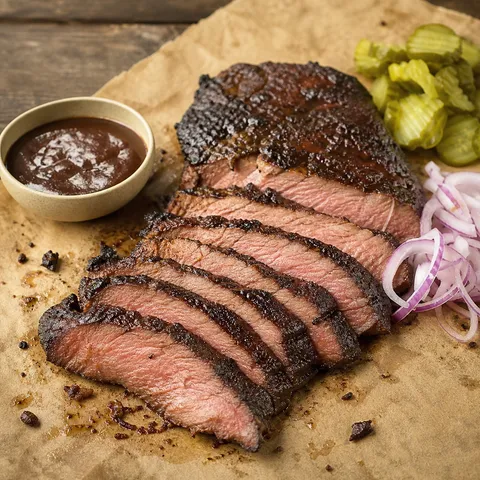 Bbq Lens Verified Images are for illustrative purposes only, may be inaccurate, and do not guarantee the presence or absence of specific ingredients.
 Santa Maria Tri-Tip
California-style Santa Maria tri-tip roast seasoned simply with garlic, pepper, and salt, then grilled over red oak for a smoky crust.
 Bbq Lens Verified Images are for illustrative purposes only, may be inaccurate, and do not guarantee the presence or absence of specific ingredients.
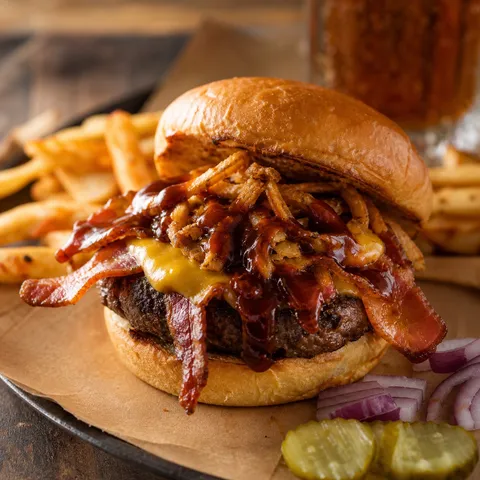
 BBQ Bacon Cheeseburgers
Thick beef patties grilled over an open flame, topped with crispy bacon, melted cheddar, and smoky BBQ sauce on a toasted bun.
 Bbq Lens Verified Images are for illustrative purposes only, may be inaccurate, and do not guarantee the presence or absence of specific ingredients.
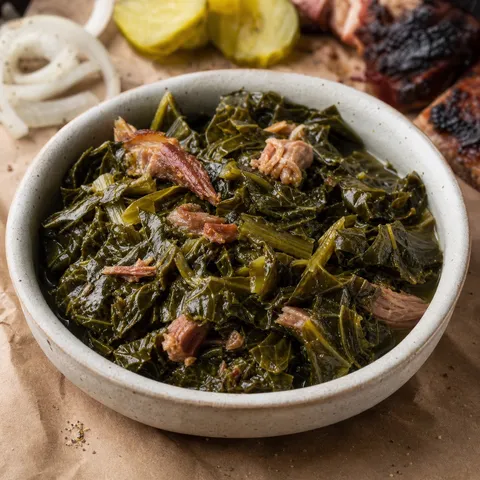
 Southern Collard Greens
Slow-simmered collard greens with smoked ham hock, cider vinegar, and a touch of heat, a soulful Southern BBQ side.