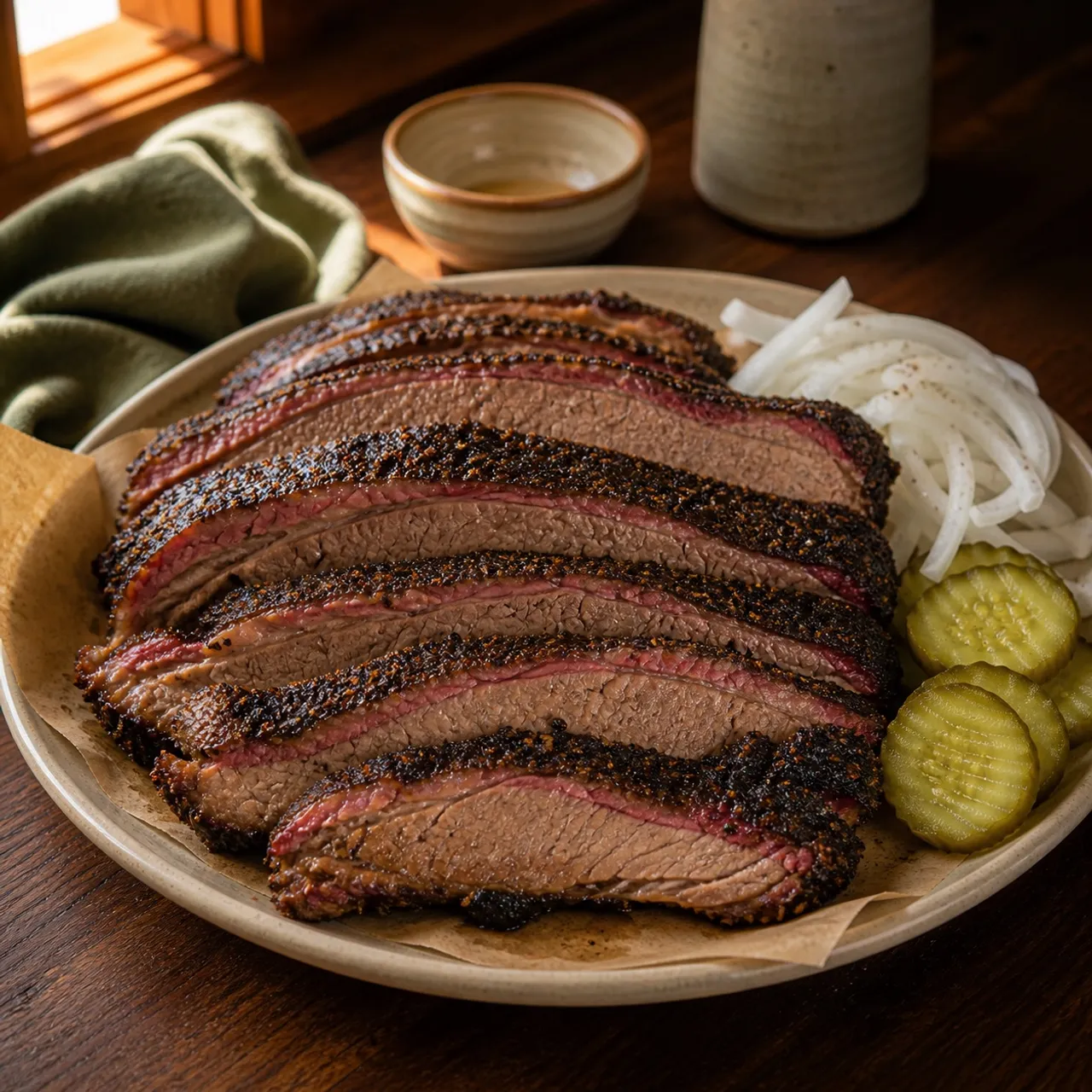
 Bbq Images are for illustrative purposes only, may be inaccurate, and do not guarantee the presence or absence of specific ingredients.
 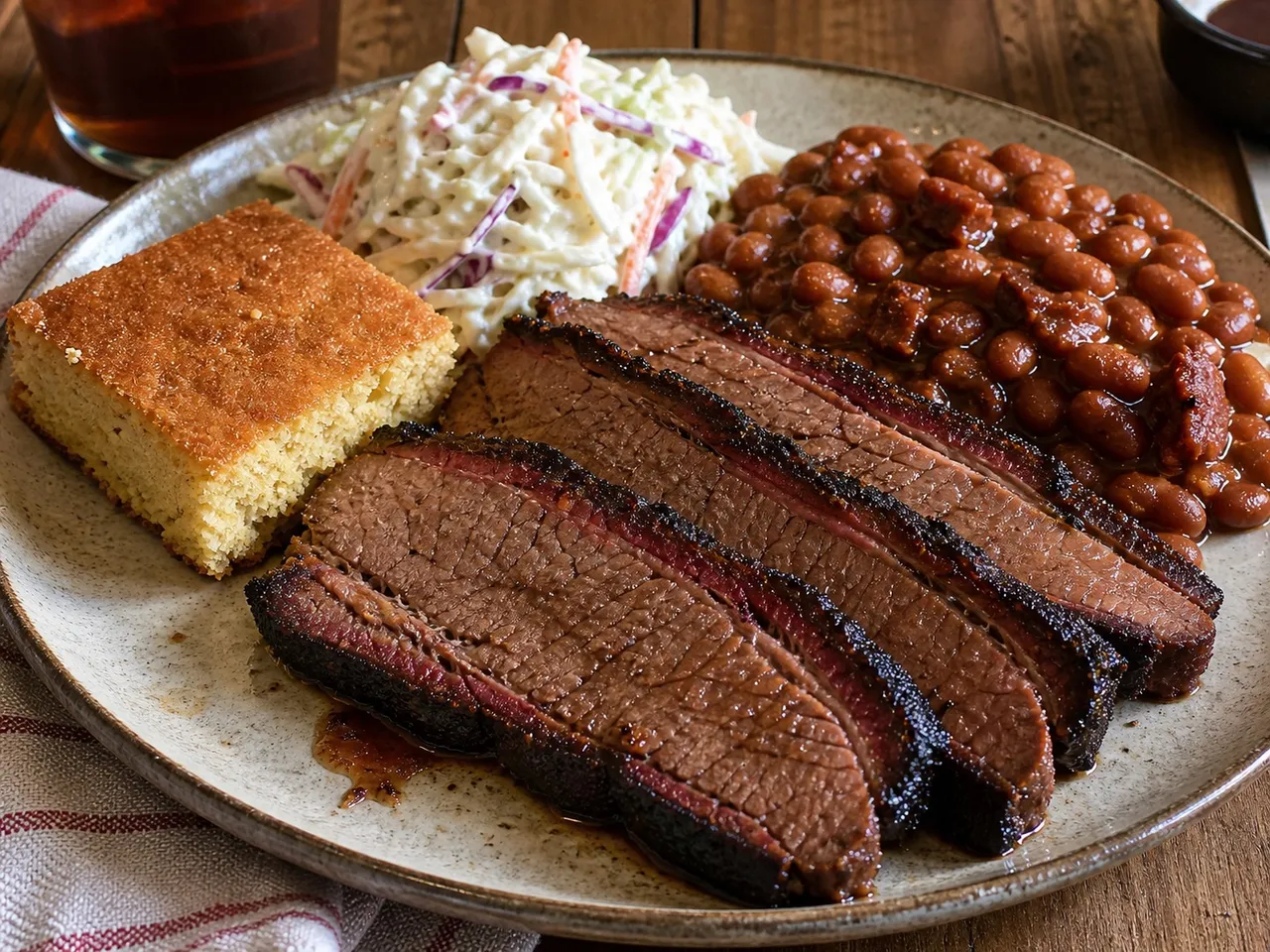 Serving Images are for illustrative purposes only, may be inaccurate, and do not guarantee the presence or absence of specific ingredients.
 Texas Smoked Brisket
Salt-and-pepper crusted beef brisket smoked low and slow over post oak until it forms a dark bark and a tender, juicy interior — the centerpiece of Texas barbecue.
Contains common allergens
In the app, Listahan checks these against your household automatically.
Instructions
6 steps- 1
Trim the brisket to an even 1/4-inch fat cap and pat it completely dry.
- 2
Slather the brisket all over with yellow mustard, then coat evenly with the salt and pepper to form the classic Texas "dalmatian" rub.
- 3
Set up the smoker for indirect heat at 250 degrees Fahrenheit with post oak or hickory. Smoke the brisket fat-side up until a dark bark forms and the internal temperature stalls around 165 degrees, about 6 hours.
- 4
Wrap the brisket tightly in butcher paper or foil and return it to the smoker. Continue cooking until the thickest part of the flat probes tender at about 203 degrees, roughly 4 to 5 more hours.
- 5
Rest the wrapped brisket in an insulated cooler for at least 1 hour before unwrapping.
- 6
Slice the flat against the grain into pencil-thick slices; cube the point separately if making burnt ends.
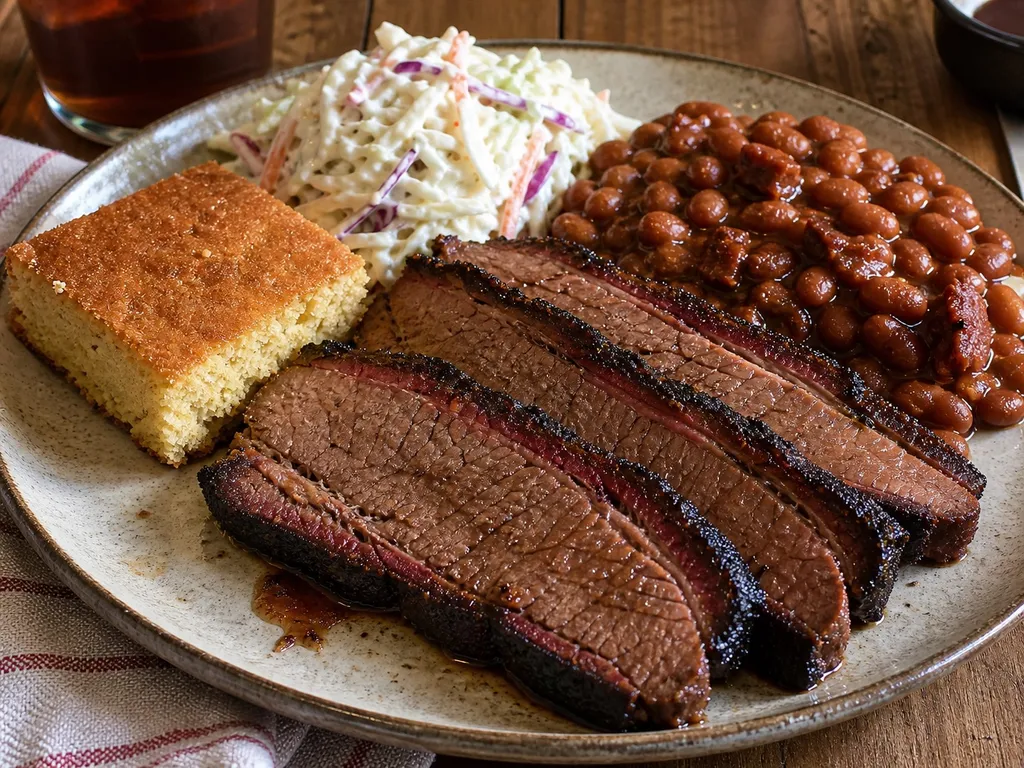 Images are for illustrative purposes only, may be inaccurate, and do not guarantee the presence or absence of specific ingredients.
 Listahan Family Score™
69/100
Works for many families
Score reflects how well this recipe fits a typical busy household. In the app, your Family Score is personalized to your household's allergens, kids, and pantry.
Nutrition
per serving5
Calories
0 g
Protein
1 g
Carbs
0 g
Fat
Estimated per serving. Actual values depend on the brands and portions you use.
Listahan cooking guide
Chef notes & practical guide
Technique notes, ingredient swaps, serve-alongside ideas, storage guidance, and equipment for this recipe.
Cultural context
Texas brisket traces its roots to the German and Czech butcher shops of Central Texas, where immigrant meat market owners sold slow-smoked beef cuts that were too tough to sell raw. The style became codified in towns like Lockhart and Taylor, where post-oak smoke and a simple salt-and-pepper crust became law. Unlike the sauced traditions of Kansas City or the Carolinas, Central Texas brisket lets the meat and smoke speak entirely for themselves.
Listahan note
This version focuses on the packer brisket trimmed to a quarter-inch fat cap, seasoned with just kosher salt and coarse black pepper, and smoked low and slow until the bark sets and the flat probes tender without resistance.
Technique cues
- Trim the fat cap to roughly a quarter inch rather than removing it entirely — too little fat and the flat dries out before the point renders down.
- Hold the brisket in a cooler wrapped in butcher paper for at least one hour after pulling from the smoker; this carryover rest allows the muscle fibers to reabsorb juices that would otherwise run out on the cutting board.
- Slice against the grain of the flat, and rotate the point to find its own grain direction before carving — the two muscles run at different angles and carving parallel to the grain turns tender brisket into chewy strips.
Kitchen flow
- Parallel prep
- Season the brisket the evening before and refrigerate uncovered so the surface dries out slightly — this helps bark form faster once it hits the smoker.
- Make-ahead
- Smoked brisket holds exceptionally well; slice only what you need and refrigerate the rest whole in butcher paper for up to four days, reheating slices in a covered pan with a splash of beef broth.
- Leftover move
- Chop leftover point meat coarsely and toss with a little sauce for brisket tacos, or cube it and fold into a hash with potatoes and onions for a hearty breakfast.
- Cleanup rhythm
- Line the water pan with foil before the cook and let the smoker cool completely before scraping the grates; drip trays with foil liners make fat disposal effortless.
Ingredient brief
Role, handling, and swap guidance for each key ingredient.
whole packer brisket
primary protein
Purpose: The full packer cut includes both the lean flat and the fatty point, which balance each other during the long cook — the point self-bastes the flat as fat renders.
Handling: Trim the hard white fat between the flat and point to about a quarter inch and square off any thin edges that would burn before the thick center is done.
Adaptation: A flat-only brisket works but dries out more easily; wrap it in butcher paper earlier in the cook and reduce target temperature by about 10 degrees.
kosher salt
cure and bark builder
Purpose: Salt draws moisture to the surface and then pulls it back in, carrying seasoning deep into the meat and forming the dense, mahogany bark that defines Texas brisket.
Handling: Apply at least one hour before smoking and ideally the night before to allow the salt to penetrate fully.
Adaptation: Sea salt works at the same volume; avoid table salt, which is finer and can over-season the crust.
coarse black pepper
bark seasoning
Purpose: Coarse-ground pepper creates the peppery, crackling outer bark that is the signature of Central Texas-style smoked brisket.
Handling: Use a 16-mesh grind — coarser than a standard pepper grinder setting — and apply in a roughly equal ratio to the salt by volume.
Adaptation: A coarse mixed peppercorn blend adds depth without straying far from tradition.
post oak wood chunks
smoke source
Purpose: Post oak burns clean and long, producing a mild, slightly sweet smoke that complements beef without overpowering it the way hickory or mesquite can.
Handling: Use fist-sized chunks rather than chips; chunks smolder slowly and produce thin blue smoke instead of the heavy white smoke that turns meat acrid.
Adaptation: White oak or pecan is the closest substitute; hickory works but use it sparingly as it is significantly more assertive.
Technique notes
- The stall — when the internal temperature plateaus around 150 to 165 degrees Fahrenheit for several hours — is caused by evaporative cooling, not a problem with the cook; resist the urge to raise the heat and instead wrap in butcher paper to push through it.
- Judge doneness by feel, not temperature alone: probe the thickest part of the flat with a thermometer and look for the resistance of warm butter — the probe should glide in with almost no push-back, which typically happens between 195 and 205 degrees.
- The money muscle of a brisket is the deckle end of the point, where the fat has fully rendered into rich pockets of gelatin; slice this section into cubes and return them to the smoker with a light sauce coat for burnt ends.
Ingredient swaps
- Weeknight shortcut
- A chuck roast smoked to 205 degrees using the same rub and wood delivers much of the same bark-and-smoke satisfaction in roughly half the time.
- Lower-sodium direction
- Reduce salt by one-third and compensate with a light spritz of beef broth and apple cider vinegar during the stall to keep moisture on the surface.
- Oven alternative
- Rub and sear the brisket in a cast-iron skillet, then roast fat-side up at 275 degrees covered in foil for 6 to 8 hours; add a few drops of liquid smoke to the braising liquid for a hint of campfire flavor.
Serve alongside
- Jalapeno cheddar cornbread
- Dill pickle slices with raw white onion
- Pinto beans with smoked ham hock
- Shiner Bock or any amber lager
- Unsweetened iced tea with lemon
Serving suggestions only — check pairings for your household's allergens.
Storage & reheating
- Refrigerate unsliced brisket wrapped tightly in butcher paper or foil for up to 4 days; it holds moisture better as a whole piece than pre-sliced.
- To reheat, place slices in a baking dish with a few tablespoons of beef broth, cover tightly with foil, and warm at 300 degrees for 20 to 25 minutes until heated through without drying out.
- Freeze well-wrapped slices or chopped pieces for up to 3 months; thaw overnight in the refrigerator before reheating.
Equipment
- Offset smoker or kamado grill with indirect heat setup
- Instant-read thermometer with a long probe
- Unlined pink butcher paper for wrapping during the stall
Make this household-aware
Listahan Pro checks this recipe against your household's allergens, finds pantry-aware swaps, builds the shopping list, and helps you plan the week around it.
Plan it in Listahan
Add Texas Smoked Brisket to your week, check it against your household's allergens, and build the shopping list automatically.
More Bbq recipes
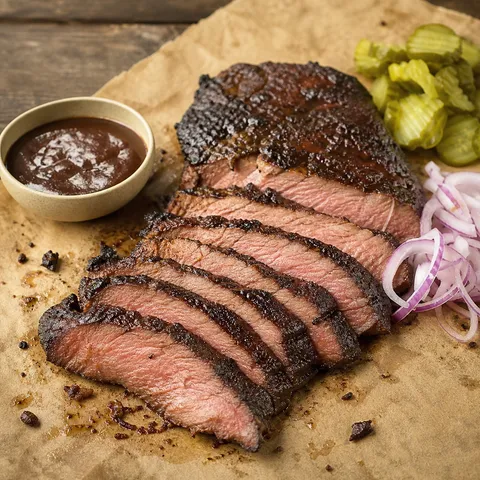 Bbq Lens Verified Images are for illustrative purposes only, may be inaccurate, and do not guarantee the presence or absence of specific ingredients.
 Santa Maria Tri-Tip
California-style Santa Maria tri-tip roast seasoned simply with garlic, pepper, and salt, then grilled over red oak for a smoky crust.
 Bbq Lens Verified Images are for illustrative purposes only, may be inaccurate, and do not guarantee the presence or absence of specific ingredients.
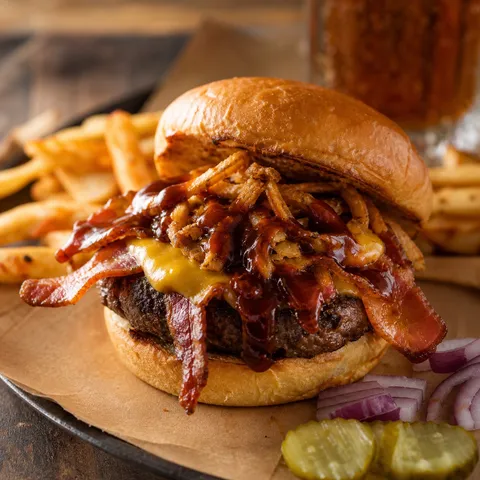
 BBQ Bacon Cheeseburgers
Thick beef patties grilled over an open flame, topped with crispy bacon, melted cheddar, and smoky BBQ sauce on a toasted bun.
 Bbq Lens Verified Images are for illustrative purposes only, may be inaccurate, and do not guarantee the presence or absence of specific ingredients.
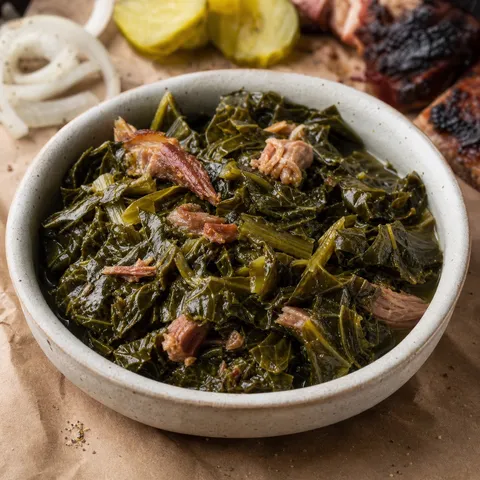
 Southern Collard Greens
Slow-simmered collard greens with smoked ham hock, cider vinegar, and a touch of heat, a soulful Southern BBQ side.