 Brazilian Images are for illustrative purposes only, may be inaccurate, and do not guarantee the presence or absence of specific ingredients.
  Serving Images are for illustrative purposes only, may be inaccurate, and do not guarantee the presence or absence of specific ingredients.
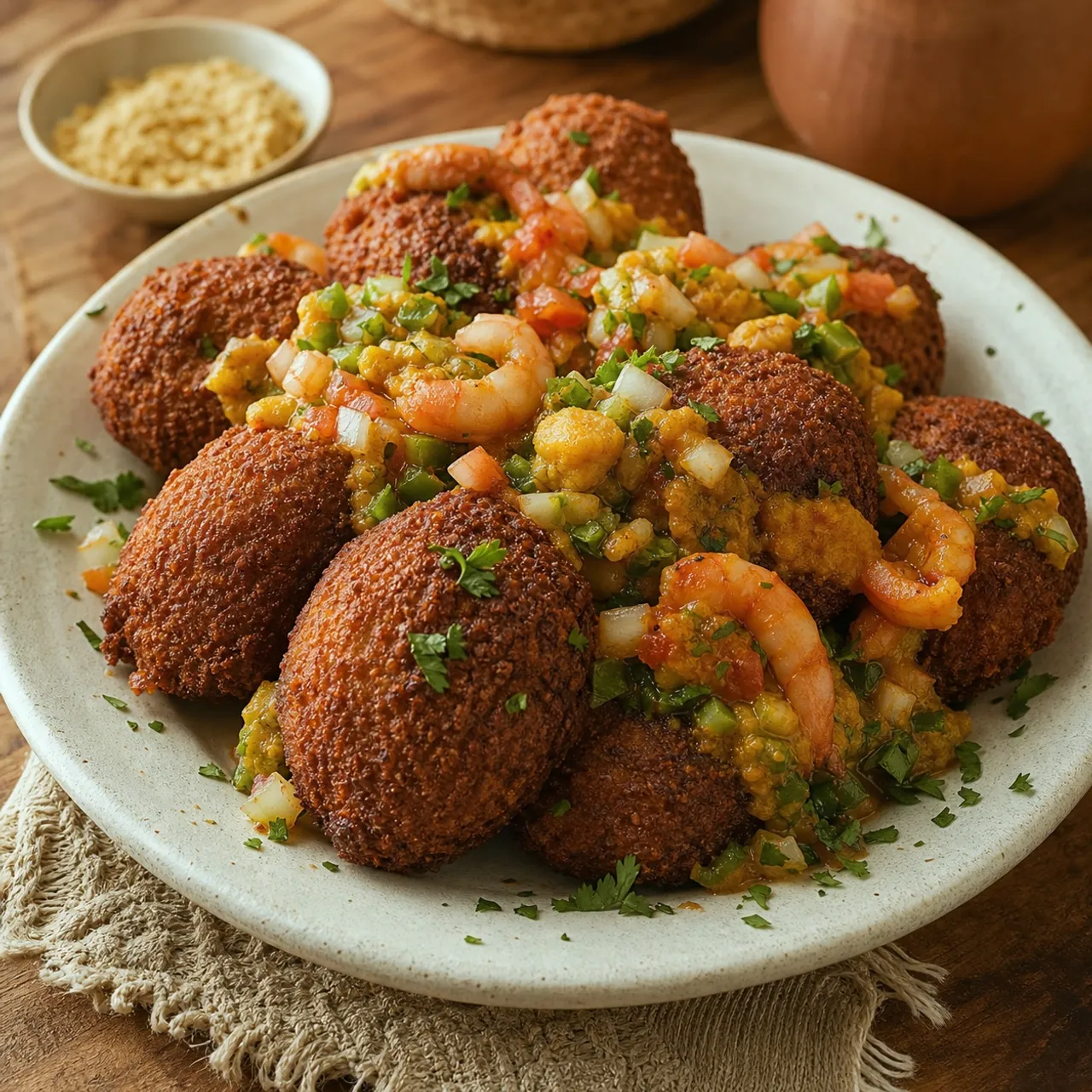
 Acarajé (Bahian Black-Eyed Pea Fritters)
Deep-fried black-eyed pea fritters cooked in dendê palm oil, split open and stuffed with vatapá and dried shrimp — an Afro-Brazilian icon from Bahia.
Contains common allergens
In the app, Listahan checks these against your household automatically.
Good to know
- Crispy
Matched from this dish's own ingredients and timing. Browse more: crispy recipes
Instructions
7 steps- 1
Drain the soaked black-eyed peas and rub between your hands or in a food processor to loosen and remove the skins; rinse to remove floating skins.
- 2
Blend the peeled peas with the onion and salt in a food processor, adding just enough water to form a thick, fluffy batter; whip well to aerate.
- 3
Heat the dendê oil in a deep pot to 350°F.
- 4
Scoop the batter with two spoons into oval fritters and carefully drop into the hot oil.
- 5
Fry for 4-5 minutes, turning once, until deep golden and crisp outside.
- 6
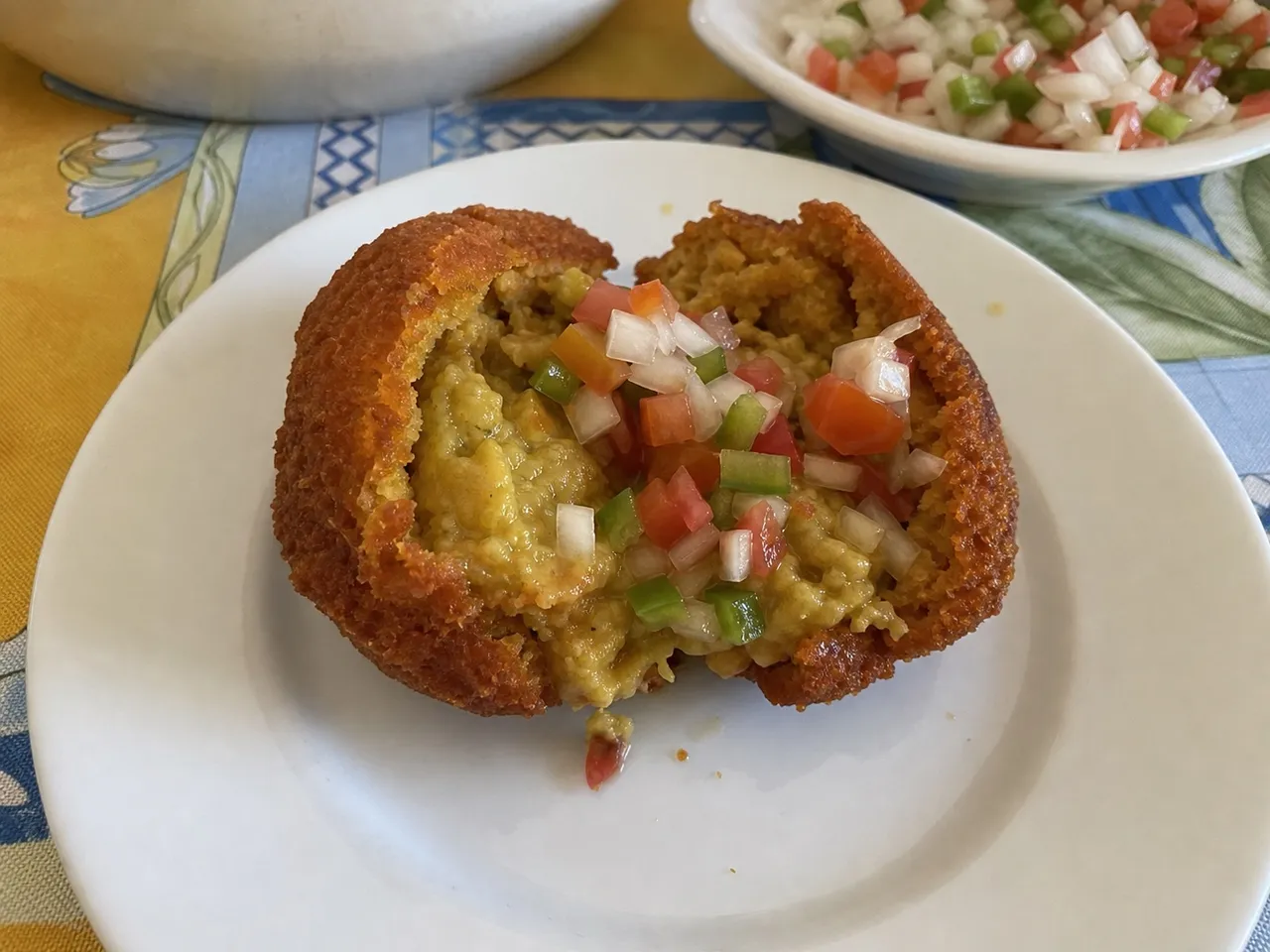
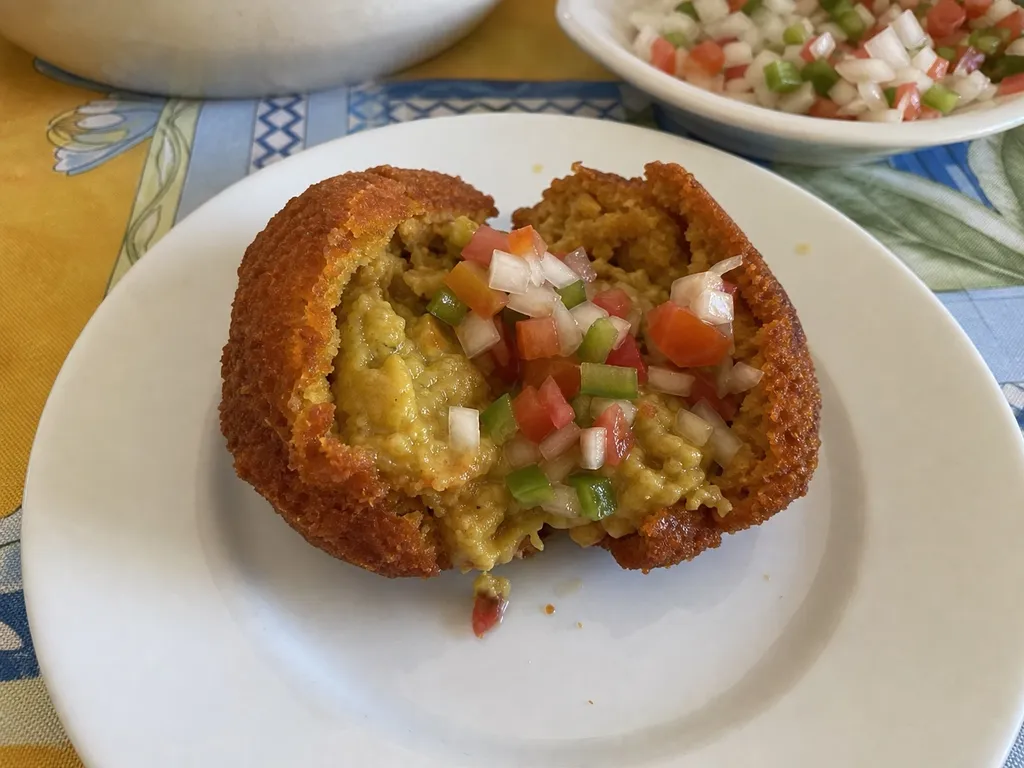
Drain on paper towels, then slice each fritter open without cutting through.
- 7
Stuff with vatapá, ground dried shrimp, and a spoonful of vinagrete, and serve warm.
 Images are for illustrative purposes only, may be inaccurate, and do not guarantee the presence or absence of specific ingredients.
 Listahan Family Score™
61/100
Works for many families
Score reflects how well this recipe fits a typical busy household. In the app, your Family Score is personalized to your household's allergens, kids, and pantry.
Nutrition
per serving150
Calories
8 g
Protein
14 g
Carbs
8 g
Fat
Estimated per serving. Actual values depend on the brands and portions you use.
Listahan cooking guide
Chef notes & practical guide
Technique notes, ingredient swaps, serve-alongside ideas, storage guidance, and equipment for this recipe.
Cultural context
Acaraje traces directly to the Yoruba peoples of West Africa, brought to Bahia through the transatlantic slave trade, and remains sacred food in Candomble religious practice, offered to the orixa Iansa before it is ever sold as street food. It is traditionally prepared and sold by Baianas do acaraje, women in white lace and turbans working from streetside stalls, a role recognized by Brazil as intangible cultural heritage. The deep orange color and distinct aroma come from dende, red palm oil pressed from a palm tree also native to West Africa.
Listahan note
This version follows the traditional method of hand-peeling soaked black-eyed peas before frying in dende oil, then splitting and stuffing with vatapa, dried shrimp, and vinagrete, the same layered street-food build sold in Salvador today.
Technique cues
- Removing the skins from the soaked peas is not optional, the skins trap air bubbles that keep the batter light; skipped skins produce a dense, heavy fritter that doesn't puff properly.
- Whipping the blended batter well incorporates air the same way whipping egg whites does, giving the fritter its characteristic airy interior rather than a dense paste.
- Frying at a steady 350F is what sets the exterior into a crisp shell quickly enough to seal in the aerated batter; too cool an oil makes the fritters absorb grease and collapse.
Kitchen flow
- Parallel prep
- Soak the peas the night before, then prep the vatapa and vinagrete while the peas drain and the oil heats the next day.
- Make-ahead
- Vatapa and vinagrete both hold well made a day ahead and refrigerated, leaving only the peeling, blending, and frying for serving day.
- Leftover move
- Leftover unstuffed fritters recrisp in a 375F oven for 8 minutes; the peeled raw batter does not keep well and should be fried the same day it's made.
- Cleanup rhythm
- Strain and save the dende oil through a fine mesh sieve once cooled, since good dende oil is worth reusing for the next batch or other Bahian dishes.
Ingredient brief
Role, handling, and swap guidance for each key ingredient.
dried black-eyed peas, soaked overnight and skins removed
the entire fritter base
Purpose: peeled black-eyed peas are what give acaraje its light, aerated interior once blended and whipped, unlike a denser bean fritter made with skins on
Handling: rub the soaked peas vigorously between your hands or in a food processor, then rinse away the floating skins in several changes of water
Adaptation: there is no real substitute that preserves the dish's identity; this ingredient defines the recipe
dende (palm) oil
both the frying medium and a defining flavor
Purpose: dende oil's deep orange color and distinctive earthy, slightly smoky flavor is inseparable from acaraje's identity and its Afro-Brazilian roots
Handling: heat it in a deep, heavy pot to a steady 350F before frying
Adaptation: a neutral vegetable oil will fry the fritters fine but produces a noticeably milder, less authentic result missing the dende flavor and color entirely
vatapa (creamy shrimp and bread paste)
the primary stuffing
Purpose: vatapa's rich, peanut-and-coconut-thickened shrimp paste is the traditional filling that turns a plain fritter into the full acaraje experience
Handling: have it prepared and warm before the fritters come out of the fryer so assembly is quick
Adaptation: if vatapa isn't available, a smaller amount of a similarly rich, ground-nut-thickened seafood paste comes closest, though the flavor will differ
dried shrimp, ground
concentrated savory-briny topping
Purpose: dried shrimp brings an intensely savory, slightly funky depth that fresh shrimp cannot replicate and is a hallmark of Bahian cooking
Handling: grind it to a coarse powder so it can be sprinkled evenly over the stuffed filling
Adaptation: finely minced fresh cooked shrimp can stand in but will taste much milder and less distinctly Bahian
Technique notes
- Shape the fritters with two spoons rather than your hands, dropping wet batter directly into hot oil from a spoon protects you from splatter and gives a more even oval shape.
- Turn the fritters only once during frying, excessive flipping deflates the aerated batter before it sets.
- Slice the fried fritter open without cutting all the way through, this creates a pocket that holds the stuffing rather than letting it fall out.
Ingredient swaps
- Shellfish-free direction
- This dish cannot be made shellfish-free without losing its identity, since dried shrimp and vatapa's shrimp base are essential; it is not suitable for a household avoiding shellfish or seafood.
- Milder oil option
- For a less intense flavor, fry in a neutral oil instead of dende, understanding this moves away from the traditional preparation.
- Weeknight shortcut
- Use a store-bought prepared vatapa, as the recipe suggests, to cut significant time off the process.
Serve alongside
- extra vatapa spooned on top
- caruru (okra and shrimp side dish)
- farofa de dende
- chilled guarana Antarctica soda
- a cold local cerveja (beer)
- fresh coconut water
Serving suggestions only — check pairings for your household's allergens.
Storage & reheating
- Refrigerate stuffed fritters in an airtight container for up to 2 days.
- Recrisp in a 375F oven for 7 to 8 minutes rather than microwaving, which turns them soft.
- Freezing is not recommended once stuffed; freeze plain fried fritters only, up to a month, and stuff after reheating.
Equipment
- food processor or strong blender
- deep heavy pot or fryer with a thermometer
- slotted spoon
- two spoons for shaping
Make this household-aware
Listahan Pro checks this recipe against your household's allergens, finds pantry-aware swaps, builds the shopping list, and helps you plan the week around it.
Plan it in Listahan
Add Acarajé (Bahian Black-Eyed Pea Fritters) to your week, check it against your household's allergens, and build the shopping list automatically.
More Brazilian recipes
 Brazilian Lens Verified Images are for illustrative purposes only, may be inaccurate, and do not guarantee the presence or absence of specific ingredients.
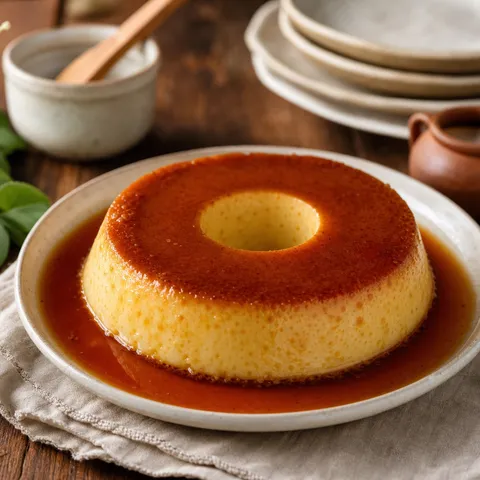
 Pudim de Leite (Brazilian Flan)
A silky caramel-topped milk pudding made with sweetened condensed milk, the most requested dessert at any Brazilian family gathering.
 Brazilian Lens Verified Images are for illustrative purposes only, may be inaccurate, and do not guarantee the presence or absence of specific ingredients.
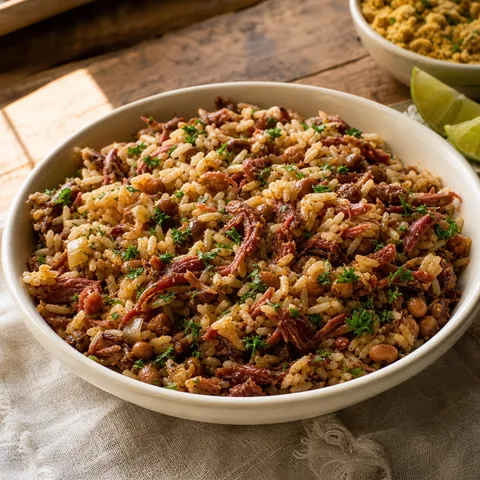
 Arroz Carreteiro (Brazilian Rice with Dried Beef)
A smoky one-pot rice from the gaúcho cattle-drivers of southern Brazil, cooked with shredded dried beef, tomato, and peppers.
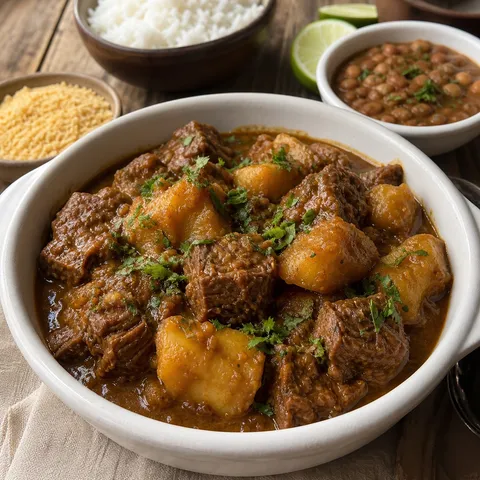 Brazilian Lens Verified Images are for illustrative purposes only, may be inaccurate, and do not guarantee the presence or absence of specific ingredients.
 Vaca Atolada (Beef and Cassava Stew)
"Stuck cow" stew: fall-apart beef short ribs braised with cassava until the pot turns thick and glossy, a Minas Gerais farmhouse classic.