 Breakfast Images are for illustrative purposes only, may be inaccurate, and do not guarantee the presence or absence of specific ingredients.
  Serving Images are for illustrative purposes only, may be inaccurate, and do not guarantee the presence or absence of specific ingredients.
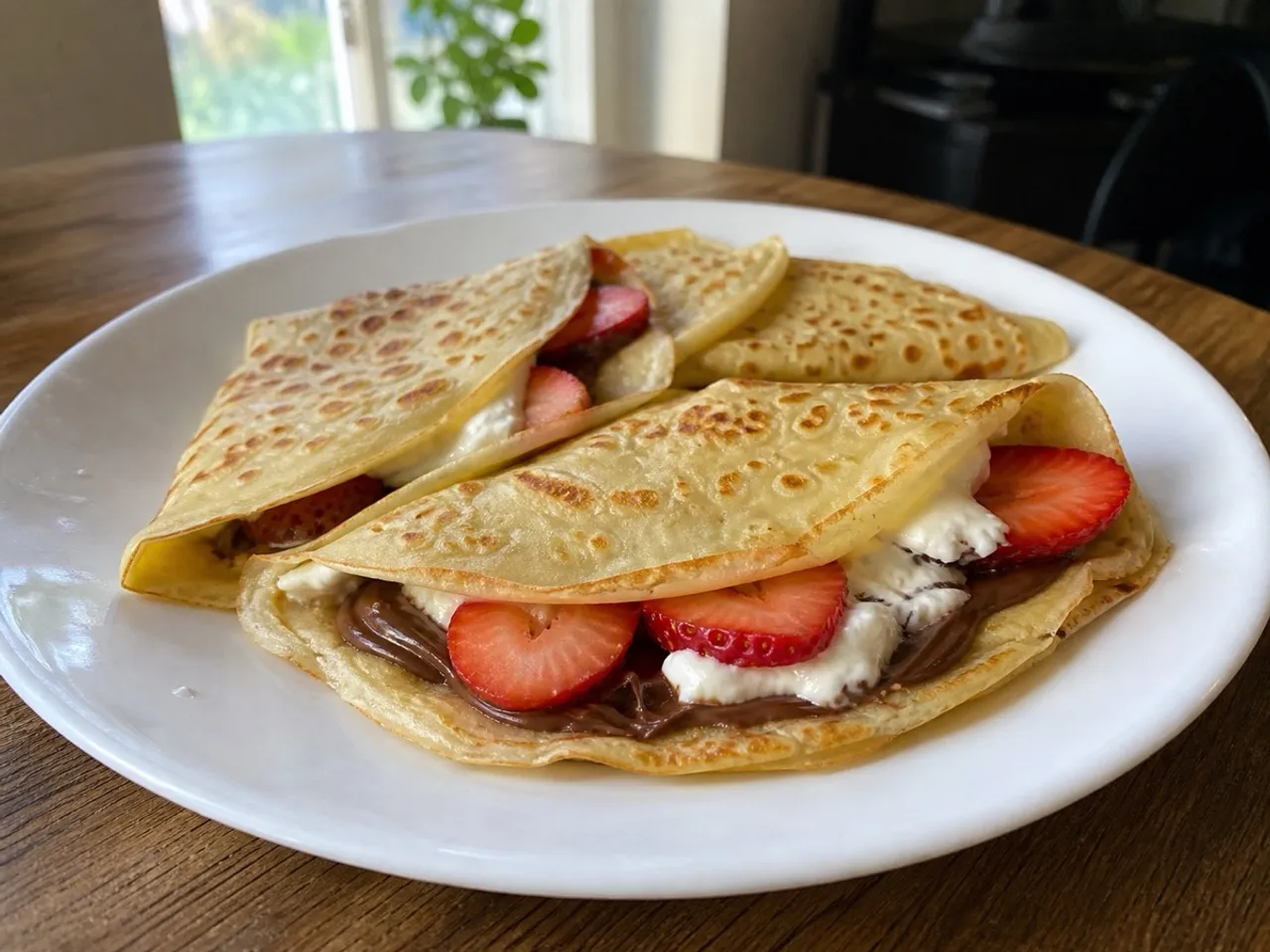
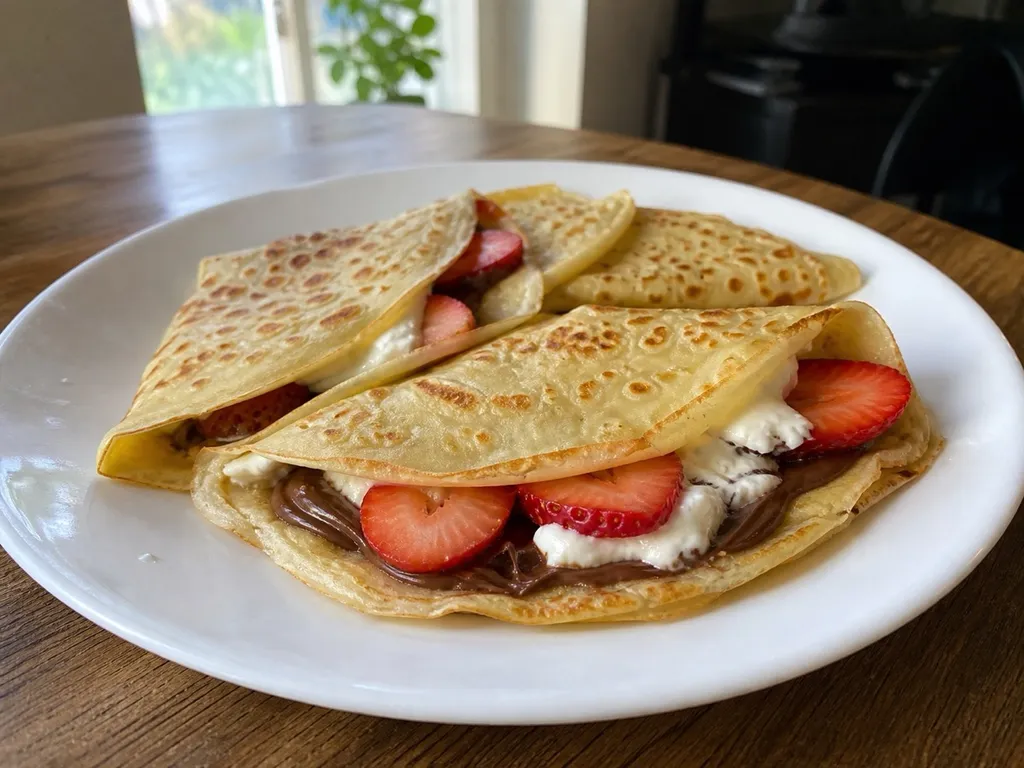
 French Crepes
Thin, delicate French pancakes that can be filled sweet with fruit and Nutella or savory with ham and cheese.
Contains common allergens
In the app, Listahan checks these against your household automatically.
Good to know
- Ready in under 30 minutes
Matched from this dish's own ingredients and timing. Browse more: 30-minute meals
Instructions
6 steps- 1
Whisk flour, eggs, milk, melted butter, sugar, salt, and vanilla together until smooth. Let batter rest 15 minutes.
- 2
Heat a lightly buttered nonstick crepe pan or skillet over medium heat.
- 3
Pour a thin layer of batter into the pan, swirling to coat the bottom evenly.
- 4
Cook about 1-2 minutes until edges lift, then flip and cook 30 seconds more.
- 5
Stack finished crepes on a plate and repeat with remaining batter.
- 6
Fill and fold or roll crepes with desired fillings and serve warm.
 Images are for illustrative purposes only, may be inaccurate, and do not guarantee the presence or absence of specific ingredients.
 Listahan Family Score™
77/100
Good fit for most families
Score reflects how well this recipe fits a typical busy household. In the app, your Family Score is personalized to your household's allergens, kids, and pantry.
Nutrition
per serving260
Calories
9 g
Protein
31 g
Carbs
11 g
Fat
Estimated per serving. Actual values depend on the brands and portions you use.
Listahan cooking guide
Chef notes & practical guide
Technique notes, ingredient swaps, serve-alongside ideas, storage guidance, and equipment for this recipe.
Cultural context
Crepes are one of France's everyday griddle traditions, with strong roots in Brittany, where thin pancakes are cooked quickly and filled at the table. Sweet crepes like this version are common for breakfast, dessert, or an afternoon snack, while savory versions usually lean less sweet and are filled more simply.
Listahan note
This version keeps the batter familiar and lightly sweet, then relies on a short rest and a thin pour to get tender crepes instead of thick pancakes. It is built for flexible filling, so the same stack can go fruit-forward, creamy, or chocolatey.
Technique cues
- Resting the batter gives the flour time to hydrate, which helps the crepes cook up softer and less likely to tear.
- The first crepe often tells you what to fix: if it is thick, add a splash of milk; if it sticks, add a little more butter to the pan.
- Stack crepes as they finish so their steam keeps them pliable for folding or rolling.
Kitchen flow
- Parallel prep
- Slice fruit, set out fillings, and warm plates while the batter rests.
- Make-ahead
- Mix the batter a few hours ahead and refrigerate it; whisk again and loosen with a splash of milk before cooking.
- Leftover move
- Fold leftover crepes around jam or fruit, then warm briefly in a buttered skillet for a quick snack.
- Cleanup rhythm
- Wipe the pan with a buttered paper towel between crepes, then soak the mixing bowl once the last crepe is stacked.
Ingredient brief
Role, handling, and swap guidance for each key ingredient.
All-purpose flour
Structure base
Purpose: It gives the batter enough body to hold together while still staying thin.
Handling: Whisk until no dry pockets remain, then let the batter rest before cooking.
Adaptation: Cake flour makes a more delicate crepe, while bread flour can make the texture chewier.
Large eggs
Binder and richness
Purpose: Eggs help the crepes set quickly and give them enough flexibility to flip.
Handling: Whisk them fully into the milk and flour so the batter pours evenly.
Adaptation: An extra egg makes the crepes sturdier for heavier fillings.
Whole milk
Batter liquid
Purpose: Whole milk thins the batter while adding enough richness for soft, lightly browned crepes.
Handling: Add a splash more after resting if the batter no longer flows easily across the pan.
Adaptation: Low-fat milk works, though the crepes may taste a little less rich.
Unsalted butter, melted, plus more for the pan
Tenderness and pan release
Purpose: Butter softens the crepes and helps the edges brown lightly instead of drying out.
Handling: Let melted butter cool slightly before whisking it in so it does not scramble the eggs.
Adaptation: A neutral oil can be used in the pan, but butter gives better flavor.
Sugar
Light sweetness
Purpose: A small amount rounds out the batter and helps sweet fillings taste more balanced.
Handling: Whisk it in with the flour so it disperses evenly.
Adaptation: Reduce it for savory fillings, especially if using ham and cheese.
Fresh fruit, whipped cream, or chocolate-hazelnut spread, for filling
Finishing filling
Purpose: These fillings add contrast to the soft crepe without needing a separate sauce.
Handling: Slice fruit before cooking so the warm crepes can be filled right away.
Adaptation: Jam, lemon and sugar, or lightly sweetened ricotta can fill the same role.
Technique notes
- Use medium heat, not high heat. Crepes need time to spread before the bottom sets.
- Pour less batter than feels natural, then swirl immediately so the pan bottom is barely coated.
- Flip when the edges look dry and lift easily; forcing the turn too early is what usually causes tearing.
Ingredient swaps
- Savory path
- Reduce the sugar and skip the vanilla when filling with ham and cheese.
- No crepe pan
- Use an 8- to 10-inch nonstick skillet and keep the batter layer thin so the crepes stay flexible.
- Less-sweet finish
- Use fresh fruit with a squeeze of lemon instead of chocolate-hazelnut spread or whipped cream.
- Richer dessert style
- Brown the butter before adding it to the batter for a nuttier flavor that works well with fruit fillings.
Serve alongside
- Strawberry citrus salad
- Soft scrambled eggs with chives
- Roasted breakfast potatoes
- Vanilla yogurt with berries
- Cafe au lait
- Fresh orange juice
- Black tea with lemon
Serving suggestions only — check pairings for your household's allergens.
Storage & reheating
- Refrigerate stacked crepes in a sealed container with parchment between layers for up to 3 days.
- Reheat in a dry skillet over low heat or microwave briefly under a damp paper towel until pliable.
- Freeze stacked crepes with parchment between layers, then thaw in the refrigerator before reheating.
Equipment
- Nonstick crepe pan or 8- to 10-inch skillet
- Whisk
- Ladle or measuring cup
- Thin flexible spatula
Make this household-aware
Listahan Pro checks this recipe against your household's allergens, finds pantry-aware swaps, builds the shopping list, and helps you plan the week around it.
Plan it in Listahan
Add French Crepes to your week, check it against your household's allergens, and build the shopping list automatically.
More Breakfast recipes
 Breakfast Lens Verified Images are for illustrative purposes only, may be inaccurate, and do not guarantee the presence or absence of specific ingredients.
 Matzo Brei
A beloved Passover-week breakfast: matzo soaked in egg, fried until golden, and served sweet with cinnamon-sugar or savory with salt.
 Breakfast Lens Verified Images are for illustrative purposes only, may be inaccurate, and do not guarantee the presence or absence of specific ingredients.
 Avocado Toast with Poached Egg
Crusty toasted sourdough piled with bright, lemony smashed avocado and topped with a soft poached egg that spills its golden yolk on first cut.
 Breakfast Lens Verified Images are for illustrative purposes only, may be inaccurate, and do not guarantee the presence or absence of specific ingredients.
 Savory Steel-Cut Oatmeal
Hearty steel-cut oats simmered in savory broth and topped with a soft egg, sauteed greens, and toasted seeds.