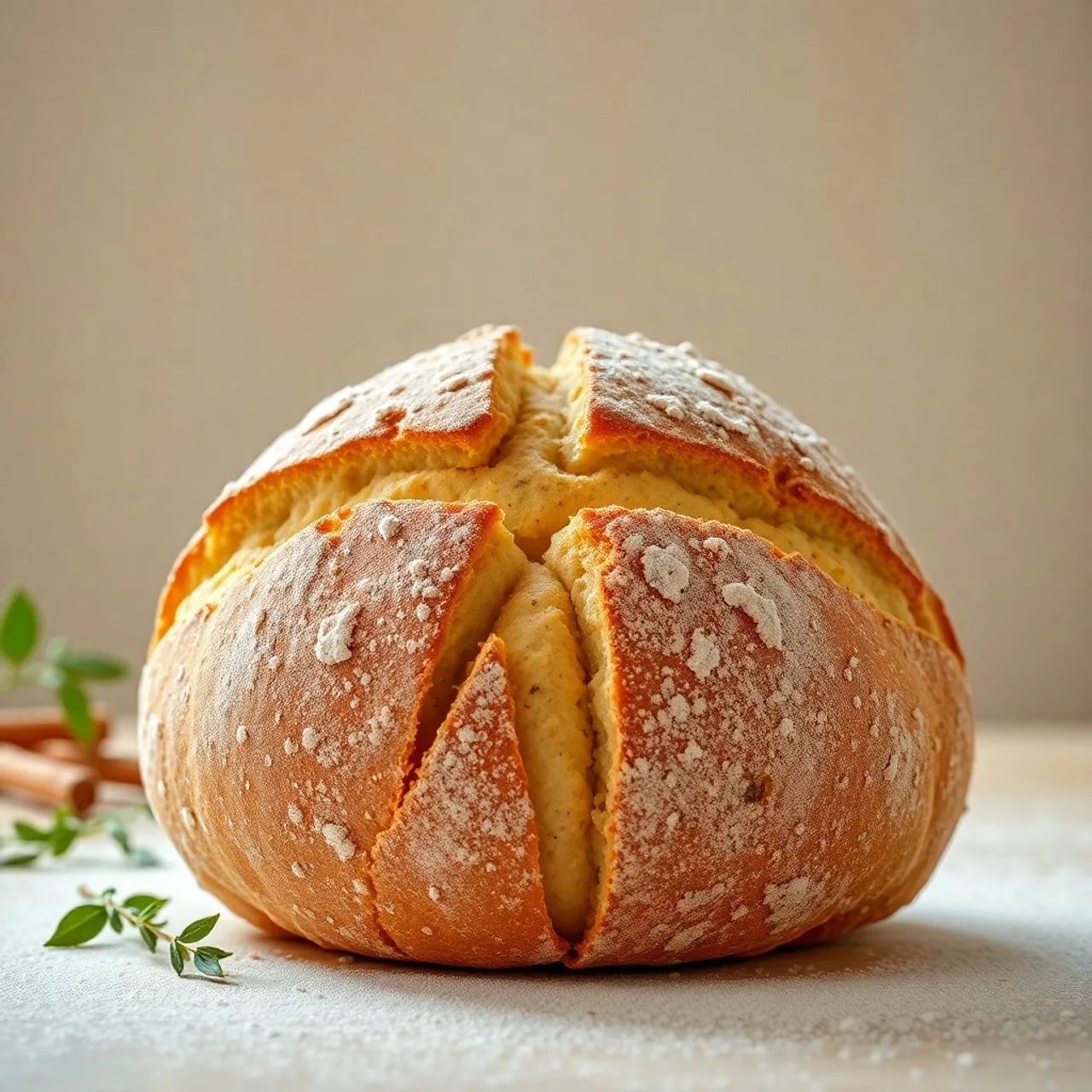
 British & Irish Images are for illustrative purposes only, may be inaccurate, and do not guarantee the presence or absence of specific ingredients.
 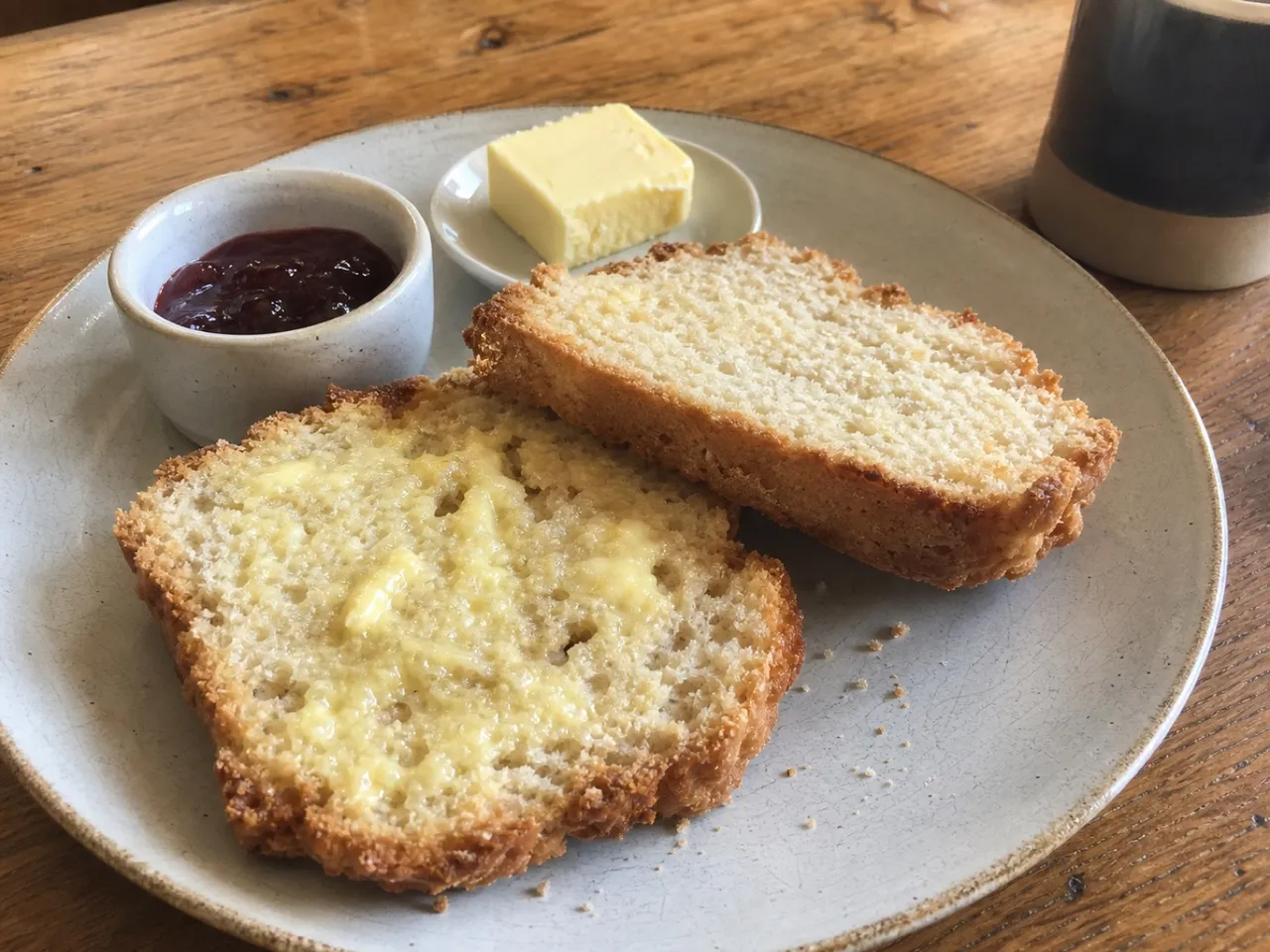 Serving Images are for illustrative purposes only, may be inaccurate, and do not guarantee the presence or absence of specific ingredients.
 Soda Bread
Rustic Irish loaf leavened with buttermilk and baking soda, with a tender crumb and lightly tangy flavor — ready in under an hour, no yeast needed.
Contains common allergens
In the app, Listahan checks these against your household automatically.
Instructions
6 steps- 1
Preheat the oven: Preheat your oven to 200°C (400°F). Lightly flour a baking sheet.
- 2
Dry ingredients: In a large, wide mixing bowl, sift together the flour, baking soda, and salt. Mix well. Make a well in the center of the dry ingredients.
- 3
Add the buttermilk: Pour most of the buttermilk into the well. Using your hand shaped like a claw, quickly and gently mix the dough in a circular motion. Add more buttermilk if the dough feels too dry. The dough should be soft but not sticky.
- 4
Shape the dough: Turn the dough out onto a lightly floured surface. Do not knead it; just gently bring it together into a round loaf about 4cm (1.5 inches) thick.
- 5
Score the bread: Place the loaf on the prepared baking sheet. Using a sharp knife, cut a deep cross in the top of the loaf (traditionally to let the fairies out).
- 6
Bake: Bake for 15 minutes, then reduce the heat to 180°C (350°F) and bake for another 25-30 minutes. The bread is done when it is golden brown and sounds hollow when tapped on the bottom. Cool on a wire rack.
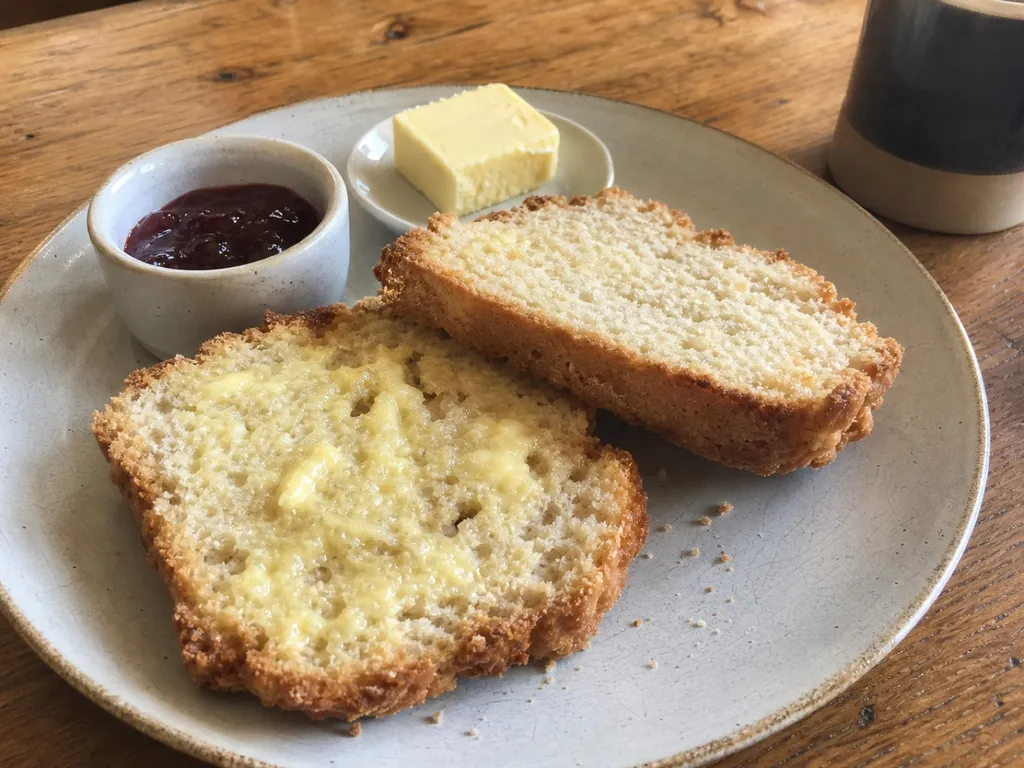 Images are for illustrative purposes only, may be inaccurate, and do not guarantee the presence or absence of specific ingredients.
 Listahan Family Score™
68/100
Works for many families
Score reflects how well this recipe fits a typical busy household. In the app, your Family Score is personalized to your household's allergens, kids, and pantry.
Nutrition
per serving410
Calories
11 g
Protein
86 g
Carbs
1 g
Fat
Estimated per serving. Actual values depend on the brands and portions you use.
Listahan cooking guide
Chef notes & practical guide
Technique notes, ingredient swaps, serve-alongside ideas, storage guidance, and equipment for this recipe.
Cultural context
Irish soda bread evolved in the 1840s — the era of the Great Famine — when bicarbonate of soda arrived in Ireland as a leavening agent and transformed what could be made with only flour, salt, baking soda, and buttermilk into a proper loaf without the need for yeast, time, or an oven more sophisticated than a pot over the fire. The cross cut into the top was both practical — it helped heat penetrate to the center — and, in Irish folk tradition, thought to ward off evil and let the fairies out. White soda bread and the denser wholemeal brown soda bread are both traditional, and both remain daily breads in many Irish households.
Listahan note
This version works the dough as little as possible and goes from mixing bowl to oven within 5 minutes, because overworking activates gluten that makes soda bread tough and dense.
Technique cues
- Mix the dough until it just comes together — 30 seconds of mixing is enough; the moment it forms a rough, slightly sticky ball, stop and shape it immediately.
- The buttermilk and baking soda react the moment they touch, producing the carbon dioxide bubbles that leaven the bread; any delay between mixing and baking loses that rise.
- Tap the bottom of the finished loaf — it should sound hollow like a drum when the bread is cooked through; the internal temperature should reach 190-200 degrees F.
Kitchen flow
- Parallel prep
- Preheat the oven and line the baking sheet before you begin mixing; the bread should go in within 3 minutes of the dough coming together.
- Make-ahead
- Soda bread is best on the day it is made; slice and freeze individual portions on the day of baking for toast later in the week.
- Leftover move
- Day-old soda bread is excellent toasted, or use thick slices as the base for a pan-fried egg and butter.
- Cleanup rhythm
- A single bowl, a parchment-lined tray, and a fork — one of the fastest and cleanest baking projects possible.
Ingredient brief
Role, handling, and swap guidance for each key ingredient.
plain or wholemeal flour
primary structure
Purpose: Soft, low-protein flour is ideal for soda bread because less gluten development produces a tender crumb; strong bread flour makes it tough.
Handling: Sift with the baking soda and salt to distribute the leavening evenly before adding buttermilk.
Adaptation: A half-and-half blend of wholemeal and white flour produces a flavorful loaf with a lighter crumb than all-wholemeal.
buttermilk
acid that activates the leavening
Purpose: The lactic acid in buttermilk reacts with baking soda to produce carbon dioxide, which is the only leavening in the bread.
Handling: Use cold, straight from the fridge; add all at once and mix minimally.
Adaptation: Whole milk with a tablespoon of lemon juice or white vinegar stirred in and left for 5 minutes creates a functional buttermilk substitute.
baking soda
chemical leavening
Purpose: Baking soda is the entire rise in soda bread; the correct amount is critical — too little and the bread is dense, too much and it tastes metallic.
Handling: Measure precisely with a level measuring spoon and sift with the flour to avoid pockets of unreacted soda.
Adaptation: No direct substitute works the same way; baking powder produces a flatter loaf without the characteristic tang.
Technique notes
- Shape the dough into a round about 2 inches thick; thicker than this and the center may not cook through before the outside is done.
- The cross must be deep — cut about 1 inch into the dough — to allow the bread to fully open as it bakes and heat to reach the center.
- Wrapping the fresh loaf loosely in a clean tea towel while it cools keeps the crust from hardening to an impenetrable shell; a slightly soft crust is more traditional.
Ingredient swaps
- Dairy-free direction
- Use a plant-based milk (oat or soy) with a tablespoon of apple cider vinegar left to curdle for 5 minutes; the result is nearly identical.
- Gluten-free direction
- A gluten-free plain flour blend works with an extra 1/4 teaspoon of xanthan gum; the loaf will be denser but slices and toasts well.
- Enriched variation
- Add a tablespoon of butter rubbed into the flour and a handful of raisins and caraway seeds for a spotted dog — a traditional Irish enriched variation.
Serve alongside
- Smoked salmon with butter
- Irish cheddar and Branston pickle
- Thick-cut marmalade and salted butter
- Strong Irish breakfast tea
- Cold milk
Serving suggestions only — check pairings for your household's allergens.
Storage & reheating
- Best on the day of baking; store at room temperature wrapped in a tea towel for up to 2 days.
- Slice and freeze on baking day for up to 1 month; toast straight from frozen.
Equipment
- Large mixing bowl wide enough to work the dough without flour spilling
- Parchment-lined baking sheet or round cast iron pan
- Sharp chef's knife for the cross cut
- Instant-read thermometer to confirm the center is cooked through
Make this household-aware
Listahan Pro checks this recipe against your household's allergens, finds pantry-aware swaps, builds the shopping list, and helps you plan the week around it.
Plan it in Listahan
Add Soda Bread to your week, check it against your household's allergens, and build the shopping list automatically.
More British & Irish recipes
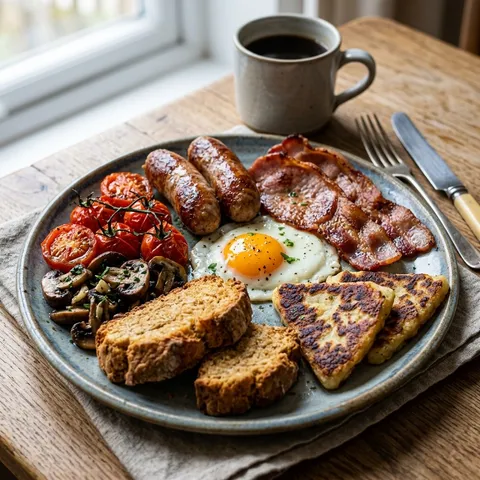 British & Irish Lens Verified Images are for illustrative purposes only, may be inaccurate, and do not guarantee the presence or absence of specific ingredients.
 Ulster Fry
Northern Ireland's legendary fry-up: bacon, sausages, eggs, black pudding, potato bread, and soda bread — fuller and heartier than its English cousin.
 British & Irish Lens Verified Images are for illustrative purposes only, may be inaccurate, and do not guarantee the presence or absence of specific ingredients.
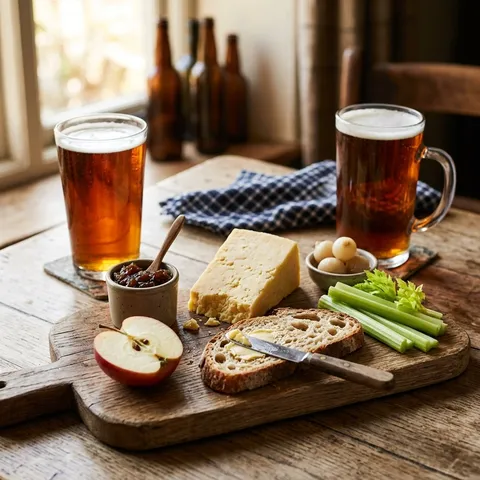
 Ploughman's Lunch
Sharp aged cheddar, crusty bread, tangy Branston pickle, and a boiled egg — a beloved no-cook British lunch that's greater than the sum of its parts.
 British & Irish Lens Verified Images are for illustrative purposes only, may be inaccurate, and do not guarantee the presence or absence of specific ingredients.
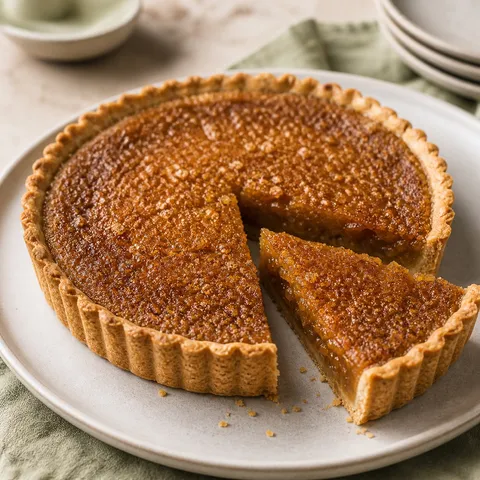
 Treacle Tart
A sweet, sticky tart filled with golden syrup and fresh breadcrumbs, with a gently caramelized top and a hint of lemon — Harry Potter's favorite dessert.