 Cajun & Creole Images are for illustrative purposes only, may be inaccurate, and do not guarantee the presence or absence of specific ingredients.
 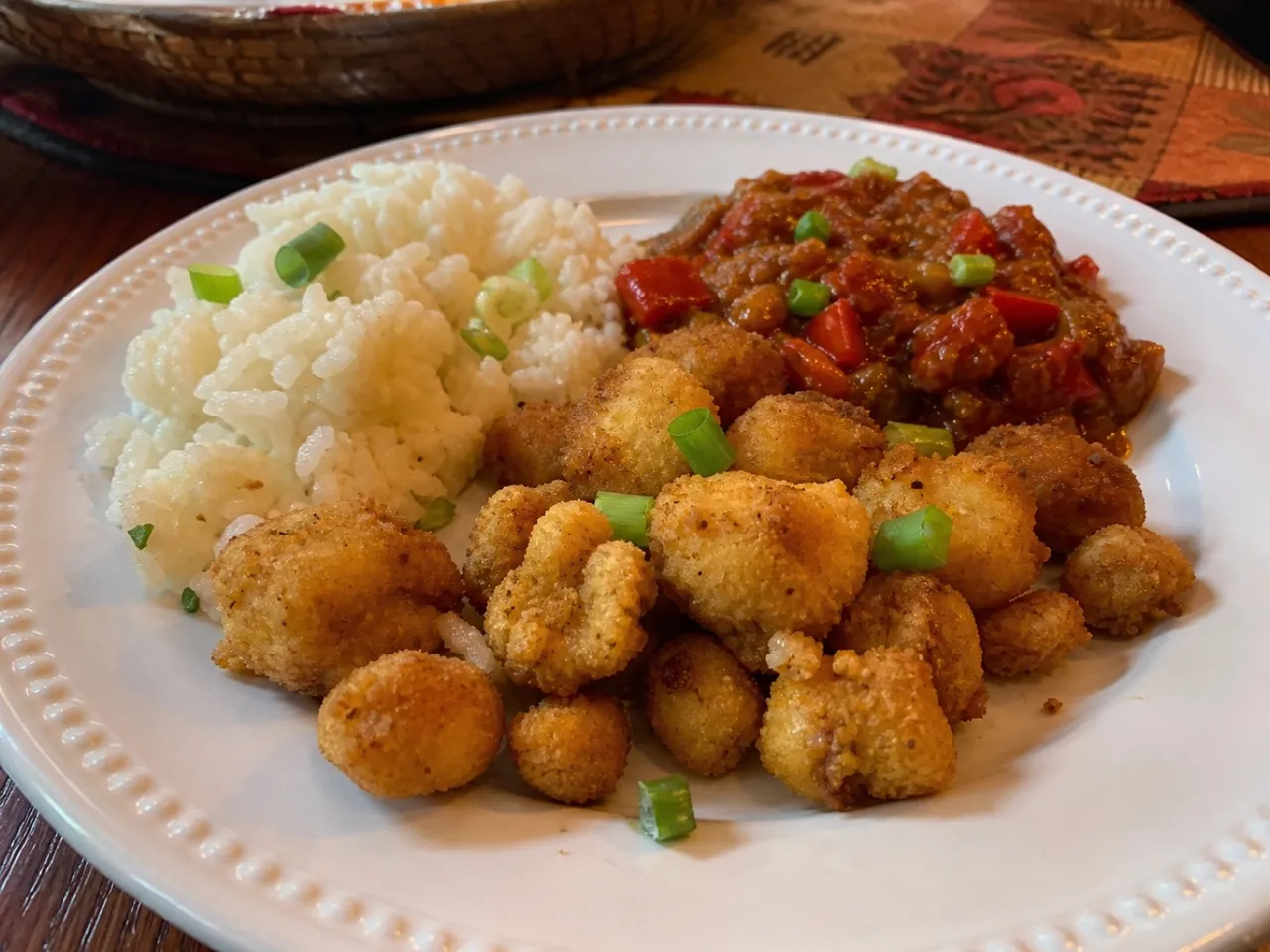 Serving Images are for illustrative purposes only, may be inaccurate, and do not guarantee the presence or absence of specific ingredients.
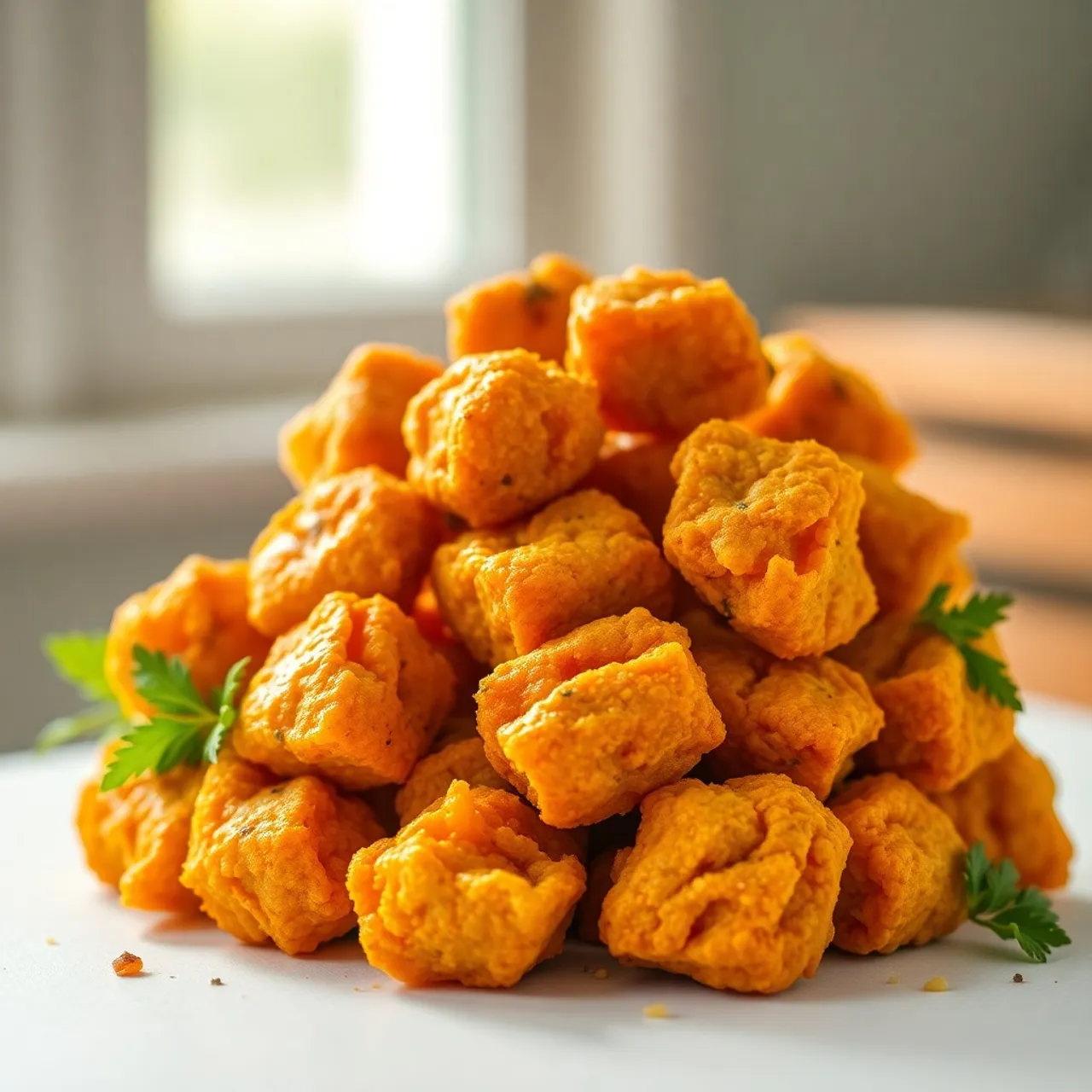
 Alligator Bites
Tender chunks of Louisiana alligator marinated in Cajun spices, battered, and fried until crispy — mildly sweet, surprisingly light, and a genuine conversation starter.
Contains common allergens
In the app, Listahan checks these against your household automatically.
Good to know
- Crispy
- Ready in under 30 minutes
Matched from this dish's own ingredients and timing. Browse more: crispy recipes30-minute meals
Instructions
6 steps- 1
Soak the alligator pieces in the buttermilk for at least 1 hour in the refrigerator to tenderize.
- 2
Combine the flour and Cajun seasoning in a shallow dish.
- 3
Remove the alligator from the buttermilk, letting the excess drip off, and dredge each piece thoroughly in the seasoned flour.
- 4
Heat the oil to 350 F (175 C) in a deep pot or fryer.
- 5
Fry the pieces in batches until golden brown and cooked through, about 3 to 4 minutes; alligator cooks quickly and toughens if overdone.
- 6
Drain on paper towels and serve hot with remoulade sauce.
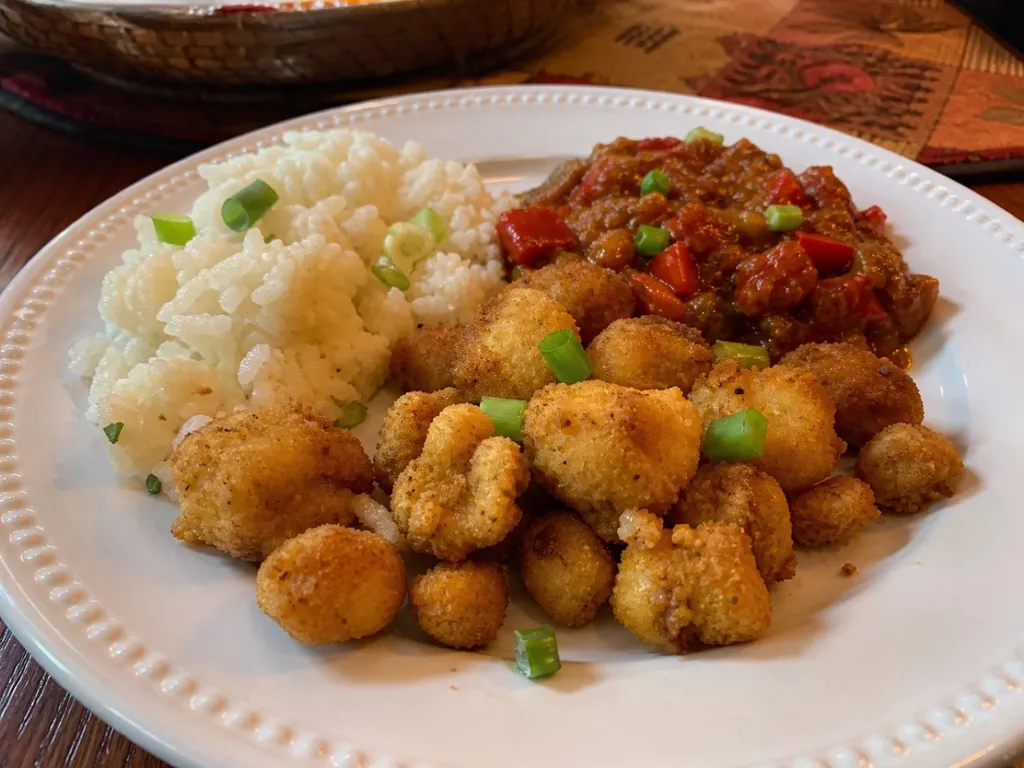 Images are for illustrative purposes only, may be inaccurate, and do not guarantee the presence or absence of specific ingredients.
 Listahan Family Score™
67/100
Works for many families
Score reflects how well this recipe fits a typical busy household. In the app, your Family Score is personalized to your household's allergens, kids, and pantry.
Nutrition
per serving2210
Calories
29 g
Protein
0 g
Carbs
236 g
Fat
Estimated per serving. Actual values depend on the brands and portions you use.
Listahan cooking guide
Chef notes & practical guide
Technique notes, ingredient swaps, serve-alongside ideas, storage guidance, and equipment for this recipe.
Cultural context
Alligator has been eaten by Indigenous peoples of the Gulf Coast for thousands of years, and Cajun trappers integrated it into their diet as a matter of survival long before it appeared on restaurant menus. Today alligator tail meat — the only part worth eating — is a staple of Louisiana roadside stands and festivals, most commonly battered and fried into bite-sized pieces. The state of Louisiana manages a sustainable alligator harvest program, making it one of the most ecologically responsible meats available in the region.
Listahan note
This version uses an overnight buttermilk soak to tenderize the naturally firm alligator tail meat and a seasoned cornmeal-flour crust that fries to a proper crunch without masking the meat's mild, distinctive flavor.
Technique cues
- Alligator tail is naturally dense and chewy; an 8- to 24-hour soak in seasoned buttermilk is not optional — it breaks down the muscle fibers and prevents the finished bites from being rubbery.
- Cut the meat into pieces no larger than 1.5 inches; larger pieces do not cook through before the crust over-browns.
- Fry at 375 degrees Fahrenheit for exactly 3 to 4 minutes — alligator is fully cooked at 165 degrees internal and dries out quickly if overcooked, much like chicken breast.
Kitchen flow
- Parallel prep
- While the marinated alligator comes to room temperature (about 20 minutes before frying), set up the coating station and preheat the oil.
- Make-ahead
- The buttermilk marinade can be done up to 24 hours ahead; any longer and the texture becomes overly soft. The dipping sauce can be made 3 days ahead.
- Leftover move
- Reheat leftover bites in a 400-degree oven for 6 minutes on a rack; they crisp back up well and can be served over a Caesar salad for an unusual lunch.
- Cleanup rhythm
- Strain and store the frying oil once cooled — it can be reused once more for savory frying. The coating station uses disposable bags or is easiest cleaned by rinsing immediately before the cornmeal dries.
Ingredient brief
Role, handling, and swap guidance for each key ingredient.
alligator tail meat
the main protein
Purpose: Tail meat is the leanest, most tender part of the alligator and has a mild flavor often compared to chicken crossed with mild fish.
Handling: Cut into 1-inch cubes and remove any sinew or membrane, which does not tenderize and stays tough.
Adaptation: Chicken thighs cut into cubes make a very close approximation in texture; the flavor is different but the dish works equally well.
buttermilk
marinade and tenderizer
Purpose: The lactic acid in buttermilk gently breaks down the protein structure of the dense alligator meat, producing a noticeably more tender result.
Handling: Season with Cajun spice and hot sauce before submerging the meat; cover and refrigerate at least 8 hours.
Adaptation: Full-fat plain yogurt thinned with a little milk works as a marinade; it is slightly more acidic and tenderizes slightly faster.
yellow cornmeal and all-purpose flour
crispy coating
Purpose: The cornmeal provides crunch and a Southern character while the flour helps the crust adhere to the wet surface of the marinated meat.
Handling: Season the coating aggressively — the meat inside is quite mild and relies on the crust for most of its flavor.
Adaptation: Panko alone produces a lighter, less rustic crust if a finer texture is preferred.
Cajun seasoning blend
flavor throughout
Purpose: Seasoning in the buttermilk marinade and again in the coating ensures the alligator bites have flavor all the way through, not just on the surface.
Handling: Use about 1 tablespoon per pound of meat in the marinade; 2 teaspoons per cup of coating mix.
Adaptation: A mix of smoked paprika, cayenne, garlic powder, and black pepper replicates a commercial Cajun blend.
Technique notes
- Consistent oil temperature is the most important variable; use a thermometer and fry in small batches to prevent the temperature from dropping below 360 degrees.
- A ranch-remoulade hybrid dipping sauce — equal parts Creole remoulade and buttermilk ranch — is the classic pairing and better than either sauce alone for alligator.
- Season the finished bites with a pinch of fine salt immediately out of the fryer while they are still glistening with oil so the salt adheres.
Ingredient swaps
- Gluten-free direction
- Use all cornmeal plus a tablespoon of tapioca starch for binding; the crust will be slightly more grainy in texture but still satisfyingly crunchy.
- Poultry substitute
- Alligator is unavailable in most markets outside Louisiana and specialty online retailers; boneless, skinless chicken thigh cut into cubes is the best texture match.
- Air-fryer direction
- Spray coated bites generously with oil and air-fry at 400 degrees for 10 minutes, shaking halfway; the result is crunchier than oven-baked and acceptable though not identical to deep-frying.
Serve alongside
- Creole remoulade or ranch dipping sauce
- Pickled banana peppers
- Cajun dirty rice
- Abita Turbodog dark ale
- Cold lager beer or an Aperol spritz for contrast
Serving suggestions only — check pairings for your household's allergens.
Storage & reheating
- Fried alligator bites keep in the refrigerator for up to 2 days but lose crispness rapidly. Reheat in a 400-degree oven on a rack for 7 to 8 minutes. The uncooked marinated meat can be kept in the buttermilk for up to 24 hours total; do not freeze raw marinated alligator.
Equipment
- Deep heavy-bottomed pot or Dutch oven for frying
- Clip-on thermometer for oil temperature
- Spider strainer or slotted spoon
- Wire rack set over a sheet pan for draining
Make this household-aware
Listahan Pro checks this recipe against your household's allergens, finds pantry-aware swaps, builds the shopping list, and helps you plan the week around it.
Plan it in Listahan
Add Alligator Bites to your week, check it against your household's allergens, and build the shopping list automatically.
More Cajun & Creole recipes
 Cajun & Creole Lens Verified Images are for illustrative purposes only, may be inaccurate, and do not guarantee the presence or absence of specific ingredients.
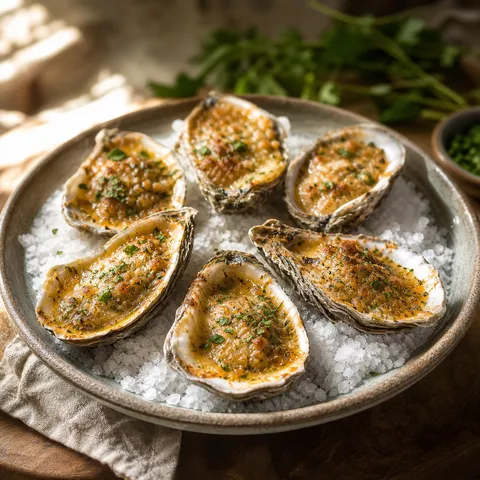
 Oysters Bienville
A classic New Orleans baked oyster dish crowned with a rich shrimp-and-mushroom cream sauce, browned to perfection on the half shell.
 Cajun & Creole Lens Verified Images are for illustrative purposes only, may be inaccurate, and do not guarantee the presence or absence of specific ingredients.
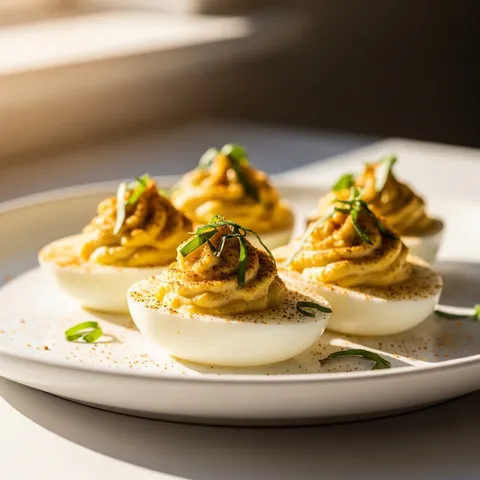
 Cajun Deviled Eggs
Classic deviled eggs with a Louisiana twist — creamy yolk filling spiked with hot sauce, Creole mustard, and cayenne, topped with a sprinkle of smoked paprika.
 Cajun & Creole Lens Verified Images are for illustrative purposes only, may be inaccurate, and do not guarantee the presence or absence of specific ingredients.
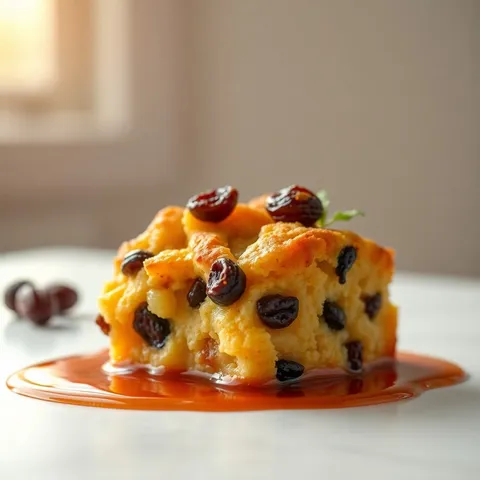
 Creole Bread Pudding
Day-old French bread soaked in a rich custard of cream, eggs, and vanilla, baked golden, then drowned in a warm bourbon-laced whiskey sauce.