 Cajun & Creole Images are for illustrative purposes only, may be inaccurate, and do not guarantee the presence or absence of specific ingredients.
 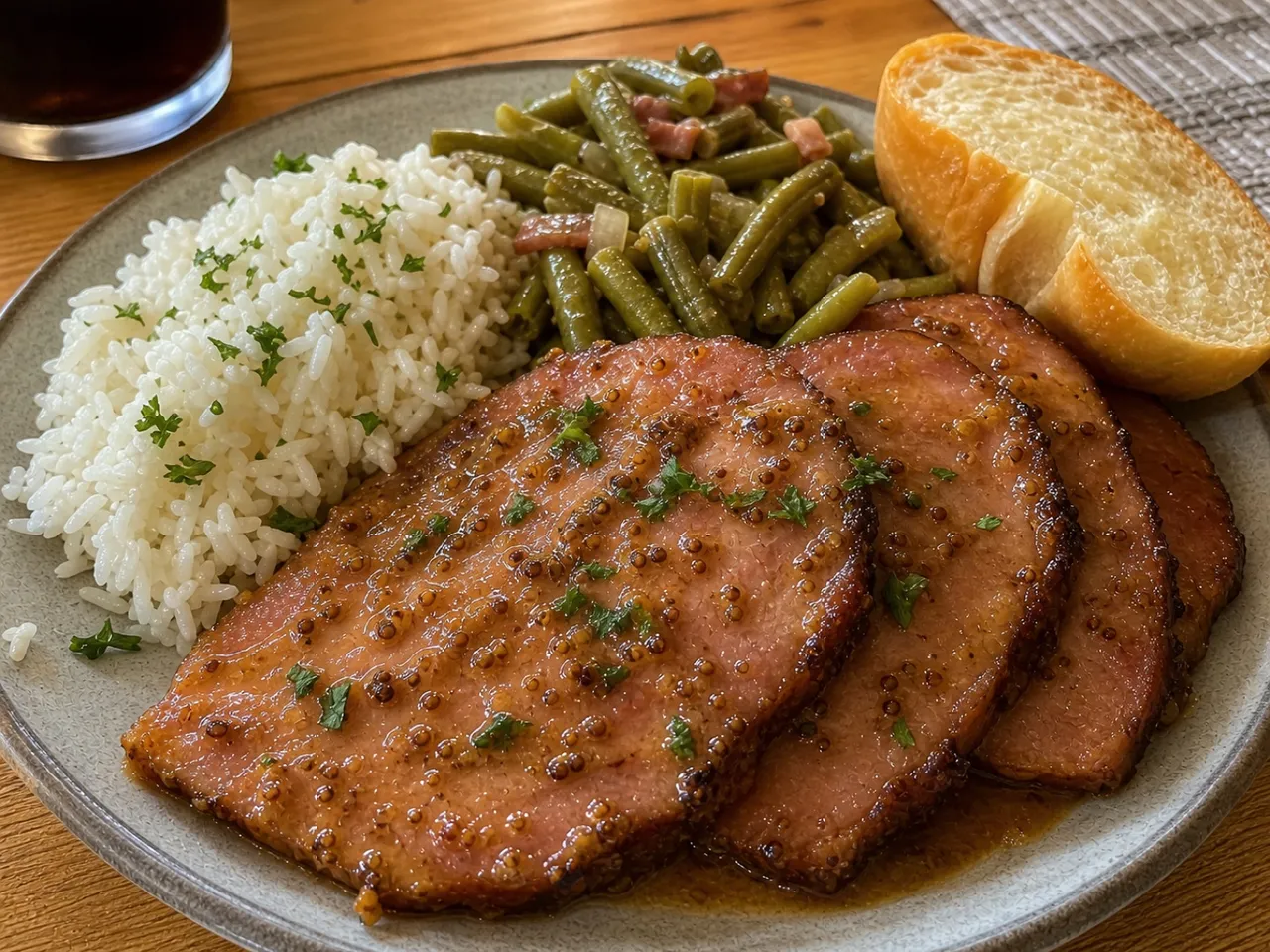 Serving Images are for illustrative purposes only, may be inaccurate, and do not guarantee the presence or absence of specific ingredients.
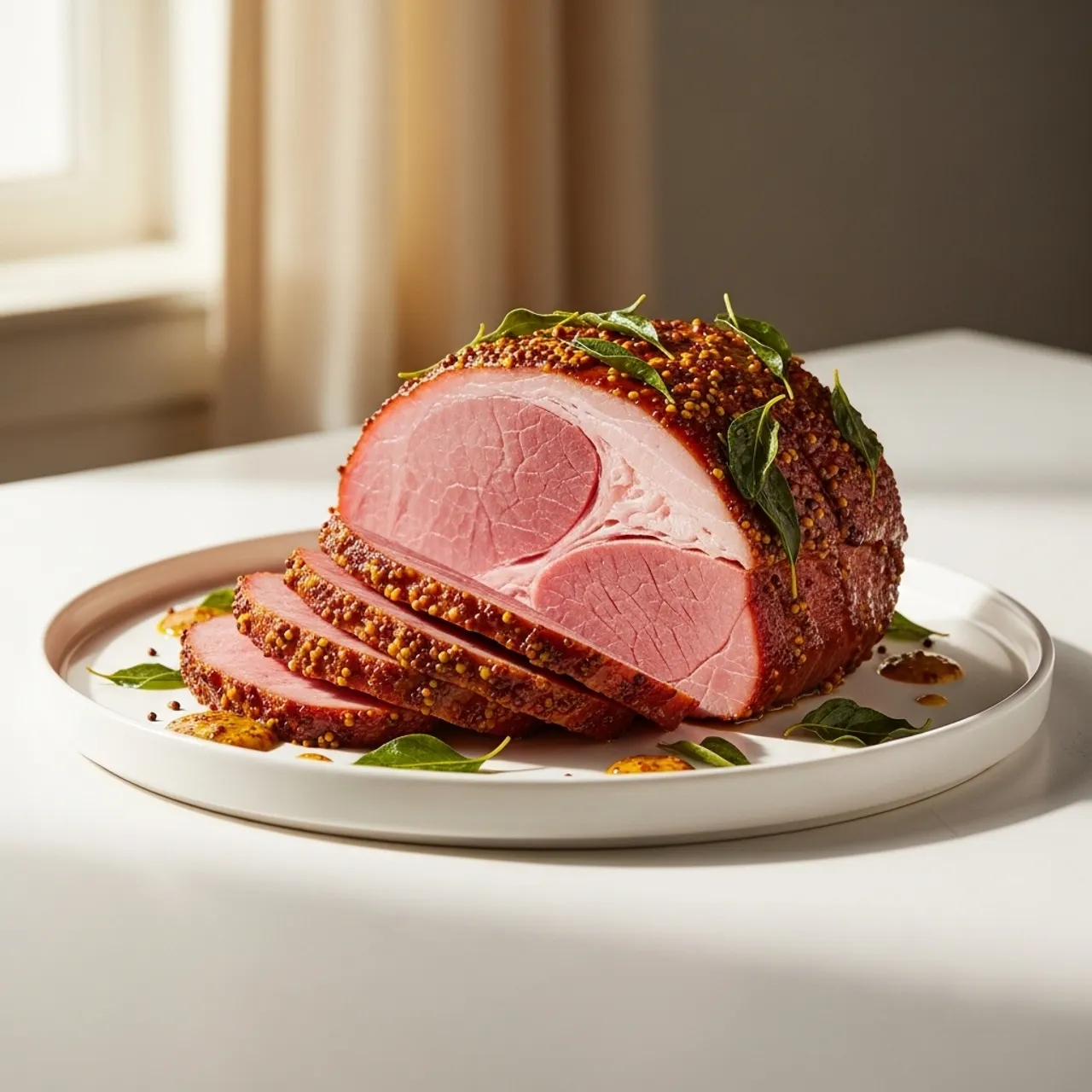
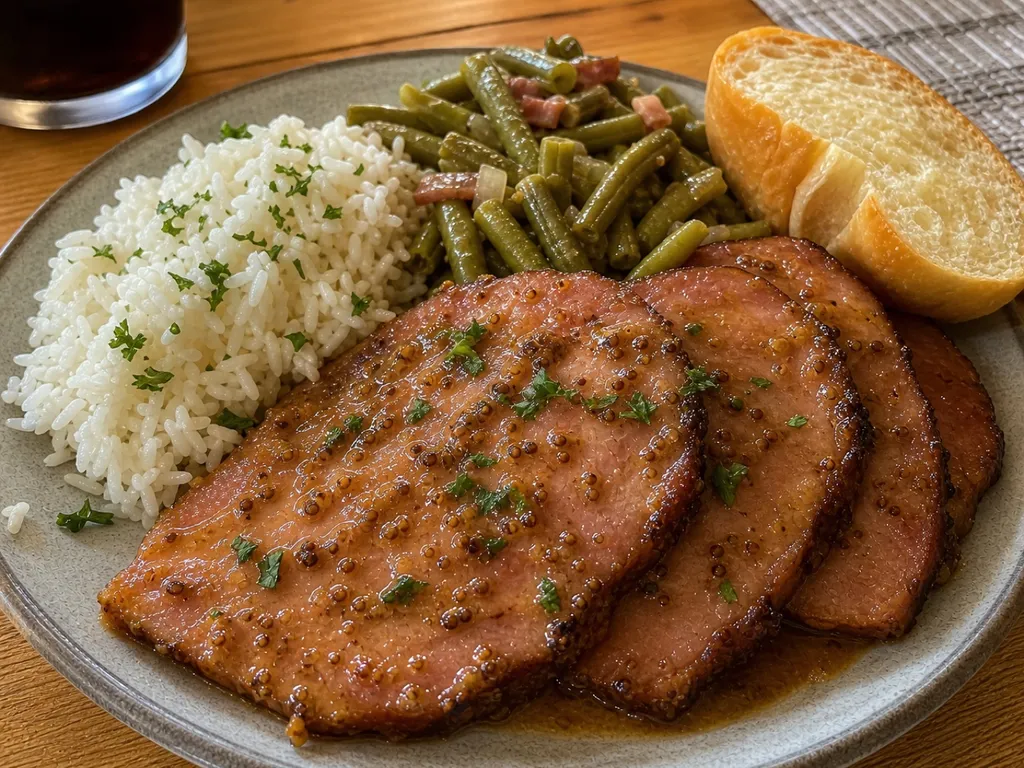
 Creole Mustard Glazed Ham
Slow-roasted ham lacquered in a sharp, sweet Creole mustard glaze that caramelizes to a sticky, tangy crust — a festive centerpiece with serious Southern soul.
Contains common allergens
In the app, Listahan checks these against your household automatically.
Instructions
6 steps- 1
Preheat your oven to 325°F (165°C). Place the ham on a rack in a roasting pan, score the skin in a diamond pattern, and cover loosely with foil.
- 2
Bake the ham for 1.5 hours to warm it through (about 12-15 minutes per pound).
- 3
While the ham is baking, whisk together the Creole mustard, brown sugar, cane syrup, and cayenne pepper in a small bowl to form a thick glaze.
- 4
Remove the foil from the ham during the last 30 minutes of cooking.
- 5
Brush the ham generously with the mustard glaze every 10 minutes until a sticky, caramelized crust forms.
- 6
Remove from the oven, let the ham rest for 15 minutes, then slice and serve with extra glaze on the side.
 Images are for illustrative purposes only, may be inaccurate, and do not guarantee the presence or absence of specific ingredients.
 Listahan Family Score™
65/100
Works for many families
Score reflects how well this recipe fits a typical busy household. In the app, your Family Score is personalized to your household's allergens, kids, and pantry.
Nutrition
per serving180
Calories
1 g
Protein
42 g
Carbs
1 g
Fat
Estimated per serving. Actual values depend on the brands and portions you use.
Listahan cooking guide
Chef notes & practical guide
Technique notes, ingredient swaps, serve-alongside ideas, storage guidance, and equipment for this recipe.
Cultural context
Glazed ham has long been a centerpiece of New Orleans holiday and celebration cooking, reflecting the city's French and Spanish Creole heritage where elaborate feast preparations were markers of social standing. The use of Creole mustard — a coarse-ground, slightly spicy brown mustard unique to Louisiana — distinguishes this version from the brown sugar or honey glaze common elsewhere in the South. Creole mustard, originally made by German immigrants in the Louisiana region, has been produced commercially by brands like Zatarain's since 1889 and its tangy, horseradish-forward character became integral to New Orleans condiment culture.
Listahan note
This version builds a glaze from Creole mustard, brown sugar, and cider vinegar that caramelizes into a deeply glossy, tangy-sweet crust on a pre-cooked bone-in ham during the final hour of baking.
Technique cues
- Score the ham in a diamond crosshatch pattern before applying the glaze — the cuts allow the glaze to seep into the meat rather than sitting only on the surface, and they create visual lines that caramelize separately for better presentation.
- Apply the glaze in three thin coats at fifteen-minute intervals during the final hour of cooking rather than all at once; this builds up a thick, lacquered layer without any single coat burning before the others set.
- Rest the glazed ham on the counter for twenty minutes before slicing; cutting immediately releases the juices before they have reabsorbed and produces dry, stringy slices rather than moist ones.
Kitchen flow
- Parallel prep
- Make the glaze while the ham comes to room temperature — both take twenty to thirty minutes and aligning them means the ham goes into the oven without delay.
- Make-ahead
- The entire ham can be baked two days ahead, refrigerated, and reheated in a 300-degree oven tightly covered with foil for thirty to forty minutes; it slices more cleanly when chilled and reheated.
- Leftover move
- Slice leftover ham thin and stack with Creole mustard and Swiss cheese on crusty bread for a New Orleans-inspired pressed sandwich, or dice for split pea soup or jambalaya.
- Cleanup rhythm
- Line the roasting pan with foil before baking and crimp the foil to seal around the ham; the caramelized glaze drips are impossible to scrub off bare metal but lift easily off foil.
Ingredient brief
Role, handling, and swap guidance for each key ingredient.
bone-in pre-cooked ham
main protein
Purpose: A bone-in, pre-cooked ham is the practical choice for home cooks — it only needs to be heated through and glazed rather than cooked from raw, which significantly reduces the risk of under or over-cooking.
Handling: Let the ham sit at room temperature for forty-five minutes before going into the oven so the interior heats evenly without the outside over-baking while the center catches up.
Adaptation: A boneless ham spiral-sliced works for easier serving; apply the glaze between the slices as well as on the surface for maximum coverage.
Creole mustard
glaze flavor base
Purpose: The coarse grind, brown color, and vinegar-horseradish sharpness of Creole mustard creates a glaze that is more complex and assertive than standard Dijon, making it the Louisiana signature element in this dish.
Handling: Bring to room temperature before mixing into the glaze so it blends smoothly with the sugar and vinegar rather than seizing.
Adaptation: Whole-grain Dijon mustard is the closest substitute; add a small amount of prepared horseradish to approximate the Creole mustard character.
brown sugar
caramelization and sweetness
Purpose: Brown sugar's molasses content creates the caramel notes and dark color in the glaze while balancing the sharpness of the mustard and vinegar.
Handling: Pack firmly when measuring so the ratio to mustard is correct; loosely packed brown sugar will under-sweeten the glaze.
Adaptation: Cane syrup — deeply associated with Louisiana cooking — provides a more complex, less refined sweetness than brown sugar and is worth seeking out.
apple cider vinegar
acidity and glaze fluidity
Purpose: Vinegar keeps the glaze from becoming too thick and cloying, and its acidity brightens the sugar-fat-salt combination of the ham and mustard.
Handling: Add to the glaze mixture gradually and taste — the tanginess should be noticeable but not dominant over the mustard.
Adaptation: White wine vinegar produces a slightly more refined glaze; balsamic vinegar makes a darker, sweeter version that works beautifully with holiday spice additions.
whole cloves
aromatic decoration and spice
Purpose: Pressing whole cloves into the scored crosshatch intersections perfumes the ham with a warm, slightly medicinal spice as it roasts and creates the traditional visual presentation associated with holiday ham.
Handling: Press the pointed end into the crosshatch intersections firmly enough that they stay in place during roasting but can be removed before slicing.
Adaptation: Ground cloves, about a quarter-teaspoon stirred into the glaze, provides the same flavor without the decorative aspect.
Technique notes
- Reserve the ham bone after carving and simmer it with water, split peas, onion, and celery for two hours — the resulting soup is one of the most deeply flavored things a home cook can make from a single ingredient.
- If the glaze begins darkening too quickly in the oven, tent the ham loosely with foil to slow the caramelization without removing it from the heat; remove the foil for the final five minutes to re-crisp the surface.
- A small amount of bourbon stirred into the glaze is a New Orleans-style addition that adds vanilla and oak depth — two tablespoons is enough to taste without making the glaze noticeably alcoholic.
Ingredient swaps
- Lower-sodium direction
- Choose a low-sodium pre-cooked ham and make the glaze without additional salt; Creole mustard and brown sugar provide sufficient flavor without adding more sodium.
- Gluten-free direction
- All traditional glaze ingredients are naturally gluten-free; verify your Creole mustard brand if gluten sensitivity is a concern, as some mustards use malt vinegar.
- Lower-sugar direction
- Reduce brown sugar by half and increase Creole mustard to maintain volume; the glaze will be tangier and less sweet but still caramelizes well.
- Weeknight shortcut
- Brush the glaze onto thick pre-sliced ham steaks and broil for four minutes per side rather than roasting a whole bone-in ham — same flavors in a fraction of the time.
Serve alongside
- candied yams
- collard greens with pot likker
- skillet cornbread
- sweet tea
- sparkling apple cider
Serving suggestions only — check pairings for your household's allergens.
Storage & reheating
- Refrigerate leftover ham tightly wrapped in foil for up to a week. Reheat individual slices in a skillet over medium heat with a splash of water and a dab of butter for thirty seconds per side, which revives the glaze without drying the meat.
Equipment
- large roasting pan with rack
- pastry brush for glazing
- foil for lining and tenting
- instant-read thermometer to confirm internal temperature reaches 140 degrees
Make this household-aware
Listahan Pro checks this recipe against your household's allergens, finds pantry-aware swaps, builds the shopping list, and helps you plan the week around it.
Plan it in Listahan
Add Creole Mustard Glazed Ham to your week, check it against your household's allergens, and build the shopping list automatically.
More Cajun & Creole recipes
 Cajun & Creole Lens Verified Images are for illustrative purposes only, may be inaccurate, and do not guarantee the presence or absence of specific ingredients.
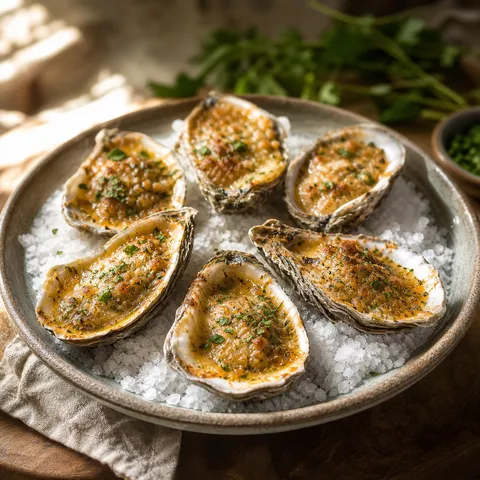
 Oysters Bienville
A classic New Orleans baked oyster dish crowned with a rich shrimp-and-mushroom cream sauce, browned to perfection on the half shell.
 Cajun & Creole Lens Verified Images are for illustrative purposes only, may be inaccurate, and do not guarantee the presence or absence of specific ingredients.
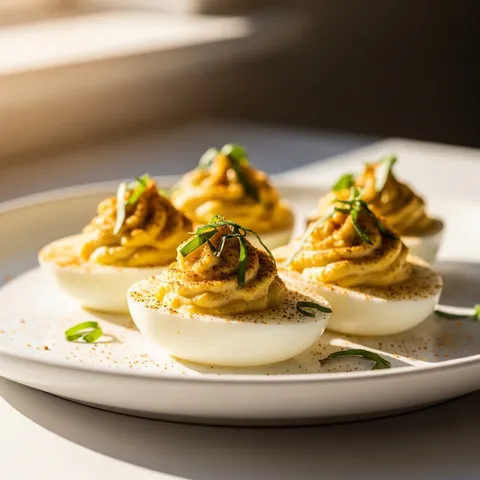
 Cajun Deviled Eggs
Classic deviled eggs with a Louisiana twist — creamy yolk filling spiked with hot sauce, Creole mustard, and cayenne, topped with a sprinkle of smoked paprika.
 Cajun & Creole Lens Verified Images are for illustrative purposes only, may be inaccurate, and do not guarantee the presence or absence of specific ingredients.
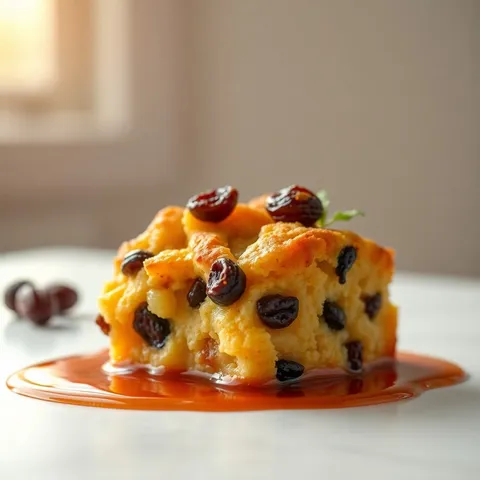
 Creole Bread Pudding
Day-old French bread soaked in a rich custard of cream, eggs, and vanilla, baked golden, then drowned in a warm bourbon-laced whiskey sauce.