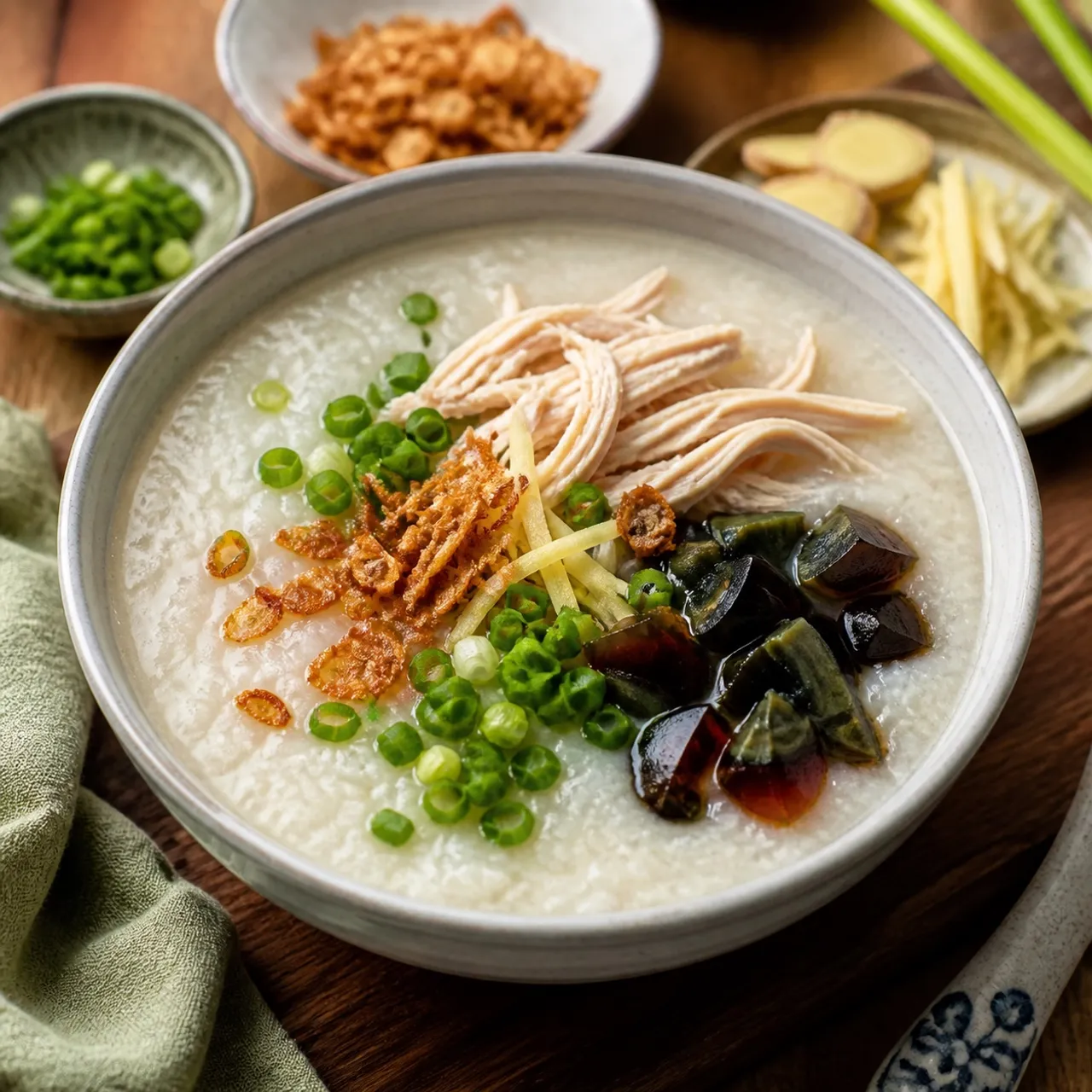
 Chinese Images are for illustrative purposes only, may be inaccurate, and do not guarantee the presence or absence of specific ingredients.
 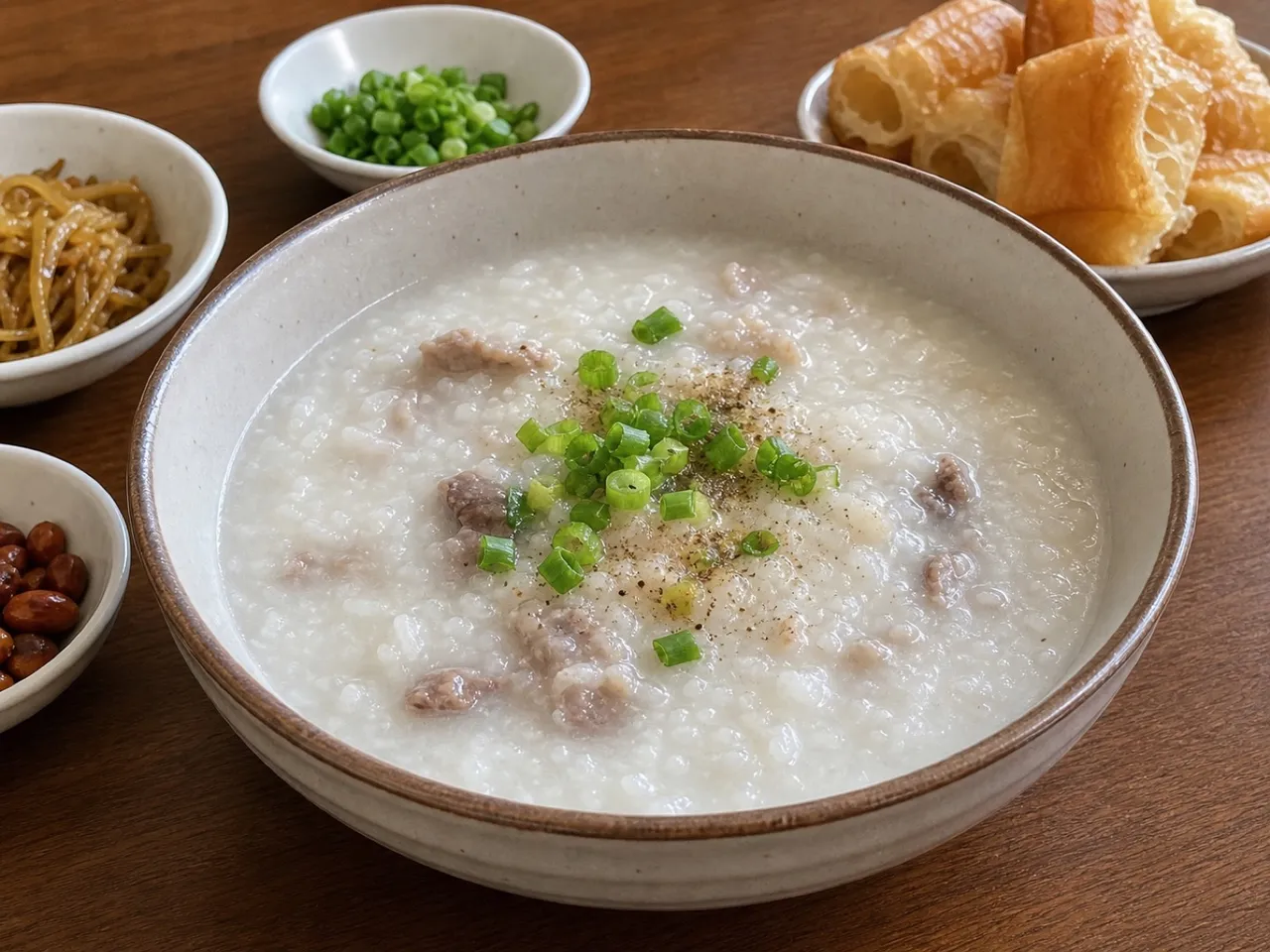 Serving Images are for illustrative purposes only, may be inaccurate, and do not guarantee the presence or absence of specific ingredients.
 Congee
A warm, comforting rice porridge, often served with savory toppings.
Contains common allergens
In the app, Listahan checks these against your household automatically.
Good to know
- One-pot
Matched from this dish's own ingredients and timing. Browse more: one-pot dinners
Instructions
6 steps- 1
Prep the Rice: Rinse the rice under cold water until the water runs clear. For an even silkier texture, freeze the rinsed, wet rice overnight before cooking, as the ice crystals break down the grains.
- 2
Start the Boil: In a large heavy-bottomed pot, combine the rice, 8 cups of broth, and the julienned ginger. Bring to a rolling boil over medium-high heat.
- 3
Simmer: Once boiling, reduce the heat to the lowest possible setting. Partially cover the pot with a lid to prevent it from boiling over.
- 4
Stir Periodically: Simmer for 1 to 1.5 hours. Stir every 15 minutes, scraping the bottom of the pot to ensure the rice doesn't stick and burn.
- 5
Adjust Consistency: As the rice grains burst and release their starches, the porridge will thicken. If it becomes too thick, stir in up to 2 more cups of hot broth or water until you reach your desired creamy consistency.
- 6
Season and Serve: Stir in salt to taste. Ladle the hot congee into bowls and allow guests to customize their bowls with scallions, fried shallots, century egg, or shredded meats.
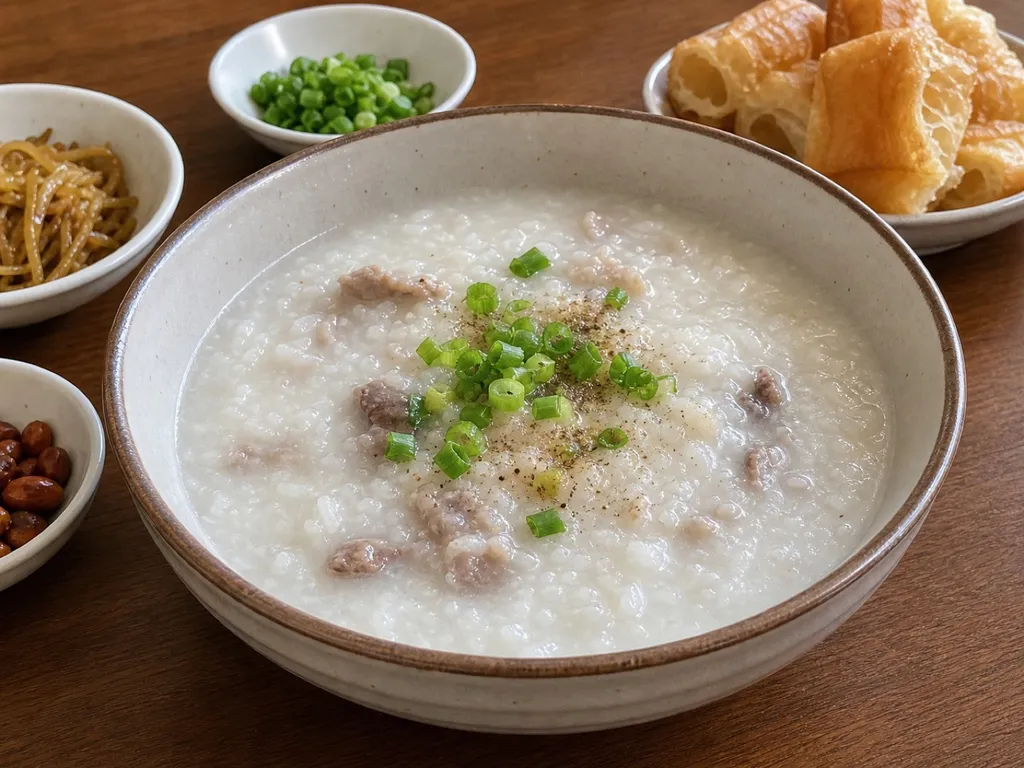 Images are for illustrative purposes only, may be inaccurate, and do not guarantee the presence or absence of specific ingredients.
 Listahan Family Score™
71/100
Good fit for most families
Score reflects how well this recipe fits a typical busy household. In the app, your Family Score is personalized to your household's allergens, kids, and pantry.
Nutrition
per serving860
Calories
83 g
Protein
37 g
Carbs
42 g
Fat
Estimated per serving. Actual values depend on the brands and portions you use.
Listahan cooking guide
Chef notes & practical guide
Technique notes, ingredient swaps, serve-alongside ideas, storage guidance, and equipment for this recipe.
Cultural context
Congee (zhou in Mandarin, jook in Cantonese) is one of the oldest surviving dishes in Chinese culinary history, with records dating back at least 2,500 years. It is rice cooked with a large quantity of water or broth until the grains break down into a thick, silky porridge, and it appears across nearly every regional Chinese cuisine as well as throughout Southeast and South Asia. Traditionally eaten as breakfast, sick-day food, and late-night comfort, congee's genius is its economy: a small amount of rice stretches into a filling pot that nourishes without demanding much from the body.
Listahan note
This version cooks the congee in good chicken stock rather than plain water so the base already has depth before any toppings are added, and it uses a broken-rice technique to speed the process without sacrificing the silky final texture.
Technique cues
- Rinse the rice and then toss it with a teaspoon of neutral oil before adding it to the pot; the oil coats each grain and prevents the starches from clumping into gluey pockets as they dissolve.
- Keep the pot at a steady low simmer, not a rolling boil; a vigorous boil evaporates the liquid too fast and creates a gummy, gluey texture instead of the smooth, flowing consistency you want.
- Stir the pot every 10 minutes or so from the bottom to prevent the softened rice from settling and scorching on the base of the pot.
Kitchen flow
- Parallel prep
- While the congee simmers, prepare all toppings: poach an egg, shred ginger, slice scallions, fry shallots, and arrange condiments so everything is ready when the porridge reaches the right texture.
- Make-ahead
- Congee thickens significantly as it cools and sits; cook a large batch, refrigerate, and thin each portion with stock or water when reheating.
- Leftover move
- Cold leftover congee can be shaped into patties and pan-fried until golden for crispy rice cakes that work as a completely different meal.
- Cleanup rhythm
- Soak the pot immediately after portioning; the starchy residue dissolves in hot water within minutes but becomes very difficult to scrub once it dries and sets.
Ingredient brief
Role, handling, and swap guidance for each key ingredient.
jasmine rice
base
Purpose: Jasmine rice is aromatic and breaks down efficiently into a smooth porridge with the right water ratio.
Handling: Rinse thoroughly until the water runs clear, then toss with a small amount of oil before adding to the pot.
Adaptation: Medium-grain white rice works equally well; short-grain gives a stickier, denser result.
chicken stock
flavor base
Purpose: Cooking the rice in stock rather than water gives the congee enough underlying savory depth that toppings feel like enhancements rather than necessities.
Handling: Use low-sodium stock so you can control the final saltiness with your toppings.
Adaptation: Vegetable stock or plain water with a piece of kombu works for a vegetarian base; the flavor will be subtler.
ginger
warmth and freshness
Purpose: Ginger slices simmered in the congee from the start give the base a clean, warming note that is deeply associated with this dish across Chinese food culture.
Handling: Peel and slice into coins; no need to mince since the slices will be removed or eaten whole.
Adaptation: Ground ginger can substitute in a pinch but lacks the fresh brightness of the sliced root.
white pepper
gentle heat
Purpose: White pepper is the traditional seasoning for congee and contributes a mild, earthy heat without the visible flecks of black pepper.
Handling: Add in small increments and taste; it is easy to over-season a bland base like congee.
Adaptation: Black pepper works but changes the appearance and gives a sharper bite.
Technique notes
- Using a ratio of 1 cup rice to 8 to 10 cups of liquid gives the silky, flowing restaurant-style texture; less liquid yields a thicker, more Western-style porridge.
- For a faster congee, briefly pulse the rinsed rice in a blender a few times to break the grains before cooking; broken rice dissolves into smooth porridge in about 30 minutes versus 60 to 90.
- Finish each bowl with a few drops of toasted sesame oil and a light drizzle of soy sauce rather than salting the pot; individual seasoning at the table means every family member can customize to their preference.
Ingredient swaps
- Gluten-free direction
- Congee is naturally gluten-free; just ensure your soy sauce or other condiment toppings are tamari or certified gluten-free.
- Vegetarian direction
- Use vegetable stock as the base and top with soft tofu, sauteed mushrooms, pickled vegetables, and fried shallots for a fully satisfying meatless bowl.
- Weeknight shortcut
- Make congee in a slow cooker on low for 6 to 8 hours overnight; wake up to a ready pot that just needs toppings.
Serve alongside
- you tiao (Chinese fried dough sticks)
- century egg with ginger and scallion
- soft-boiled egg with soy and sesame
- hot jasmine tea
- warm soy milk
Serving suggestions only — check pairings for your household's allergens.
Storage & reheating
- Congee keeps in the refrigerator for up to 4 days in a sealed container; it will thicken considerably, so stir in stock or water when reheating.
- It can be frozen for up to 2 months; thaw overnight in the refrigerator and reheat over medium-low heat with added liquid, stirring frequently.
Equipment
- heavy-bottomed pot or Dutch oven for even heat distribution
- long-handled ladle or wooden spoon for stirring from the bottom
- blender (optional) for pre-breaking the rice to speed cooking
Make this household-aware
Listahan Pro checks this recipe against your household's allergens, finds pantry-aware swaps, builds the shopping list, and helps you plan the week around it.
Plan it in Listahan
Add Congee to your week, check it against your household's allergens, and build the shopping list automatically.
More Chinese recipes
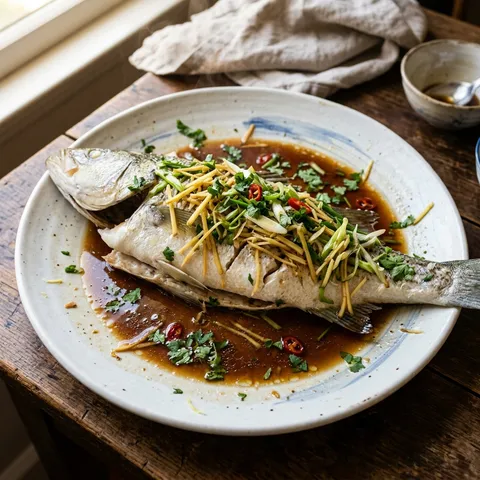 Chinese Lens Verified Images are for illustrative purposes only, may be inaccurate, and do not guarantee the presence or absence of specific ingredients.
 Steamed Fish with Soy and Ginger
A traditional banquet dish featuring delicately steamed whole fish with hot oil poured over aromatics.
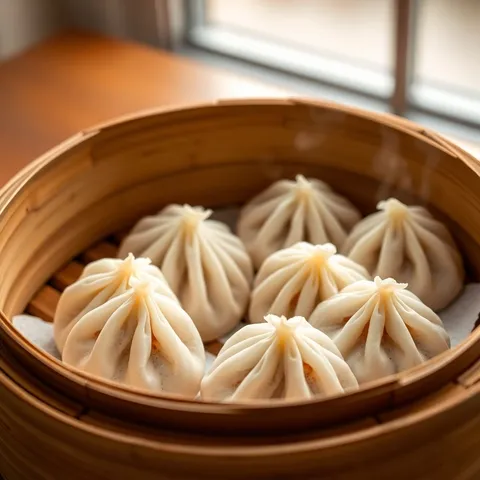 Chinese Lens Verified Images are for illustrative purposes only, may be inaccurate, and do not guarantee the presence or absence of specific ingredients.
 Xiao Long Bao (Soup Dumplings)
Delicate steamed buns filled with pork and a rich, savory soup.
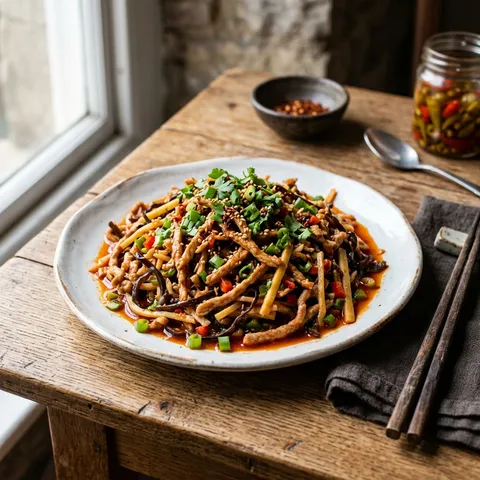 Chinese Lens Verified Images are for illustrative purposes only, may be inaccurate, and do not guarantee the presence or absence of specific ingredients.
 Yuxiang Rou Si (Fish-Fragrant Pork Shreds)
A classic Sichuan dish that uses "fish-fragrant" seasoning (sweet, sour, and spicy) on pork shreds, containing no actual fish.