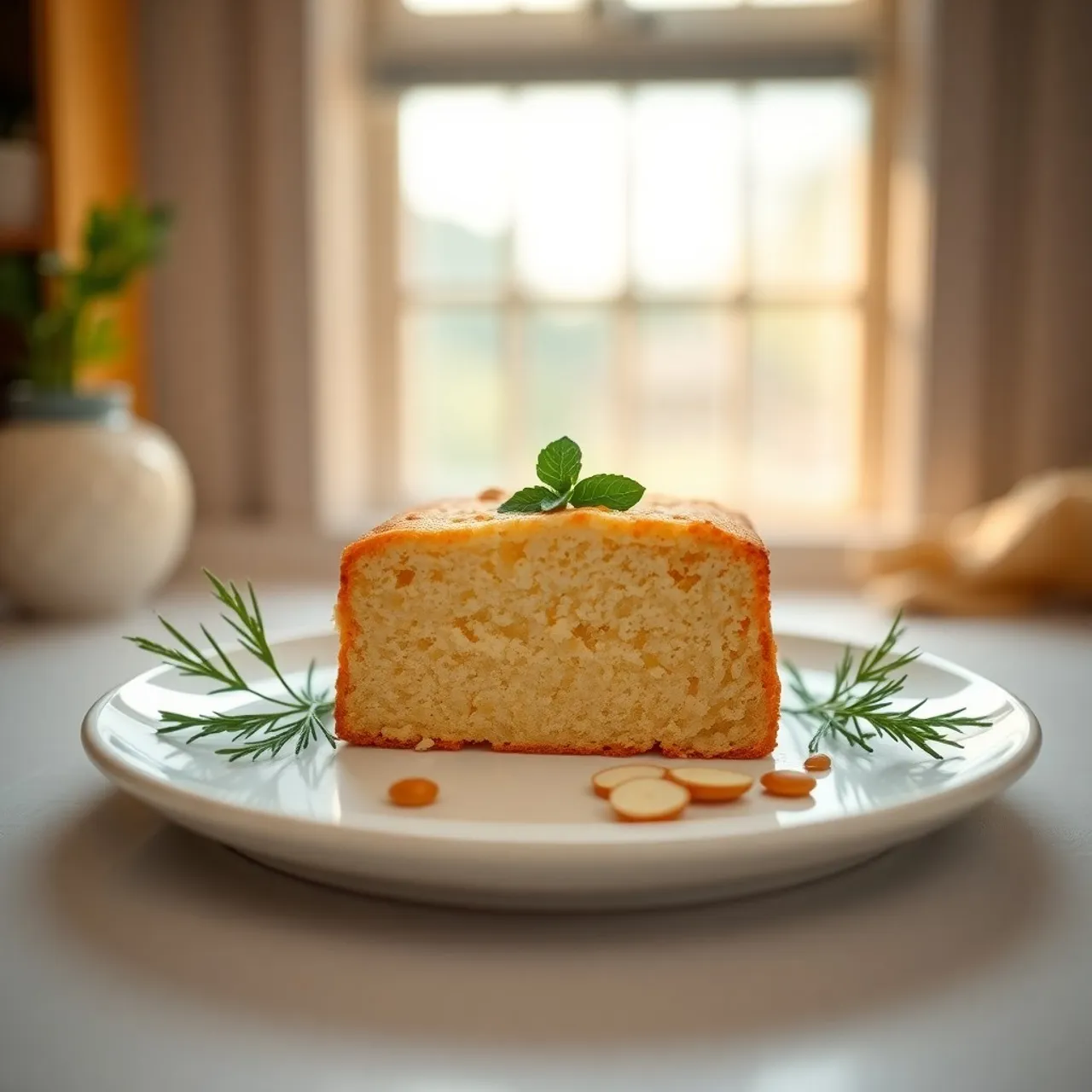
 Desserts Images are for illustrative purposes only, may be inaccurate, and do not guarantee the presence or absence of specific ingredients.
 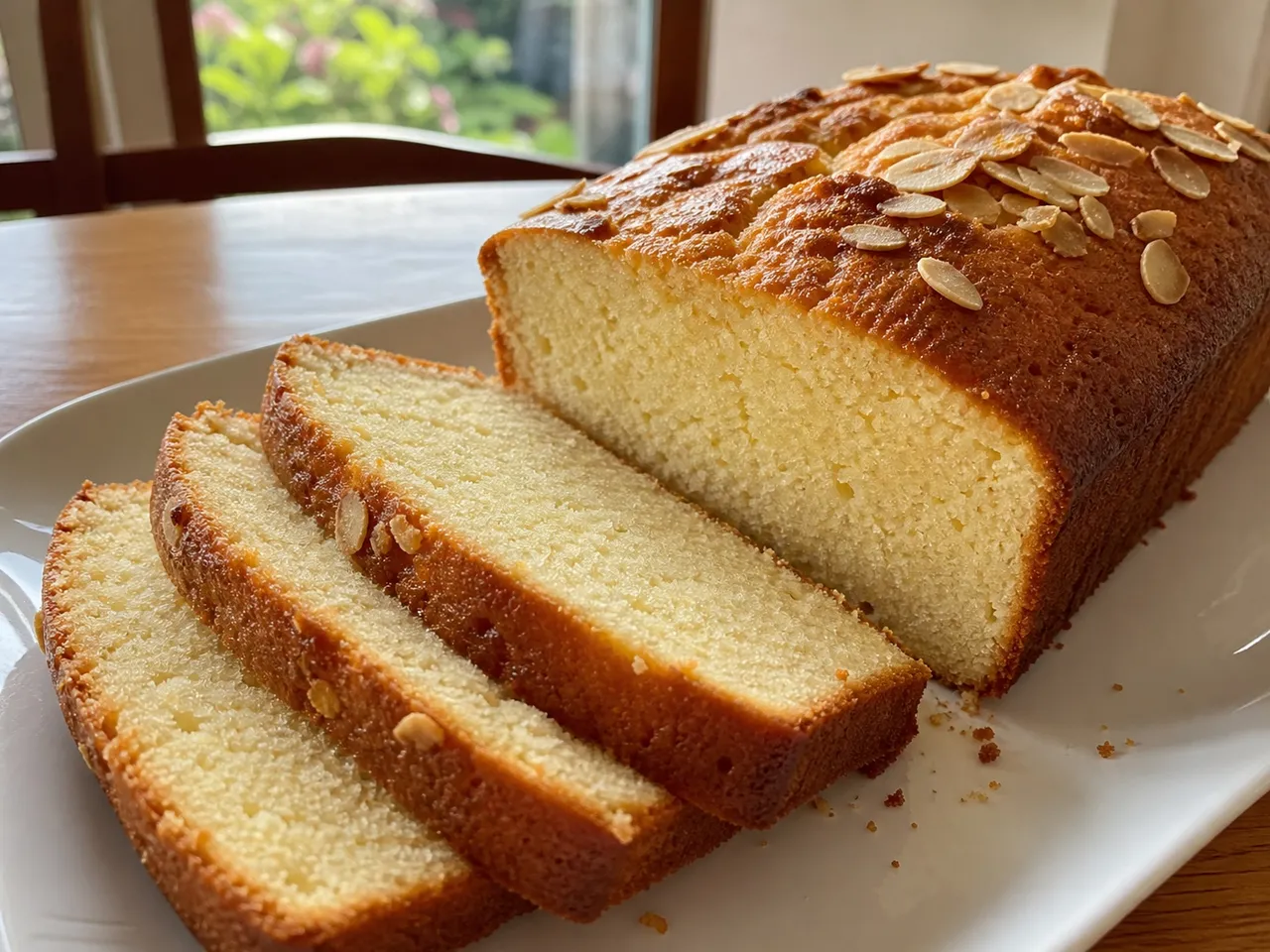 Serving Images are for illustrative purposes only, may be inaccurate, and do not guarantee the presence or absence of specific ingredients.
 Almond Pound Cake
A dense, moist pound cake rich with almond paste and a delicate almond aroma.
Contains common allergens
In the app, Listahan checks these against your household automatically.
Instructions
5 steps- 1
Preheat the oven to 350°F (175°C) and grease a 9x5-inch loaf pan.
- 2
In a large bowl, cream the softened butter and almond paste together with a mixer until light and fluffy. Gradually beat in the sugar, then add the eggs one at a time, beating well after each addition.
- 3
In a separate bowl, whisk together the flour, cornstarch, and baking powder. Add the dry ingredients to the batter alternately with the milk, beginning and ending with the flour mixture, mixing just until smooth.
- 4
Pour the batter into the prepared pan and bake for about 1 hour, or until a toothpick inserted in the center comes out clean. (To make a bundt cake, double the recipe and bake about 75 minutes.)
- 5
Cool the cake in the pan for 10 minutes, then turn out onto a wire rack to cool completely. Serve dusted with powdered sugar or drizzled with orange or chocolate glaze.
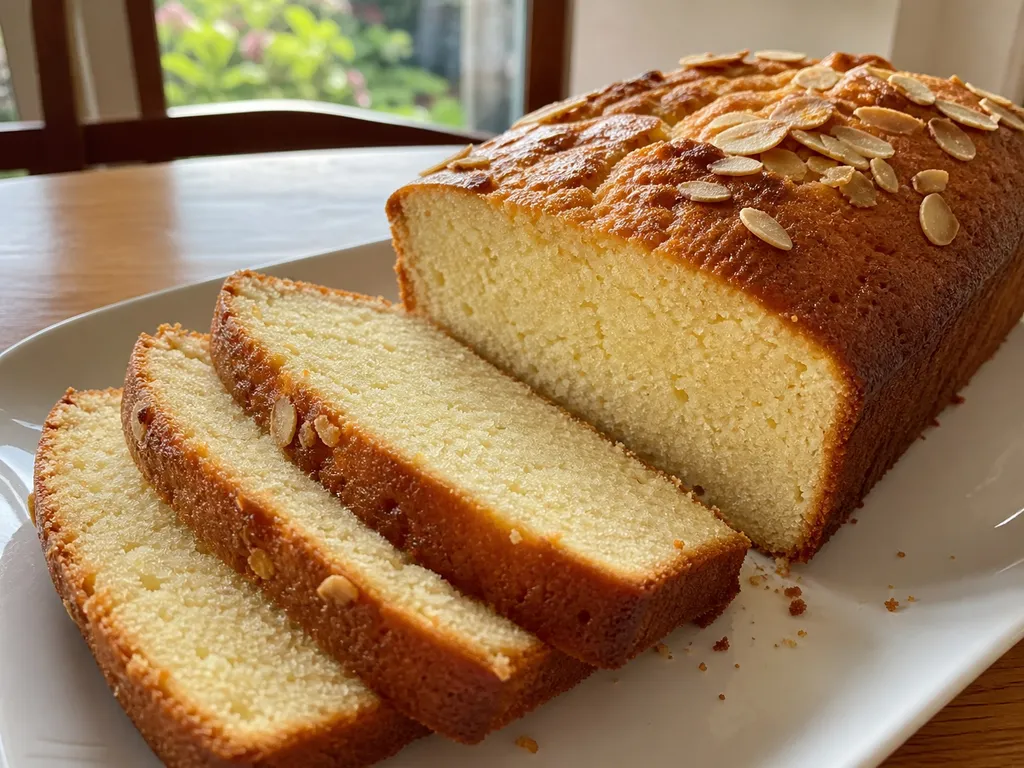 Images are for illustrative purposes only, may be inaccurate, and do not guarantee the presence or absence of specific ingredients.
 Listahan Family Score™
74/100
Good fit for most families
Score reflects how well this recipe fits a typical busy household. In the app, your Family Score is personalized to your household's allergens, kids, and pantry.
Nutrition
per serving370
Calories
6 g
Protein
52 g
Carbs
15 g
Fat
Estimated per serving. Actual values depend on the brands and portions you use.
Listahan cooking guide
Chef notes & practical guide
Technique notes, ingredient swaps, serve-alongside ideas, storage guidance, and equipment for this recipe.
Cultural context
Pound cake originated in early 18th-century Britain, named for the original formula of one pound each of butter, sugar, eggs, and flour, producing a dense, rich loaf that kept well without refrigeration. The almond variation draws on the French tradition of frangipane and the widespread use of almond paste in European baking, where the nut's natural oils produce a moister, more aromatic crumb. Almond paste-enriched pound cakes became popular in American home baking through the mid-20th century.
Listahan note
This version incorporates almond paste directly into the batter rather than relying solely on extract, producing a denser, moister crumb with genuine almond flavor that does not fade during baking.
Technique cues
- Cream the softened butter with the almond paste first before adding sugar; the paste needs to fully incorporate into the fat before other ingredients go in, or you will have visible lumps in the finished cake.
- Cornstarch in the flour mixture acts as a partial cake flour substitute, diluting the protein content and producing a more tender, finer crumb than all-purpose flour alone.
- Add eggs one at a time and beat for at least 45 seconds between each addition; the emulsion built during this step holds the batter together and prevents a greasy, dense result.
Kitchen flow
- Parallel prep
- While the oven preheats, grease and flour the loaf pan thoroughly (or use a baking spray with flour), and set the butter, eggs, and milk out to reach room temperature.
- Make-ahead
- Pound cake improves overnight as the almond flavor deepens; bake the day before, cool completely in the pan, then wrap in plastic wrap and slice the next day.
- Leftover move
- Slice day-old almond pound cake thick and pan-toast it in butter until golden on both sides; serve with fresh berries and a spoonful of mascarpone for a fast elegant dessert.
- Cleanup rhythm
- The loaf pan is the only major piece to wash; line it with parchment leaving an overhang on the long sides as a sling, and the cake lifts out cleanly with no scrubbing.
Ingredient brief
Role, handling, and swap guidance for each key ingredient.
2/3 cup butter (softened)
primary fat and structure
Purpose: Creamed butter traps air during beating, providing the lift that keeps a dense almond cake from being too heavy.
Handling: Butter should be fully softened at true room temperature (about 68 F); it should press easily with a finger but not be greasy or shiny.
Adaptation: European-style butter with higher fat content (84%) produces a richer, more golden crumb; do not use melted butter, which eliminates the creaming step entirely.
3 1/2 oz almond paste
almond flavor and moisture
Purpose: Almond paste (not marzipan, which has more sugar) contributes both authentic almond flavor and extra fat from ground almonds, making the crumb noticeably more tender and moist than extract alone.
Handling: Break the almond paste into small pieces before adding to the creamed butter so the mixer can fully incorporate it without lumps.
Adaptation: If almond paste is unavailable, add 1 teaspoon of almond extract and 2 tablespoons of finely ground blanched almonds, but the moisture and flavor will be noticeably less complex.
4 large eggs
structure, richness, and emulsification
Purpose: Eggs provide protein structure that holds the pound cake together and lecithin in the yolks emulsifies the fat into the batter.
Handling: Use room temperature eggs; cold eggs cause the butter to seize and break the emulsion, resulting in a curdled-looking batter that bakes into an uneven texture.
Adaptation: No good substitute for whole eggs in a pound cake; the structure and richness are both essential.
5 Tbsp cornstarch
protein dilution for tenderness
Purpose: Replacing a portion of flour with cornstarch lowers the overall protein content of the dry ingredients, producing a finer, more tender crumb similar to cake flour.
Handling: Whisk cornstarch thoroughly with the flour and baking powder before sifting; it clumps easily and needs to be evenly distributed.
Adaptation: Cake flour can replace the all-purpose flour and cornstarch combination directly at the same total weight; use 2 1/4 cups cake flour and omit the cornstarch.
1/2 cup milk
hydration and crumb softness
Purpose: Milk adds just enough liquid to bring the batter to a smooth, dropping consistency without thinning the dense pound cake structure.
Handling: Warm the milk briefly if the kitchen is cold to prevent it from tightening the batter when added.
Adaptation: Full-fat oat milk or almond milk work as dairy-free substitutes with minimal flavor impact given the strong almond paste flavor already in the batter.
Technique notes
- After the batter goes into the pan, run a wet knife or offset spatula lengthwise down the center of the top; this controlled split prevents the cake from cracking unpredictably during oven spring.
- Test doneness with a skewer at the thickest point at 55 minutes; pound cakes often take longer than estimated because the dense batter conducts heat slowly.
- Cool in the pan for 15 minutes before unmolding; inverting too soon while the structure is still hot can cause the sides to collapse inward.
Ingredient swaps
- Dairy-free option
- Replace butter with vegan butter sticks (not spread) and use almond milk; the almond-on-almond combination actually enhances the flavor profile.
- Gluten-free direction
- Replace the flour and cornstarch with 2 1/4 cups of a 1:1 gluten-free baking blend; the almond paste adds enough natural fat and moisture that the texture holds well.
- Citrus variation
- Add the zest of one lemon or orange to the butter-almond paste mixture; citrus and almond are a classic pairing that brightens the rich crumb.
Serve alongside
- fresh raspberry compote spooned alongside
- whipped cream with a few drops of amaretto stirred in
- thinly sliced peaches macerated with sugar and a splash of white wine
- amaretto on ice or a small pour of Frangelico
- a cup of strong espresso or Americano
- cold brew with cream
Serving suggestions only — check pairings for your household's allergens.
Storage & reheating
- Wrap tightly in plastic wrap at room temperature and eat within 3 days; the almond paste keeps the crumb moist longer than a plain butter cake.
- Refrigerate for up to 1 week; the cold firms the crumb, which makes it easier to slice very thin.
- Freeze whole or in slices wrapped individually in plastic then foil for up to 2 months; thaw at room temperature for 1-2 hours.
Equipment
- 9x5-inch loaf pan
- stand mixer with paddle attachment or electric hand mixer
- sifter or fine-mesh strainer for the dry ingredients
- skewer or cake tester for doneness
Make this household-aware
Listahan Pro checks this recipe against your household's allergens, finds pantry-aware swaps, builds the shopping list, and helps you plan the week around it.
Plan it in Listahan
Add Almond Pound Cake to your week, check it against your household's allergens, and build the shopping list automatically.
More Desserts recipes
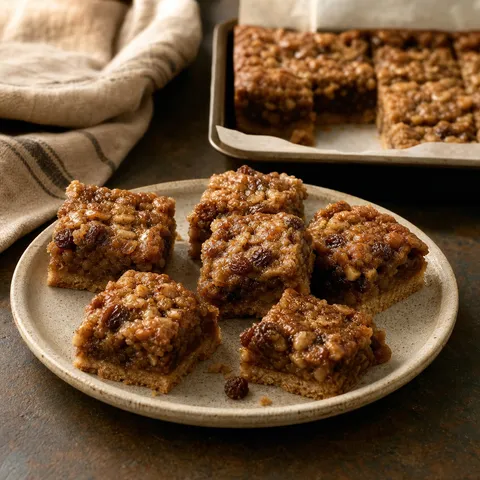 Desserts Lens Verified Images are for illustrative purposes only, may be inaccurate, and do not guarantee the presence or absence of specific ingredients.
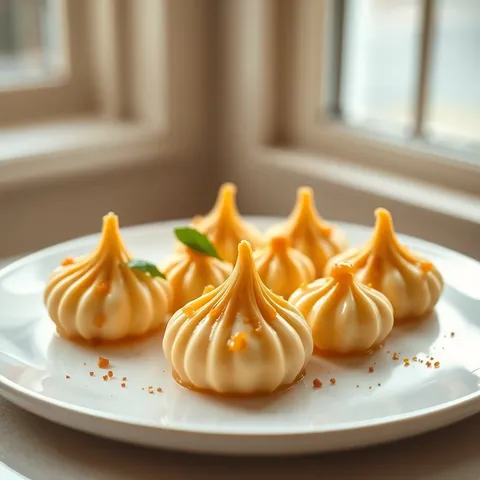
 Buttertart Squares
Chewy butter tart squares with a shortbread base and a gooey brown sugar, raisin, and walnut topping.
 Desserts Lens Verified Images are for illustrative purposes only, may be inaccurate, and do not guarantee the presence or absence of specific ingredients.
 Amber and Zach's Kisses
Light, crisp meringue kisses that melt in your mouth and make a pretty edible decoration.
 Desserts Lens Verified Images are for illustrative purposes only, may be inaccurate, and do not guarantee the presence or absence of specific ingredients.
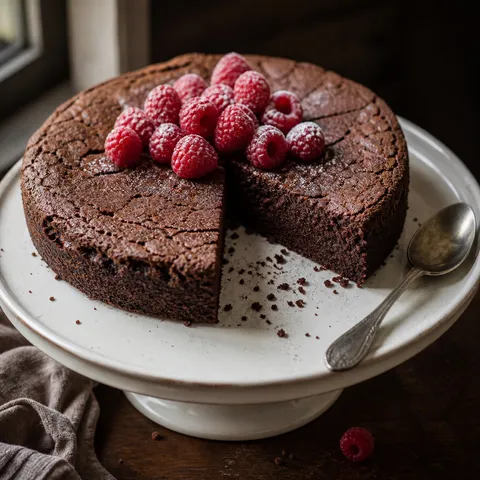
 Passover Flourless Chocolate Cake
A rich, dense flourless chocolate cake with no flour, matzo meal, or leavening — a naturally kosher-for-Passover dessert perfect for the seder table.