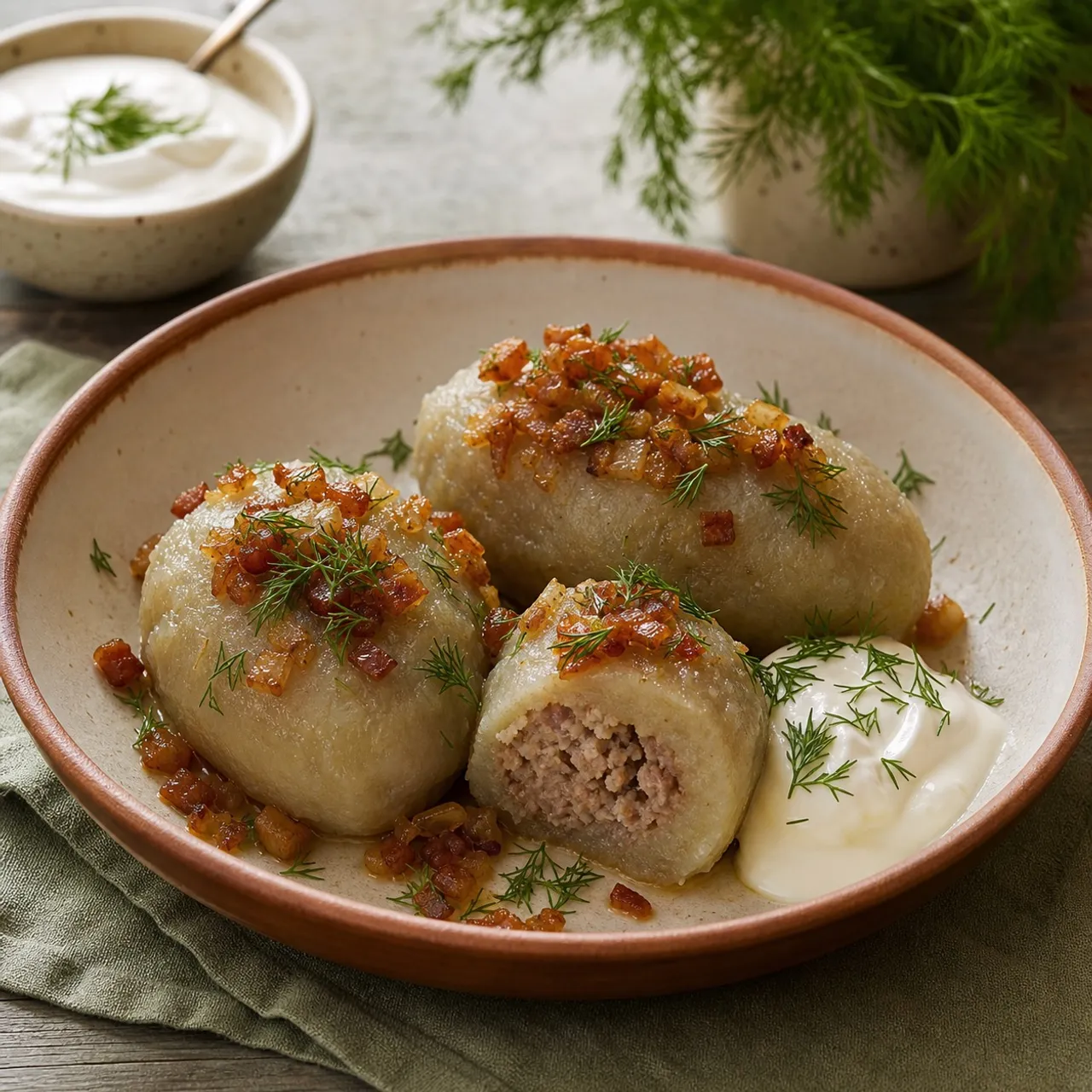
 Eastern European Images are for illustrative purposes only, may be inaccurate, and do not guarantee the presence or absence of specific ingredients.
 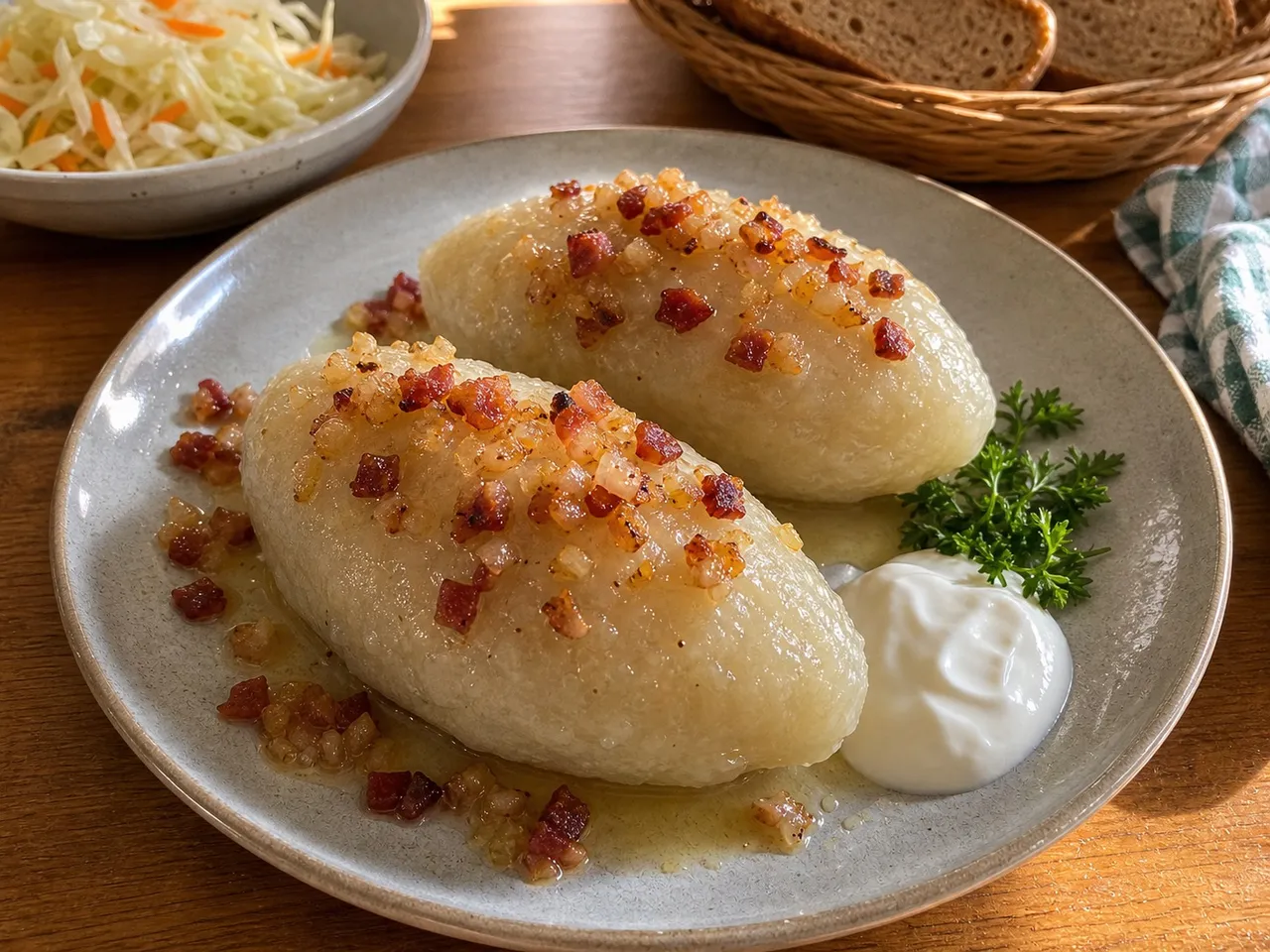 Serving Images are for illustrative purposes only, may be inaccurate, and do not guarantee the presence or absence of specific ingredients.
 Cepelinai
Lithuania's giant zeppelin-shaped potato dumplings stuffed with seasoned pork, boiled until tender, and crowned with crispy bacon and sour cream sauce.
Contains common allergens
In the app, Listahan checks these against your household automatically.
Good to know
- Crispy
Matched from this dish's own ingredients and timing. Browse more: crispy recipes
Instructions
8 steps- 1
Peel about three quarters of the potatoes and boil them until tender, then mash and let cool slightly; this forms the boiled potato base for the dough.
- 2
Peel and finely grate the remaining raw potatoes, then wrap the gratings in cheesecloth and squeeze out as much liquid as possible, reserving the starch that settles at the bottom of the liquid.
- 3
Combine the raw grated potato, the reserved starch, and the mashed boiled potato into a firm, cohesive dough.
- 4
Mix the ground pork with the grated onion, egg, salt, and pepper to make the filling.
- 5
Wet your hands, take a portion of the potato dough, flatten it into an oval in your palm, place a spoonful of the meat filling in the center, and enclose it fully into a large zeppelin-shaped dumpling.
- 6
Lower the cepelinai gently into a large pot of gently simmering salted water and cook for 35 to 45 minutes, until the dough turns slightly translucent and firm.
- 7
While they cook, fry the diced bacon until crisp and stir it into the sour cream.
- 8
Lift the cepelinai out carefully with a slotted spoon and serve topped with the bacon and sour cream sauce.
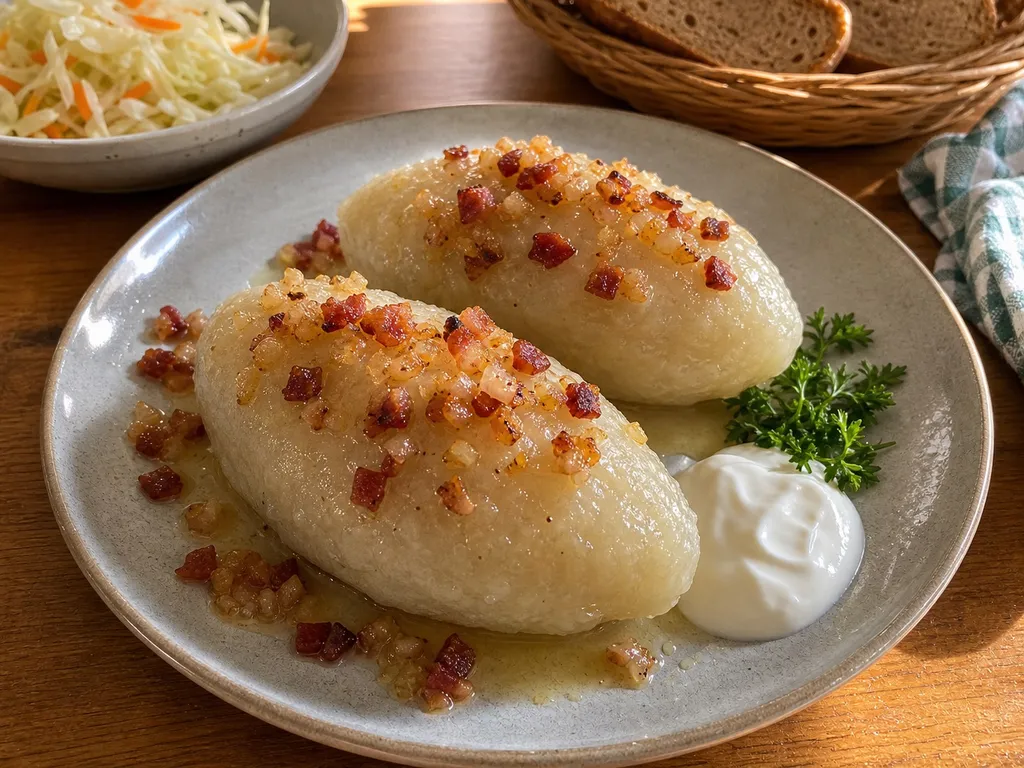 Images are for illustrative purposes only, may be inaccurate, and do not guarantee the presence or absence of specific ingredients.
 Listahan Family Score™
68/100
Works for many families
Score reflects how well this recipe fits a typical busy household. In the app, your Family Score is personalized to your household's allergens, kids, and pantry.
Nutrition
per serving600
Calories
40 g
Protein
64 g
Carbs
20 g
Fat
Estimated per serving. Actual values depend on the brands and portions you use.
Listahan cooking guide
Chef notes & practical guide
Technique notes, ingredient swaps, serve-alongside ideas, storage guidance, and equipment for this recipe.
Cultural context
Cepelinai are Lithuania's national dish and among the most demanding dumplings in the eastern European canon — large zeppelin-shaped potato dumplings stuffed with seasoned meat that require a specific ratio of raw to cooked potato to achieve the right dense, almost chewy wrapper that holds together through long boiling. The name itself reflects this shape, borrowed from the German Zeppelin airships whose silhouette the cooked dumplings were said to resemble. They were peasant food by necessity, making maximum use of the potato that sustained Lithuanian farming communities through long winters.
Listahan note
This version carefully addresses the raw-to-cooked potato ratio that determines whether your cepelinai hold together or fall apart in the water — getting that balance right is the whole technical challenge.
Technique cues
- The potato dough requires both raw grated potato (drained of as much starch liquid as possible) and an equal amount of riced cooked potato; the cooked portion binds the raw starch so the shell holds during the long boiling.
- Form the dumplings with wet hands and work quickly — raw potato oxidizes and turns pink on exposure to air, so assemble each dumpling immediately after portioning and lower it straight into simmering water.
- Simmer cepelinai at a very gentle bubble for 25 to 30 minutes; aggressive boiling breaks the fragile potato shell before it has time to fully cook and set.
Kitchen flow
- Parallel prep
- Boil and rice one batch of potatoes while you grate and drain the raw potatoes simultaneously; prepare and season the filling while both cool.
- Make-ahead
- Formed raw cepelinai can rest covered in the refrigerator for up to 4 hours before boiling, but they discolor as they sit so cook within the day they are assembled.
- Leftover move
- Pan-fry cold leftover cepelinai in butter or bacon fat over medium heat until crisped and golden on both sides — this is arguably better than the original boiled version.
- Cleanup rhythm
- Rinse starchy potato equipment in cold water immediately after use; hot water sets potato starch into a stubborn paste that is difficult to scrub off bowls and graters.
Ingredient brief
Role, handling, and swap guidance for each key ingredient.
russet potatoes
dumpling shell
Purpose: High-starch russets produce a potato dough that is dense enough to shape and hold together during boiling without becoming gummy or waterlogged.
Handling: Grate half raw and squeeze out liquid aggressively in a kitchen towel; boil and rice the other half and cool before combining so the mixture is workable.
Adaptation: Yukon Gold potatoes can be used for a slightly creamier, less starchy shell with more buttery flavor, though they are slightly more fragile.
ground pork
filling protein
Purpose: Pork provides the fat content needed to keep the filling moist through the extended boiling time without drying out inside the starchy shell.
Handling: Season generously with salt, pepper, and a small amount of grated onion; mix until just combined to avoid a dense, meatball-like texture.
Adaptation: Half beef and half pork is a common alternative; a sauteed mushroom and onion filling makes an excellent vegetarian version.
onion
aromatic in filling and topping
Purpose: Onion appears twice — grated raw in the filling for moisture and caramelized as a crispy bacon-fat topping that is the classic serving finish.
Handling: For the filling, grate raw and add directly; for the topping, dice and cook in rendered bacon fat until golden and beginning to crisp.
Adaptation: Shallots in the filling give a milder, less sulfurous note; green onions as a garnish can substitute for the fried onion topping.
bacon
crispy topping and flavor base
Purpose: Crisped bacon and its rendered fat constitute the traditional cepelinai topping and add the smoky, salty richness that the neutral potato shell lacks.
Handling: Cook low and slow in the pan until the fat renders fully and the strips crisp evenly; crumble over the plated dumplings with a spoonful of sour cream.
Adaptation: For a pork-free version, omit bacon and finish with browned butter, fried shallots, and fresh dill for a lighter but still rich topping.
sour cream
finishing sauce
Purpose: Full-fat sour cream is the standard accompaniment and provides an acidic, creamy contrast to the dense, starchy dumplings.
Handling: Serve cold alongside rather than heated over the dumplings so the cream stays silky rather than breaking.
Adaptation: Creme fraiche has a more delicate sourness and higher fat content; Greek yogurt is a lighter option with a sharper tang.
Technique notes
- Squeezing maximum liquid out of the raw potato is the single most important step — insufficient draining produces a wet, sticky dough that disintegrates in the water no matter how carefully you shape the dumplings.
- Test the first cepelinai alone before cooking the batch; lower it carefully into the simmering water and check after 10 minutes that it is holding together before committing all of them to the pot.
- The cooked dumplings should be slightly translucent at the surface when done — if they look chalky and opaque, give them 5 more minutes as the starch has not fully gelatinized.
Ingredient swaps
- Gluten-free direction
- Cepelinai are naturally gluten-free as written when the filling and toppings are prepared without wheat-containing additives; verify any seasoning blends used.
- Dairy-free direction
- Serve with a drizzle of good olive oil and crispy shallots in place of the sour cream topping for a dairy-free finish that still adds richness.
- Vegetarian direction
- Fill with sauteed mushrooms, caramelized onion, and fresh thyme in place of ground pork; increase the seasoning so the filling carries enough flavor against the neutral potato shell.
Serve alongside
- simple shredded beet salad with vinegar
- pickled cucumber spears
- buttered dark rye bread
- cold Lithuanian kvass
- cold lager beer
Serving suggestions only — check pairings for your household's allergens.
Storage & reheating
- Cooked cepelinai keep refrigerated for up to 3 days; store with a drizzle of oil to prevent them from sticking together. Reheat by pan-frying in butter until heated through and crisped rather than microwaving, which makes the exterior gummy. Raw assembled dumplings should be cooked the same day they are formed.
Equipment
- box grater with large holes for the raw potato
- potato ricer for the cooked potato component
- large wide pot with room for the dumplings to float without touching
Make this household-aware
Listahan Pro checks this recipe against your household's allergens, finds pantry-aware swaps, builds the shopping list, and helps you plan the week around it.
Plan it in Listahan
Add Cepelinai to your week, check it against your household's allergens, and build the shopping list automatically.
More Eastern European recipes
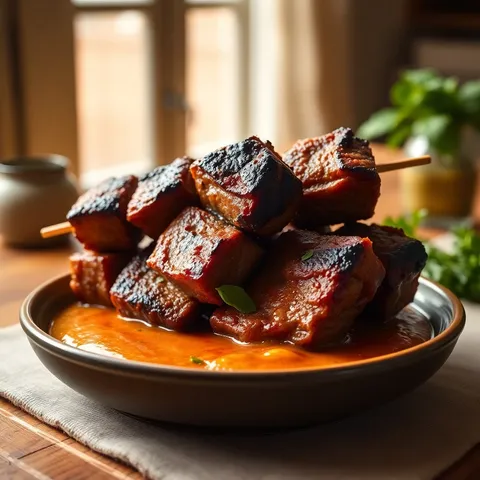 Eastern European Lens Verified Images are for illustrative purposes only, may be inaccurate, and do not guarantee the presence or absence of specific ingredients.
 Shashlik
Smoky, charred cubes of marinated lamb or pork threaded on skewers and grilled over embers — Central Asia's festive open-fire classic, fragrant with onion and spice.
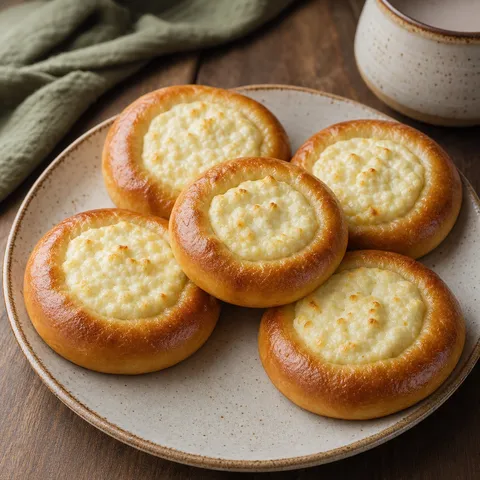 Eastern European Lens Verified Images are for illustrative purposes only, may be inaccurate, and do not guarantee the presence or absence of specific ingredients.
 Vatrushka
Soft, pillowy Russian buns filled with a sweetened quark or farmer's cheese center — lightly golden and gently sweet, perfect alongside tea or coffee.
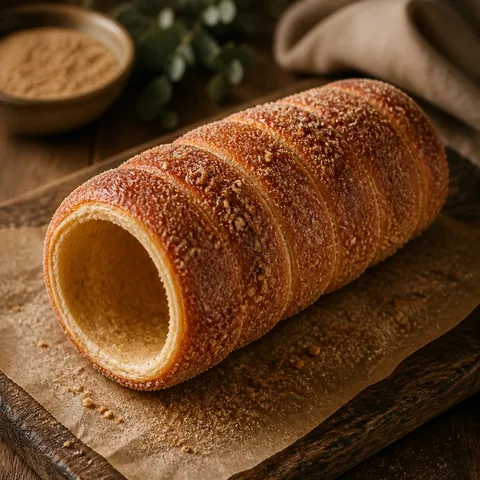 Eastern European Lens Verified Images are for illustrative purposes only, may be inaccurate, and do not guarantee the presence or absence of specific ingredients.
 Kurtosh Kalach
Hungary's iconic chimney cake — sweet yeast dough spiraled around a spit, rolled in cinnamon sugar, and roasted until the outside caramelizes into a crackly, warm shell.