 Eastern European Images are for illustrative purposes only, may be inaccurate, and do not guarantee the presence or absence of specific ingredients.
 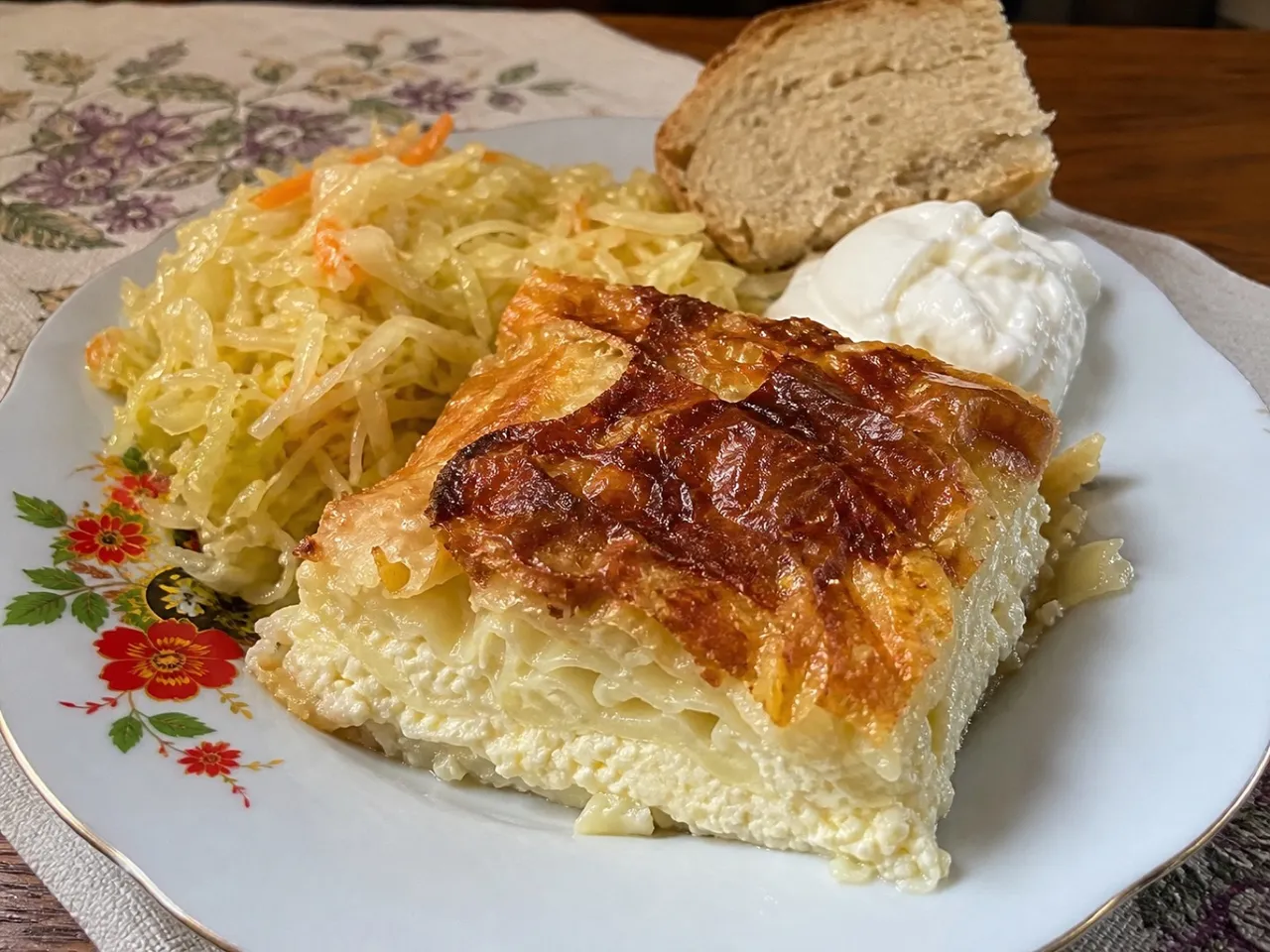 Serving Images are for illustrative purposes only, may be inaccurate, and do not guarantee the presence or absence of specific ingredients.
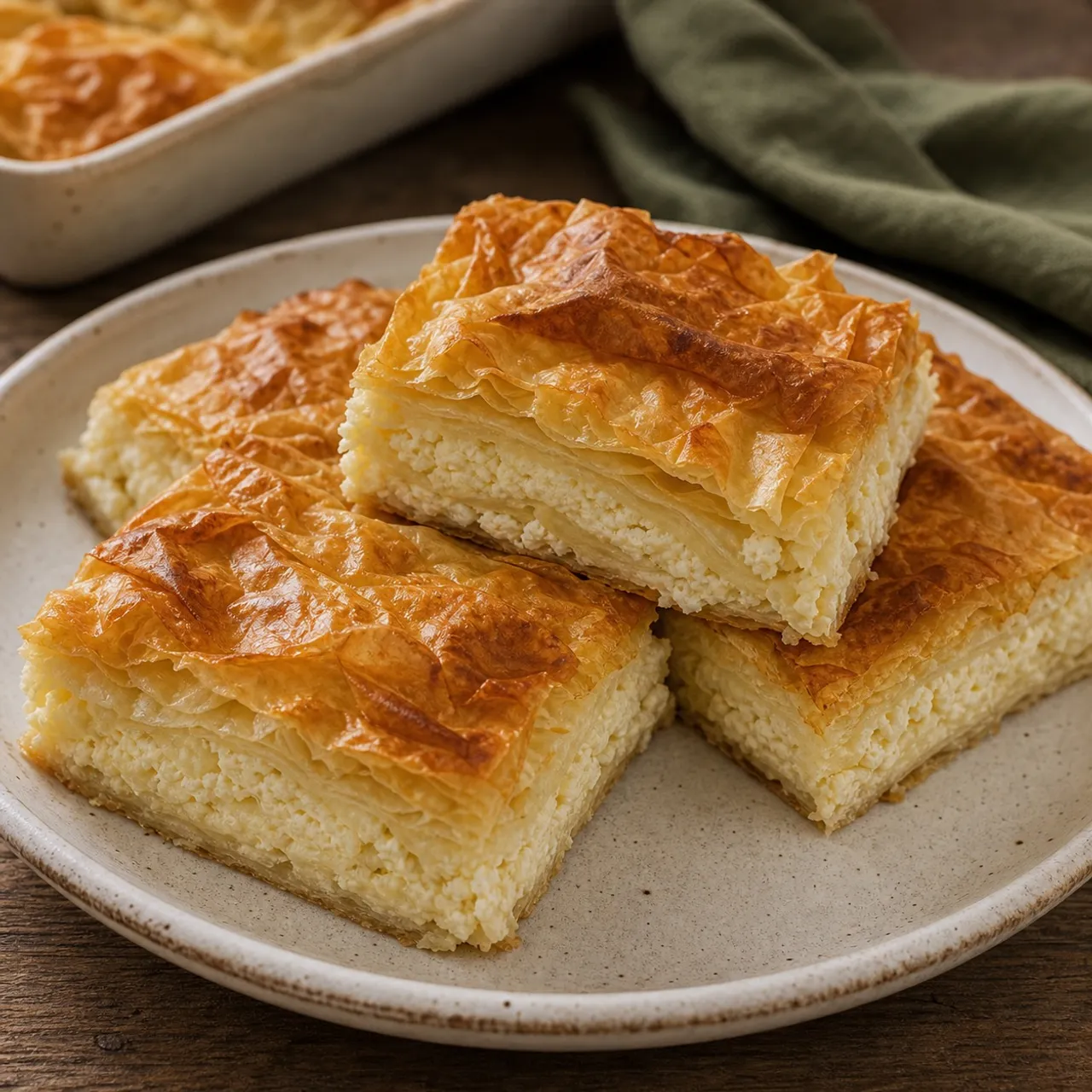
 Gibanica
Serbia's rustic layered cheese pie — crumpled filo, tangy white cheese, and egg baked together into a golden, creamy pastry that works for breakfast or any meal.
Contains common allergens
In the app, Listahan checks these against your household automatically.
Instructions
8 steps- 1
Preheat the oven to 375 degrees F and generously butter a 9x13-inch baking dish.
- 2
In a bowl, whisk together the eggs, yogurt, milk, and salt until smooth, then fold in the crumbled feta and cottage cheese.
- 3
Take a sheet of filo, crumple it loosely by hand into a loose ball, and set it into the dish. Repeat with a few more sheets to cover the bottom in a rustic, crumpled layer.
- 4
Drizzle a portion of the melted butter and a ladle of the cheese mixture over the crumpled filo.
- 5
Continue layering crumpled filo sheets, butter, and cheese mixture in this fashion until all the filo and filling are used, finishing with a layer of filo brushed generously with butter.
- 6
Pour any remaining cheese mixture evenly over the top so it seeps down through the layers.
- 7
Bake for 35 to 40 minutes until the top is deep golden brown and a knife inserted comes out mostly clean.
- 8
Let the pie rest for 10 minutes before cutting into squares and serving warm.
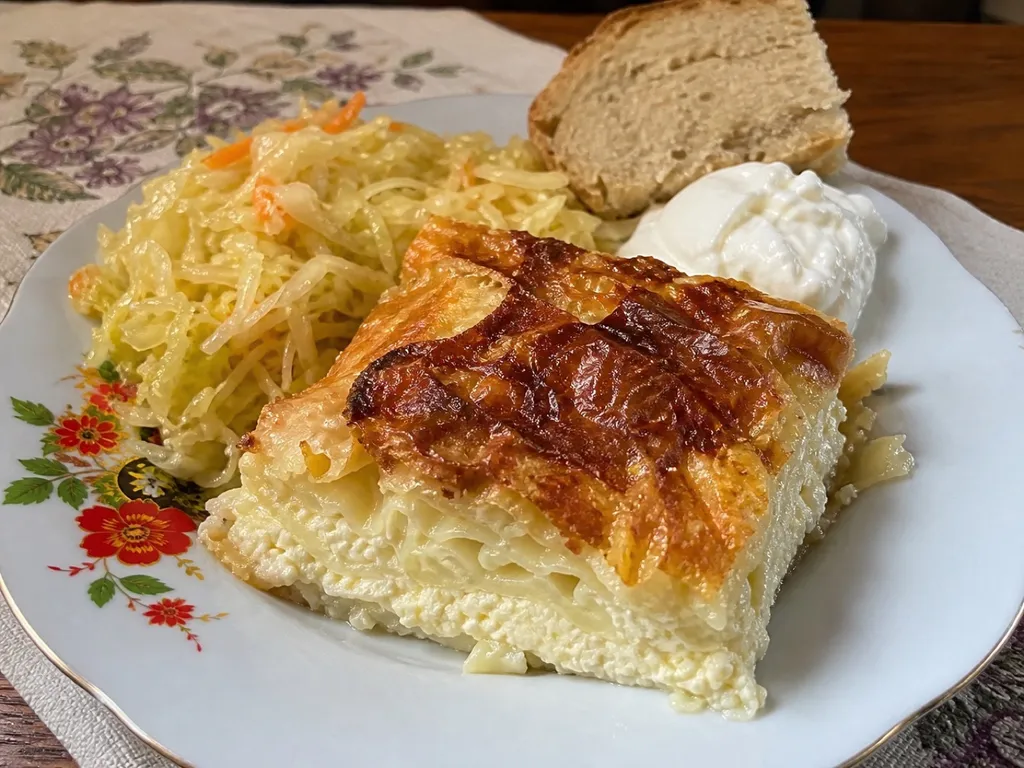 Images are for illustrative purposes only, may be inaccurate, and do not guarantee the presence or absence of specific ingredients.
 Listahan Family Score™
75/100
Good fit for most families
Score reflects how well this recipe fits a typical busy household. In the app, your Family Score is personalized to your household's allergens, kids, and pantry.
Nutrition
per serving630
Calories
27 g
Protein
86 g
Carbs
20 g
Fat
Estimated per serving. Actual values depend on the brands and portions you use.
Listahan cooking guide
Chef notes & practical guide
Technique notes, ingredient swaps, serve-alongside ideas, storage guidance, and equipment for this recipe.
Cultural context
Gibanica is Serbia's most beloved savory pastry — a baked filo pie filled with white cheese and eggs that is related to Bulgarian banitsa and Greek tiropita but follows its own distinct construction method. Traditional Serbian gibanica uses a crumple-and-layer technique rather than flat sheets: filo is scrunched into loose ruffles and layered with the filling, producing a more irregular, dramatic interior with crunch in some places and soft creamy filling pockets in others. It is served at every occasion from weekday breakfast to wedding tables and is considered a reliable test of a cook's feel for pastry.
Listahan note
This version uses the crumpling technique rather than flat layering because the irregular texture it creates is what distinguishes gibanica from its regional cousins and is genuinely easier to execute than precise flat layering.
Technique cues
- Do not spread the filling in even layers — pour it generously between each crumpled filo layer and let gravity distribute it unevenly, which creates the contrasting wet and crispy pockets that define proper gibanica.
- Crumple each filo sheet loosely rather than folding it; tight folding produces a dense, compressed pastry while loose crumpling creates the open structure that traps filling between the layers.
- Bake in a deep pan and expect the center to rise significantly; the egg-based filling puffs as it sets and a shallow pan will cause overflow — use at least 3-inch-deep sides.
Kitchen flow
- Parallel prep
- Mix the filling completely and have it ready before unwrapping the filo so you can work through the assembly in one uninterrupted sequence while the filo stays moist.
- Make-ahead
- Assemble gibanica up to 12 hours ahead, cover tightly, and refrigerate; bring to room temperature for 20 minutes before baking for even cooking throughout.
- Leftover move
- Gibanica reheats to near-original quality in a 350 F oven for 10 minutes; eat cold straight from the refrigerator and it reads as a satisfying snack with a coffee on the side.
- Cleanup rhythm
- Grease the baking pan generously and use parchment on the bottom before building layers; filo that bakes onto an ungreased pan base welds to it and tears when you try to serve.
Ingredient brief
Role, handling, and swap guidance for each key ingredient.
filo dough
layered crumple wrapper
Purpose: The thin filo sheets crumple into irregular forms that bake into a combination of crispy shards and softer, filling-saturated sections that is the textural signature of gibanica.
Handling: Thaw completely and bring to room temperature before working; cold filo tears when crumpled rather than folding gracefully into ruffles.
Adaptation: Homemade pulled dough (yufka) produces a slightly thicker, chewier result that is traditional but takes skill to pull thin enough.
cottage cheese or ricotta
filling body
Purpose: A fresh, mild cheese gives the filling a creamy, slightly fluffy body that contrasts with the salty feta and creates the layered complexity in each bite.
Handling: Drain cottage cheese in a fine mesh strainer for 30 minutes before using to remove excess whey that would make the filling too wet.
Adaptation: Strained Greek yogurt blended with the egg achieves a similar effect with a tangier note if you find cottage cheese too mild.
feta cheese
salty, tangy filling element
Purpose: Crumbled feta provides the dominant savory seasoning of the filling, approximating the Serbian beli sir (white cheese) that gibanica traditionally uses.
Handling: Crumble finely so it distributes throughout the filling mixture rather than sitting in larger pieces that create uneven salty pockets.
Adaptation: Serbian or Bulgarian white cheese (beli sir) is the authentic choice and worth seeking out from Eastern European specialty markets if available in your area.
eggs
filling setter and top glaze
Purpose: Eggs set the filling into a custardy consistency during baking and brushed on the top layer promote the deep golden-brown crust the finished pastry needs.
Handling: Reserve one egg for the top glaze; whisk the rest thoroughly into the cheese mixture so the filling sets evenly throughout the pan.
Adaptation: Additional yogurt can partially replace eggs in the filling for a more tangy, less custardy result if preferred.
sparkling water
filling lightener
Purpose: A splash of sparkling water whisked into the filling creates a slightly lighter, airier set that makes the finished gibanica feel less dense in the center.
Handling: Add just before baking and mix gently so the carbonation is not entirely lost before the batter goes into the pan.
Adaptation: Plain water works but produces a denser, more compact filling; the sparkling water step is a small upgrade worth keeping.
Technique notes
- Pour the last third of the filling mixture over the final crumpled filo layer rather than stopping filling earlier; the top needs to be just as saturated as the rest or it bakes up dry and papery rather than golden and set.
- A light drizzle of sunflower oil over the very top before the egg glaze promotes a more even, lacquered brown surface rather than patchy browning where the glaze pooled.
- Cut gibanica into squares rather than wedges while still warm — as it cools, the filling firms up and cold gibanica cuts much more cleanly without the layers separating.
Ingredient swaps
- Gluten-free direction
- Gluten-free filo is available from specialty suppliers and substitutes directly; the crumpling method actually works well with more fragile GF filo sheets.
- Lower-sodium direction
- Rinse the feta and reduce by half, replacing with an equal amount of additional cottage cheese; the filling reads less salty while retaining its creamy character.
- Weeknight shortcut
- Use puff pastry on the bottom and top of the pan with the filling in between for a quick version that bakes faster and does not require crumpling technique.
Serve alongside
- plain yogurt for dipping
- fresh tomato and cucumber salad
- strong black coffee for a breakfast pairing
- cold ayran (yogurt drink)
- Serbian rakija (fruit brandy) for a festive occasion
Serving suggestions only — check pairings for your household's allergens.
Storage & reheating
- Gibanica keeps at room temperature loosely covered for up to 1 day, refrigerated for up to 3 days. The filo softens as it sits but retains its flavor fully. Reheat in a 350 F oven for 10 minutes to restore some crispiness to the top crust. Not recommended for freezing as the filo becomes soggy upon thawing.
Equipment
- deep 9x13 or round 10-inch baking pan with 3-inch sides
- pastry brush for oiling layers and egg glazing
- large kitchen towel for covering filo while working
Make this household-aware
Listahan Pro checks this recipe against your household's allergens, finds pantry-aware swaps, builds the shopping list, and helps you plan the week around it.
Plan it in Listahan
Add Gibanica to your week, check it against your household's allergens, and build the shopping list automatically.
More Eastern European recipes
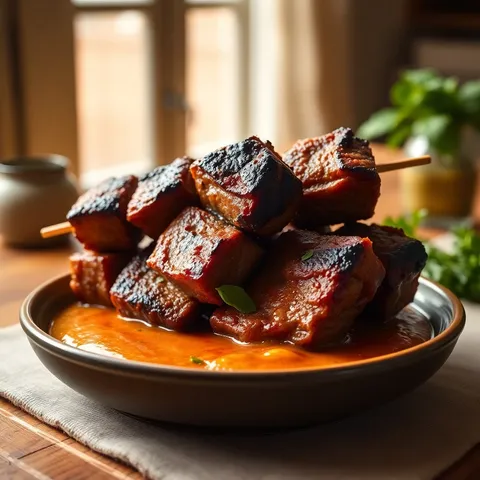 Eastern European Lens Verified Images are for illustrative purposes only, may be inaccurate, and do not guarantee the presence or absence of specific ingredients.
 Shashlik
Smoky, charred cubes of marinated lamb or pork threaded on skewers and grilled over embers — Central Asia's festive open-fire classic, fragrant with onion and spice.
 Eastern European Lens Verified Images are for illustrative purposes only, may be inaccurate, and do not guarantee the presence or absence of specific ingredients.
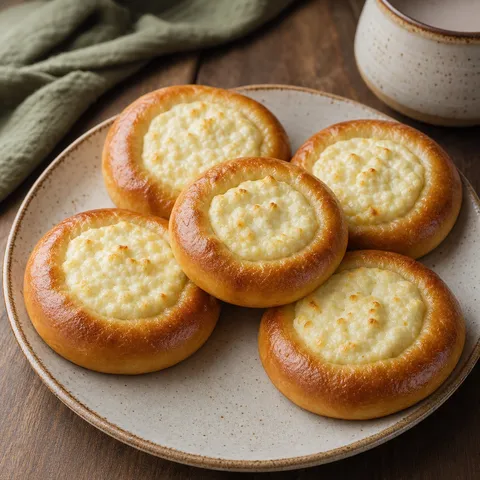
 Vatrushka
Soft, pillowy Russian buns filled with a sweetened quark or farmer's cheese center — lightly golden and gently sweet, perfect alongside tea or coffee.
 Eastern European Lens Verified Images are for illustrative purposes only, may be inaccurate, and do not guarantee the presence or absence of specific ingredients.
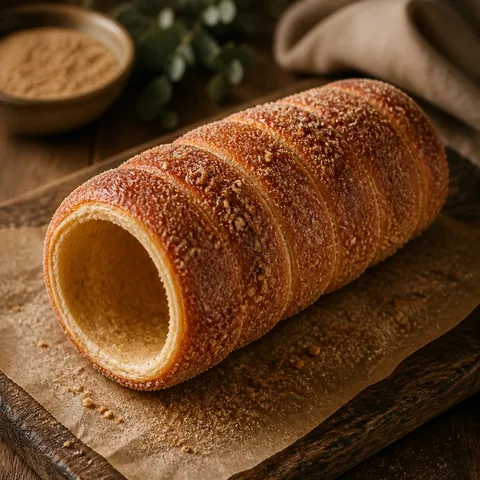
 Kurtosh Kalach
Hungary's iconic chimney cake — sweet yeast dough spiraled around a spit, rolled in cinnamon sugar, and roasted until the outside caramelizes into a crackly, warm shell.