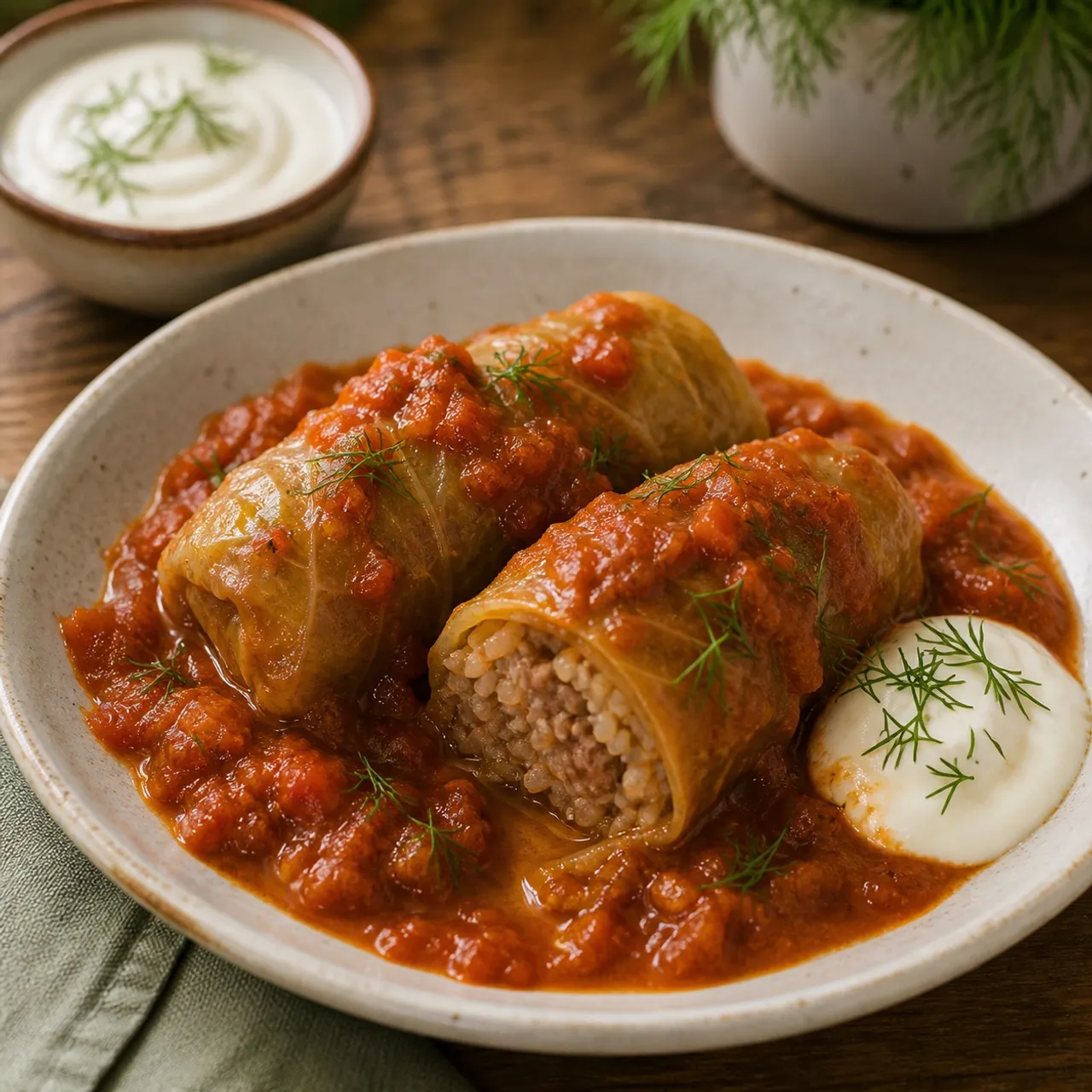
 Eastern European Images are for illustrative purposes only, may be inaccurate, and do not guarantee the presence or absence of specific ingredients.
 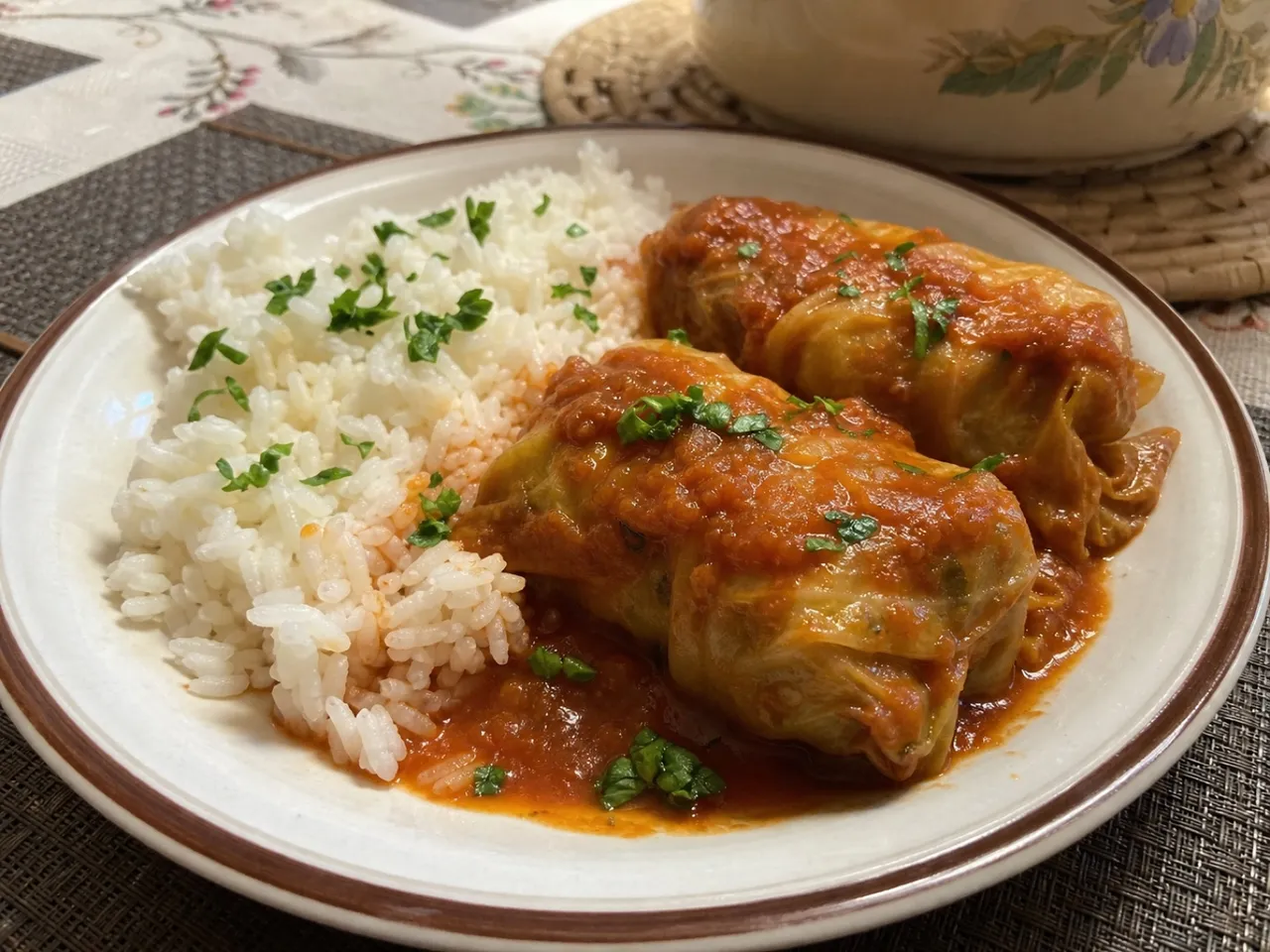 Serving Images are for illustrative purposes only, may be inaccurate, and do not guarantee the presence or absence of specific ingredients.
 Golabki
Polish cabbage rolls filled with seasoned ground pork and rice, baked in a sweet-tangy tomato sauce until tender — the warm, stick-to-your-ribs heart of Polish home cooking.
Contains common allergens
In the app, Listahan checks these against your household automatically.
Good to know
- One-pot
Matched from this dish's own ingredients and timing. Browse more: one-pot dinners
Instructions
8 steps- 1
Core the cabbage and boil it whole in a large pot of salted water for 8 to 10 minutes, peeling off softened outer leaves as they loosen, until you have 12 to 14 pliable leaves.
- 2
Shave down the thick center rib of each leaf with a knife so it folds easily.
- 3
In a bowl, combine the ground pork, cooked rice, chopped onion, egg, salt, pepper, and marjoram until evenly mixed.
- 4
Place a portion of filling near the base of each cabbage leaf, fold in the sides, and roll up tightly into a snug bundle.
- 5
Melt the butter in a large pot and lightly saute a few shredded extra cabbage leaves on the bottom as a bed, then arrange the rolls seam-side down on top.
- 6
Stir the brown sugar into the crushed tomatoes and pour over the rolls, adding enough water to come halfway up the sides.
- 7
Cover and simmer gently, or bake at 350 F, for about 1.5 hours, until the cabbage is tender and the filling is cooked through.
- 8
Let rest 10 minutes before serving the rolls spooned with plenty of the tomato sauce.
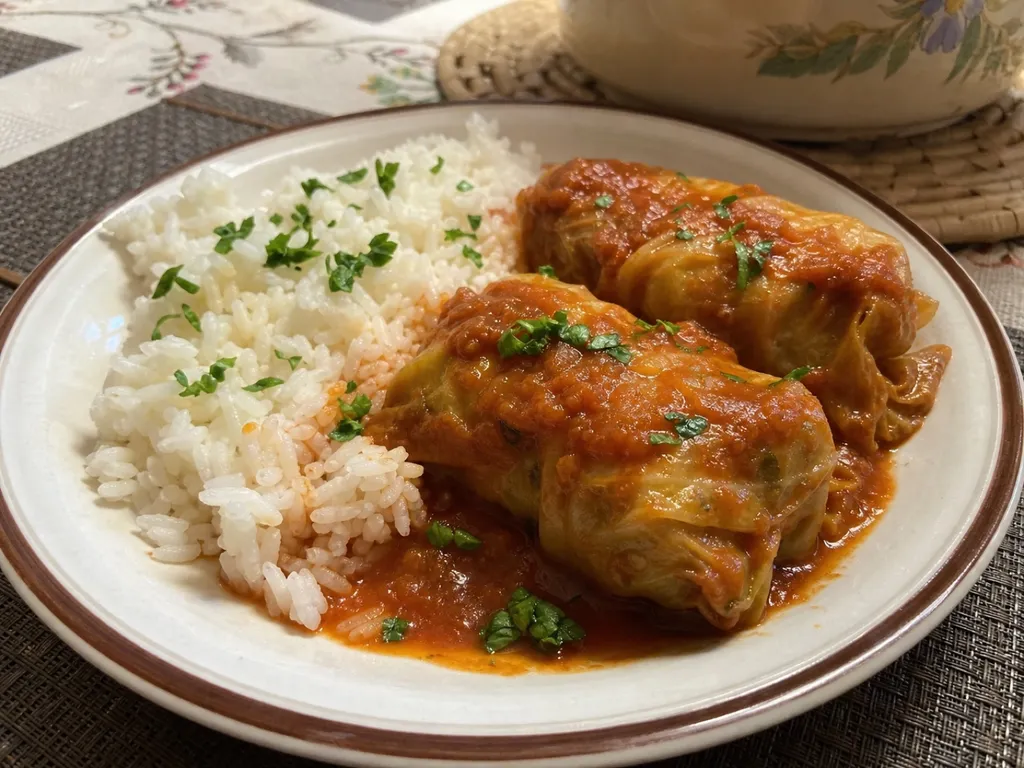 Images are for illustrative purposes only, may be inaccurate, and do not guarantee the presence or absence of specific ingredients.
 Listahan Family Score™
68/100
Works for many families
Score reflects how well this recipe fits a typical busy household. In the app, your Family Score is personalized to your household's allergens, kids, and pantry.
Nutrition
per serving425
Calories
36 g
Protein
34 g
Carbs
17 g
Fat
Estimated per serving. Actual values depend on the brands and portions you use.
Listahan cooking guide
Chef notes & practical guide
Technique notes, ingredient swaps, serve-alongside ideas, storage guidance, and equipment for this recipe.
Cultural context
Golabki — Polish cabbage rolls — translate literally to 'little pigeons,' a whimsical name attached to what is in reality a deeply pragmatic dish that stretches a small amount of ground meat into a filling meal by wrapping it in blanched cabbage leaves with rice and braising it in tomato sauce for hours. The dish appears in essentially the same form across most of central and eastern Europe under different names — holubtsi in Ukraine, sarmale in Romania, sarma in the Balkans — testimony to the shared agricultural and culinary heritage of the region.
Listahan note
This version braises the rolls slowly in tomato sauce on the stovetop, which allows the sauce to reduce into the cabbage and gives the finished dish the deeply savory, almost sweet quality that distinguishes a good golabki from an institutional cafeteria roll.
Technique cues
- Freeze the whole cabbage head overnight and thaw before separating the leaves; freezing ruptures the cell walls so the leaves become pliable without blanching and tear far less during rolling.
- The filling should feel slightly loose and wet before rolling — the rice absorbs moisture from the braising liquid while cooking and if the filling is too compact it will expand and split the cabbage seam.
- Layer the finished rolls seam-side down in the pot and pour the tomato sauce directly over them before covering; the weight of the sauce keeps them from unrolling during the long braise.
Kitchen flow
- Parallel prep
- Soften and separate the cabbage leaves (by freezing ahead or blanching) while you mix and season the filling so you can roll immediately when both are ready.
- Make-ahead
- Golabki actually improve significantly after an overnight rest — assemble and braise, then cool and refrigerate; the sauce concentrates and the rolls absorb it further overnight.
- Leftover move
- Reheat golabki covered over low heat with a splash of additional tomato or water; they freeze beautifully in their sauce for up to 3 months.
- Cleanup rhythm
- Use a Dutch oven or wide braising pot large enough that rolls are in a single layer without stacking; double layers cook unevenly and the bottom ones may over-braise.
Ingredient brief
Role, handling, and swap guidance for each key ingredient.
green cabbage
wrapper
Purpose: The large outer leaves of a green cabbage are pliable enough to roll tightly around the filling and remain intact through a long braise without falling apart.
Handling: Core the cabbage before blanching or freezing so the boiling water can penetrate between leaves; peel leaves carefully once softened, trimming the thick central rib so they roll flat.
Adaptation: Savoy cabbage has a more delicate texture and slightly sweeter flavor; napa cabbage works but cooks faster and may become too soft during a long braise.
ground pork
filling protein
Purpose: Pork's fat content keeps the filling moist during the extended braising time and contributes a richness that leaner meats cannot match in this preparation.
Handling: Combine with raw rice, grated onion, and seasoning; mix gently so the filling stays somewhat loose rather than compressed into a tight meatball.
Adaptation: A half-pork, half-beef mix is common and classic; ground turkey works for a leaner option but benefits from the addition of a tablespoon of oil to compensate for the lower fat.
uncooked white rice
filling binder and extender
Purpose: Raw rice is added directly to the filling and finishes cooking in the braising liquid, absorbing the tomato sauce and binding the meat mixture into a cohesive stuffing.
Handling: Use short-grain rice for a stickier, better-binding result; add raw without pre-rinsing so the surface starch helps the filling hold together.
Adaptation: Barley can substitute for a chewier, nuttier texture; cooked rice can be used but halve the braising liquid as there is no raw starch left to absorb it.
crushed tomatoes
braising liquid
Purpose: Tomato provides the acidity and sweetness that tenderizes the cabbage and bastes the rolls in a sauce that reduces to a concentrated, slightly caramelized finish.
Handling: Mix with a cup of water or stock before pouring over the rolls so the sauce reaches the rolls on the bottom of the pot rather than just the top layer.
Adaptation: A jar of prepared tomato passata works equally well; sauerkraut juice mixed with tomato (a traditional variation) adds a pleasant sour note to the sauce.
Technique notes
- Trim the thick central rib of each cabbage leaf with a sharp knife flush with the leaf surface before rolling; an untrimmed rib creates a hard bump in the roll that prevents a tight seal.
- Braise on the stovetop over the lowest heat your burner allows for at least 90 minutes rather than rushing in the oven — slow braising collapses the cabbage into the filling until the two are nearly indistinguishable.
- A spoonful of sour cream stirred into the braising sauce just before serving rounds out the tomato's acidity and creates the creamy-tomatoey finish that is the signature of the Polish home version.
Ingredient swaps
- Gluten-free direction
- Golabki as written are naturally gluten-free when the filling and sauce use no wheat-based fillers or thickeners; confirm any prepared tomato sauce brands you use.
- Dairy-free direction
- Skip the sour cream finish and stir a tablespoon of coconut cream or cashew cream into the sauce instead for richness without dairy.
- Vegetarian direction
- Fill with a mixture of cooked mushrooms, onion, brown rice, and fresh thyme — season aggressively so the filling is as savory as the meat version.
Serve alongside
- mashed potatoes with butter and dill
- dark rye bread for soaking up sauce
- pickled beet salad
- cold Polish lager
- dry cider
Serving suggestions only — check pairings for your household's allergens.
Storage & reheating
- Golabki keep refrigerated in their braising sauce for up to 4 days and improve as they sit. Reheat covered over low heat until warmed through, adding a splash of water if the sauce has thickened too much. Golabki freeze well in their sauce for up to 3 months; thaw overnight in the refrigerator before reheating.
Equipment
- Dutch oven or wide braising pot with a tight-fitting lid
- sharp knife for trimming cabbage ribs
- large bowl for mixing the filling
Make this household-aware
Listahan Pro checks this recipe against your household's allergens, finds pantry-aware swaps, builds the shopping list, and helps you plan the week around it.
Plan it in Listahan
Add Golabki to your week, check it against your household's allergens, and build the shopping list automatically.
More Eastern European recipes
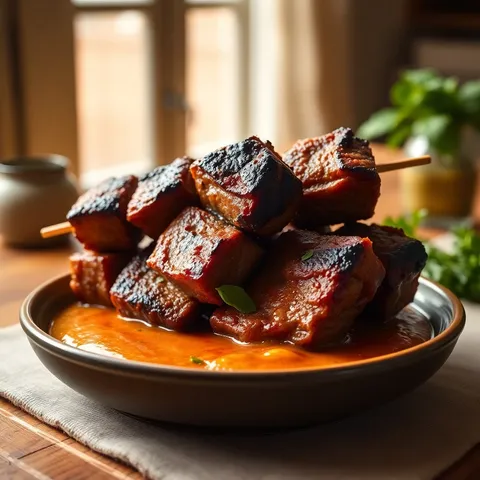 Eastern European Lens Verified Images are for illustrative purposes only, may be inaccurate, and do not guarantee the presence or absence of specific ingredients.
 Shashlik
Smoky, charred cubes of marinated lamb or pork threaded on skewers and grilled over embers — Central Asia's festive open-fire classic, fragrant with onion and spice.
 Eastern European Lens Verified Images are for illustrative purposes only, may be inaccurate, and do not guarantee the presence or absence of specific ingredients.
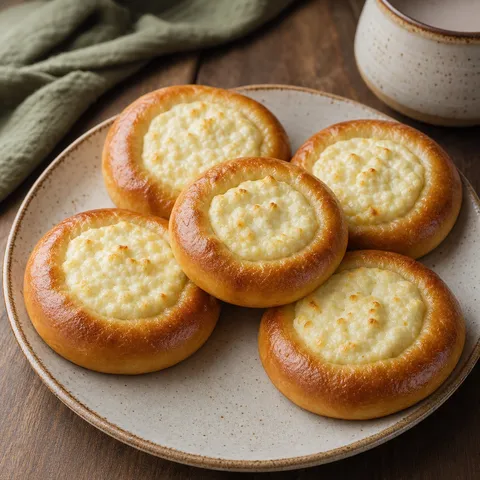
 Vatrushka
Soft, pillowy Russian buns filled with a sweetened quark or farmer's cheese center — lightly golden and gently sweet, perfect alongside tea or coffee.
 Eastern European Lens Verified Images are for illustrative purposes only, may be inaccurate, and do not guarantee the presence or absence of specific ingredients.
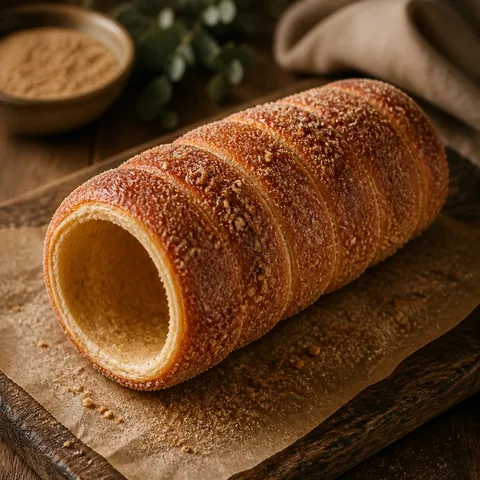
 Kurtosh Kalach
Hungary's iconic chimney cake — sweet yeast dough spiraled around a spit, rolled in cinnamon sugar, and roasted until the outside caramelizes into a crackly, warm shell.