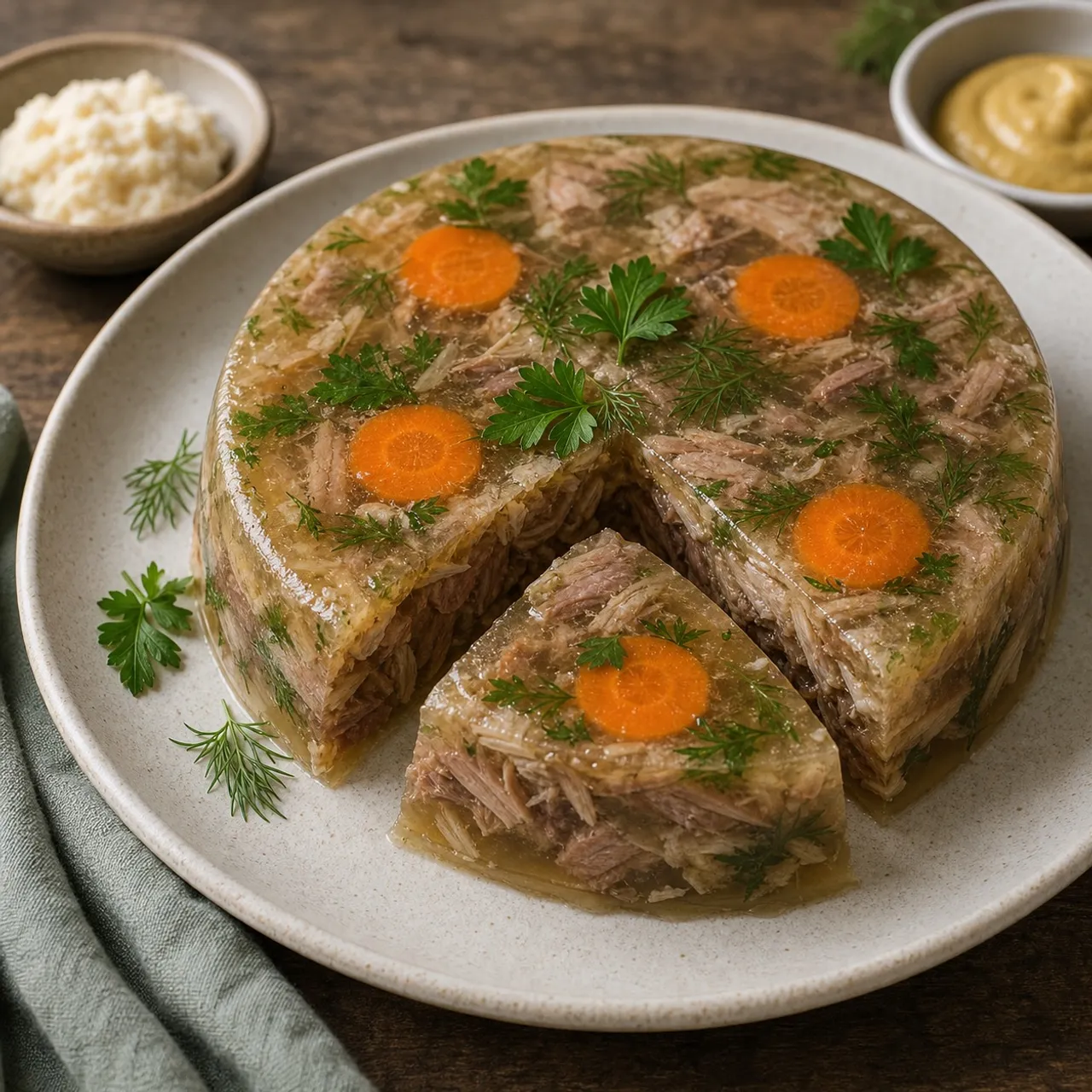
 Eastern European Images are for illustrative purposes only, may be inaccurate, and do not guarantee the presence or absence of specific ingredients.
 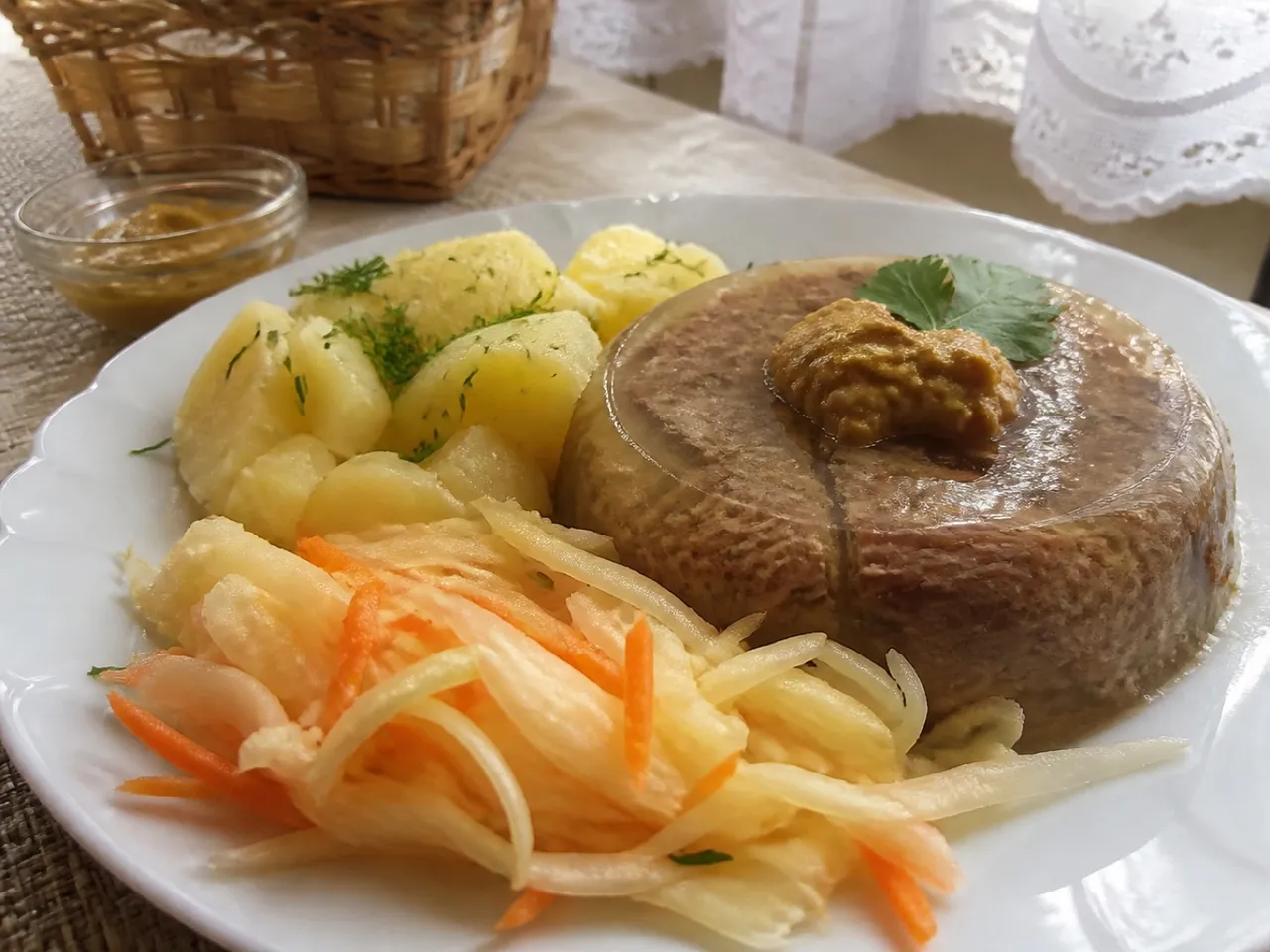 Serving Images are for illustrative purposes only, may be inaccurate, and do not guarantee the presence or absence of specific ingredients.
 Kholodets
Slow-simmered pork or veal set in a crystal-clear, savory aspic — a traditional Slavic cold dish served with sharp mustard and horseradish at festive gatherings.
Contains common allergens
In the app, Listahan checks these against your household automatically.
Good to know
- One-pot
Matched from this dish's own ingredients and timing. Browse more: one-pot dinners
Instructions
8 steps- 1
Place the trotters, shank, and shoulder in a large stockpot and cover with cold water. Bring to a boil, then drain and rinse the meat and pot thoroughly to remove impurities for a clearer stock.
- 2
Return the meat to the clean pot and cover with fresh cold water by about 2 inches. Bring to a bare simmer, skimming off any foam that rises.
- 3
Add the onion halves, carrots, bay leaves, and peppercorns. Partially cover and simmer very gently, barely bubbling, for 5 to 6 hours, until the meat falls off the bone and the broth is rich with released collagen.
- 4
About 30 minutes before the end of cooking, stir in the garlic cloves and season the broth generously with salt, tasting to ensure it is slightly saltier than you want the finished dish, since chilling mutes seasoning.
- 5
Strain the broth through a fine sieve into a clean bowl or pot, discarding the onion, bay leaves, and peppercorns, and reserve the meat and carrots separately to cool slightly.
- 6
Pick the meat from the bones, discarding skin, cartilage you do not want, and bone, and shred or dice it into bite-sized pieces. Slice the cooked carrots.
- 7
Divide the meat and sliced carrots among shallow dishes or a large flat pan, then ladle the strained broth over top so it fully covers the meat.
- 8
Refrigerate uncovered until fully set into a firm, clear aspic, at least 6 hours or overnight, then slice into portions and serve cold with sharp mustard and grated horseradish.
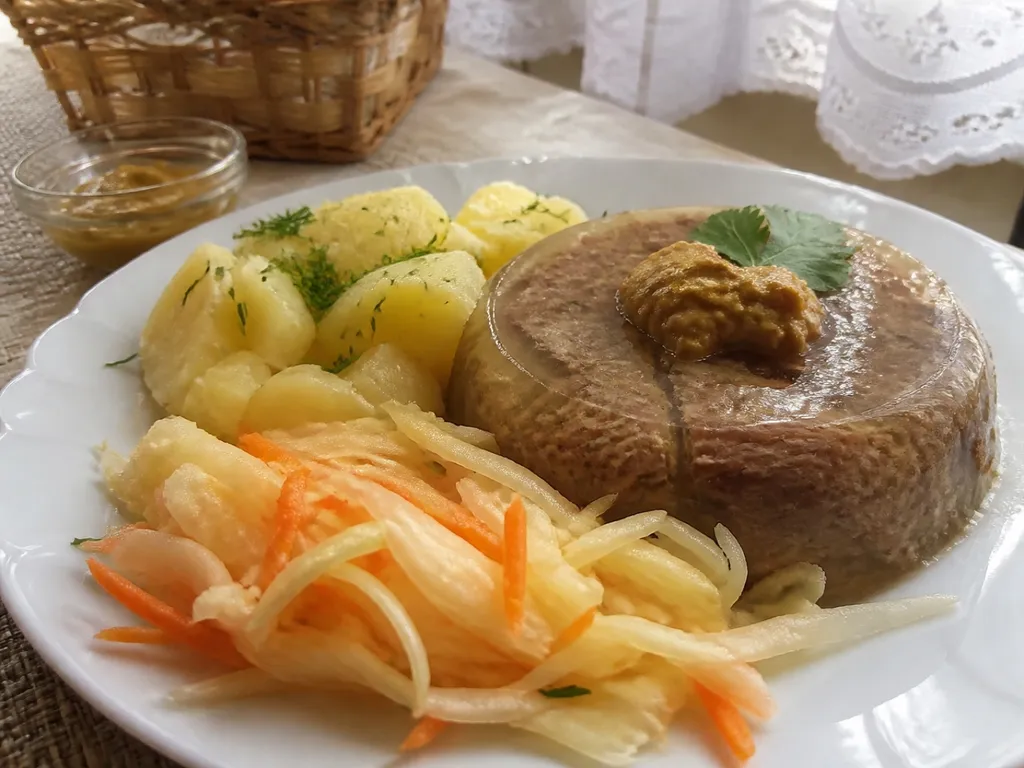 Images are for illustrative purposes only, may be inaccurate, and do not guarantee the presence or absence of specific ingredients.
 Listahan Family Score™
70/100
Good fit for most families
Score reflects how well this recipe fits a typical busy household. In the app, your Family Score is personalized to your household's allergens, kids, and pantry.
Nutrition
per serving715
Calories
74 g
Protein
1 g
Carbs
44 g
Fat
Estimated per serving. Actual values depend on the brands and portions you use.
Listahan cooking guide
Chef notes & practical guide
Technique notes, ingredient swaps, serve-alongside ideas, storage guidance, and equipment for this recipe.
Cultural context
Kholodets — Russian aspic — is a cold, slow-set meat jelly made by simmering collagen-rich cuts like pork knuckles, feet, and beef shanks for many hours until the natural gelatin is extracted into the broth, which is then poured over the picked meat and set in the refrigerator until it solidifies into a firm, sliceable terrine. It is one of the oldest preparations in Slavic cuisine and appears in virtually the same form across Russia, Ukraine, Belarus, and the Baltic states, where it goes by names including holodets, studenets, and galareta. The dish requires no additives — the collagen in the bones does all the work — and was the original refrigerator-to-table food of the pre-industrial household.
Listahan note
This version clarifies the broth after straining so the finished kholodets is a clear golden jelly rather than a cloudy one, which takes one extra step but makes the dish dramatically more visually impressive.
Technique cues
- Blanch the pork knuckles in boiling water for 5 minutes and discard the first liquid before the long simmer begins — this removes much of the albumin and blood that would otherwise cloud the broth and produce a grey, murky jelly.
- Simmer at the lowest possible bubble for at least 4 hours, adding water only as needed to keep the bones submerged; a hard boil emulsifies fat into the broth and prevents the jelly from setting clear.
- Season the strained broth aggressively with salt before pouring over the meat — once cold the gelatin mutes flavors significantly and kholodets that tasted well-seasoned warm will taste flat and bland once chilled.
Kitchen flow
- Parallel prep
- While the stock simmers unattended, pick and shred the earlier-removed cooked meat from any pre-cooked batches of bones and arrange it in the molds so you are ready to pour immediately when the stock is done.
- Make-ahead
- Kholodets is by definition a make-ahead dish requiring at least 6 hours of chilling to set fully, and keeps refrigerated for up to 5 days without loss of quality.
- Leftover move
- Slice cold kholodets thin and serve on black bread with prepared horseradish and a dill pickle alongside for a classic afternoon snack board.
- Cleanup rhythm
- Line the setting molds with plastic wrap before pouring so the kholodets unmolds cleanly; greased pans work but plastic wrap gives a cleaner release and crisper edges.
Ingredient brief
Role, handling, and swap guidance for each key ingredient.
pork knuckle or feet
collagen source and gelatin base
Purpose: The skin, cartilage, and connective tissue in pork extremities are extraordinarily rich in collagen, which converts to gelatin during the long simmer and sets the jelly without any added gelatin.
Handling: Scrub and rinse thoroughly; blanch in boiling water for 5 minutes and discard that liquid before the long stock simmer begins.
Adaptation: Beef shank with the marrow bone adds depth and richness alongside pork extremities; using chicken feet in combination increases gelatin yield significantly.
garlic
aromatic and essential flavoring
Purpose: Raw crushed garlic added to the strained broth just before pouring gives kholodets its characteristic pungency, which is one of the most identifying flavor notes of the dish.
Handling: Add raw, not cooked — the heat of the warm broth mellows the garlic slightly but keeps its sharpness, which is what you want against the neutral gelatin.
Adaptation: Roasted garlic produces a sweeter, mellower note that is less assertive if raw garlic is too strong for your preference.
bay leaves
stock aromatic
Purpose: Bay leaves contribute a subtle herbal quality to the stock during the long simmer that adds background complexity without any single identifiable note.
Handling: Add 3 to 4 leaves at the beginning of the simmer and remove when straining; crushed leaves release more flavor than whole ones.
Adaptation: A combination of fresh thyme and parsley stems in the stock is a French-influenced alternative that produces a lighter, more herbal background flavor.
peppercorns
stock spice
Purpose: Whole black peppercorns steeped during the long simmer provide a gentle, diffuse heat and depth that black pepper added later cannot replicate.
Handling: Add whole to the stock from the beginning; crack a few for more volatile aroma or leave whole for a subtler result.
Adaptation: White peppercorns produce a cleaner, less earthy pepper flavor in the finished jelly if you prefer a more refined taste.
Technique notes
- Test the gelatin set by placing a spoonful of the hot strained broth on a cold plate and refrigerating for 5 minutes; if it does not set to a firm jelly, continue simmering to reduce further or add a small amount of unflavored powdered gelatin to ensure a firm set.
- The picked meat should be arranged in a loose, slightly random layer rather than packed tight; the finished slices look more appealing with visible pieces of meat suspended throughout the clear jelly.
- Serve kholodets unmolded and whole at the table rather than sliced in the kitchen — the reveal of the clear jelly with meat suspended inside is part of the dish's visual appeal, especially with a good napkin of grated horseradish on the side.
Ingredient swaps
- Gluten-free direction
- Kholodets contains no gluten as written; confirm any prepared horseradish sauce accompaniment is gluten-free as some brands include malt vinegar.
- Lower-sodium direction
- Season the finished broth conservatively before pouring and provide additional salt at the table; cold gelatin genuinely mutes saltiness so calibrate carefully when seasoning hot.
- Chicken direction
- A chicken kholodets made from a whole hen with feet produces a lighter, more delicate jelly with a cleaner flavor that is easier for guests unfamiliar with the pork version.
Serve alongside
- grated fresh horseradish or prepared khren
- dill pickles and pickled beets
- sliced dark rye bread
- ice-cold vodka (the traditional pairing)
- cold kvass
Serving suggestions only — check pairings for your household's allergens.
Storage & reheating
- Kholodets keeps refrigerated covered for up to 5 days and is at its best between day 1 and day 3 when the flavors have had time to settle. It does not freeze well as the gelatin structure breaks down on thawing and the jelly becomes syrupy rather than firm. Always keep refrigerated as the gelatin melts at room temperature within 30 minutes.
Equipment
- large stock pot for the 4-hour simmer
- fine mesh strainer or cheesecloth-lined colander for clarifying the broth
- loaf pan or terrine mold for setting
Make this household-aware
Listahan Pro checks this recipe against your household's allergens, finds pantry-aware swaps, builds the shopping list, and helps you plan the week around it.
Plan it in Listahan
Add Kholodets to your week, check it against your household's allergens, and build the shopping list automatically.
More Eastern European recipes
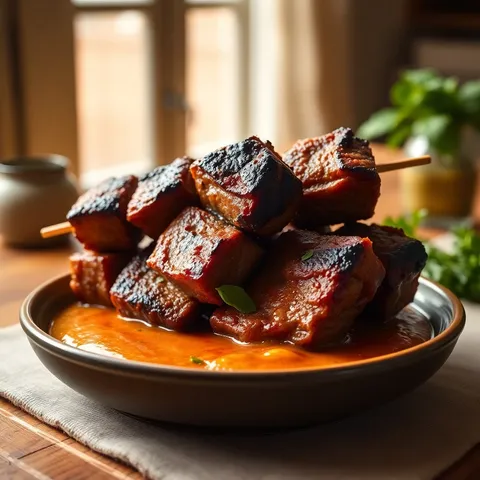 Eastern European Lens Verified Images are for illustrative purposes only, may be inaccurate, and do not guarantee the presence or absence of specific ingredients.
 Shashlik
Smoky, charred cubes of marinated lamb or pork threaded on skewers and grilled over embers — Central Asia's festive open-fire classic, fragrant with onion and spice.
 Eastern European Lens Verified Images are for illustrative purposes only, may be inaccurate, and do not guarantee the presence or absence of specific ingredients.
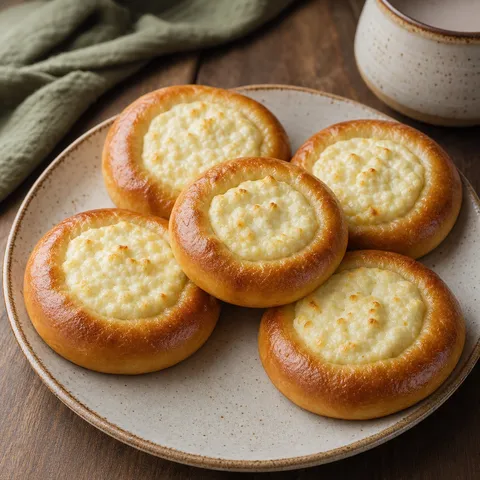
 Vatrushka
Soft, pillowy Russian buns filled with a sweetened quark or farmer's cheese center — lightly golden and gently sweet, perfect alongside tea or coffee.
 Eastern European Lens Verified Images are for illustrative purposes only, may be inaccurate, and do not guarantee the presence or absence of specific ingredients.
 Kurtosh Kalach
Hungary's iconic chimney cake — sweet yeast dough spiraled around a spit, rolled in cinnamon sugar, and roasted until the outside caramelizes into a crackly, warm shell.