 Eastern European Images are for illustrative purposes only, may be inaccurate, and do not guarantee the presence or absence of specific ingredients.
 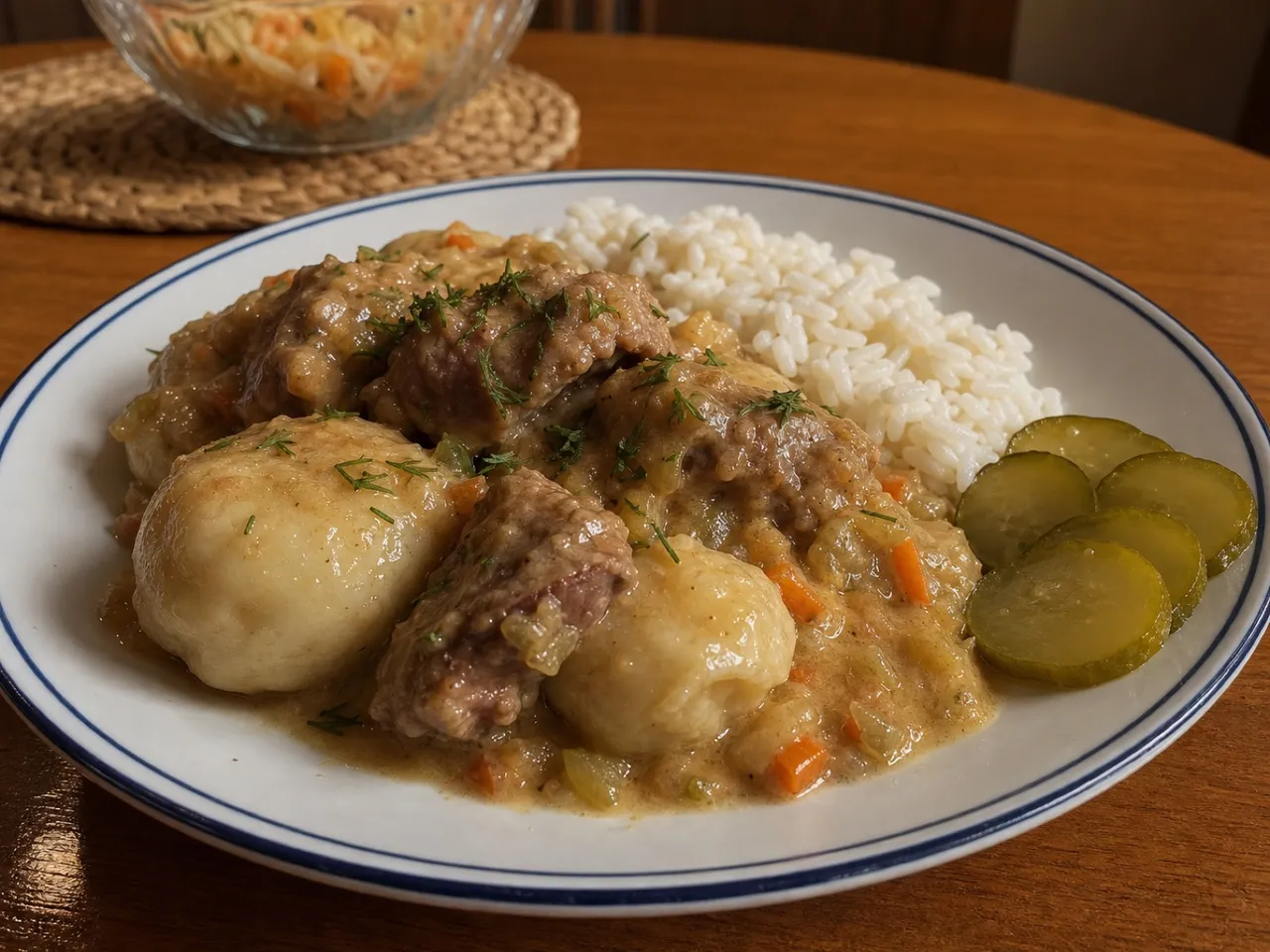 Serving Images are for illustrative purposes only, may be inaccurate, and do not guarantee the presence or absence of specific ingredients.
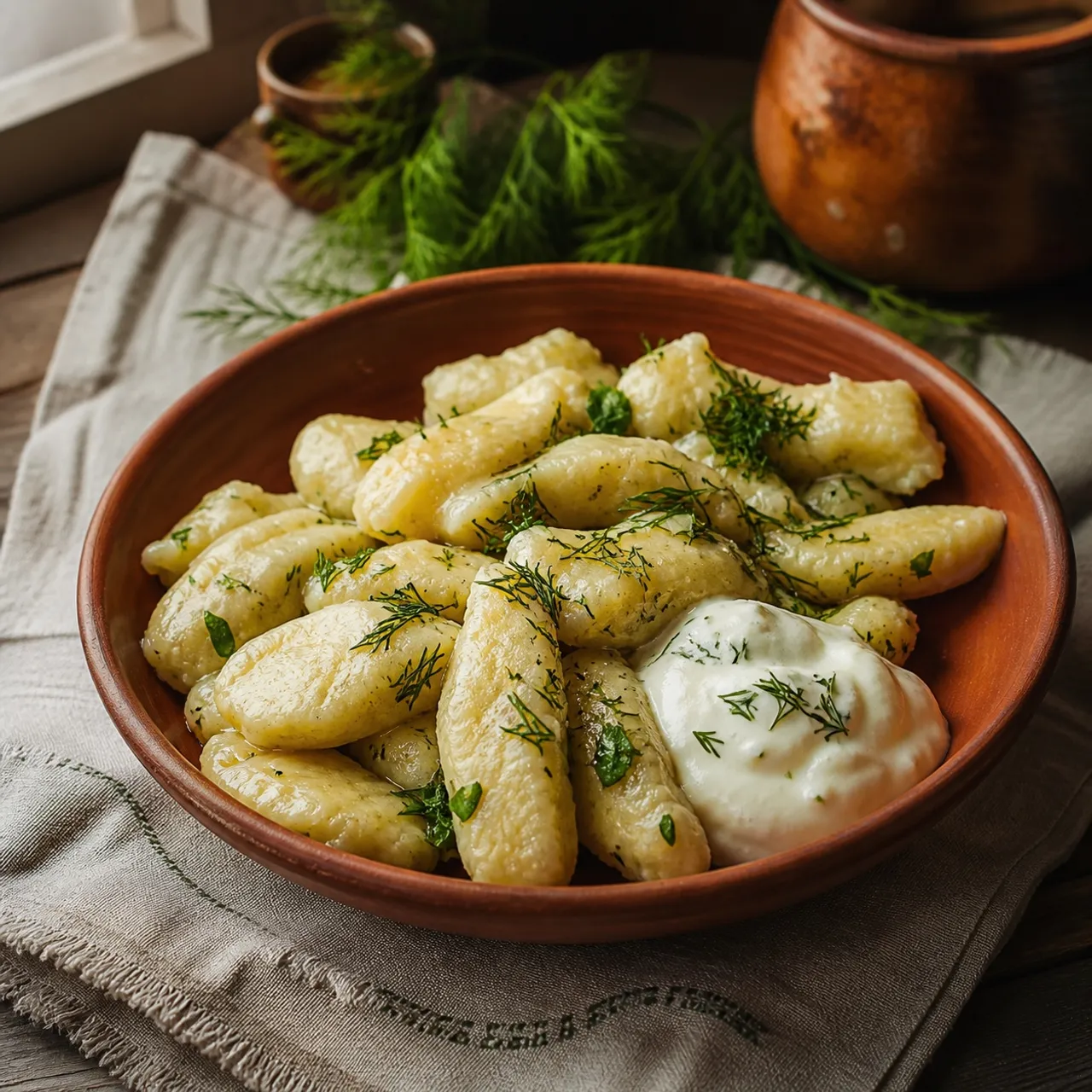
 Kletski
Light, rustic Eastern European boiled dough dumplings — simple and comforting, dropped into rich broths or tossed with butter and herbs as a satisfying side.
Contains common allergens
In the app, Listahan checks these against your household automatically.
Good to know
- One-pot
- Ready in under 30 minutes
Matched from this dish's own ingredients and timing. Browse more: one-pot dinners30-minute meals
Instructions
7 steps- 1
In a bowl, whisk the eggs with the milk and salt, then stir in the flour until you have a thick, sticky, elastic dough that falls slowly off a spoon.
- 2
Let the dough rest for 15 minutes to relax the gluten.
- 3
Bring the broth, or a large pot of salted water, to a steady boil.
- 4
Using a spoon dipped in the hot liquid, scoop small irregular pieces of dough and drop them directly into the boiling liquid.
- 5
Cook the dumplings for 5 to 7 minutes, until they float to the surface and are cooked through in the center.
- 6
If cooked in water, drain the dumplings and toss them with the melted butter; if cooked directly in broth, leave them in for serving as a soup.
- 7
Sprinkle with chopped parsley and serve warm, either as a buttery side or ladled into bowls with their cooking broth.
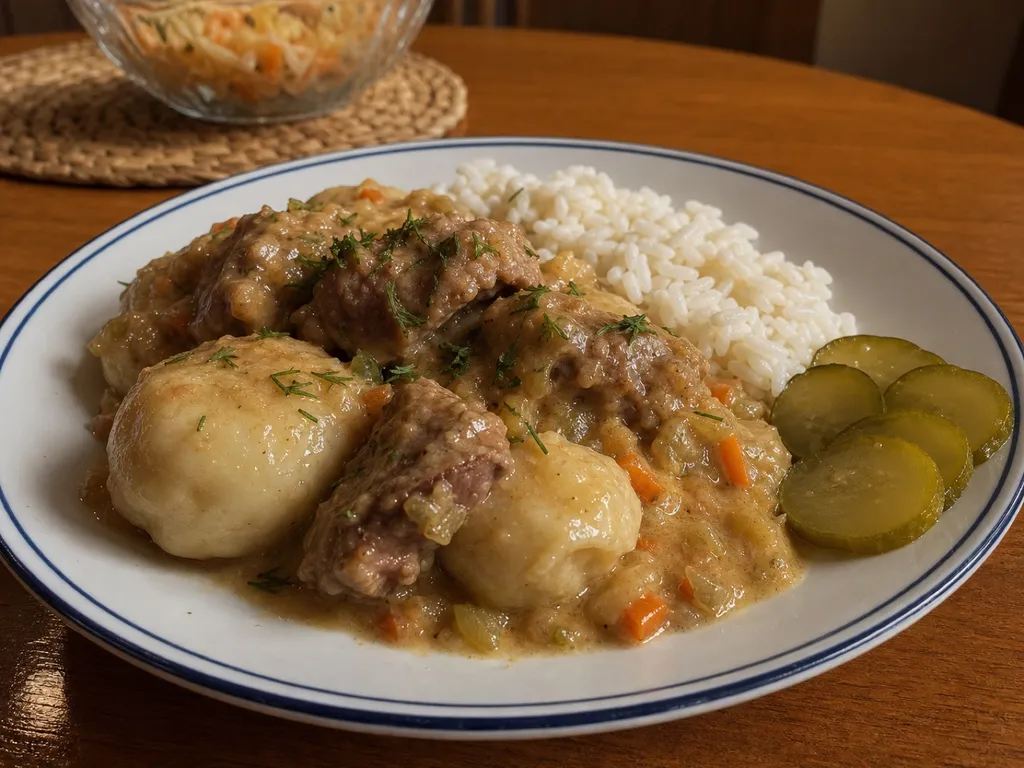 Images are for illustrative purposes only, may be inaccurate, and do not guarantee the presence or absence of specific ingredients.
 Listahan Family Score™
71/100
Good fit for most families
Score reflects how well this recipe fits a typical busy household. In the app, your Family Score is personalized to your household's allergens, kids, and pantry.
Nutrition
per serving280
Calories
10 g
Protein
49 g
Carbs
4 g
Fat
Estimated per serving. Actual values depend on the brands and portions you use.
Listahan cooking guide
Chef notes & practical guide
Technique notes, ingredient swaps, serve-alongside ideas, storage guidance, and equipment for this recipe.
Cultural context
Kletski are Belarusian flour dumplings that share ancestry with the German Klosse and Polish kopytka, reflecting centuries of cross-border culinary exchange across the flatlands of Central and Eastern Europe. In Belarus they were a reliable cold-weather staple, dropped directly into boiling broth or salted water from a spoon or piping bag when time and ingredients were scarce. The name comes from the root word for a lump or blob, which honestly describes their unpretentious free-form shape and signals that these were a cook's practical solution rather than a showpiece.
Listahan note
This version drops the kletski directly into a clear broth so the dumplings absorb flavor as they cook, giving you a complete light meal in one pot rather than a plain side dish. We keep the dumplings egg-rich so they hold together with a silky, slightly firm bite.
Technique cues
- Use a wet spoon or a piping bag to drop the batter into simmering (not furiously boiling) water -- a rolling boil breaks the soft dumplings apart before they have a chance to set.
- The kletski are done when they float and then cook for one additional minute; pulling them the second they surface leaves a raw, gummy center, so patience for that extra minute matters.
- Season the cooking liquid generously with salt and aromatics because the dumplings absorb the surrounding liquid as they cook -- bland water produces bland kletski no matter how well the batter is seasoned.
Kitchen flow
- Parallel prep
- Mix the batter while the broth heats; by the time the liquid is at a gentle simmer the batter has rested and is ready to drop.
- Make-ahead
- The batter can rest covered in the refrigerator for up to four hours; bring it to room temperature for ten minutes before cooking so the dumplings drop cleanly from the spoon.
- Leftover move
- Store leftover kletski in their broth and reheat gently on the stovetop over low heat -- they absorb liquid as they sit, so add a splash of fresh broth when reheating to loosen the consistency.
- Cleanup rhythm
- Use a single pot for the broth and dumplings; wipe the spoon or piping bag between batches if batter starts sticking, and rinse the pot while still hot for easy cleanup after serving.
Ingredient brief
Role, handling, and swap guidance for each key ingredient.
all-purpose flour
dumpling base
Purpose: Flour provides the structure that holds the soft batter together in the hot liquid without dissolving or crumbling.
Handling: Sift lightly to prevent lumps that would leave raw flour pockets in the finished dumplings.
Adaptation: Half all-purpose and half semolina gives a slightly chewier, more rustic kletski that some cooks prefer for its firmer bite.
eggs
richness and cohesion
Purpose: Eggs bind the flour and liquid into a cohesive batter and contribute fat that keeps the cooked dumpling tender rather than rubbery.
Handling: Beat until fully blended before adding to the flour so the batter comes together in a few strokes.
Adaptation: Two tablespoons of aquafaba per egg can stand in for a vegan version, though the dumplings will be slightly lighter and more fragile.
milk
batter liquid
Purpose: Milk loosens the batter to a spoonable consistency and adds subtle richness that water alone cannot provide.
Handling: Use at room temperature to prevent the eggs from seizing when combined.
Adaptation: Unsweetened oat milk or any unflavored plant milk works without changing the texture noticeably.
chicken broth
cooking and serving liquid
Purpose: Broth infuses flavor into the dumplings as they cook, turning a plain flour dumpling into something that tastes fully seasoned from the inside out.
Handling: Bring to a gentle simmer before dropping in the batter; taste and adjust salt before cooking so the dumplings absorb well-seasoned liquid.
Adaptation: Vegetable broth or a light mushroom broth substitutes seamlessly and keeps the dish vegetarian.
fresh dill
herbal finish
Purpose: Dill is the canonical finishing herb for kletski in Belarusian cooking, cutting through the starchy richness and brightening the bowl.
Handling: Chop finely and add after the dumplings are plated so the heat does not turn it brown and bitter.
Adaptation: Flat-leaf parsley or chives are softer alternatives that still lift the broth without overpowering the delicate dumplings.
Technique notes
- A small ice cream scoop or a piping bag fitted with a wide round tip gives more uniform kletski than a spoon and speeds up the process significantly when cooking for four or more people.
- Adding a tablespoon of sour cream to the batter is a regional variation that makes the dumplings noticeably more tender and gives a slight tang that balances the rich broth.
- If the first test dumpling falls apart in the water, the batter is too thin -- whisk in a tablespoon of flour at a time and test again rather than adjusting the whole batch at once.
Ingredient swaps
- Gluten-free direction
- Use a 1-to-1 gluten-free baking flour; the dumplings will be slightly more delicate and benefit from a shorter cooking time, so start checking at the float stage.
- Dairy-free option
- Replace milk with unsweetened oat milk and skip any butter finish; the texture is virtually indistinguishable in the final bowl.
- Weeknight shortcut
- Use a good-quality store-bought broth and drop in the kletski batter straight from the bowl for a complete light dinner in under 20 minutes.
Serve alongside
- Simple cucumber salad with dill and vinegar
- Dark rye bread with butter
- Roasted beet salad with sour cream dressing
- Hot black tea with lemon
- Cold kefir or plain buttermilk
Serving suggestions only — check pairings for your household's allergens.
Storage & reheating
- Refrigerate kletski submerged in their broth in a covered container for up to three days; they will continue to absorb liquid and swell slightly, so the texture the next day is softer and more pillowy.
- Freeze uncooked batter (not cooked dumplings) in a zip-lock bag for up to one month; thaw overnight in the refrigerator and stir before using.
Equipment
- Medium heavy-bottomed pot for maintaining a steady gentle simmer
- Piping bag or small ice cream scoop for consistently shaped dumplings
- Fine-mesh skimmer or slotted spoon for lifting cooked dumplings without excess broth
- Ladle for portioning broth evenly into serving bowls
Make this household-aware
Listahan Pro checks this recipe against your household's allergens, finds pantry-aware swaps, builds the shopping list, and helps you plan the week around it.
Plan it in Listahan
Add Kletski to your week, check it against your household's allergens, and build the shopping list automatically.
More Eastern European recipes
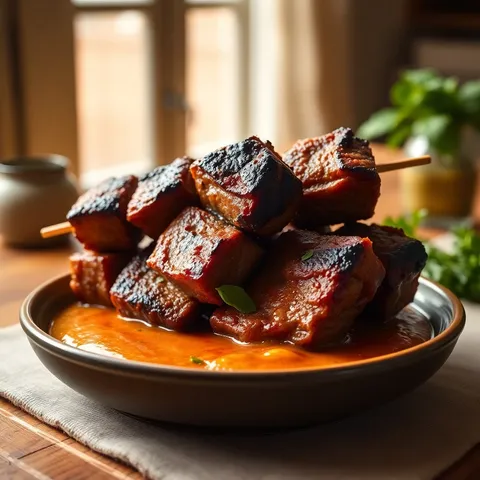 Eastern European Lens Verified Images are for illustrative purposes only, may be inaccurate, and do not guarantee the presence or absence of specific ingredients.
 Shashlik
Smoky, charred cubes of marinated lamb or pork threaded on skewers and grilled over embers — Central Asia's festive open-fire classic, fragrant with onion and spice.
 Eastern European Lens Verified Images are for illustrative purposes only, may be inaccurate, and do not guarantee the presence or absence of specific ingredients.
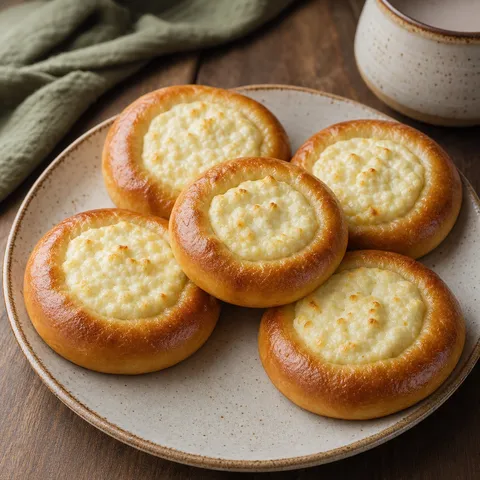
 Vatrushka
Soft, pillowy Russian buns filled with a sweetened quark or farmer's cheese center — lightly golden and gently sweet, perfect alongside tea or coffee.
 Eastern European Lens Verified Images are for illustrative purposes only, may be inaccurate, and do not guarantee the presence or absence of specific ingredients.
 Kurtosh Kalach
Hungary's iconic chimney cake — sweet yeast dough spiraled around a spit, rolled in cinnamon sugar, and roasted until the outside caramelizes into a crackly, warm shell.