 Eastern European Images are for illustrative purposes only, may be inaccurate, and do not guarantee the presence or absence of specific ingredients.
  Serving Images are for illustrative purposes only, may be inaccurate, and do not guarantee the presence or absence of specific ingredients.
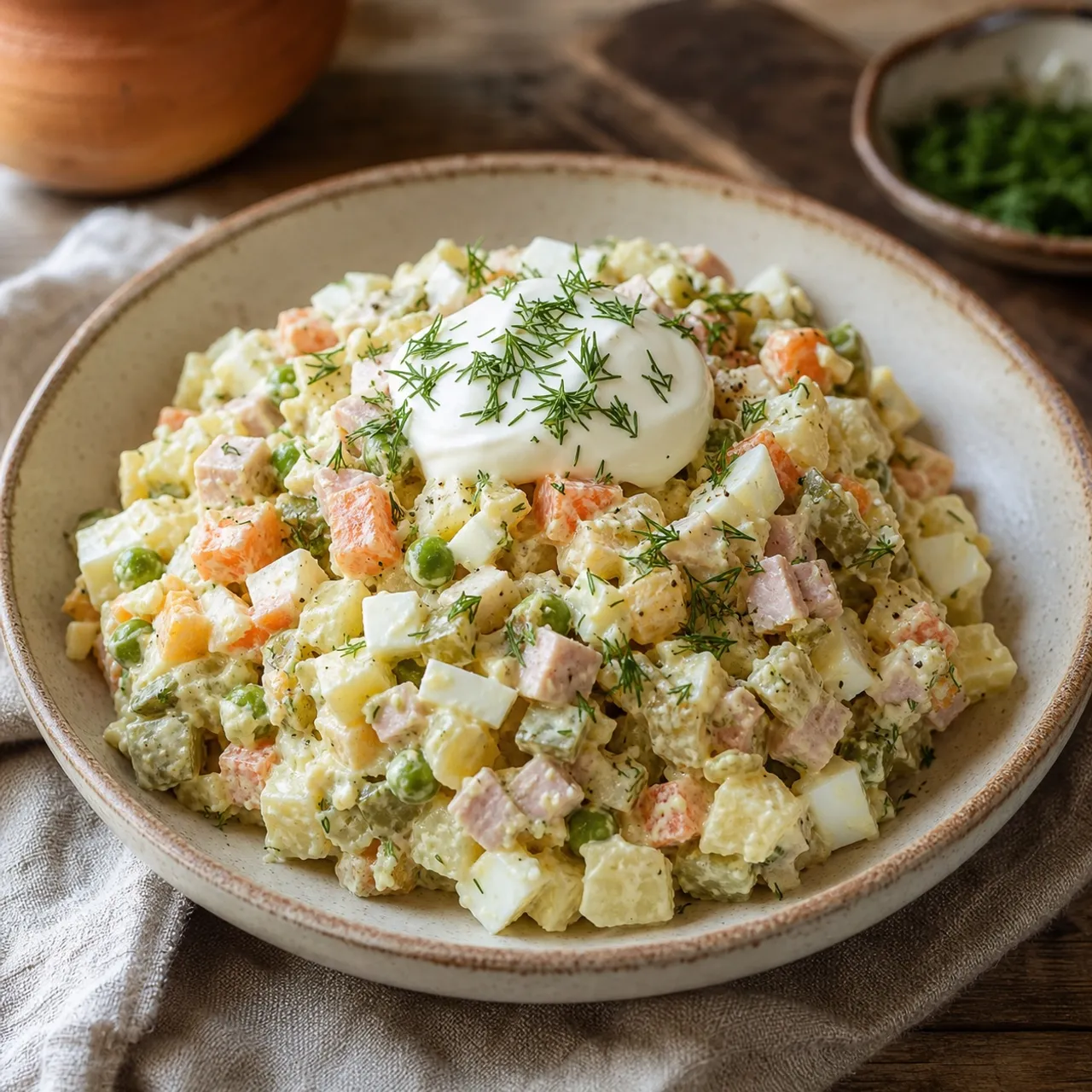
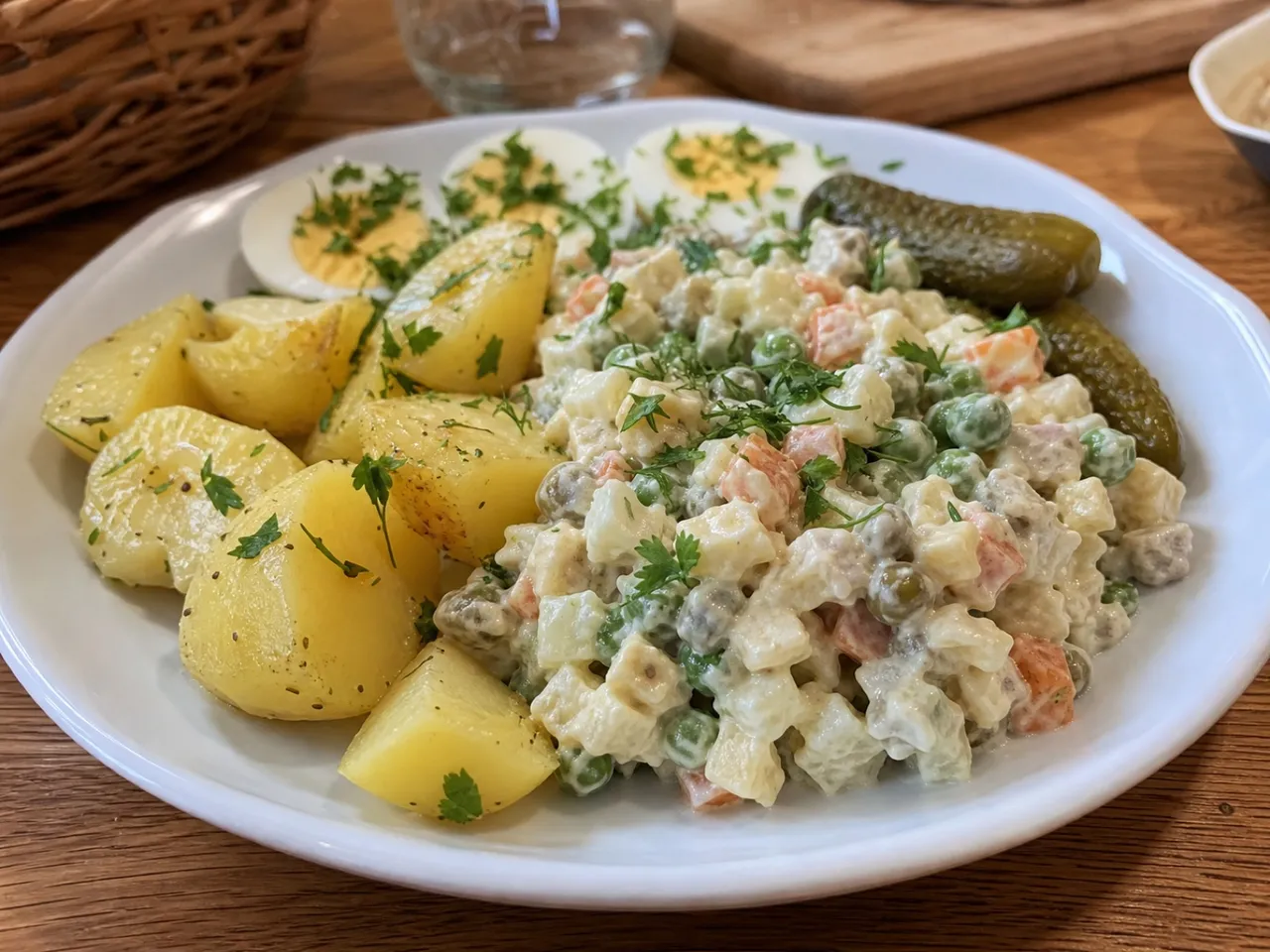
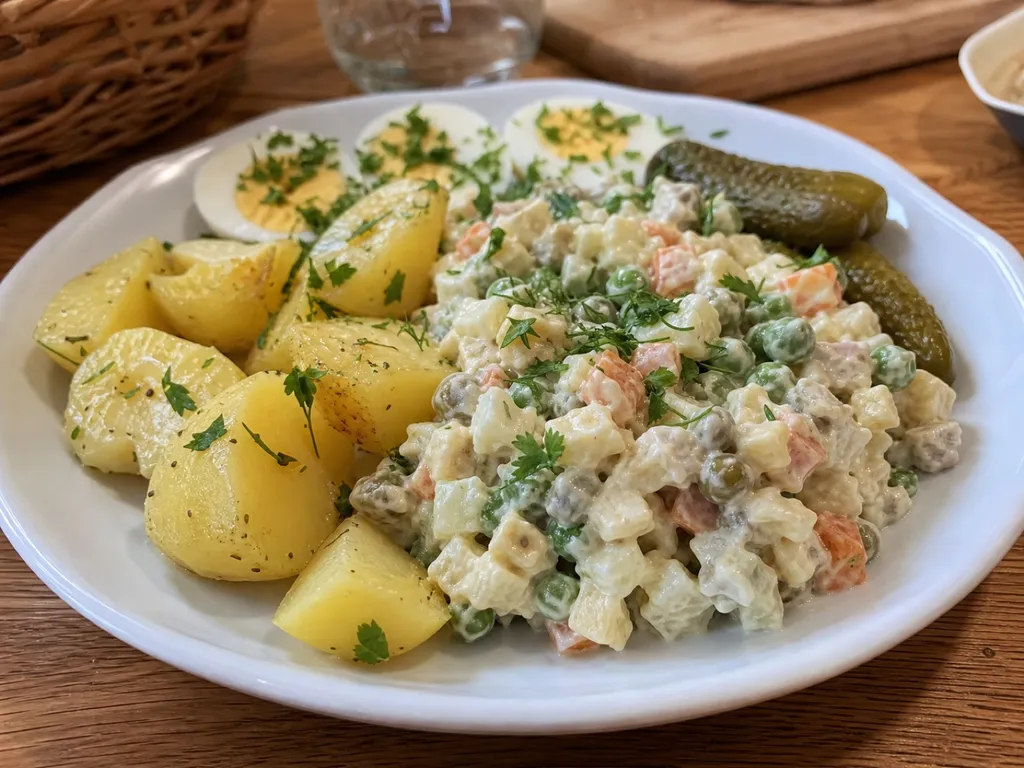
 Olivier Salad
Russia's iconic celebration salad — diced potatoes, carrots, peas, pickles, and chicken or bologna bound in creamy mayonnaise — a must at every New Year's table.
Contains common allergens
In the app, Listahan checks these against your household automatically.
Instructions
7 steps- 1
Boil the potatoes and carrots separately, whole and unpeeled, until just fork-tender, then cool, peel, and cube them into small, even pieces.
- 2
Hard-boil the eggs, cool them in ice water, peel, and chop into small pieces.
- 3
Combine the cubed potatoes, carrots, chopped eggs, diced pickles, peas, and diced chicken or bologna in a large bowl.
- 4
Fold in the mayonnaise gently, coating everything evenly without mashing the vegetables.
- 5
Season with salt and pepper to taste, keeping in mind the pickles already add saltiness.
- 6
Cover and refrigerate the salad for at least 1 hour to let the flavors meld before serving.
- 7
Garnish with fresh dill just before bringing it to the table.
 Images are for illustrative purposes only, may be inaccurate, and do not guarantee the presence or absence of specific ingredients.
 Listahan Family Score™
67/100
Works for many families
Score reflects how well this recipe fits a typical busy household. In the app, your Family Score is personalized to your household's allergens, kids, and pantry.
Nutrition
per serving415
Calories
17 g
Protein
22 g
Carbs
29 g
Fat
Estimated per serving. Actual values depend on the brands and portions you use.
Listahan cooking guide
Chef notes & practical guide
Technique notes, ingredient swaps, serve-alongside ideas, storage guidance, and equipment for this recipe.
Cultural context
Olivier salad began as the most lavish dish on the menu of the Hermitage restaurant in 1860s Moscow, where Belgian chef Lucien Olivier created a composed salad of grouse, veal tongue, caviar, and crayfish tails bound in his secret house mayonnaise. The recipe was stolen, simplified, and industrialized through the Soviet era until it became a completely different dish — potatoes, eggs, bologna sausage, pickles, carrots, and peas in mayonnaise — that bore almost no ingredient resemblance to the original but inherited its name and its status as the centerpiece of the New Year's Eve table across all fifteen Soviet republics. Today it is the most-made salad in Russia and virtually every family has a version they consider definitive.
Listahan note
This version uses boiled chicken or bologna as the protein rather than grouse, which is the format almost every household uses today and the one that captures the true Soviet-era comfort of the dish.
Technique cues
- Cook the potatoes and carrots separately from the eggs and let all three cool completely in the refrigerator before cutting and mixing — warm ingredients melt the mayonnaise and produce a greasy, runny salad rather than a cohesive, chilled one.
- Cut every component into uniform small dice (roughly half a centimeter) so each forkful contains a proportionate bite of every ingredient — Olivier is a composed salad and the uniform dice is what gives it its particular satisfying texture.
- Mix gently with the mayonnaise just before serving rather than hours ahead — a well-made Olivier holds its shape when scooped rather than weeping liquid, and over-mixing breaks the potato pieces and turns the whole salad mushy.
Kitchen flow
- Parallel prep
- Boil potatoes, carrots, and eggs simultaneously in separate pots; while they cool, dice the pickles and open the canned peas so everything is ready to mix at once.
- Make-ahead
- Olivier can be made 24 hours ahead, covered tightly, and refrigerated; add a little extra mayonnaise and stir gently before serving as the salad absorbs the dressing overnight.
- Leftover move
- Leftover Olivier stuffed into a baguette makes an unexpectedly good sandwich; the components hold their texture overnight and the mayonnaise softens the bread in a pleasing way.
- Cleanup rhythm
- All components are boiled and the only dishes used are pots for boiling and a single large mixing bowl; the prep is entirely water-based until the mayonnaise step, which makes cleanup simple.
Ingredient brief
Role, handling, and swap guidance for each key ingredient.
waxy potatoes
primary bulk
Purpose: Waxy potatoes hold their shape after boiling and dicing rather than crumbling into mash, which is essential for the distinct dice texture that defines a proper Olivier.
Handling: Boil whole in salted water until just tender throughout, cool completely in the refrigerator before peeling and dicing so they hold their edges when cut.
Adaptation: Yukon Gold potatoes can be used and are the closest widely available waxy variety; avoid Russets as they crumble when diced.
eggs
protein and richness
Purpose: Hard-boiled eggs diced into the salad add protein, a creamy textural contrast, and a richness that complements the mayonnaise binding.
Handling: Boil 10 minutes from a cold start, shock immediately in ice water to prevent green rings around the yolk, peel and refrigerate before dicing.
Adaptation: No direct swap — eggs are essential to the flavor profile and cannot be omitted without significantly changing the character of the dish.
dill pickles
acid balance
Purpose: Diced dill pickles cut through the richness of the mayonnaise and provide the sharp acidic counterpoint that makes Olivier refreshing rather than heavy.
Handling: Choose medium-sour pickles rather than very sour ones; dice to the same small size as the other components and drain on paper towels to remove excess brine.
Adaptation: Cornichons produce a similar effect in smaller volume; avoid sweet pickles which change the fundamental flavor direction of the salad.
bologna or boiled chicken
main protein
Purpose: Soviet-era Olivier used bologna (doktorskaya kolbasa) because it was the most available processed meat protein; boiled chicken is a fresher alternative that many contemporary cooks prefer.
Handling: Dice to the same uniform size as the other components; boiled chicken should be cooled completely and the skin removed before dicing.
Adaptation: Canned tuna packed in water is a less traditional but very popular variation; crab stick or cooked shrimp make an upmarket version.
mayonnaise
binding dressing
Purpose: Full-fat mayonnaise is the non-negotiable binding agent of Olivier — it coats every component and holds the salad together as a cohesive mass rather than a loose mix.
Handling: Use sparingly to start and add more at the table if needed; too much mayonnaise overwhelms the other flavors and produces a wet, heavy result.
Adaptation: A blend of mayonnaise and sour cream (3:1) lightens the richness and adds a slight tang; avoid low-fat mayonnaise which is too thin and produces a watery salad.
Technique notes
- The ratio of mayonnaise to total ingredients should feel under-dressed before chilling — the vegetables release a small amount of moisture as the salad rests and the dressing appears more generous after 2 hours in the refrigerator.
- Taste and adjust the seasoning only after the salad is fully chilled, as the flavors change significantly when cold and a salad that tastes well-seasoned at room temperature is often underseasoned once cold.
- Press the finished salad into a deep bowl or round mold lined with plastic wrap, refrigerate for 2 hours, then unmold onto a platter and garnish with reserved peas and dill for a dramatic table presentation that is worth the extra step for guests.
Ingredient swaps
- Dairy-free direction
- Use a vegan mayonnaise made with aquafaba or sunflower oil — several commercial versions have the correct thick, creamy consistency for binding the salad.
- Egg-free direction
- Simply omit the eggs and increase the potato and carrot quantities to compensate for volume; the salad loses some richness but remains cohesive with enough mayonnaise.
- Lighter direction
- Replace half the mayonnaise with plain Greek yogurt for a tangier, significantly lighter version; reduce the pickle quantity slightly as the yogurt adds its own acidity.
Serve alongside
- dark rye bread or Borodinsky bread
- cold cuts and smoked fish for a zakuski spread
- marinated herring
- sparkling water
- cold vodka (traditional New Year pairing)
Serving suggestions only — check pairings for your household's allergens.
Storage & reheating
- Olivier salad keeps refrigerated in an airtight container for up to 3 days. The flavors improve after the first day as everything melds together. Stir gently before serving as it rests and add a small spoonful of fresh mayonnaise to refresh the binding if it has absorbed overnight. Not suitable for freezing.
Equipment
- large pot for boiling potatoes and carrots
- small pot for boiling eggs
- large cutting board and sharp knife for precise uniform dicing
Make this household-aware
Listahan Pro checks this recipe against your household's allergens, finds pantry-aware swaps, builds the shopping list, and helps you plan the week around it.
Plan it in Listahan
Add Olivier Salad to your week, check it against your household's allergens, and build the shopping list automatically.
More Eastern European recipes
 Eastern European Lens Verified Images are for illustrative purposes only, may be inaccurate, and do not guarantee the presence or absence of specific ingredients.
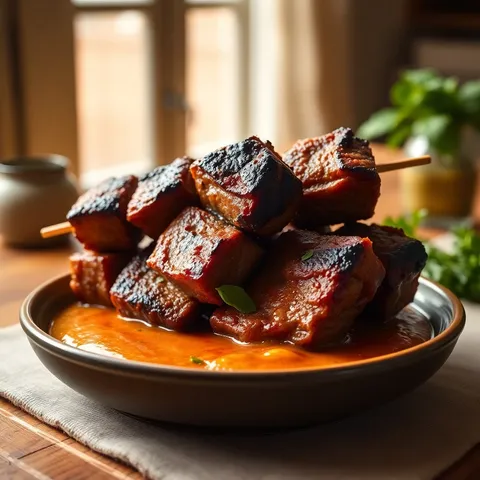
 Shashlik
Smoky, charred cubes of marinated lamb or pork threaded on skewers and grilled over embers — Central Asia's festive open-fire classic, fragrant with onion and spice.
 Eastern European Lens Verified Images are for illustrative purposes only, may be inaccurate, and do not guarantee the presence or absence of specific ingredients.
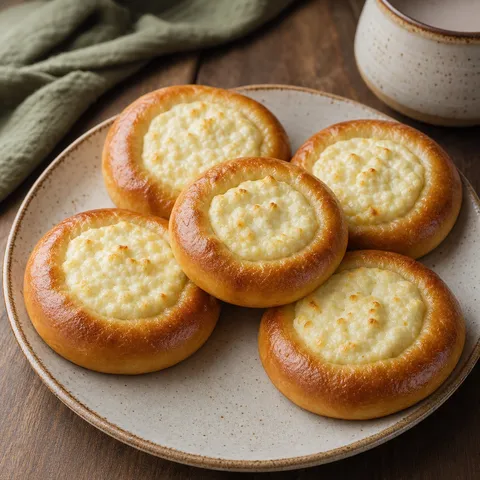
 Vatrushka
Soft, pillowy Russian buns filled with a sweetened quark or farmer's cheese center — lightly golden and gently sweet, perfect alongside tea or coffee.
 Eastern European Lens Verified Images are for illustrative purposes only, may be inaccurate, and do not guarantee the presence or absence of specific ingredients.
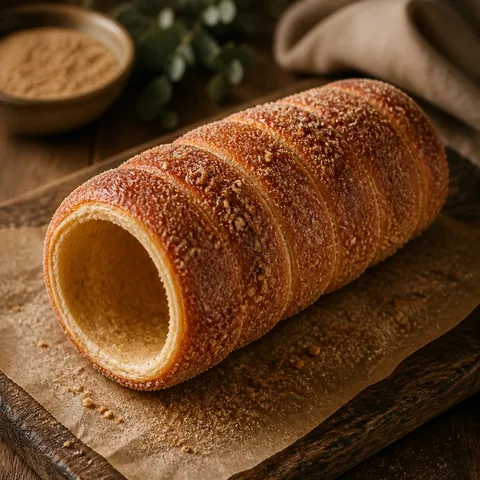
 Kurtosh Kalach
Hungary's iconic chimney cake — sweet yeast dough spiraled around a spit, rolled in cinnamon sugar, and roasted until the outside caramelizes into a crackly, warm shell.