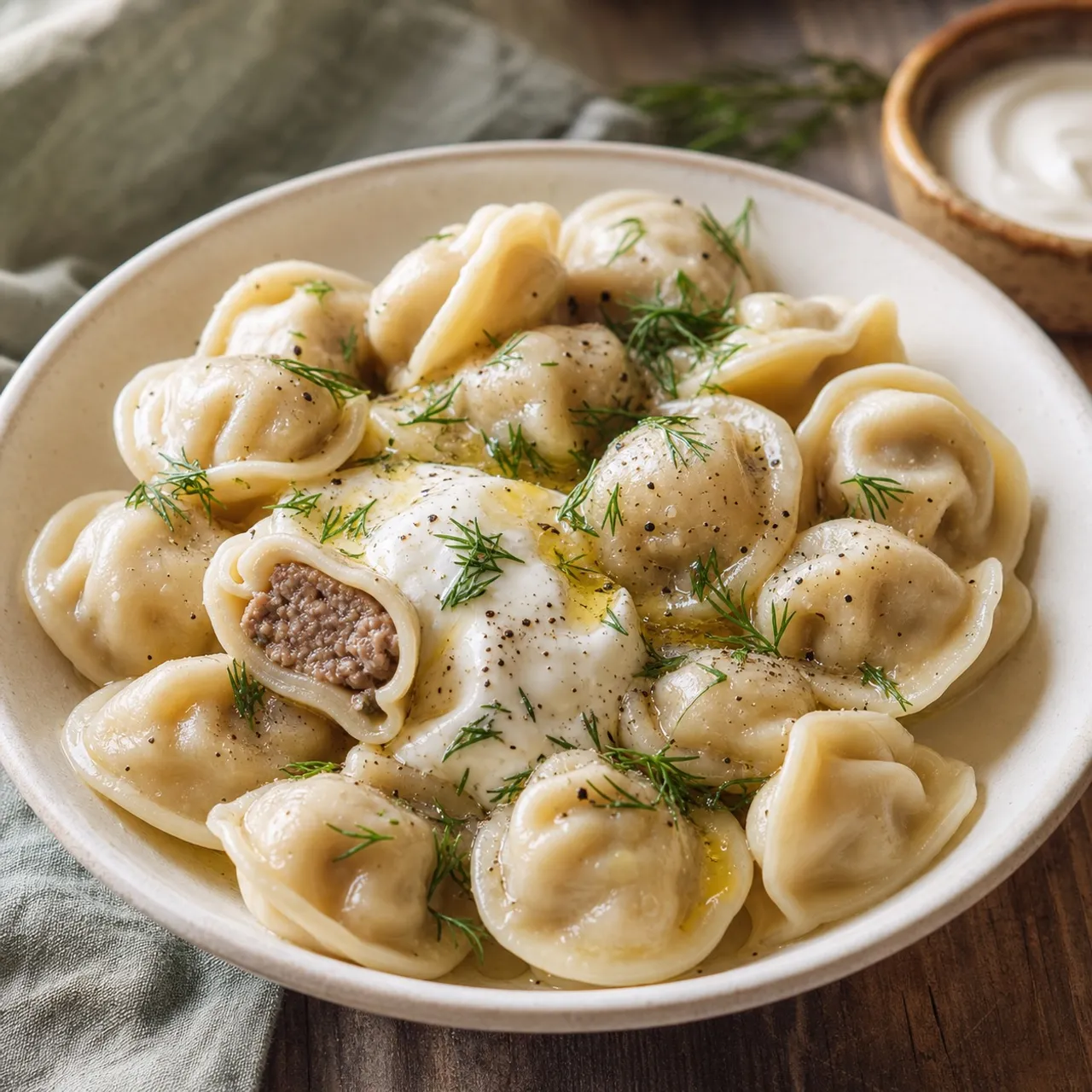
 Eastern European Images are for illustrative purposes only, may be inaccurate, and do not guarantee the presence or absence of specific ingredients.
 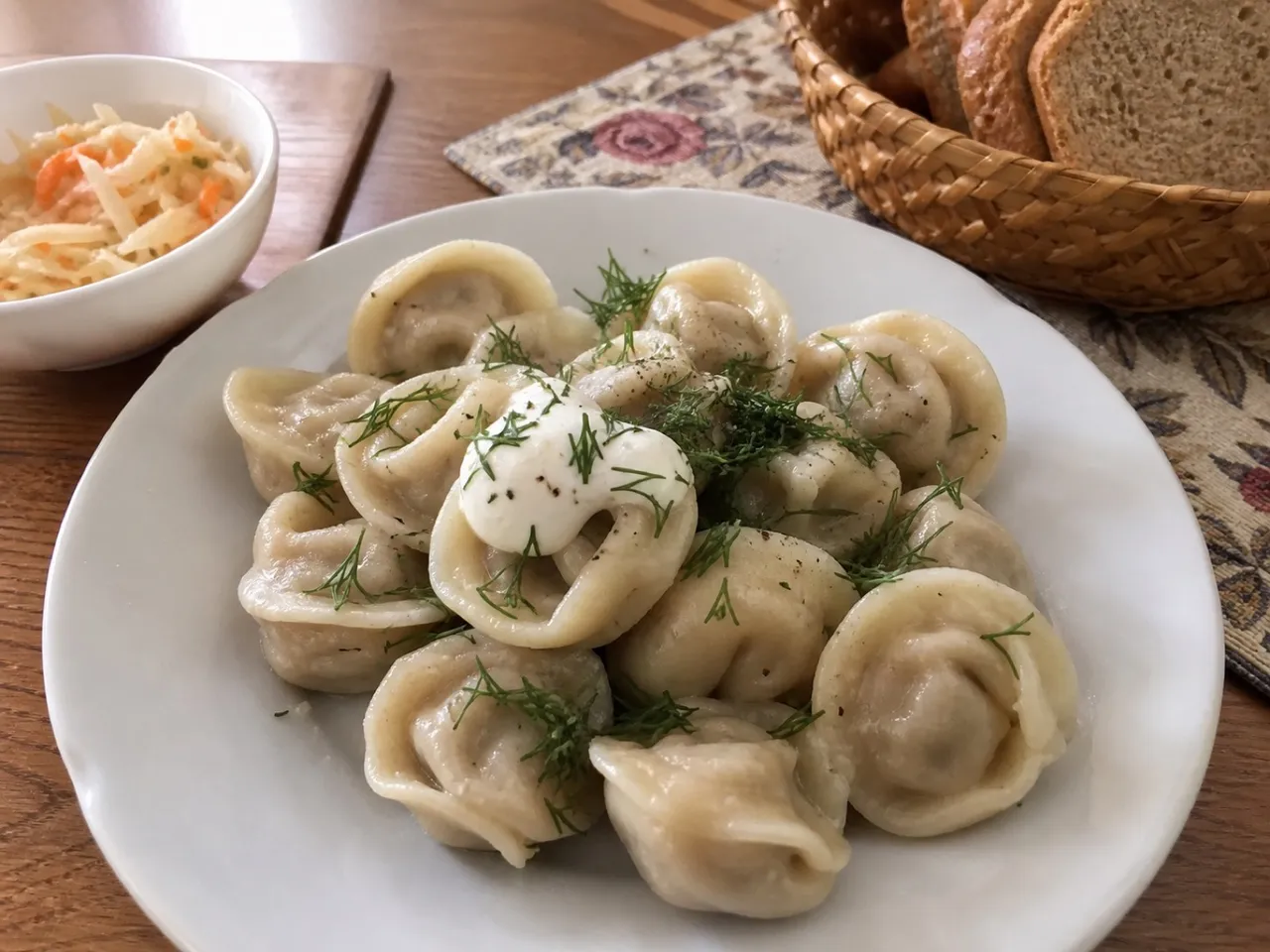 Serving Images are for illustrative purposes only, may be inaccurate, and do not guarantee the presence or absence of specific ingredients.
 Pelmeni
Tender Siberian dumplings packed with seasoned pork and beef, boiled and tossed in butter — Russia's answer to fast, filling, crowd-pleasing comfort food.
Contains common allergens
In the app, Listahan checks these against your household automatically.
Instructions
6 steps- 1
Mix the ground pork, ground beef, grated onion, salt, and black pepper in a bowl. Cover and refrigerate while preparing the dough to allow flavors to meld.
- 2
In a separate large bowl, combine the flour, water, and egg. Knead vigorously for 10 minutes until you have a smooth, elastic dough. Let rest under a damp cloth for 30 minutes.
- 3
Roll out the dough on a lightly floured surface until very thin (about 1/16-inch). Cut into 2-inch rounds using a small glass or cookie cutter.
- 4
Place a half-teaspoon of the meat mixture in the center of each dough circle. Fold in half to form a crescent, pinch the edges to seal securely, then bring the two corners together and pinch them to form a round dumpling.
- 5
Bring a large pot of heavily salted water or chicken broth to a rolling boil. Drop the pelmeni in batches, stirring gently so they don't stick to the bottom.
- 6
Once the pelmeni float to the surface, cook for an additional 3 minutes. Remove with a slotted spoon and toss with butter. Serve with sour cream or vinegar.
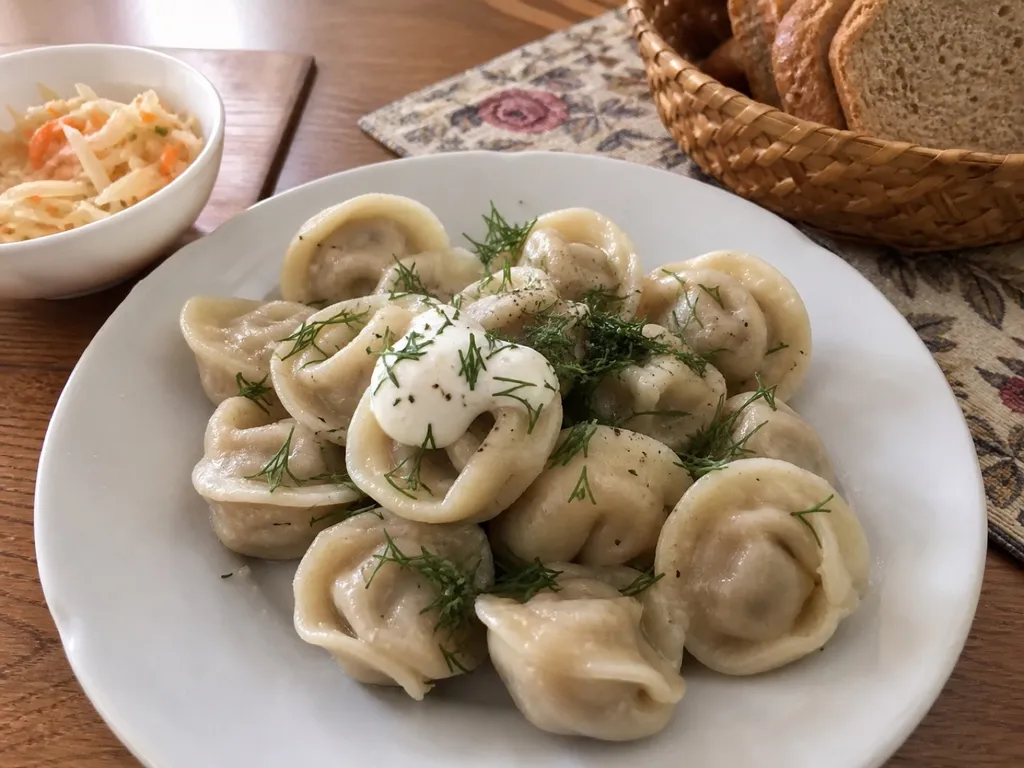 Images are for illustrative purposes only, may be inaccurate, and do not guarantee the presence or absence of specific ingredients.
 Listahan Family Score™
70/100
Good fit for most families
Score reflects how well this recipe fits a typical busy household. In the app, your Family Score is personalized to your household's allergens, kids, and pantry.
Nutrition
per serving865
Calories
55 g
Protein
99 g
Carbs
25 g
Fat
Estimated per serving. Actual values depend on the brands and portions you use.
Listahan cooking guide
Chef notes & practical guide
Technique notes, ingredient swaps, serve-alongside ideas, storage guidance, and equipment for this recipe.
Cultural context
Pelmeni are Siberian dumplings that originated in the Ural mountains and spread west into Russian cuisine over centuries of trade and migration. Unlike Chinese or Italian dumplings, pelmeni were traditionally made in enormous batches in autumn and left to freeze outdoors as a natural deep-freeze pantry for winter — the frozen dumplings could be boiled straight from the cold as a fast, filling meal. The thin, unleavened dough wrapped around a seasoned raw meat filling distinguishes them from Georgian khinkali or Ukrainian varenyky.
Listahan note
This version uses a mix of pork and beef in the filling so you get fat from the pork and flavor from the beef, and the dough is rested long enough to roll paper-thin without tearing.
Technique cues
- Keep the filling cold — even slightly warm meat will make the dough sticky and hard to seal; mix and refrigerate it at least 30 minutes before filling.
- Seal pelmeni with a firm, deliberate pinch and then bring the two sealed corners together and press to form the classic crescent-purse shape, which prevents them from opening during boiling.
- Do not crowd the pot: boil pelmeni in small batches so the water returns to a boil quickly and the dumplings cook evenly rather than stewing.
Kitchen flow
- Parallel prep
- Mix and refrigerate the filling first, then make and rest the dough — by the time the dough is ready to roll, the filling is cold and firm.
- Make-ahead
- Freeze uncooked pelmeni in a single layer on a floured sheet pan until solid, then transfer to a bag; boil directly from frozen, adding 2 extra minutes to cooking time.
- Leftover move
- Pan-fry leftover boiled pelmeni in butter until the skins are golden and crisp — they transform completely and are arguably better than freshly boiled.
- Cleanup rhythm
- Flour your work surface lightly and keep a bench scraper nearby to lift sticky dough and keep the surface clean between rolling sessions.
Ingredient brief
Role, handling, and swap guidance for each key ingredient.
ground pork
fatty base
Purpose: Pork contributes fat that keeps the filling juicy and prevents it from becoming grainy when cooked.
Handling: Use freshly ground or grind your own from shoulder for the best texture — pre-ground pork can be too lean.
Adaptation: Ground lamb brings a richer, more assertive flavor in the same ratio.
ground beef
flavor anchor
Purpose: Beef adds savory depth and a firmer bite that balances the softness of the pork.
Handling: Choose 80/20 ground beef so the filling does not dry out inside the dough wrapper.
Adaptation: Ground turkey can replace beef but requires an additional tablespoon of butter in the filling to compensate for lower fat.
onion
aromatic moisture
Purpose: Finely grated onion seasons the filling and releases juice that steams inside the sealed dumpling, keeping the meat tender.
Handling: Grate on a box grater rather than chopping so the onion fully integrates without visible chunks.
Adaptation: Shallots provide a milder, slightly sweeter onion note.
all-purpose flour
dough structure
Purpose: A high-gluten flour gives the thin wrappers enough elasticity to stretch without tearing and enough structure to stay intact during boiling.
Handling: Sift before measuring and rest the dough wrapped in plastic for at least 30 minutes so the gluten relaxes and rolls easily.
Adaptation: Tipo 00 pasta flour produces a silkier, more tender wrapper.
sour cream
serving condiment
Purpose: Cold sour cream is the classic accompaniment that cools each bite, adds tang, and contrasts with the rich meat filling.
Handling: Serve straight from the container in a small bowl alongside the dumplings.
Adaptation: Plain full-fat Greek yogurt is a lighter alternative with a similar tang.
Technique notes
- A round cookie cutter or wide-mouth jar lid cuts circles faster and more uniformly than a glass rim, which can compress and thin the edges.
- Add a bay leaf and a few peppercorns to the boiling water — it subtly seasons the dough from the outside as the dumplings cook.
- Taste the raw filling by cooking a tiny portion in a small skillet before you stuff the dumplings, so you can adjust seasoning without wasting a batch.
Ingredient swaps
- Gluten-free direction
- A blend of rice flour and tapioca starch in a 3-to-1 ratio makes a workable dough; roll slightly thicker than wheat dough and handle gently.
- Lower-sodium direction
- Season the filling with herbs, grated onion, and white pepper rather than relying on salt — the natural juices from the meat and onion carry a lot of flavor on their own.
- Weeknight shortcut
- Use store-bought gyoza or dumpling wrappers instead of making dough from scratch — the flavor is similar and saves 40 minutes of prep.
Serve alongside
- Sour cream with fresh dill
- Pickled cucumbers (Russian-style)
- Clear beef broth as a light dipping broth
- Ice-cold vodka (traditional)
- Light kvass
Serving suggestions only — check pairings for your household's allergens.
Storage & reheating
- Cooked pelmeni keep refrigerated for up to 2 days; reheat in simmering water for 2 minutes or pan-fry in butter.
- Uncooked frozen pelmeni last up to 3 months in the freezer and cook straight from frozen without thawing.
Equipment
- Rolling pin or pasta machine for thin, even dough sheets
- 3-inch round cutter or wide-mouth jar lid
- Large pot (at least 6 quarts) for boiling without crowding
- Floured sheet pan for freezing individual dumplings before bagging
Make this household-aware
Listahan Pro checks this recipe against your household's allergens, finds pantry-aware swaps, builds the shopping list, and helps you plan the week around it.
Plan it in Listahan
Add Pelmeni to your week, check it against your household's allergens, and build the shopping list automatically.
More Eastern European recipes
 Eastern European Lens Verified Images are for illustrative purposes only, may be inaccurate, and do not guarantee the presence or absence of specific ingredients.
 Shashlik
Smoky, charred cubes of marinated lamb or pork threaded on skewers and grilled over embers — Central Asia's festive open-fire classic, fragrant with onion and spice.
 Eastern European Lens Verified Images are for illustrative purposes only, may be inaccurate, and do not guarantee the presence or absence of specific ingredients.
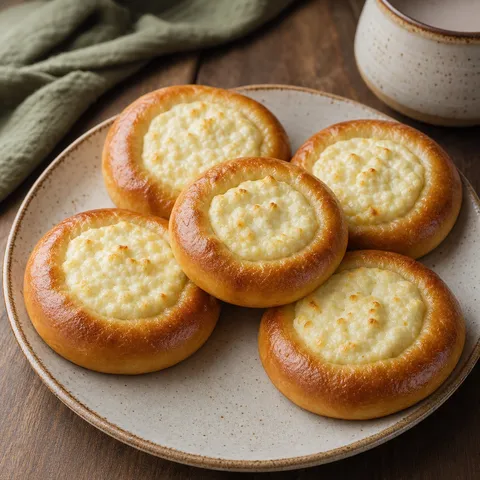
 Vatrushka
Soft, pillowy Russian buns filled with a sweetened quark or farmer's cheese center — lightly golden and gently sweet, perfect alongside tea or coffee.
 Eastern European Lens Verified Images are for illustrative purposes only, may be inaccurate, and do not guarantee the presence or absence of specific ingredients.
 Kurtosh Kalach
Hungary's iconic chimney cake — sweet yeast dough spiraled around a spit, rolled in cinnamon sugar, and roasted until the outside caramelizes into a crackly, warm shell.