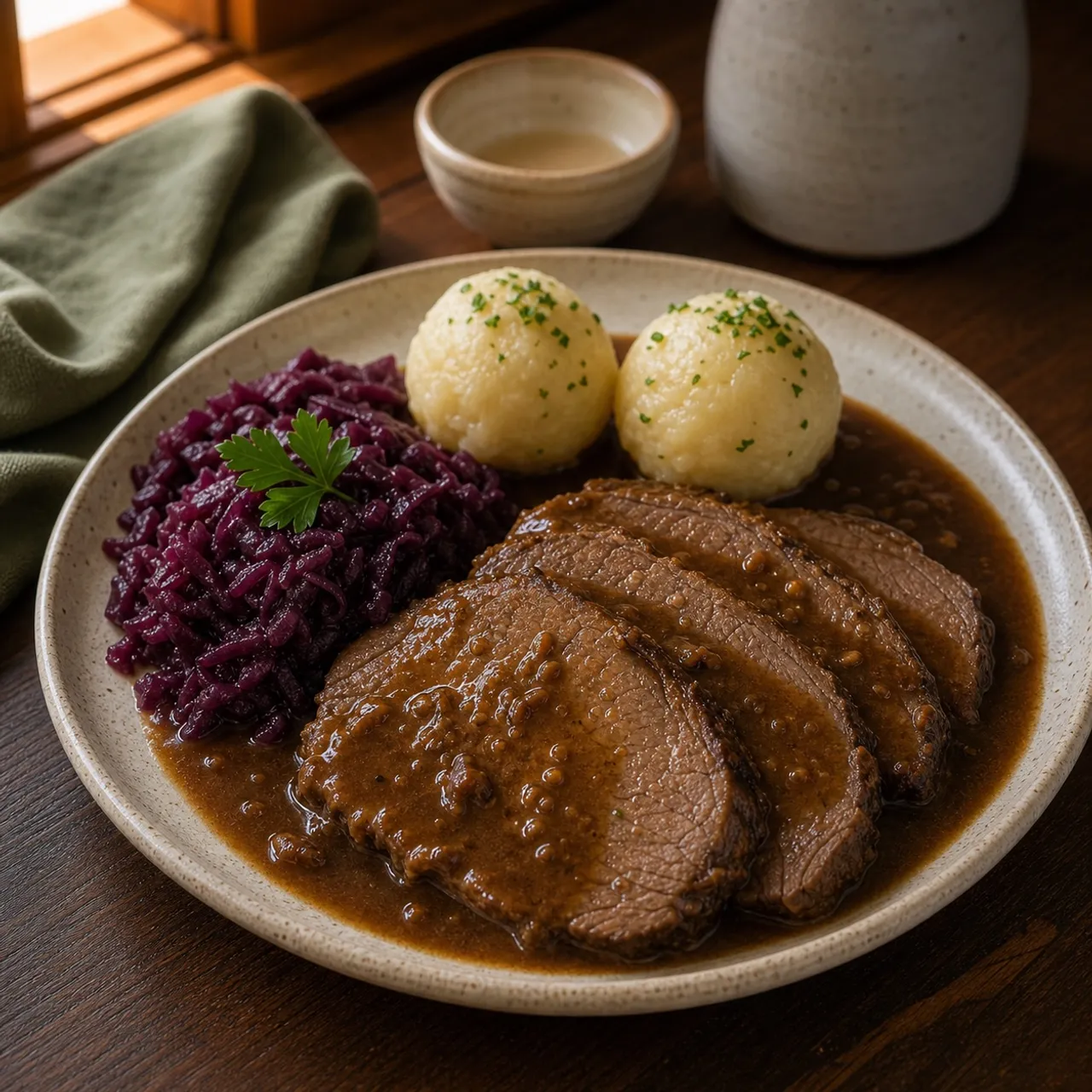
 German Images are for illustrative purposes only, may be inaccurate, and do not guarantee the presence or absence of specific ingredients.
 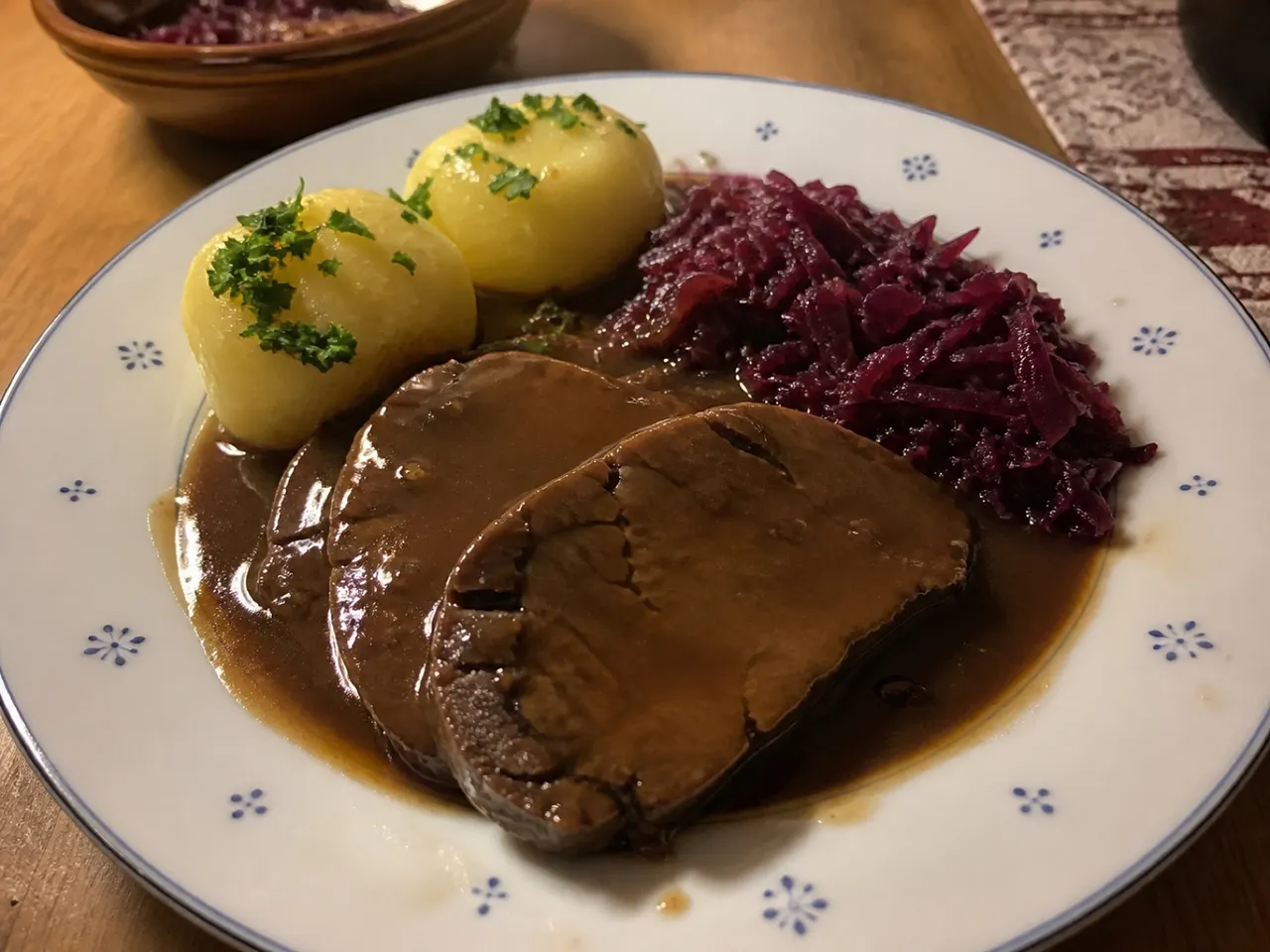 Serving Images are for illustrative purposes only, may be inaccurate, and do not guarantee the presence or absence of specific ingredients.
 Sauerbraten (German Pot Roast)
A spectacular sweet-and-sour pot roast that is marinated for days in vinegar and spices, yielding incredibly tender meat and a rich, tangy gravy thickened with ginger snaps.
Contains common allergens
In the app, Listahan checks these against your household automatically.
Good to know
- One-pot
- Ready in under 30 minutes
Matched from this dish's own ingredients and timing. Browse more: one-pot dinners30-minute meals
Instructions
5 steps- 1
Marinate (Days Ahead): In a large bowl or zip-top bag, combine the vinegar, water, onion, carrot, peppercorns, cloves, and bay leaves. Submerge the beef, cover, and refrigerate for 3 to 5 days, turning occasionally.
- 2
Sear: Remove the beef from the marinade (reserve the liquid and veggies) and pat dry. Heat oil in a heavy Dutch oven and sear the beef on all sides until browned.
- 3
Braise: Pour the reserved marinade and veggies back over the beef. Bring to a boil, then reduce heat to low, cover, and simmer for 2.5 to 3 hours until the meat is fork-tender.
- 4
Make Gravy: Remove the beef to a platter. Strain the cooking liquid to remove the solids. Return the liquid to the pot and whisk in the crushed ginger snaps. Simmer for 10 minutes until the gravy is thick and glossy.
- 5
Serve: Slice the beef and serve smothered in the sweet and sour gravy, traditionally alongside potato dumplings and red cabbage.
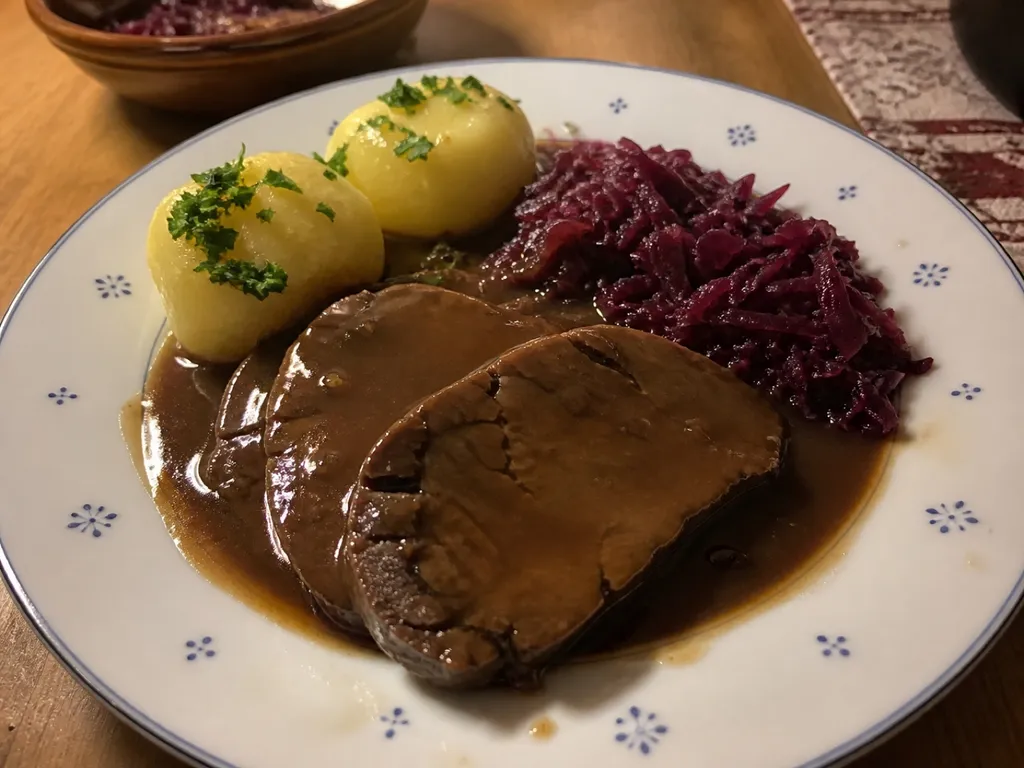 Images are for illustrative purposes only, may be inaccurate, and do not guarantee the presence or absence of specific ingredients.
 Listahan Family Score™
70/100
Good fit for most families
Score reflects how well this recipe fits a typical busy household. In the app, your Family Score is personalized to your household's allergens, kids, and pantry.
Nutrition
per serving495
Calories
45 g
Protein
4 g
Carbs
29 g
Fat
Estimated per serving. Actual values depend on the brands and portions you use.
Listahan cooking guide
Chef notes & practical guide
Technique notes, ingredient swaps, serve-alongside ideas, storage guidance, and equipment for this recipe.
Cultural context
Sauerbraten — literally 'sour roast' — is Germany's most iconic braised dish and one of the country's unofficial national dishes, with roots stretching back to medieval preservation techniques that used vinegar to extend the life of meat before refrigeration. The marinade of wine vinegar, red wine, onions, and spices penetrates the roast over several days, tenderizing tough cuts and creating the distinctive sweet-sour sauce thickened at the end with gingersnap cookies, a method that became standard in the Rhineland tradition. Regional variations are fierce: the Rhineland version adds raisins and gingersnaps to the sauce, while Swabian versions lean more savory with less sweetness.
Listahan note
This version leans into the Rhineland tradition with gingersnaps in the sauce, which thickens it naturally and adds a warming spice note that makes the dish more approachable for families unfamiliar with the sweet-sour combination.
Technique cues
- Pat the roast completely dry before searing even though it has been in the marinade — surface moisture is the enemy of browning, and a deep mahogany crust is what adds complexity to the braising liquid.
- Strain the marinade before adding it to the pot; the solids have given all they can and leaving them in causes the sauce to taste muddy rather than bright and layered.
- Crumble the gingersnaps directly into the strained braising liquid and whisk over medium heat — they dissolve completely and thicken the sauce while adding a spiced sweetness; taste and add more if you want a more pronounced sweet-sour balance.
Kitchen flow
- Parallel prep
- While the oven heats and the roast sears, strain and measure the marinade so it is ready to add the moment the sear is done and the pot is deglazed.
- Make-ahead
- Sauerbraten is genuinely better the next day — braise up to 2 days ahead, refrigerate the roast sliced in the sauce, and reheat gently on the stovetop; the flavors deepen and the meat slices more cleanly when cold.
- Leftover move
- Slice leftover sauerbraten thin and pile onto rye bread with a smear of mustard and pickled red cabbage for an open-faced sandwich; the sauce makes an excellent gravy over egg noodles.
- Cleanup rhythm
- The marinade vessel and strainer are the only items beyond the Dutch oven; deglaze the pot with the marinade while still hot to release all the fond in a single step.
Ingredient brief
Role, handling, and swap guidance for each key ingredient.
beef chuck roast or bottom round
main protein
Purpose: Connective-tissue-rich cuts like chuck break down during the long braise into fork-tender slices; a lean roast will be dry despite the marinade.
Handling: Trim excess surface fat but leave a thin layer to baste the meat as it braises; score the surface lightly if the roast is thicker than 3 inches.
Adaptation: Pork shoulder is a traditional alternative in some German regions and braises just as tenderly; venison is used in hunter-style versions.
red wine vinegar
marinade acid and flavor base
Purpose: Vinegar denatures the surface proteins of the meat over days, tenderizing the exterior and building the characteristic sour element that defines the dish.
Handling: Combine with wine and aromatics in a non-reactive bowl or zip-lock bag; never use an aluminum vessel which reacts with acid.
Adaptation: Apple cider vinegar gives a slightly fruitier sourness; white wine vinegar is more neutral and lets the spices come forward.
gingersnap cookies
sauce thickener and spice
Purpose: Gingersnaps dissolve completely in the hot braising liquid and simultaneously thicken the sauce and add the warming spice-sweetness that is the Rhineland signature.
Handling: Crush into fine crumbs before adding so they dissolve quickly without leaving lumps.
Adaptation: A tablespoon of gingerbread spice blend plus a teaspoon of cornstarch mimics the flavor and thickening effect for gluten-free versions.
red onion
marinade aromatic and sauce sweetener
Purpose: Onions release their sugars into the marinade and contribute a mild sweetness that balances the vinegar during the long soak.
Handling: Slice thickly so they remain identifiable when you strain the marinade and do not break down into the liquid prematurely.
Adaptation: Yellow onion is a perfectly fine substitute; shallots add a more refined but lighter aromatic note.
bay leaves and whole peppercorns
spice bouquet
Purpose: Whole spices infuse gently over the multi-day marinade without becoming bitter or overpowering the way ground spices would.
Handling: Add whole and remove with the strained solids — they are not meant to be eaten.
Adaptation: Juniper berries added alongside the bay leaves give a gin-like piney note that is common in Bavarian versions.
Technique notes
- A minimum 3-day marinade produces a noticeably more tender and flavored roast than an overnight soak — the acid needs time to penetrate beyond the surface, and the spices need time to infuse without becoming sharp.
- Sear the roast in batches if it is large and the Dutch oven is not wide enough to keep the meat from crowding — steaming rather than browning at this stage produces a gray, flat-tasting crust that never develops properly.
- After straining the sauce and adding gingersnaps, let it reduce uncovered for 10 minutes before adjusting seasoning — the concentration changes dramatically as it reduces and premature salting leads to an overseasoned result.
Ingredient swaps
- Gluten-free direction
- Replace gingersnap cookies with 1 tablespoon potato starch for thickening plus 1 teaspoon ground ginger and a teaspoon of brown sugar for the spice-sweet note.
- Weeknight shortcut
- Use a pressure cooker after a minimum 24-hour marinade — cook at high pressure for 75 minutes and you get a similar tenderness to the traditional multi-hour oven braise.
- Lower-acid direction
- Reduce the vinegar by a third and increase the red wine proportion; the marinade will be gentler and the finished sauce less assertively sour, which works well for kids.
Serve alongside
- Potato dumplings (Kartoffelklosse) to absorb the sauce
- Rotkohl (braised red cabbage) for color and acidity
- Buttered egg noodles (Butterspatzle) as a simpler alternative to dumplings
- German Spatburgunder (Pinot Noir) or a Dornfelder red wine
- Dark lager or Dunkelweizen for a beer pairing
Serving suggestions only — check pairings for your household's allergens.
Storage & reheating
- Sliced sauerbraten keeps refrigerated in the sauce for up to 4 days and freezes well for up to 2 months — freeze with sauce to prevent the meat from drying out.
- Thaw overnight in the refrigerator and reheat in a covered saucepan over low heat, adding a splash of beef stock if the sauce has thickened too much during storage.
Equipment
- Large non-reactive bowl or zip-lock bag for the multi-day marinade
- Heavy Dutch oven (at least 6 quarts) for even heat distribution during the long braise
- Fine-mesh strainer for separating the marinade solids
- Instant-read thermometer to confirm the roast reaches 200 F internal for full collagen breakdown
Make this household-aware
Listahan Pro checks this recipe against your household's allergens, finds pantry-aware swaps, builds the shopping list, and helps you plan the week around it.
Plan it in Listahan
Add Sauerbraten (German Pot Roast) to your week, check it against your household's allergens, and build the shopping list automatically.
More German recipes
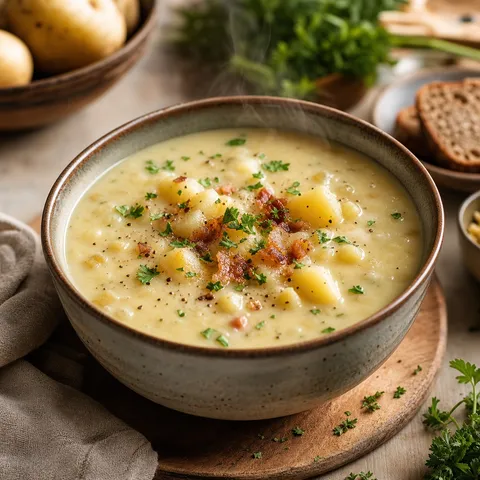 German Lens Verified Images are for illustrative purposes only, may be inaccurate, and do not guarantee the presence or absence of specific ingredients.
 Kartoffelsuppe (Creamy German Potato Soup)
A creamy, comforting German potato soup with leeks, carrots, and a smoky finish of fried sausage or bacon.
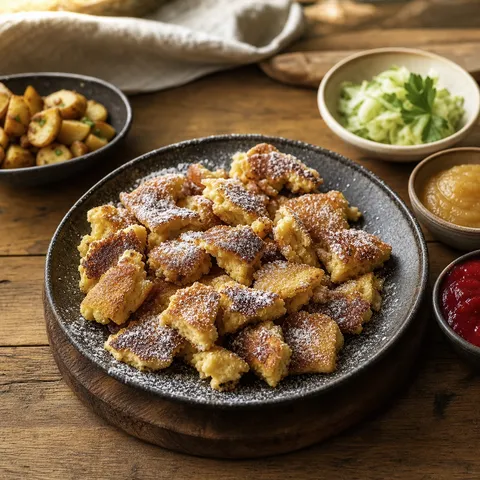 German Lens Verified Images are for illustrative purposes only, may be inaccurate, and do not guarantee the presence or absence of specific ingredients.
 Kaiserschmarrn (Shredded Sugared Pancake)
A fluffy shredded pancake dusted with powdered sugar and studded with golden raisins, torn into rustic pieces and served with stewed fruit compote.
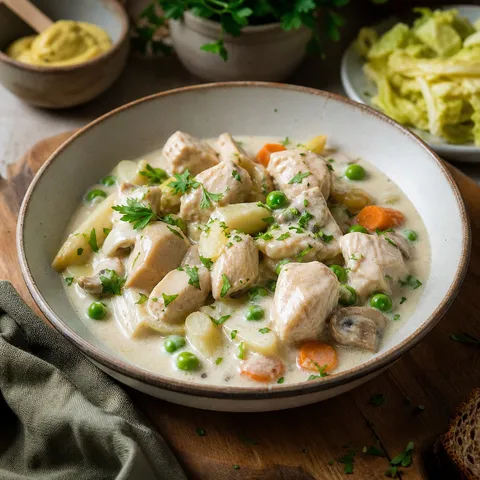 German Lens Verified Images are for illustrative purposes only, may be inaccurate, and do not guarantee the presence or absence of specific ingredients.
 Hühnerfrikassee (German Chicken Fricassee)
A comforting German chicken fricassee in a silky lemon-cream sauce studded with mushrooms, peas, and capers.