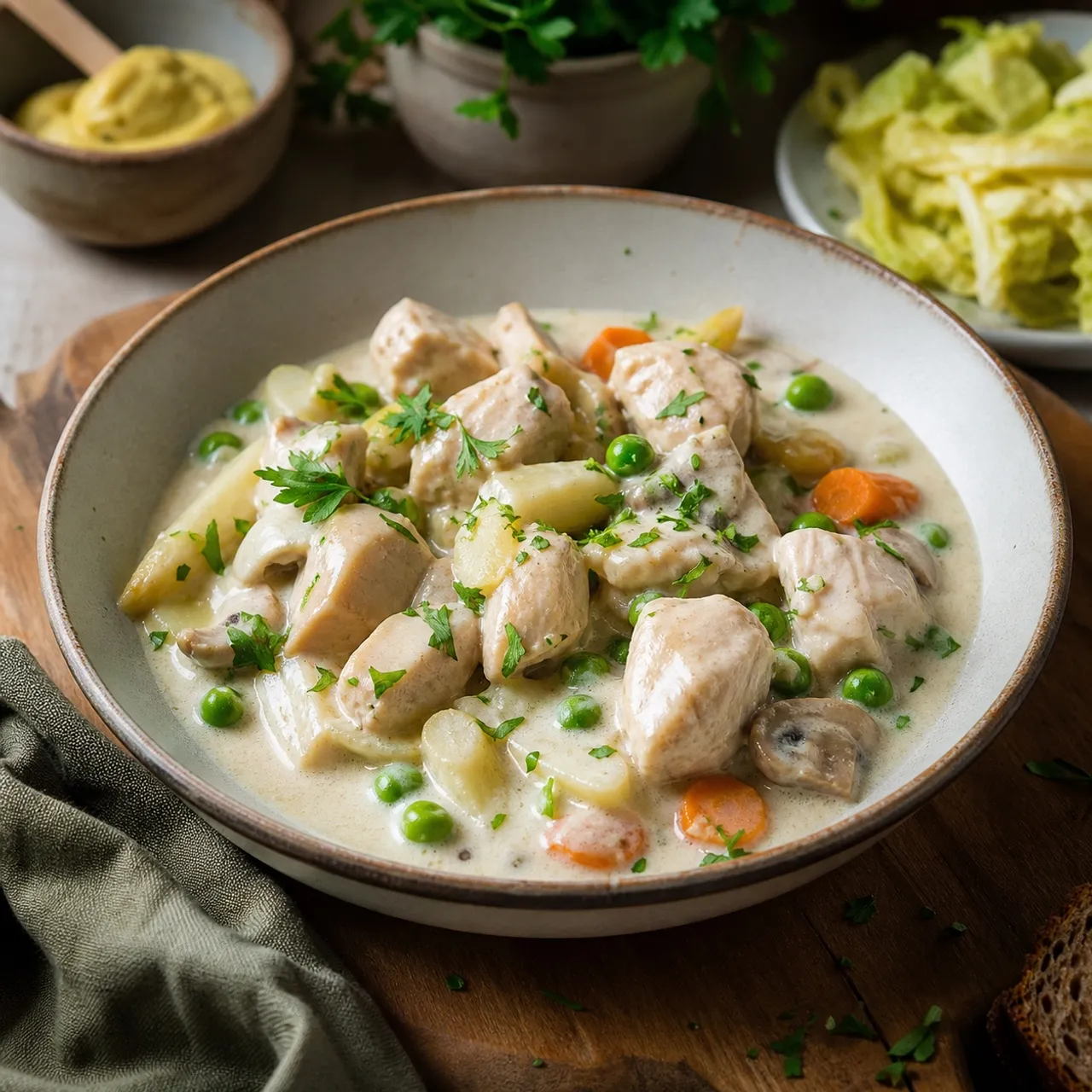
 German Images are for illustrative purposes only, may be inaccurate, and do not guarantee the presence or absence of specific ingredients.
 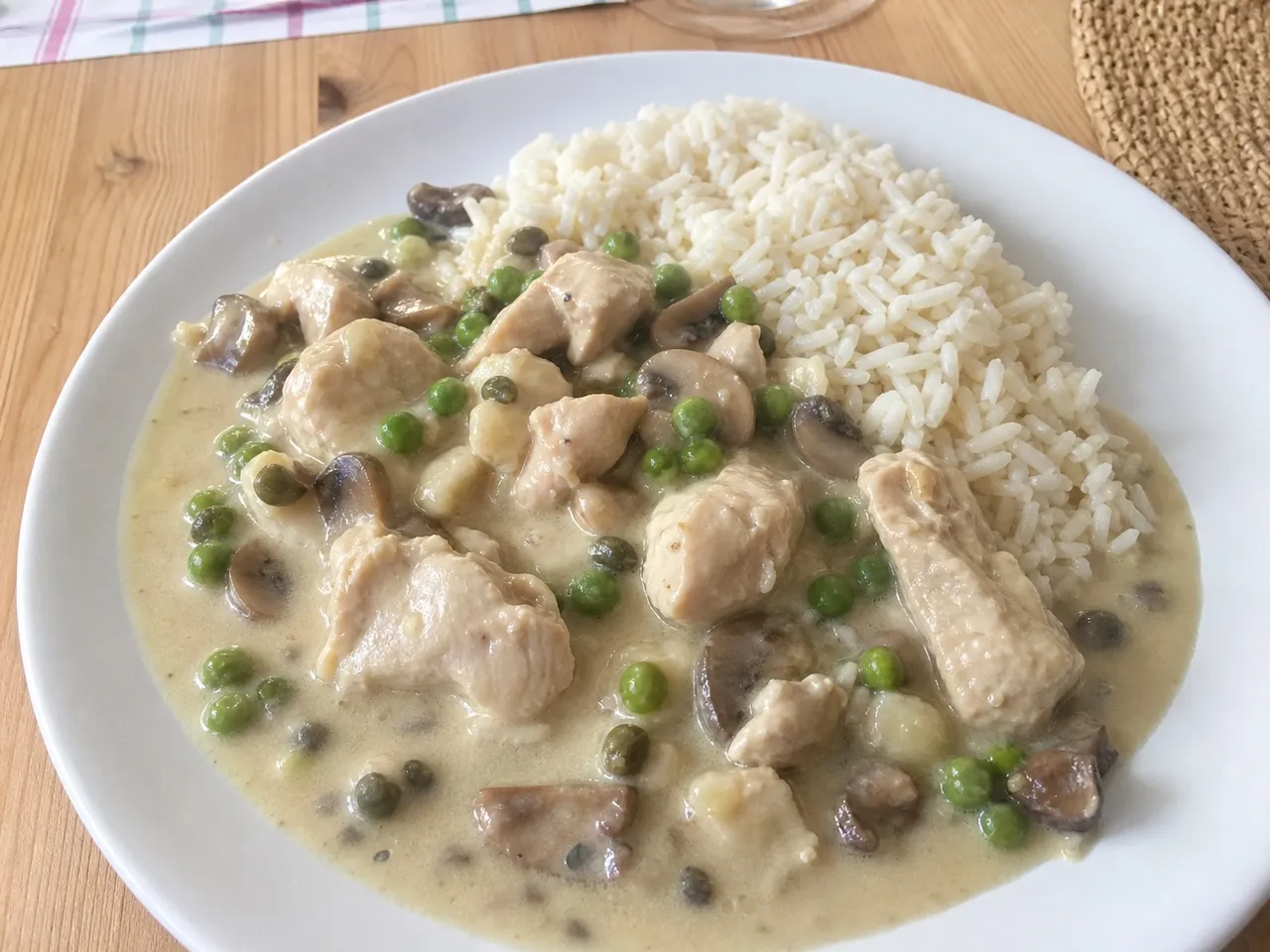 Serving Images are for illustrative purposes only, may be inaccurate, and do not guarantee the presence or absence of specific ingredients.
 Hühnerfrikassee (German Chicken Fricassee)
A comforting German chicken fricassee in a silky lemon-cream sauce studded with mushrooms, peas, and capers.
Contains common allergens
In the app, Listahan checks these against your household automatically.
Instructions
6 steps- 1
Simmer chicken in stock with the onion and bay leaf for 35-40 minutes until cooked through; remove chicken, then strain and reserve the stock.
- 2
Once cool enough to handle, shred or dice the chicken meat, discarding skin and bones.
- 3
Melt butter in a large pot, whisk in flour, and cook for 1-2 minutes to form a roux.
- 4
Gradually whisk in 700 ml of the reserved stock until smooth, then add mushrooms and simmer 8 minutes.
- 5
Stir in the peas, cream, capers, and shredded chicken, and simmer for 5 more minutes.
- 6
Season with lemon juice, salt, and white pepper before serving, often with rice or bread dumplings.
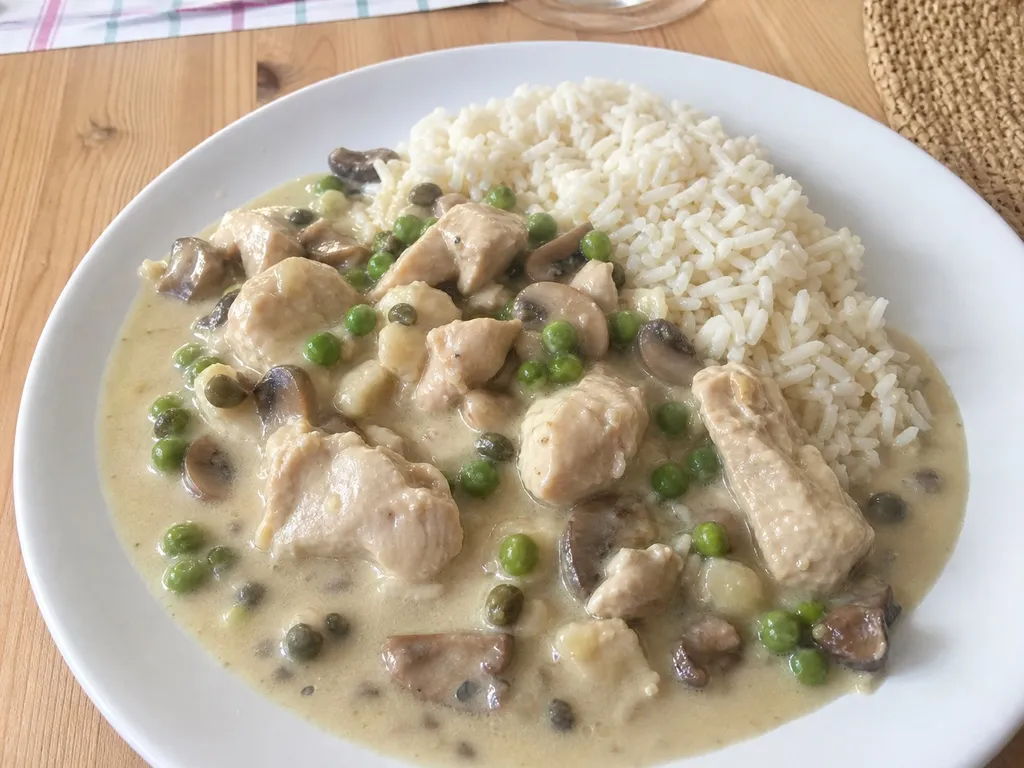 Images are for illustrative purposes only, may be inaccurate, and do not guarantee the presence or absence of specific ingredients.
 Listahan Family Score™
67/100
Works for many families
Score reflects how well this recipe fits a typical busy household. In the app, your Family Score is personalized to your household's allergens, kids, and pantry.
Nutrition
per serving1165
Calories
110 g
Protein
16 g
Carbs
75 g
Fat
Estimated per serving. Actual values depend on the brands and portions you use.
Listahan cooking guide
Chef notes & practical guide
Technique notes, ingredient swaps, serve-alongside ideas, storage guidance, and equipment for this recipe.
Cultural context
Huhnerfrikassee is a German take on the French fricassee technique, chicken poached gently and bound in a pale roux-based sauce brightened with lemon and capers. It became a staple of home cooking across Germany in the 20th century, prized as a way to stretch a whole chicken into a rich, comforting dish without ever browning the meat. It's the kind of dish grandmothers make for Sunday lunch, usually with rice or bread dumplings to catch the sauce.
Listahan note
This version keeps the chicken poaching liquid at the center of the dish, using it to build the roux-based sauce so the sauce tastes like concentrated chicken rather than plain flour and cream, and holds the peas and capers back until the end so they stay bright.
Technique cues
- Poach the chicken gently rather than at a hard boil; a vigorous boil toughens the meat and clouds the stock you'll need for the sauce.
- Cook the roux for a full 1-2 minutes before adding liquid so the raw flour taste cooks out, but keep the color pale rather than letting it brown.
- Add the reserved stock gradually while whisking, rather than all at once, to avoid lumps and to control the sauce's final thickness.
Kitchen flow
- Parallel prep
- Start rice or bread dumplings while the chicken poaches, since both take roughly as long as the sauce needs to come together.
- Make-ahead
- The chicken can be poached and shredded a day ahead; build the sauce fresh so it doesn't thicken too much on reheating.
- Leftover move
- Leftover frikassee reheats well over rice, or can be thinned with a little extra stock and served over egg noodles.
- Cleanup rhythm
- One pot for poaching and one for the sauce; deglaze the sauce pot with a splash of stock right after serving so the roux doesn't set hard.
Ingredient brief
Role, handling, and swap guidance for each key ingredient.
Bone-in chicken thighs and breasts
Main protein
Purpose: Bone-in pieces poached in stock give up more gelatin and flavor than boneless meat, which strengthens the finished sauce.
Handling: Poach whole, then shred or dice once cool enough to handle, discarding skin and bones.
Adaptation: An all-thigh mix keeps the dish moister if you prefer to skip the leaner breast meat.
All-purpose flour
Sauce thickener (roux)
Purpose: Whisked into the butter, it's what turns the poaching stock into a coatable, veloute-style sauce rather than a thin broth.
Handling: Whisk constantly while it cooks briefly in the butter to avoid scorching or lumps.
Adaptation: A gluten-free 1:1 flour blend can work for the roux, though the sauce may need a touch more whisking to stay smooth.
Button mushrooms
Savory vegetable component
Purpose: They add an earthy depth and some textural bite against the smooth sauce and shredded chicken.
Handling: Slice evenly so they cook through in the same 8 minutes as the sauce simmers.
Adaptation: Cremini mushrooms bring a slightly deeper flavor if button mushrooms aren't available.
Heavy cream
Sauce enrichment
Purpose: It rounds out the roux-based sauce into something silkier and less flour-forward.
Handling: Stir in near the end of cooking rather than boiling it hard, which can cause it to separate.
Adaptation: Whole milk or a dairy-free cream alternative can lighten the dish, though the sauce will be noticeably thinner.
Capers
Bright, salty accent
Purpose: Their brininess is what keeps this rich, creamy dish from tasting flat or one-note.
Handling: Add them whole near the end so they keep some bite rather than dissolving into the sauce.
Adaptation: Chopped cornichons can approximate the briny pop if capers aren't on hand.
Technique notes
- Whisk in the stock in a slow, steady stream rather than dumping it in, or the roux will seize into lumps that are hard to smooth out later.
- Taste the sauce before adding lemon juice; the stock's saltiness and the capers' brine both affect how much acid the dish actually needs.
- If the sauce breaks or looks greasy, a splash of cold stock whisked in off the heat usually brings it back together.
Ingredient swaps
- Dairy-free direction
- Swap the butter for a neutral oil in the roux and use a dairy-free cream alternative; the sauce will be thinner but still coats well.
- Gluten-free direction
- Use a gluten-free flour blend for the roux and double-check any stock used is certified gluten-free.
- Lighter path
- Replace half the cream with extra reserved stock for a lighter sauce that still holds together.
Serve alongside
- Steamed white rice
- Bread dumplings (Semmelknodel)
- Boiled parsley potatoes
- Simple green salad
- Dry white wine (Riesling)
- Sparkling water with lemon
- Light pilsner
Serving suggestions only — check pairings for your household's allergens.
Storage & reheating
- Refrigerate in a sealed container for up to 3 days.
- Reheat gently on the stovetop over low heat, stirring often, adding a splash of stock if the sauce has thickened too much.
- Freezing is possible for up to 1 month, though cream sauces can separate slightly on thawing; stir well while reheating.
Equipment
- Large pot for poaching
- Whisk
- Wide saucepan for the roux and sauce
Make this household-aware
Listahan Pro checks this recipe against your household's allergens, finds pantry-aware swaps, builds the shopping list, and helps you plan the week around it.
Plan it in Listahan
Add Hühnerfrikassee (German Chicken Fricassee) to your week, check it against your household's allergens, and build the shopping list automatically.
More German recipes
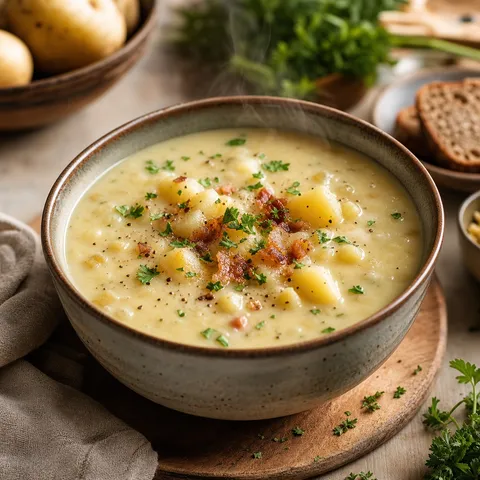 German Lens Verified Images are for illustrative purposes only, may be inaccurate, and do not guarantee the presence or absence of specific ingredients.
 Kartoffelsuppe (Creamy German Potato Soup)
A creamy, comforting German potato soup with leeks, carrots, and a smoky finish of fried sausage or bacon.
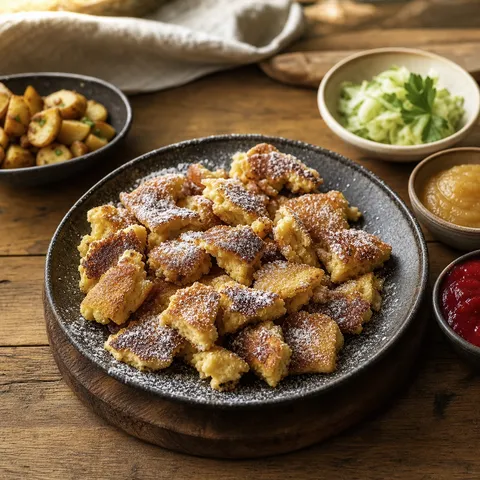 German Lens Verified Images are for illustrative purposes only, may be inaccurate, and do not guarantee the presence or absence of specific ingredients.
 Kaiserschmarrn (Shredded Sugared Pancake)
A fluffy shredded pancake dusted with powdered sugar and studded with golden raisins, torn into rustic pieces and served with stewed fruit compote.
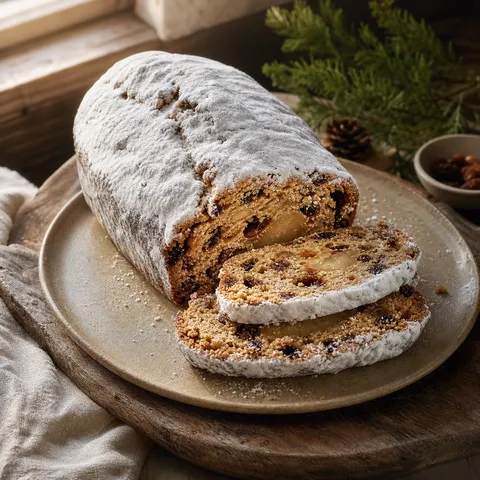 German Lens Verified Images are for illustrative purposes only, may be inaccurate, and do not guarantee the presence or absence of specific ingredients.
 Stollen (German Christmas Fruit Bread)
A dense, buttery German Christmas fruit bread studded with candied citrus peel, raisins, and marzipan, dusted heavily with powdered sugar.