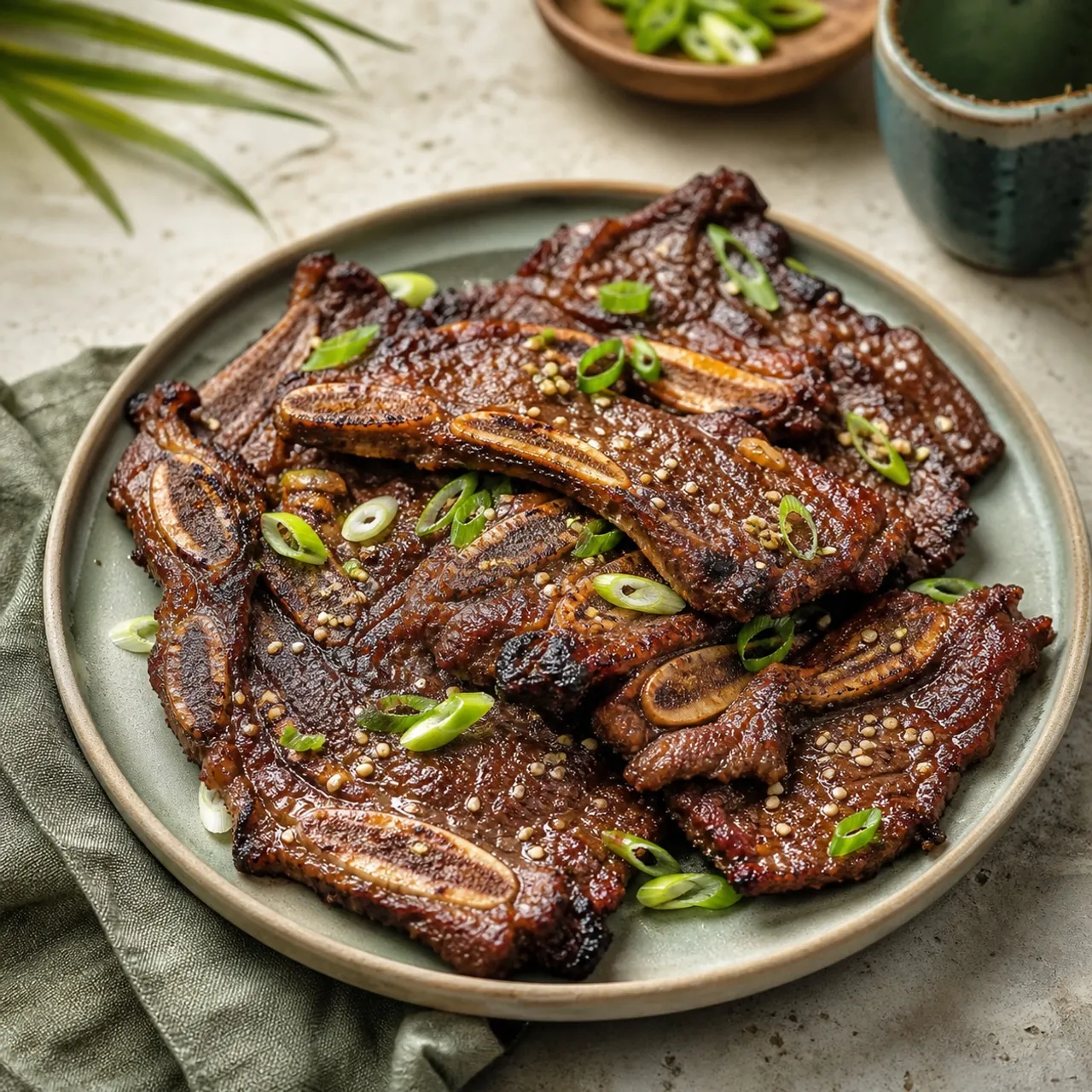
 Hawaiian Images are for illustrative purposes only, may be inaccurate, and do not guarantee the presence or absence of specific ingredients.
 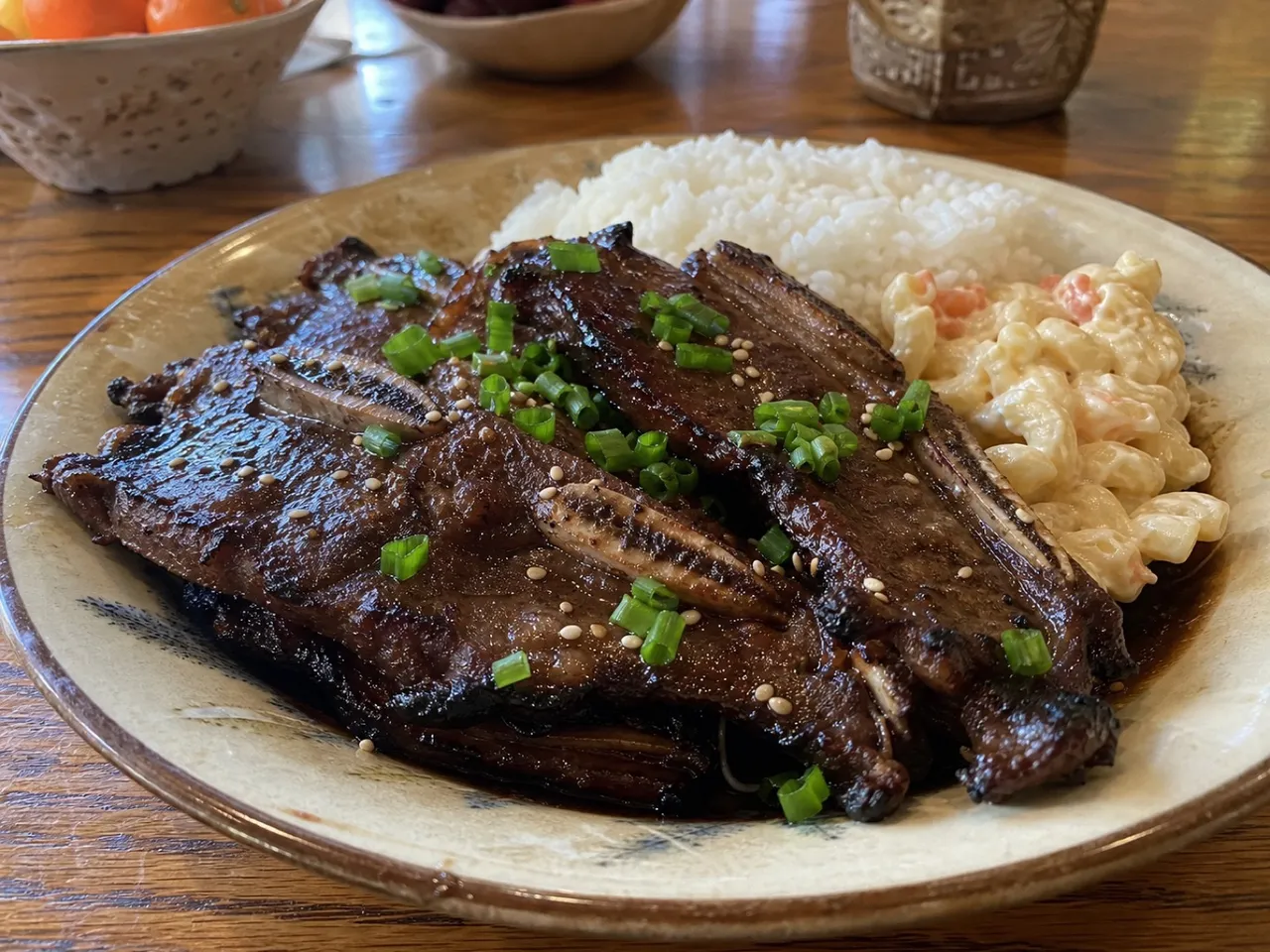 Serving Images are for illustrative purposes only, may be inaccurate, and do not guarantee the presence or absence of specific ingredients.
 Kalbi Ribs
Korean-style short ribs marinated in soy, sesame, ginger, and pear, then grilled until lacquered and charred — a staple of Hawaii's Korean barbecue plate lunch culture.
Contains common allergens
In the app, Listahan checks these against your household automatically.
Good to know
- Ready in under 30 minutes
Matched from this dish's own ingredients and timing. Browse more: 30-minute meals
Instructions
8 steps- 1
Rinse the short ribs under cold water and pat dry to remove any bone dust from cutting.
- 2
In a bowl, combine the shoyu, brown sugar, grated Asian pear, grated onion, garlic, ginger, sesame oil, and sesame seeds, stirring until the sugar dissolves.
- 3
Place the ribs in a large dish or resealable bag, pour the marinade over, and massage it into the meat, making sure the pear and onion coat every rib.
- 4
Marinate in the refrigerator for at least 4 hours, ideally overnight, since the pear's enzymes tenderize the meat over time.
- 5
Remove the ribs from the marinade and let excess drip off, discarding the used marinade or boiling it separately if you want to use it as a glaze.
- 6
Grill the ribs over high heat for 2 to 3 minutes per side, watching closely since the sugar in the marinade chars quickly, until nicely lacquered with grill marks.
- 7
Rest for a few minutes, then garnish with chopped green onions and extra sesame seeds before serving.
- 8
Serve with steamed rice and kimchi for a full Korean-Hawaiian plate lunch spread.
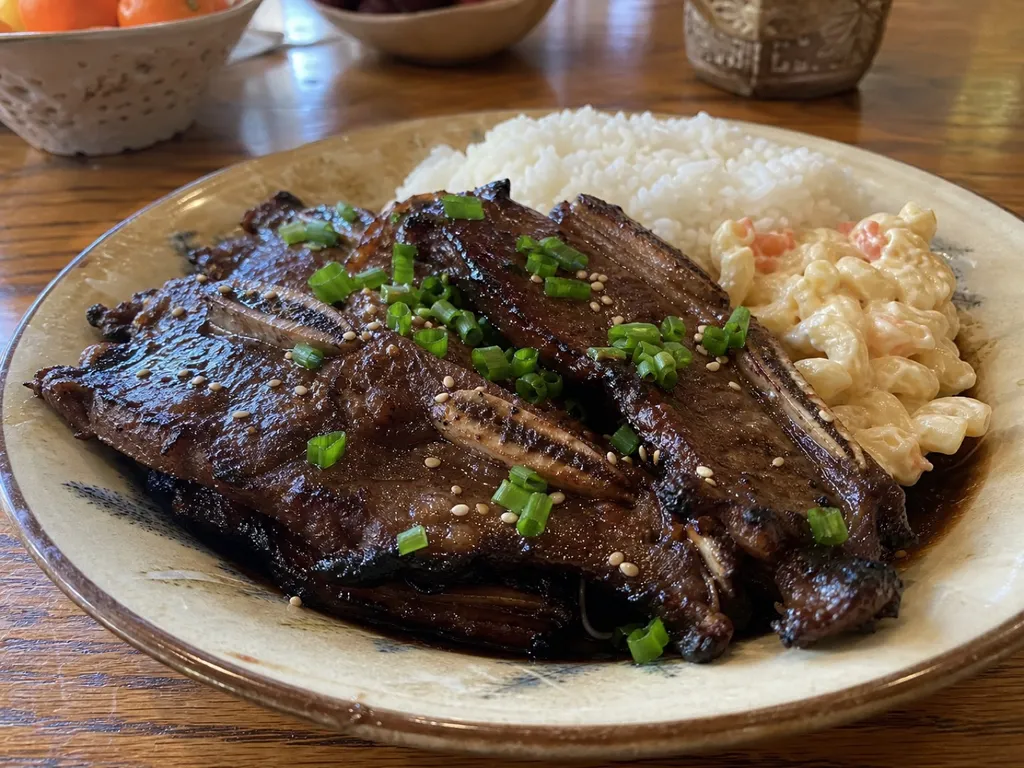 Images are for illustrative purposes only, may be inaccurate, and do not guarantee the presence or absence of specific ingredients.
 Listahan Family Score™
63/100
Works for many families
Score reflects how well this recipe fits a typical busy household. In the app, your Family Score is personalized to your household's allergens, kids, and pantry.
Nutrition
per serving635
Calories
62 g
Protein
15 g
Carbs
34 g
Fat
Estimated per serving. Actual values depend on the brands and portions you use.
Listahan cooking guide
Chef notes & practical guide
Technique notes, ingredient swaps, serve-alongside ideas, storage guidance, and equipment for this recipe.
Cultural context
Kalbi (Korean short ribs) became a fixture of Hawaiian plate lunch culture through the large Korean immigrant community that arrived in Hawaii beginning in the early 1900s. Hawaii's version of kalbi tends to be sweeter than its Korean counterpart, reflecting local preferences for fruit-forward marinades — often incorporating Asian pears or pineapple juice alongside soy and sesame. Today kalbi appears at virtually every backyard party and plate lunch counter across the islands, fully absorbed into the Hawaiian food identity.
Listahan note
This version uses flanken-cut short ribs marinated overnight in a sweet-soy-sesame mixture, then grilled over high heat for the caramelized char that makes kalbi irresistible.
Technique cues
- Flanken-cut ribs (sliced across the bones thin) are essential for this dish — they cook in minutes over direct heat and absorb marinade quickly; thick bone-in cuts require a completely different approach.
- Grate the Asian pear or use pineapple juice in the marinade; the natural enzymes tenderize the beef and add a subtle fruit sweetness that balances the soy.
- Grill over the highest heat available and cook just 2-3 minutes per side — overcooked kalbi turns chewy; you want char on the outside with a pink, juicy interior.
Kitchen flow
- Parallel prep
- While the grill heats to maximum temperature, make the rice and any salad sides — the actual grill time is under 10 minutes total.
- Make-ahead
- Marinate the ribs overnight, up to 24 hours — overnight marinade produces noticeably more flavorful and tender results than 2-hour marinating.
- Leftover move
- Leftover kalbi reheats well in a hot skillet; serve in a rice bowl with kimchi and a fried egg for a quick Korean-Hawaiian lunch.
- Cleanup rhythm
- Marinate in a zip-lock bag to minimize dishwashing; the grill grates may need a wire brush scrub immediately after cooking while the sugar residue is still warm.
Ingredient brief
Role, handling, and swap guidance for each key ingredient.
flanken-cut beef short ribs
main protein
Purpose: Thin cross-cut slices expose the bone marrow and bone flavor at the edge of each strip while cooking rapidly over high heat.
Handling: Rinse the ribs and pat dry before marinating; score the meat between bones slightly to help the marinade penetrate.
Adaptation: Bone-in short ribs cut Korean-style are the same product; also sold as 'LA galbi' at Asian grocery stores.
soy sauce
marinade base
Purpose: Soy sauce provides the salty, savory umami foundation of the marinade and helps create a lacquered exterior during grilling.
Handling: Combine with all other marinade ingredients at once and taste before adding meat to calibrate sweetness and salt.
Adaptation: Tamari for a gluten-free marinade with nearly identical flavor.
Asian pear or pineapple juice
tenderizer and sweetener
Purpose: Natural enzymes in pear and pineapple break down meat proteins slightly, resulting in noticeably more tender ribs without any added chemicals.
Handling: Grate pear directly into the marinade or add juice straight from the can or bottle.
Adaptation: Kiwi juice works similarly and has a more neutral flavor; avoid papaya, which over-tenderizes quickly.
sesame oil
aromatic finish
Purpose: Toasted sesame oil in the marinade adds a nutty depth that signals the Korean-Hawaiian heritage of the dish.
Handling: Add to the marinade off heat to preserve the toasted aroma.
Adaptation: Reduce or omit for sesame allergy — the flavor will be less complex but still good.
garlic and ginger
aromatic punch
Purpose: Together they provide the sharp, warm backbone that prevents the sweet soy marinade from tasting one-dimensional.
Handling: Grate or mince finely so they coat the meat evenly rather than sitting in clumps.
Adaptation: Garlic powder and ground ginger at half the amount work for a smoother marinade.
Technique notes
- The marinade sugar will cause the ribs to flare on a gas grill — have a spray bottle of water nearby and move ribs to a cooler zone if flare-ups are excessive.
- Letting the marinated ribs sit at room temperature for 20 minutes before grilling helps them cook more evenly and reduces the chance of a cold center.
- Scatter toasted sesame seeds and sliced scallions over the plated ribs immediately before serving — they add visual freshness to what can look quite dark off the grill.
Ingredient swaps
- Gluten-free direction
- Replace soy sauce with tamari; all other marinade ingredients are naturally gluten-free.
- Lower-sodium direction
- Use low-sodium soy sauce and reduce the quantity by 20%; the fruit component still provides plenty of flavor.
- Allergen-aware direction
- For sesame allergy, omit sesame oil entirely and replace with a drizzle of neutral oil in the marinade — the dish still tastes excellent.
Serve alongside
- steamed short-grain rice
- kimchi
- Hawaiian macaroni salad
- namul-style blanched spinach
- cold Korean lager (Hite or Cass)
- POG juice
- barley tea served cold
Serving suggestions only — check pairings for your household's allergens.
Storage & reheating
- Cooked kalbi keeps refrigerated for up to 3 days. Reheat in a hot skillet to re-caramelize the surface rather than microwaving, which makes the meat rubbery. Raw marinated ribs can be refrigerated up to 24 hours or frozen in the marinade for up to 1 month.
Equipment
- charcoal or gas grill capable of high heat
- grill tongs
- large zip-lock bag or shallow dish for marinating
- fine grater for pear and ginger
Make this household-aware
Listahan Pro checks this recipe against your household's allergens, finds pantry-aware swaps, builds the shopping list, and helps you plan the week around it.
Plan it in Listahan
Add Kalbi Ribs to your week, check it against your household's allergens, and build the shopping list automatically.
More Hawaiian recipes
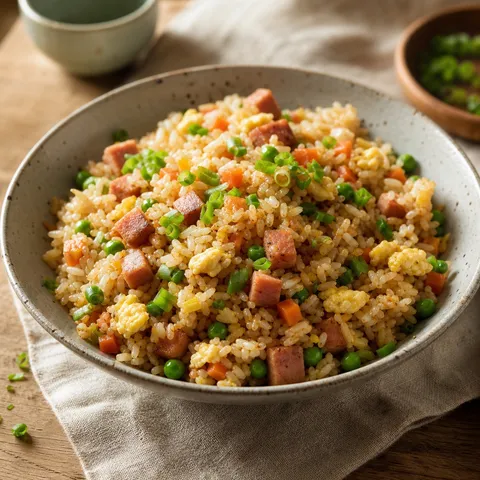 Hawaiian Lens Verified Images are for illustrative purposes only, may be inaccurate, and do not guarantee the presence or absence of specific ingredients.
 Spam Fried Rice
Day-old rice stir-fried with caramelized Spam, egg, soy sauce, and green onion — a quick, satisfying island classic that turns pantry staples into something craveable.
 Hawaiian Lens Verified Images are for illustrative purposes only, may be inaccurate, and do not guarantee the presence or absence of specific ingredients.
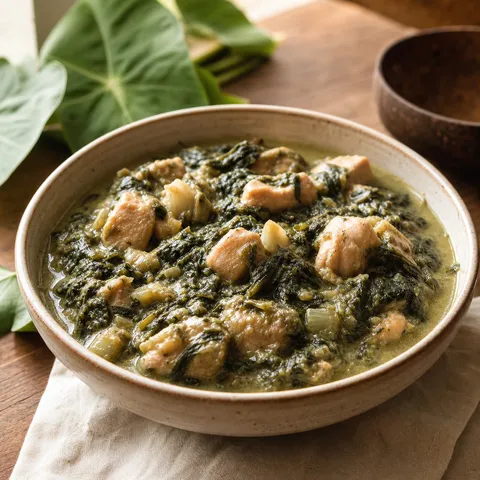
 Chicken Luau
Tender chicken simmered with young taro leaves in coconut milk until velvety and earthy — a quietly comforting Hawaiian stew full of old-fashioned luau warmth.
 Hawaiian Lens Verified Images are for illustrative purposes only, may be inaccurate, and do not guarantee the presence or absence of specific ingredients.
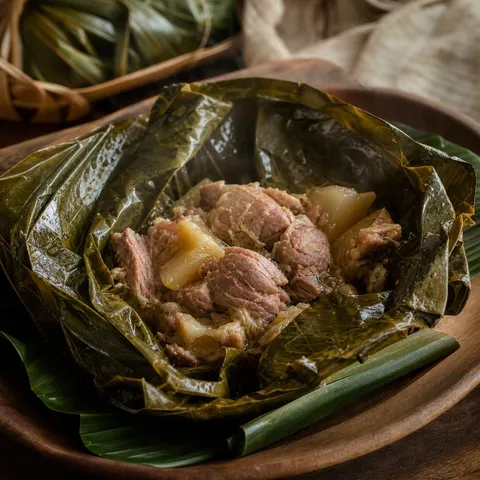
 Lau Lau
Pork shoulder and butterfish bundled in layers of taro leaf and steamed until meltingly tender — earthy, rich, and deeply rooted in Native Hawaiian tradition.