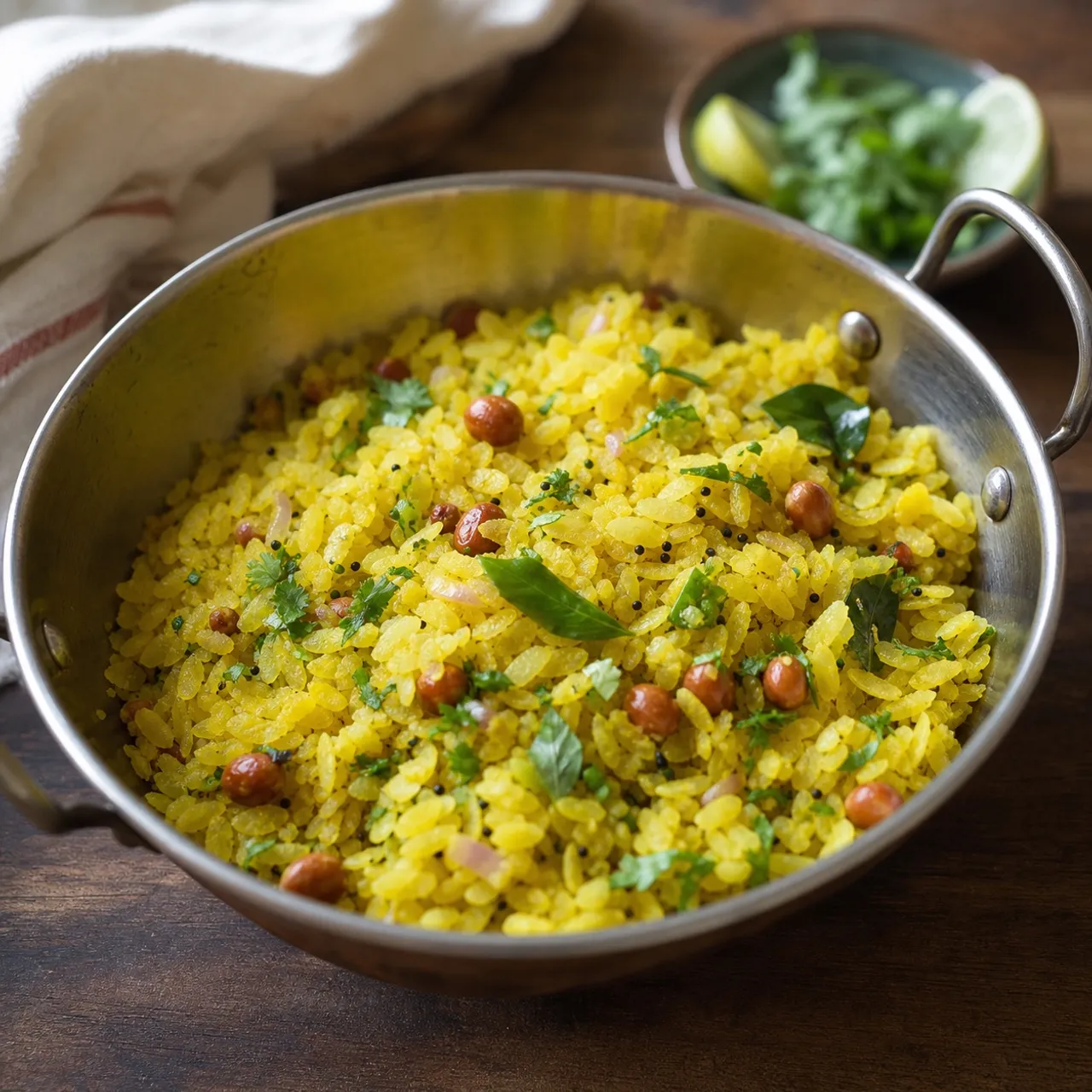
 Indian Images are for illustrative purposes only, may be inaccurate, and do not guarantee the presence or absence of specific ingredients.
 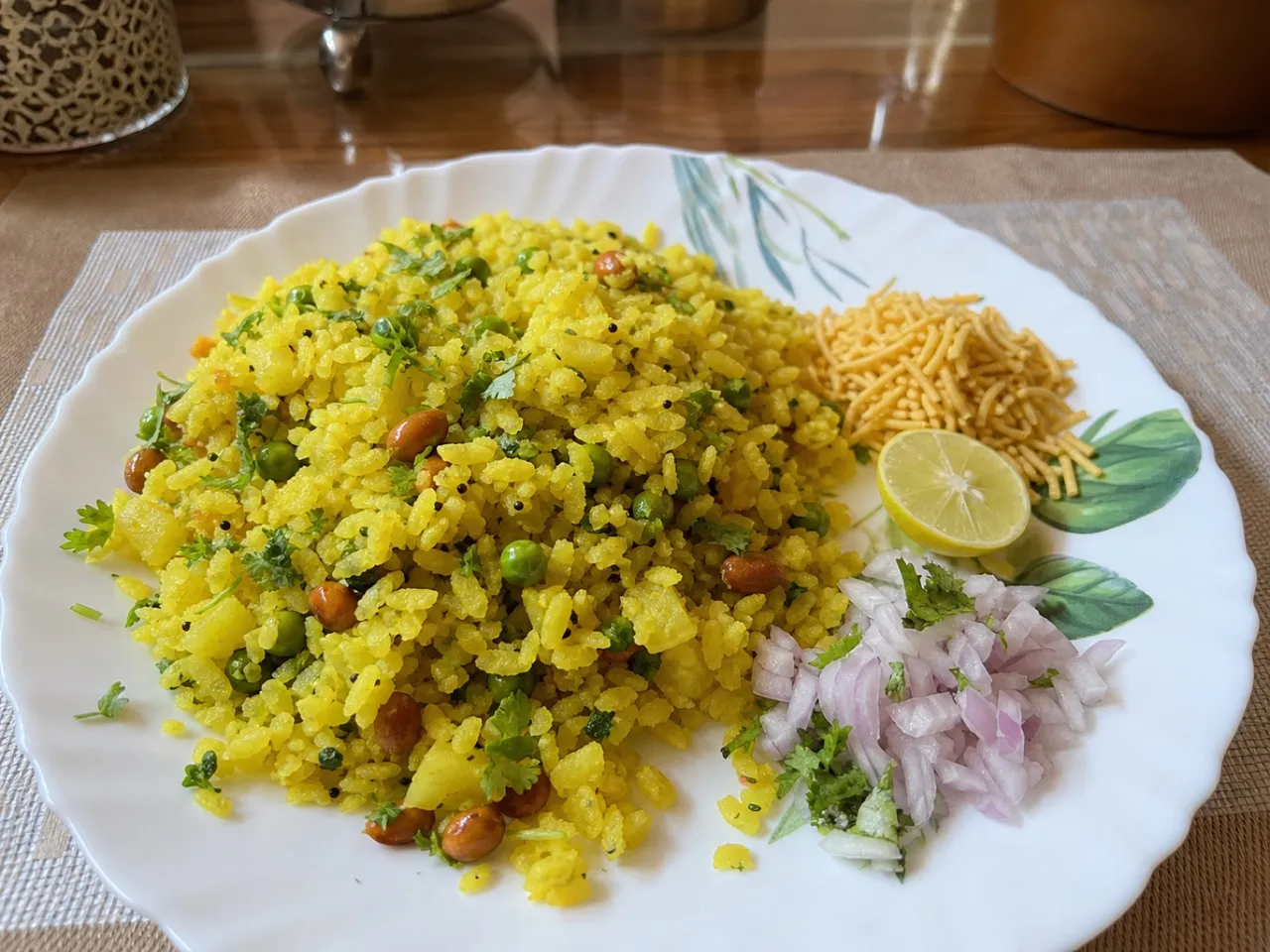 Serving Images are for illustrative purposes only, may be inaccurate, and do not guarantee the presence or absence of specific ingredients.
 Poha
Flattened rice that is steam cooked with onions, spices and herbs.
Contains common allergens
In the app, Listahan checks these against your household automatically.
Good to know
- Ready in under 30 minutes
Matched from this dish's own ingredients and timing. Browse more: 30-minute meals
Instructions
6 steps- 1
Wash the Poha: Place the flattened rice in a colander. Rinse it gently under running water for 15 seconds. Toss it to drain the water completely, then let it sit for 10 minutes to soften. It should be moist but not mushy.
- 2
Roast Peanuts: Heat 2 tbsp oil in a wide pan over medium heat. Add the raw peanuts and fry for 3-4 minutes until crunchy and slightly browned. Remove them and set aside.
- 3
Temper the Spices: In the same oil, crackle the mustard seeds. Add the chopped green chilies and a sprig of fresh curry leaves. Sauté for 10 seconds.
- 4
Sauté Onions: Add the finely chopped onions and cook for 3-4 minutes until translucent (do not brown them). Stir in the turmeric and 1 tsp salt.
- 5
Toss the Poha: Add the softened flattened rice to the pan. Toss gently using two forks or a spatula until every grain takes on a vibrant yellow color from the turmeric. Cover and steam on low heat for 2 minutes.
- 6
Garnish and Serve: Turn off the heat. Fold the roasted peanuts back in. Squeeze the juice of half a lemon over the top and garnish generously with fresh cilantro.
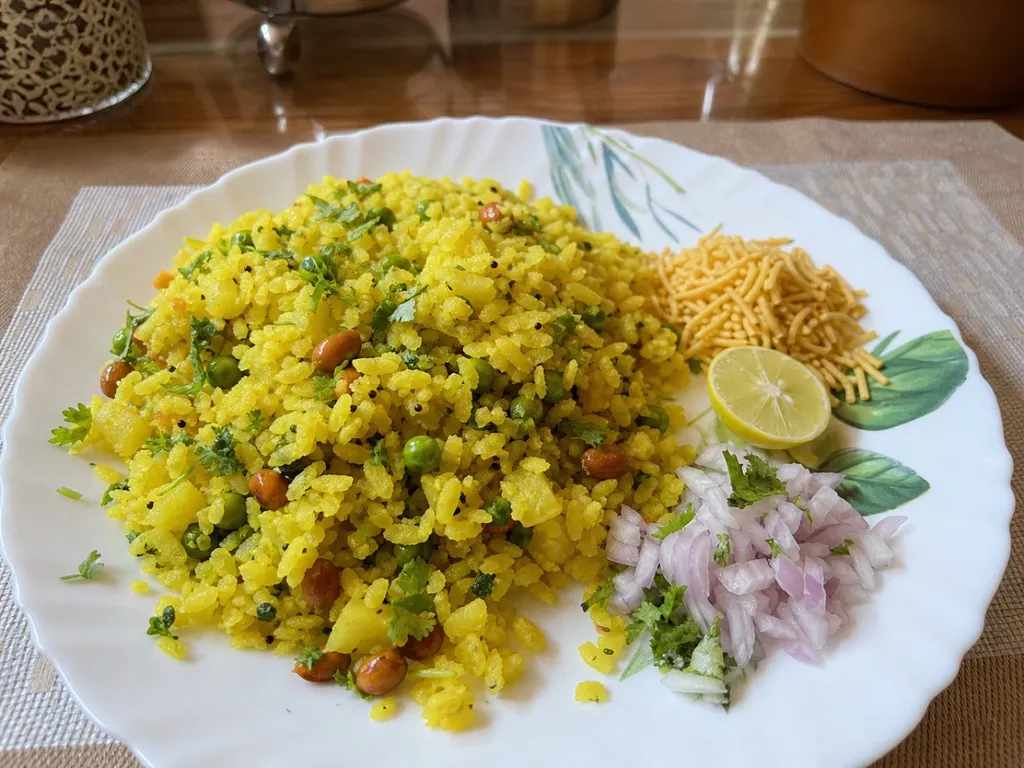 Images are for illustrative purposes only, may be inaccurate, and do not guarantee the presence or absence of specific ingredients.
 Listahan Family Score™
65/100
Works for many families
Score reflects how well this recipe fits a typical busy household. In the app, your Family Score is personalized to your household's allergens, kids, and pantry.
Nutrition
per serving405
Calories
9 g
Protein
78 g
Carbs
5 g
Fat
Estimated per serving. Actual values depend on the brands and portions you use.
Listahan cooking guide
Chef notes & practical guide
Technique notes, ingredient swaps, serve-alongside ideas, storage guidance, and equipment for this recipe.
Cultural context
Poha is made from flattened rice (called beaten rice or chivda) and is one of the most popular breakfast dishes across central and western India, particularly in Maharashtra and Madhya Pradesh. The Indore style from Madhya Pradesh, which tops poha with sev (crispy chickpea noodles) and pomegranate seeds, has become particularly famous. The dish is ancient in origin but became a staple breakfast food largely during the 19th and 20th centuries when it spread widely through Indian railway culture as a fast, affordable, and non-perishable travel food.
Listahan note
This version makes Maharashtrian-style poha with the proper balance of tartness from lemon and sweetness from a pinch of sugar, finished with fresh coconut and plenty of fresh coriander for brightness.
Technique cues
- Rinse the poha under cold water in a colander and let it drain for exactly 2-3 minutes; properly hydrated poha should be soft enough to crush between your fingers without crumbling, but still holding shape, not waterlogged.
- Keep the heat medium throughout cooking and toss gently rather than stirring vigorously, as beaten rice grains are fragile and over-stirring turns the dish into a paste.
- Add the lemon juice off-heat just before serving; acid added to a hot pan cooks off immediately and leaves a flat, muted sour taste rather than the bright citrus note the dish needs.
Kitchen flow
- Parallel prep
- Rinse and drain the poha as the first step; it only needs 2 minutes and can sit while you dice the onion and set up your tempering spices.
- Make-ahead
- Poha does not hold well and is best made fresh; however, the tempering spices can be measured and the onion diced the night before to make the 10-minute morning cook even faster.
- Leftover move
- Leftover poha can be pan-fried with a little extra oil until slightly crispy and served as a snack with chai, or topped with a fried egg for a more substantial second meal.
- Cleanup rhythm
- One pan and one colander is the entire cleanup; wipe the pan immediately while still warm as turmeric stains quickly on light-colored surfaces.
Ingredient brief
Role, handling, and swap guidance for each key ingredient.
thick poha (flattened rice)
main ingredient
Purpose: Flattened rice absorbs flavor without further cooking and is ready in minutes, making it the base of one of India's fastest wholesome breakfasts.
Handling: Rinse gently under cold water and spread on a plate to drain for 2 minutes so it softens uniformly without becoming mushy.
Adaptation: Thin poha (used for chivda/snack mixes) is too fine and disintegrates; stick with medium or thick poha for this preparation.
onion
aromatic base
Purpose: Finely diced onion softened in the tempering oil adds sweetness and body to what would otherwise be a very simple dish.
Handling: Cut into small even dice so it cooks uniformly in 3-4 minutes without any raw pieces remaining.
Adaptation: Shallots work well and produce a slightly sweeter result.
green chili
fresh heat
Purpose: A split green chili cooked in the oil adds a clean heat that is characteristic of Maharashtrian poha.
Handling: Slit lengthwise so the heat releases into the oil; remove before eating if serving to children.
Adaptation: Serrano pepper is a good substitute; jalapeño for a milder heat.
turmeric
color and mild bitterness
Purpose: Just a pinch of turmeric gives poha its characteristic pale yellow color and a faintly earthy note.
Handling: Add to the hot oil with the green chili so it blooms and distributes evenly through the fat before the onion goes in.
Adaptation: Omit if unavailable; the flavor difference is minor but the dish will be pale white rather than golden.
fresh curry leaves
aromatic bloom
Purpose: Curry leaves fried in hot oil release a citrusy, herbal fragrance that is the most distinctive aromatic note in the dish.
Handling: Add to hot oil before any other ingredients as they need direct contact with the fat to release their essential oils.
Adaptation: Dried curry leaves are a weak substitute; if unavailable, a small amount of fresh bay leaf provides a faint herbal note.
Technique notes
- A tiny pinch of sugar added with the turmeric is the Maharashtrian touch that balances the lemon juice at the end; it is not noticeable as sweetness but rounds out the flavor profile so no single note dominates.
- Top with fine sev (chickpea noodle crunchies) immediately before serving for the Indore-style version; the sev softens within minutes so it must go on at the last moment to stay crisp.
- Use a wide pan with enough surface area so the poha spreads in a thin layer; crowding it in a deep pot makes the grains steam and stick together instead of drying and separating into individual fluffy pieces.
Ingredient swaps
- Gluten-free direction
- Poha is naturally gluten-free; verify that your sev topping is made from besan only and is processed in a gluten-free facility if cross-contamination is a concern.
- Higher-protein direction
- Add 2 beaten eggs scrambled into the pan after the onion stage for a heartier breakfast version, or toss in a handful of roasted peanuts with the tempering.
- Vegan direction
- Poha is naturally vegan as written; just ensure any store-bought sev topping does not contain dairy-based additives.
Serve alongside
- Masala chai
- Tamarind chutney for dipping
- Sliced fresh banana
- Hot masala chai
- Cold nimbu pani (lemon water)
Serving suggestions only — check pairings for your household's allergens.
Storage & reheating
- Poha is best eaten immediately after cooking; it dries out and becomes gummy within 30 minutes at room temperature.
- If you must store it, refrigerate for up to 1 day and revive with a quick toss in a hot oiled pan with a few drops of water to steam it back to life.
Equipment
- Wide flat-bottomed pan or skillet for spreading the poha in a thin layer
- Fine-mesh colander for rinsing and draining the poha without losing grains
- Small tempering pan if preparing in large batch on a separate burner
- Citrus squeezer for extracting lemon juice cleanly at the end
Make this household-aware
Listahan Pro checks this recipe against your household's allergens, finds pantry-aware swaps, builds the shopping list, and helps you plan the week around it.
Plan it in Listahan
Add Poha to your week, check it against your household's allergens, and build the shopping list automatically.
More Indian recipes
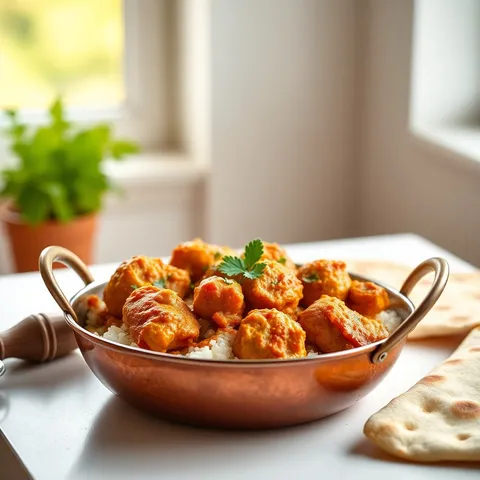 Indian Lens Verified Images are for illustrative purposes only, may be inaccurate, and do not guarantee the presence or absence of specific ingredients.
 Chicken Tikka Masala
Indulge in succulent, yogurt-marinated chicken chunks roasted to perfection and enveloped in a luscious, deeply spiced tomato-cream sauce.
 Indian Lens Verified Images are for illustrative purposes only, may be inaccurate, and do not guarantee the presence or absence of specific ingredients.
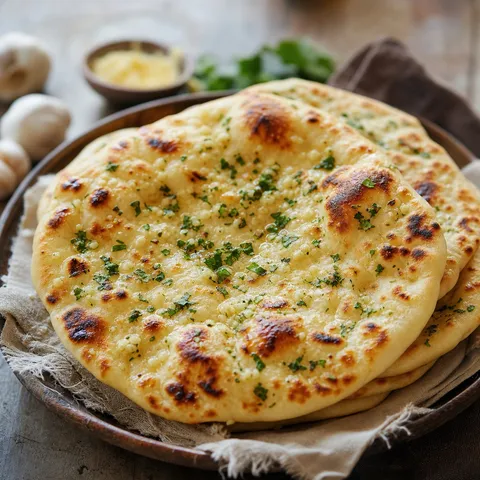
 Garlic Naan
Tear into this piping hot, blistered flatbread packed with aromatic garlic and brushed generously with irresistible melted butter.
 Indian Lens Verified Images are for illustrative purposes only, may be inaccurate, and do not guarantee the presence or absence of specific ingredients.
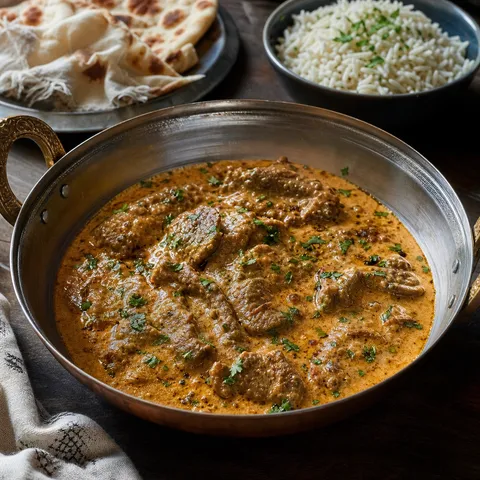
 Lamb Pasanda
A rich Mughlai dish made with flattened lamb steaks in a creamy almond sauce.