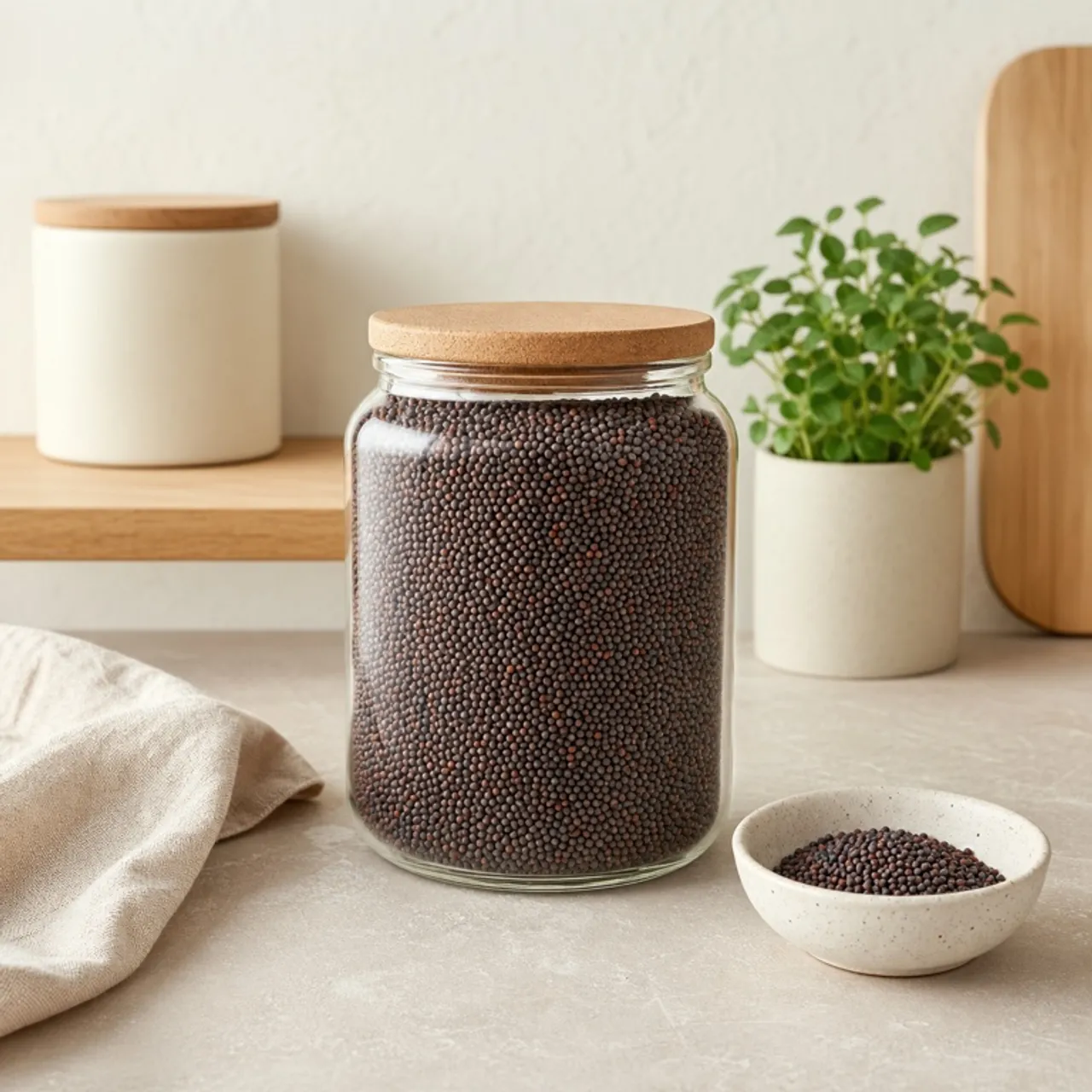
 Food Lens Images are for illustrative purposes only, may be inaccurate, and do not guarantee the presence or absence of specific ingredients.
 Food Lens · Recipe ingredients
Mustard Seeds
Raw: nutty and mildly pungent. Tempered in hot oil: nuttier, more mellow, less sharp — the popping process transforms their flavor profile into something gentler and more aromatic. Yellow seeds are mildest; black most pungent.
Lens VerifiedMustard seeds are the small, hard seeds of Brassica and Sinapis plants, used in three main varieties — black, brown, and yellow — each with different pungency levels and culinary roles. In South Asian cooking they are most often tempered in hot oil until they pop; in Western cooking they are ground into mustard condiment or pickled.
Where it comes from
Mustard seeds have been used in cooking and medicine since antiquity — the ancient Romans made a paste of ground mustard seeds (the predecessor of Dijon mustard) and the seeds appear in ancient Indian Ayurvedic texts. South Asian cultivation of brown and black varieties became deeply embedded in culinary traditions over millennia. In North America, yellow mustard seeds are the easiest to find in mainstream grocery stores, while black and brown mustard seeds are widely available at Indian and South Asian grocery stores.
Varieties — Black mustard seeds (Brassica nigra): most pungent, traditional in South Indian tempering. Brown mustard seeds (B. juncea): the most widely used in Indian cooking — more pungent than yellow, less than black. Yellow/white mustard seeds (Sinapis alba): mildest, used in Western pickling brines and mustard condiment. Most Indian recipes use either black or brown.
South Indian cuisine begins almost every dish with a sizzle of mustard seeds in oil. When the seeds pop and turn gray, the fat is ready for the next aromatics. This moment — hearing the pop — is the sensory signal that cooking has properly begun for millions of South Indian home cooks.
In a modern kitchen — When tempering mustard seeds, have a lid ready — they pop vigorously and can scatter. Use medium-high heat and cover the pan once they begin to pop. They are done when the popping subsides and the seeds have turned grayish. If they burn, they turn bitter — start over with fresh seeds and slightly lower heat.
Buying it
Yellow mustard seeds: baking/spice aisle at any grocery store. Brown and black mustard seeds: Indian or South Asian grocery stores, often sold in larger bags. Brown mustard seeds are sometimes sold as 'Indian mustard seeds.' Store in airtight containers as they can go rancid over time.
Storing it
Store whole seeds in a sealed container away from light and heat. Whole seeds keep their pungency far longer than ground mustard, especially in a cool, dark spot.
Keeps about 1 year in the pantry.
Out of mustard seeds? Good swaps
- Brown mustard seeds (for black) — Nearly identical in cooking applications; use 1:1.
- Celery seeds — Different flavor but similar small seed that pops; works as a texture substitute in tempering only.
General cooking guidance — always check the labels on the products you use. Listahan’s allergen checks run automatically when you plan a recipe in the app. Not medical advice.
Recipes that use mustard seeds
Common questions about mustard seeds
Is mustard seeds vegan?
Mustard Seeds is generally plant-based and suitable for a vegan diet, but brands differ — confirm on the label.
What can I use instead of mustard seeds?
Good swaps include Brown mustard seeds (for black), Celery seeds. Each behaves a little differently — see the swaps above for notes, and always check labels for allergens.
How do I store mustard seeds?
Store whole seeds in a sealed container away from light and heat. Whole seeds keep their pungency far longer than ground mustard, especially in a cool, dark spot. It keeps about 1 year in the pantry.
More recipe ingredients
See all


Make mustard seeds about your kitchen — with Listahan Pro
Everything above is free, forever. Pro adds the Household Lens — the same food, seen for your family:
-
Checked for each member
Flags mustard seeds per person against your household's allergies and school rules — not just a generic "contains" tag.
-
Pantry-aware
Knows whether you already have it, what is running low, and the best swap from what is in your kitchen tonight.
-
What it costs near you
A real price from the Presyo community index, so you can plan the budget — not guess.
-
Your household memory
Who likes it, plus your own private notes — brand, where you keep it, who skips it.
Allergen safety is always free — Pro adds the automation, never the safety.
Cook with mustard seeds — safely
Plan a recipe in Listahan and the household allergen check runs automatically — every plan, every swap, every lunchbox. Safety is never paywalled.