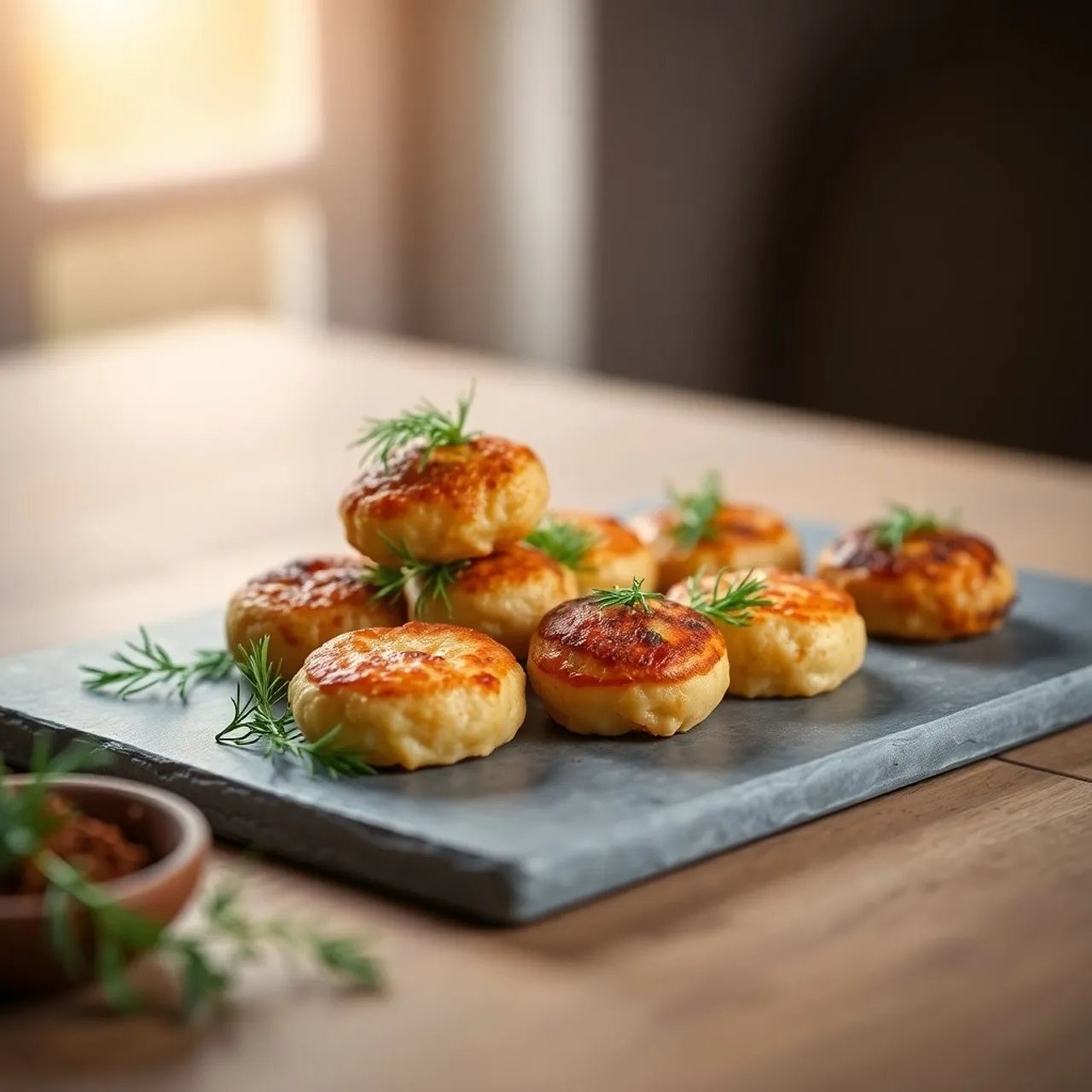
 Nordic Images are for illustrative purposes only, may be inaccurate, and do not guarantee the presence or absence of specific ingredients.
 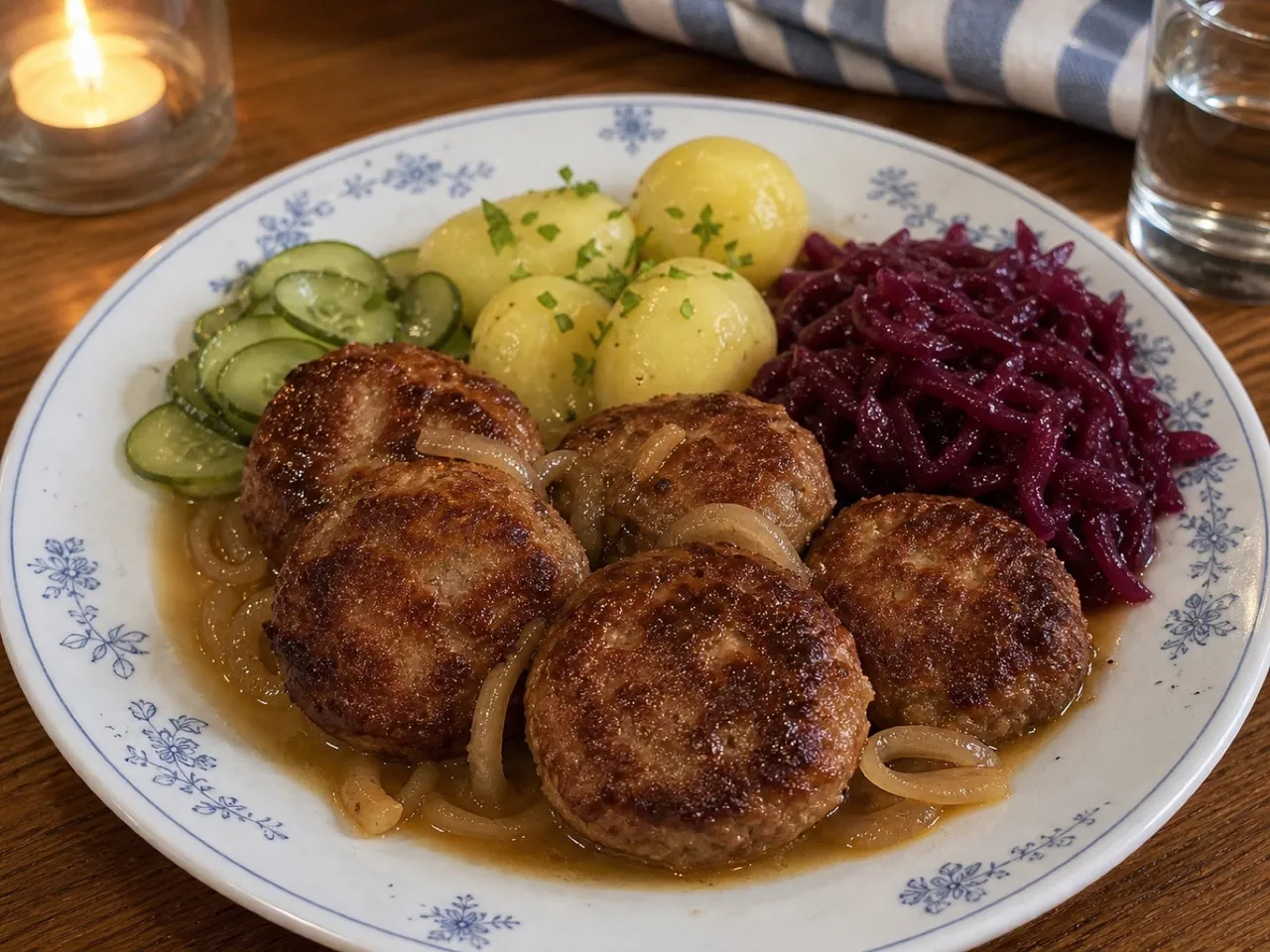 Serving Images are for illustrative purposes only, may be inaccurate, and do not guarantee the presence or absence of specific ingredients.
 Frikadeller
Denmark's pan-fried pork meatballs — plump, golden, and savory with onion and nutmeg, they're equally at home on a smørrebrød or beside creamed potatoes at dinner.
Contains common allergens
In the app, Listahan checks these against your household automatically.
Instructions
6 steps- 1
In a large bowl, combine the ground pork, grated onion, egg, flour, salt, pepper, and allspice.
- 2
Gradually mix in the milk a little at a time, stirring well after each addition (a stand mixer or hand mixer helps here) until the mixture is light, smooth, and slightly sticky; this takes a few minutes of active mixing.
- 3
Cover and refrigerate the meat mixture for at least 20 minutes to firm up, which makes shaping easier.
- 4
Melt the butter in a large skillet over medium heat. Using two spoons dipped in cold water, shape the mixture into oval meatballs (quenelles) and gently place them in the hot butter.
- 5
Fry the frikadeller for 4 to 5 minutes per side, adjusting the heat as needed, until deeply golden brown on the outside and cooked through (an internal temperature of 160 F / 71 C).
- 6
Transfer to a plate lined with paper towel to drain briefly, then serve hot with boiled potatoes, brown gravy, and pickled red cabbage.
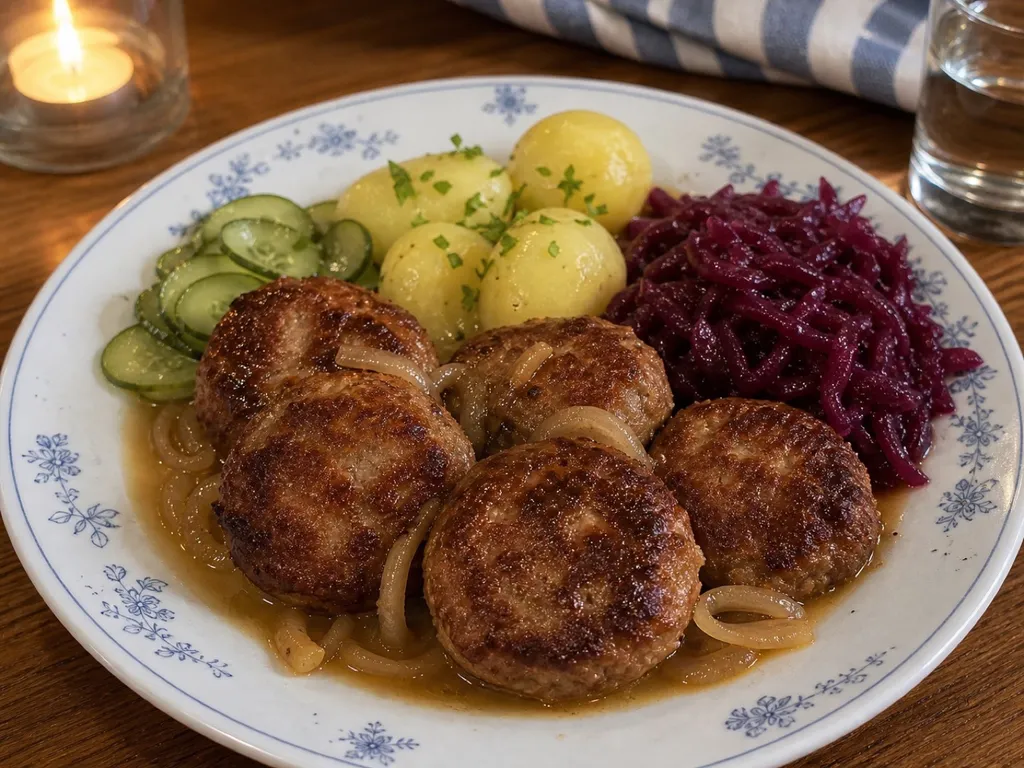 Images are for illustrative purposes only, may be inaccurate, and do not guarantee the presence or absence of specific ingredients.
 Listahan Family Score™
65/100
Works for many families
Score reflects how well this recipe fits a typical busy household. In the app, your Family Score is personalized to your household's allergens, kids, and pantry.
Nutrition
per serving305
Calories
32 g
Protein
4 g
Carbs
17 g
Fat
Estimated per serving. Actual values depend on the brands and portions you use.
Listahan cooking guide
Chef notes & practical guide
Technique notes, ingredient swaps, serve-alongside ideas, storage guidance, and equipment for this recipe.
Cultural context
Frikadeller are Denmark's national meatball — pan-fried, oval-shaped, and distinctly different from both Italian polpette and Swedish kottbullar. They have appeared in Danish cookbooks since at least the 18th century and are served in virtually every Danish household as an everyday dinner, cold on open-faced sandwiches the next day, and at festive tables. The mix of pork and veal (or beef) is the traditional formula, and the flat-oval shape — formed with a spoon and flattened slightly in the pan — is what sets them apart visually and texturally from round meatballs.
Listahan note
This version uses grated onion rather than minced so the onion cooks through completely without any raw bite, and adds milk to keep the interior moist even after the exterior is well-browned.
Technique cues
- Frikadeller are deliberately larger and flatter than Swedish meatballs — shape each one with a wet tablespoon into an oval and press lightly in the pan so the interior cooks through without burning the outside.
- The milk and flour in the mixture create a slightly denser, moister texture than a lean meatball — do not skip either; they also act as binders that hold the shape without egg doing all the work.
- Fry in butter at medium to medium-high heat: too low and they steam and turn pale and soggy; too high and the exterior chars before the center reaches safe temperature.
Kitchen flow
- Parallel prep
- Mix the meat mixture and refrigerate for 20 minutes to firm up while you prepare side dishes — cold mixture shapes more easily and holds its oval form in the pan.
- Make-ahead
- Shape the frikadeller and refrigerate on a tray, covered, for up to 8 hours before frying; fry from cold, adding 2 minutes to each side.
- Leftover move
- Cold frikadeller are a Danish refrigerator staple: serve sliced on rye bread with remoulade and pickled beets the next day.
- Cleanup rhythm
- Deglaze the frying pan with a splash of warm water right after the last batch to loosen the butter drippings — those can form the base of a quick pan gravy.
Ingredient brief
Role, handling, and swap guidance for each key ingredient.
ground pork
primary protein and fat source
Purpose: Pork provides the fat necessary for a moist frikadelle — leaner meats alone produce a dry, dense result.
Handling: Use cold ground pork straight from the refrigerator; warm meat mixture spreads in the pan instead of holding its shape.
Adaptation: All-pork frikadeller (skipping the veal) are common and slightly richer; reduce the milk by 1 tablespoon to compensate.
ground veal or beef
secondary protein
Purpose: The addition of a leaner second meat tempers the richness of the pork and gives the frikadelle a firmer, more structured interior.
Handling: Mix with the pork gently rather than kneading; overworking the mixture makes the finished meatball tough.
Adaptation: Ground turkey breast can replace veal for a lighter version, though the flavor becomes more neutral.
small onion, finely grated
aromatic
Purpose: Grated onion distributes evenly through the mixture and releases its moisture into the meat, keeping the interior juicy while adding savory depth.
Handling: Grate on the fine side of a box grater over a bowl and use the onion and its juice; the moisture from the onion contributes to the texture.
Adaptation: 3 tablespoons of onion powder can substitute if fresh onion causes issues, though the texture improvement from grated onion is noticeable.
all-purpose flour
binder and texture agent
Purpose: Flour works with the milk to create a slightly springy, cohesive texture that is the trademark of a proper Danish frikadelle.
Handling: Sift or stir the flour in smoothly and let the mixture rest for 5 minutes so the flour can hydrate before shaping.
Adaptation: Rice flour works for a gluten-free version; the texture is slightly lighter.
butter (for frying)
frying fat and flavor
Purpose: Butter is essential — it provides the golden-brown color and nutty flavor that makes frikadeller distinctive from meatballs fried in oil.
Handling: Use clarified butter or a butter-oil blend to prevent burning at the moderate heat needed to cook through a thick frikadelle.
Adaptation: Ghee is an ideal substitute; plain butter can be used but watch the heat carefully.
Technique notes
- Rest the finished mixture in the refrigerator for at least 15 minutes before shaping — cold mixture fries cleaner and the spoon releases the frikadelle more easily into the pan.
- Do not move the frikadeller for the first 3-4 minutes of frying; they release naturally from the pan when the crust has formed — forcing them too early tears the bottom.
- Test the first frikadelle by cutting it open before frying the whole batch; if the mixture is too soft to hold shape, stir in an extra tablespoon of flour and rest again.
Ingredient swaps
- Gluten-free direction
- Replace all-purpose flour with rice flour or a certified gluten-free all-purpose flour blend; the texture is slightly lighter but holds well.
- Dairy-free option
- Replace whole milk with unsweetened oat milk and fry in a butter-free neutral oil; the flavor loses a little richness but the frikadeller hold their shape correctly.
- Leaner version
- Use a 50/50 split of ground turkey and ground chicken instead of pork and veal; add an extra tablespoon of olive oil to the mixture to compensate for the lower fat content.
Serve alongside
- boiled or mashed floury potatoes with parsley butter
- pickled red cabbage (rødkaal)
- creamy white pepper gravy made from the pan drippings
- Danish lager or a light pilsner
- cold whole milk, as served in traditional Danish homes
Serving suggestions only — check pairings for your household's allergens.
Storage & reheating
- Refrigerate cooked frikadeller for up to 4 days; they are often considered better the next day eaten cold.
- Reheat in a covered skillet over low-medium heat with a tiny splash of water to prevent drying, or eat cold on a sandwich.
- Freeze cooked and cooled frikadeller on a tray, then transfer to a bag; reheat from frozen in a 350F oven for 15 minutes.
Equipment
- large heavy skillet or saute pan (cast iron or stainless)
- box grater for the onion
- large soup spoon for shaping the oval patties
- instant-read thermometer for verifying 160F internal temperature
Make this household-aware
Listahan Pro checks this recipe against your household's allergens, finds pantry-aware swaps, builds the shopping list, and helps you plan the week around it.
Plan it in Listahan
Add Frikadeller to your week, check it against your household's allergens, and build the shopping list automatically.
More Nordic recipes
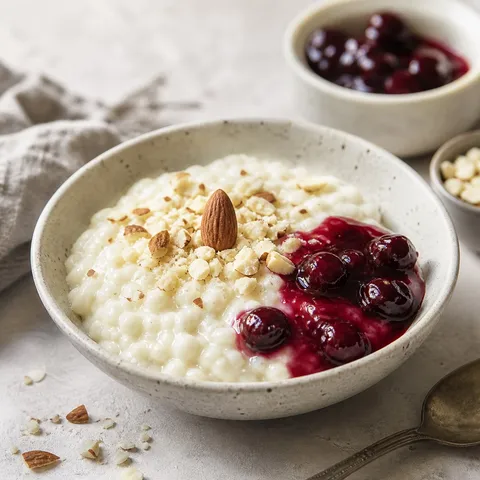 Nordic Lens Verified Images are for illustrative purposes only, may be inaccurate, and do not guarantee the presence or absence of specific ingredients.
 Risalamande
A creamy Danish cold rice pudding folded with whipped cream and chopped almonds, served with a glossy warm cherry sauce on Christmas Eve.
 Nordic Lens Verified Images are for illustrative purposes only, may be inaccurate, and do not guarantee the presence or absence of specific ingredients.
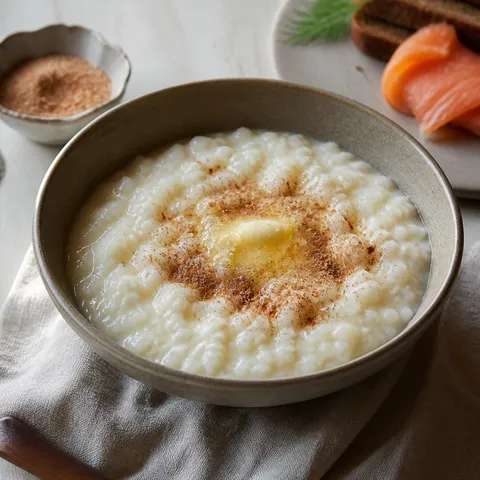
 Risgrynsgröt
Creamy Nordic rice porridge, slow-cooked until thick and comforting, scented with cinnamon and served with a pat of melting butter — Christmas morning in a bowl.
 Nordic Lens Verified Images are for illustrative purposes only, may be inaccurate, and do not guarantee the presence or absence of specific ingredients.
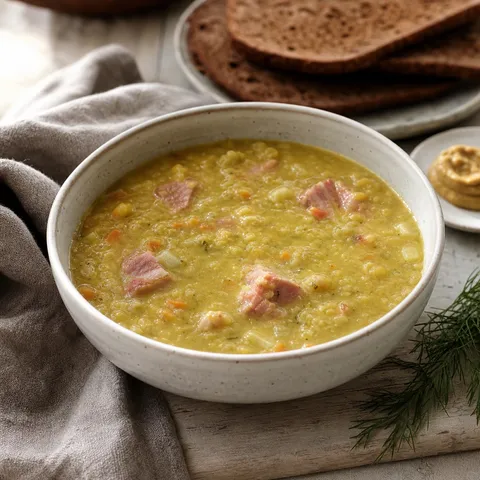
 Hernekeitto
Finland's beloved Thursday pea soup — yellow split peas simmered with smoky ham until thick and hearty, traditionally served with a shot of Finnish mustard and pancakes.