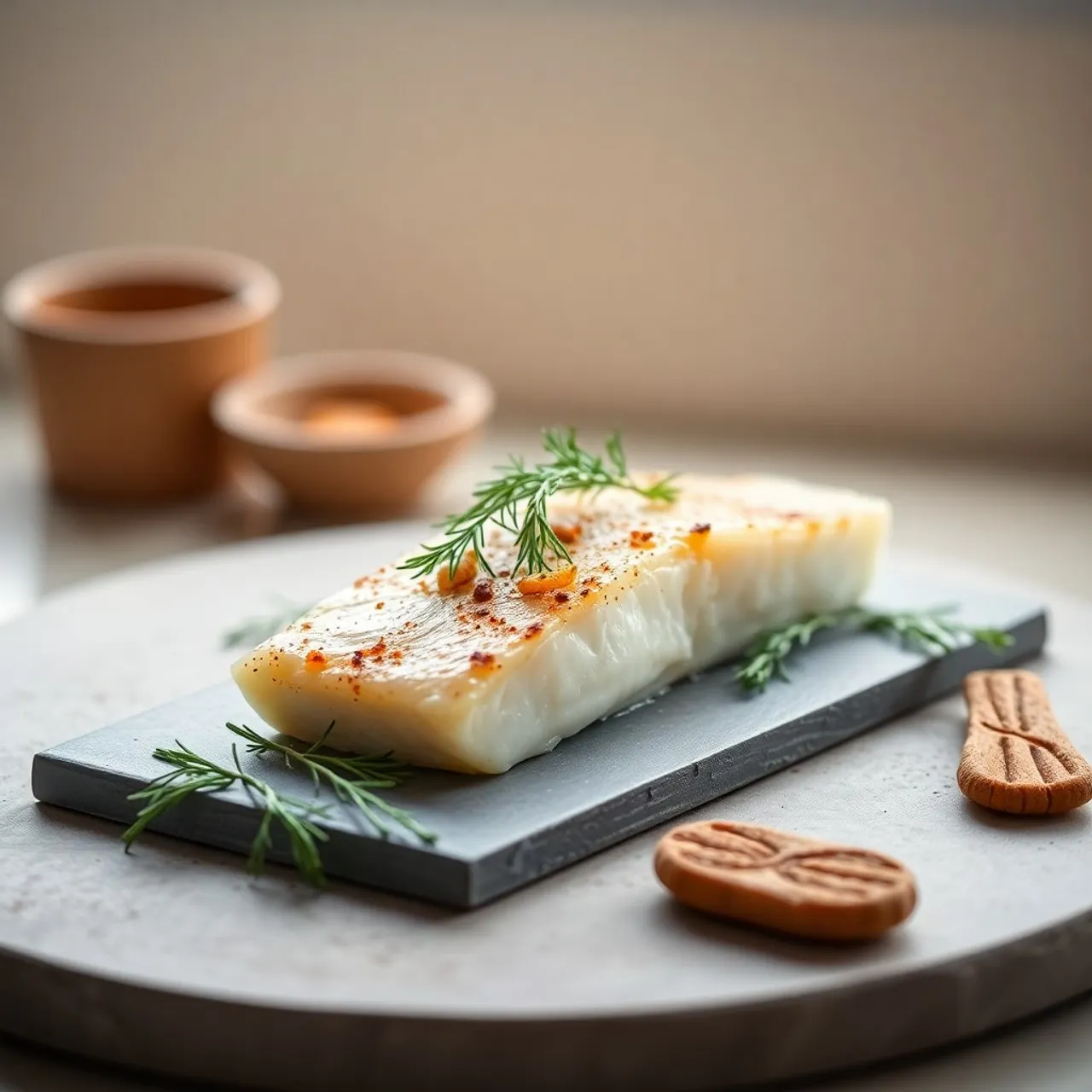
 Nordic Images are for illustrative purposes only, may be inaccurate, and do not guarantee the presence or absence of specific ingredients.
 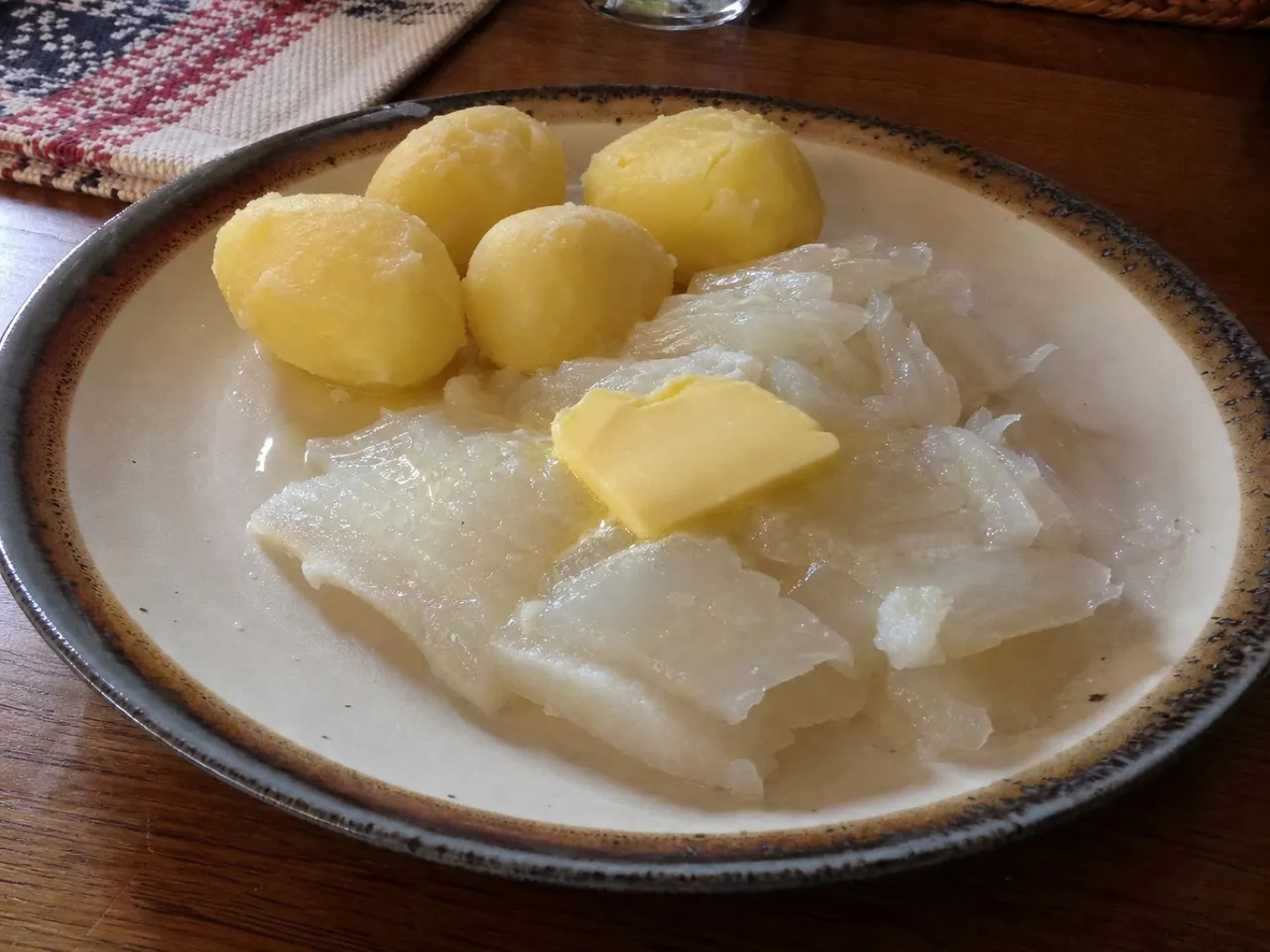 Serving Images are for illustrative purposes only, may be inaccurate, and do not guarantee the presence or absence of specific ingredients.
 Lutefisk
Dried whitefish soaked in lye then gently baked until it turns silky and mild — a divisive Nordic Christmas tradition best dressed with butter and mustard.
Contains common allergens
In the app, Listahan checks these against your household automatically.
Instructions
6 steps- 1
Preheat the oven to 400°F (200°C). If the lutefisk hasn't been soaked, follow package instructions to rinse away the lye (usually a multi-day cold water soak).
- 2
Check the fish carefully for any remaining skin or bones and remove them. Cut the fish into individual serving portions.
- 3
Place the fish pieces in a large glass or ceramic baking dish (do not use aluminum, as it reacts with the fish). Sprinkle generously with coarse salt.
- 4
Cover the dish tightly with aluminum foil or a tight-fitting lid to trap the steam.
- 5
Bake for 20-25 minutes. The fish should turn slightly translucent and flake easily with a fork, exhibiting its characteristic gelatinous texture.
- 6
Carefully drain any excess water from the baking dish. Serve piping hot, smothered in melted butter and dusted with white pepper.
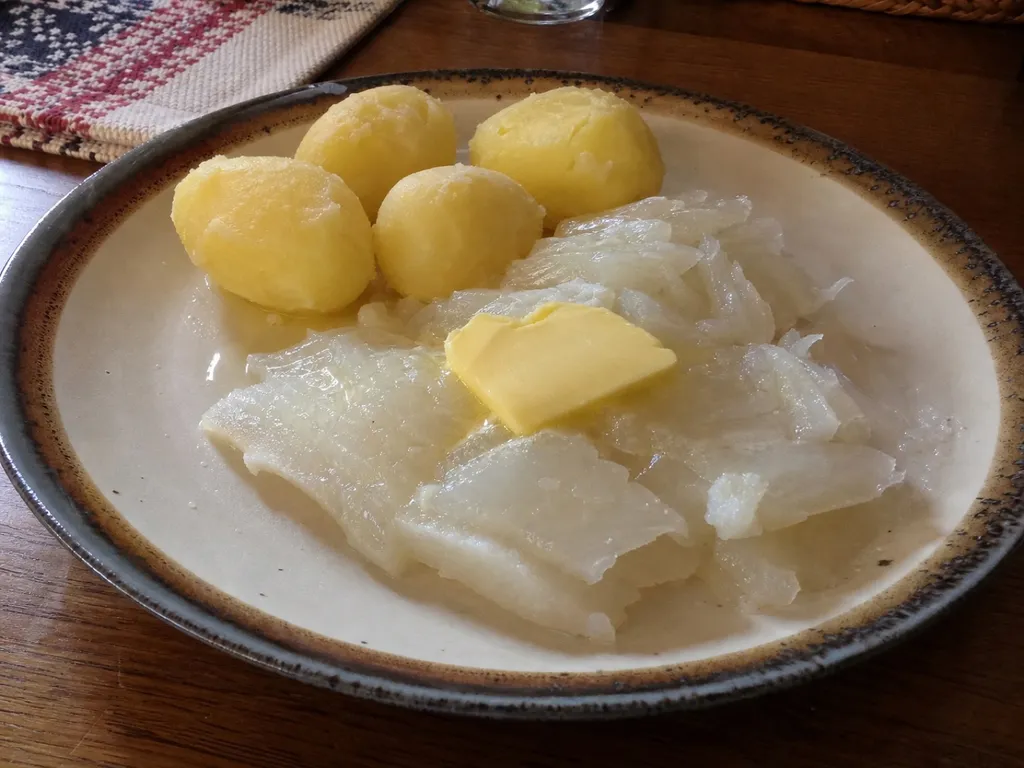 Images are for illustrative purposes only, may be inaccurate, and do not guarantee the presence or absence of specific ingredients.
 Listahan Family Score™
60/100
Works for many families
Score reflects how well this recipe fits a typical busy household. In the app, your Family Score is personalized to your household's allergens, kids, and pantry.
Nutrition
per serving450
Calories
1 g
Protein
0 g
Carbs
51 g
Fat
Estimated per serving. Actual values depend on the brands and portions you use.
Listahan cooking guide
Chef notes & practical guide
Technique notes, ingredient swaps, serve-alongside ideas, storage guidance, and equipment for this recipe.
Cultural context
Lutefisk is a preserved fish preparation with roots in Scandinavian — particularly Norwegian and Swedish — food culture stretching back to a time before refrigeration, when dried cod (stockfish) was a critical winter protein source. The lye treatment that gives the dish its name was historically a practical method for rehydrating extremely dried fish; over centuries it became a cultural tradition associated with Christmas in Norway, Sweden, and among Scandinavian communities in the American Midwest. Today it is as much a ritual as a meal, served at church suppers and family holiday tables where the aroma alone is considered part of the experience.
Listahan note
This version relies on the simplest possible preparation — oven-steaming the prepared lutefisk with salt, then serving with abundant melted butter — because the fish's unusual gelatinous texture is the point, not something to be disguised.
Technique cues
- Prepared lutefisk (available at Scandinavian specialty stores and some supermarkets during the holiday season) has already been rehydrated and treated; the cook's job is simply to heat it through without overcooking, since the high water content and delicate protein structure mean even a few extra minutes will cause it to dissolve into a watery mass.
- Oven-steaming at 400°F on a rack over a foil-lined pan (to catch water) for 20-25 minutes is more forgiving than boiling or poaching, which accelerate the breakdown — the fish should hold its shape and have a translucent, jelly-like appearance when properly cooked.
- Salt is applied generously just before and after cooking, not during, because salt draws water out during cooking and speeds deterioration of the unusual protein structure; seasoning at the table is part of the lutefisk tradition.
Kitchen flow
- Parallel prep
- While the lutefisk is in the oven, cook the accompanying sides (boiled potatoes, peas) and melt the butter — everything should arrive at the table simultaneously.
- Make-ahead
- Lutefisk cannot be made ahead or reheated successfully; plan to cook and serve it within 5 minutes of coming out of the oven.
- Leftover move
- Lutefisk does not keep or reheat well; plan portions carefully and serve any excess at the table — there are no traditional leftover applications.
- Cleanup rhythm
- Line the baking pan with heavy-duty foil before cooking to catch the significant amount of water released during oven-steaming; discard the foil for easy cleanup.
Ingredient brief
Role, handling, and swap guidance for each key ingredient.
1 kg (2.2 lbs) prepared lutefisk (rehydrated and lye-treated whitefish)
primary ingredient
Purpose: Commercially prepared lutefisk has completed the weeks-long rehydration and neutralization process; the cook only needs to apply heat — the quality of the source fish matters more than any seasoning.
Handling: Rinse under cold water, cut into serving portions of approximately 200g each, and pat as dry as possible before placing on the rack.
Adaptation: There is no true substitute for lutefisk — the dish is the treatment as much as the fish.
250g (1 cup) unsalted butter, melted
sauce and richness
Purpose: Generous melted butter masks some of the alkaline aftertaste of the lye treatment and provides the main flavor vehicle for what is otherwise a very mild, gelatinous protein.
Handling: Melt gently over low heat so the butter does not brown; serve warm at the table for individual pouring.
Adaptation: Brown butter adds a nutty depth that pairs well with the mild fish, though traditionalists prefer plain melted butter.
1 tbsp coarse salt
seasoning
Purpose: Salt draws out excess water and seasons the surface of the fish; applied after cooking it seasons without accelerating structural breakdown during the oven time.
Handling: Season lightly before cooking, then season again at the table to taste.
Adaptation: Flaky sea salt (like Maldon) sprinkled at the table provides better texture contrast than pre-salting.
Dry mustard powder (optional)
flavor accent
Purpose: A pinch of dry mustard in the melted butter adds a sharp, warming note that cuts through the richness and mild alkaline flavor without dominating.
Handling: Whisk into the melted butter just before serving; start with a very small amount and adjust.
Adaptation: A small spoonful of whole-grain mustard stirred into the butter at the table is a contemporary alternative.
Technique notes
- Oven temperature matters more than timing for lutefisk — too low and it steams in its own water without firming; too high and the outside tightens before the center heats through; 400°F is the proven middle ground.
- The finished fish should be opaque and hold its shape when lifted with a spatula but yield immediately to a fork — if it is still translucent and jiggly at the center, give it 5 more minutes; if it is falling apart in the pan, it is overcooked.
- Serve on warmed plates; lutefisk loses heat very quickly due to its high water content, and a cold plate accelerates this — warm plates in a 200°F oven for 10 minutes before service.
Ingredient swaps
- Dairy-free option
- Serve with high-quality vegan butter (such as a cultured plant-based variety) in place of dairy butter; the role is flavor delivery and any fat-forward spread works.
- Lower-fat direction
- Substitute a simple beurre blanc made with fish stock and a small amount of butter to reduce overall fat while maintaining the sauce character.
Serve alongside
- plain boiled waxy potatoes with parsley butter
- creamed green peas (classic Norwegian accompaniment)
- Norwegian flatbread (flatbrød) or lefse
- crispy fried bacon or salt pork (traditional garnish)
- aquavit served ice-cold (traditional pairing)
- cold Norwegian lager
- hot strong coffee
Serving suggestions only — check pairings for your household's allergens.
Storage & reheating
- Store uncooked prepared lutefisk in the coldest part of the refrigerator for up to 2 days after purchase; keep it well-wrapped as the odor is pervasive.
- Cooked lutefisk should be eaten immediately and does not store well — texture deteriorates significantly within an hour.
- Prepared lutefisk can be frozen before cooking; thaw overnight in the refrigerator before use.
Equipment
- rimmed baking sheet lined with heavy-duty foil
- oven-safe wire rack
- small saucepan for melting butter
- warmed serving platter
Make this household-aware
Listahan Pro checks this recipe against your household's allergens, finds pantry-aware swaps, builds the shopping list, and helps you plan the week around it.
Plan it in Listahan
Add Lutefisk to your week, check it against your household's allergens, and build the shopping list automatically.
More Nordic recipes
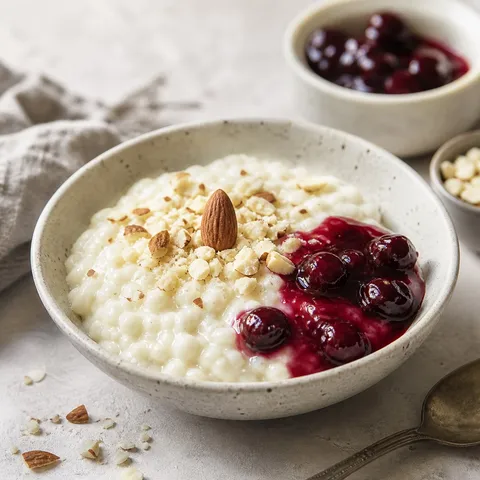 Nordic Lens Verified Images are for illustrative purposes only, may be inaccurate, and do not guarantee the presence or absence of specific ingredients.
 Risalamande
A creamy Danish cold rice pudding folded with whipped cream and chopped almonds, served with a glossy warm cherry sauce on Christmas Eve.
 Nordic Lens Verified Images are for illustrative purposes only, may be inaccurate, and do not guarantee the presence or absence of specific ingredients.
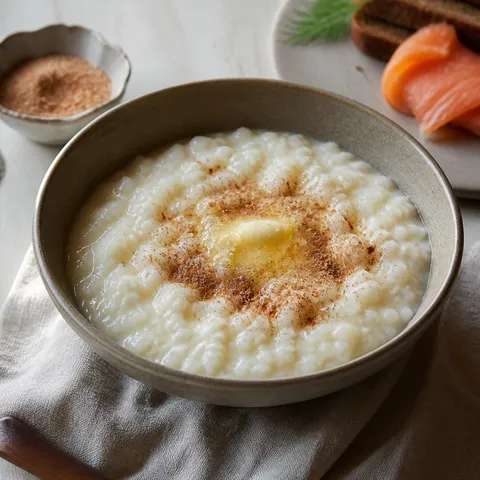
 Risgrynsgröt
Creamy Nordic rice porridge, slow-cooked until thick and comforting, scented with cinnamon and served with a pat of melting butter — Christmas morning in a bowl.
 Nordic Lens Verified Images are for illustrative purposes only, may be inaccurate, and do not guarantee the presence or absence of specific ingredients.
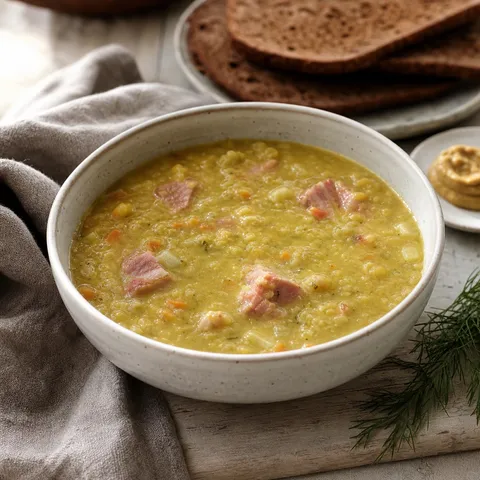
 Hernekeitto
Finland's beloved Thursday pea soup — yellow split peas simmered with smoky ham until thick and hearty, traditionally served with a shot of Finnish mustard and pancakes.