 Nordic Images are for illustrative purposes only, may be inaccurate, and do not guarantee the presence or absence of specific ingredients.
  Serving Images are for illustrative purposes only, may be inaccurate, and do not guarantee the presence or absence of specific ingredients.
 Rúgbrauð
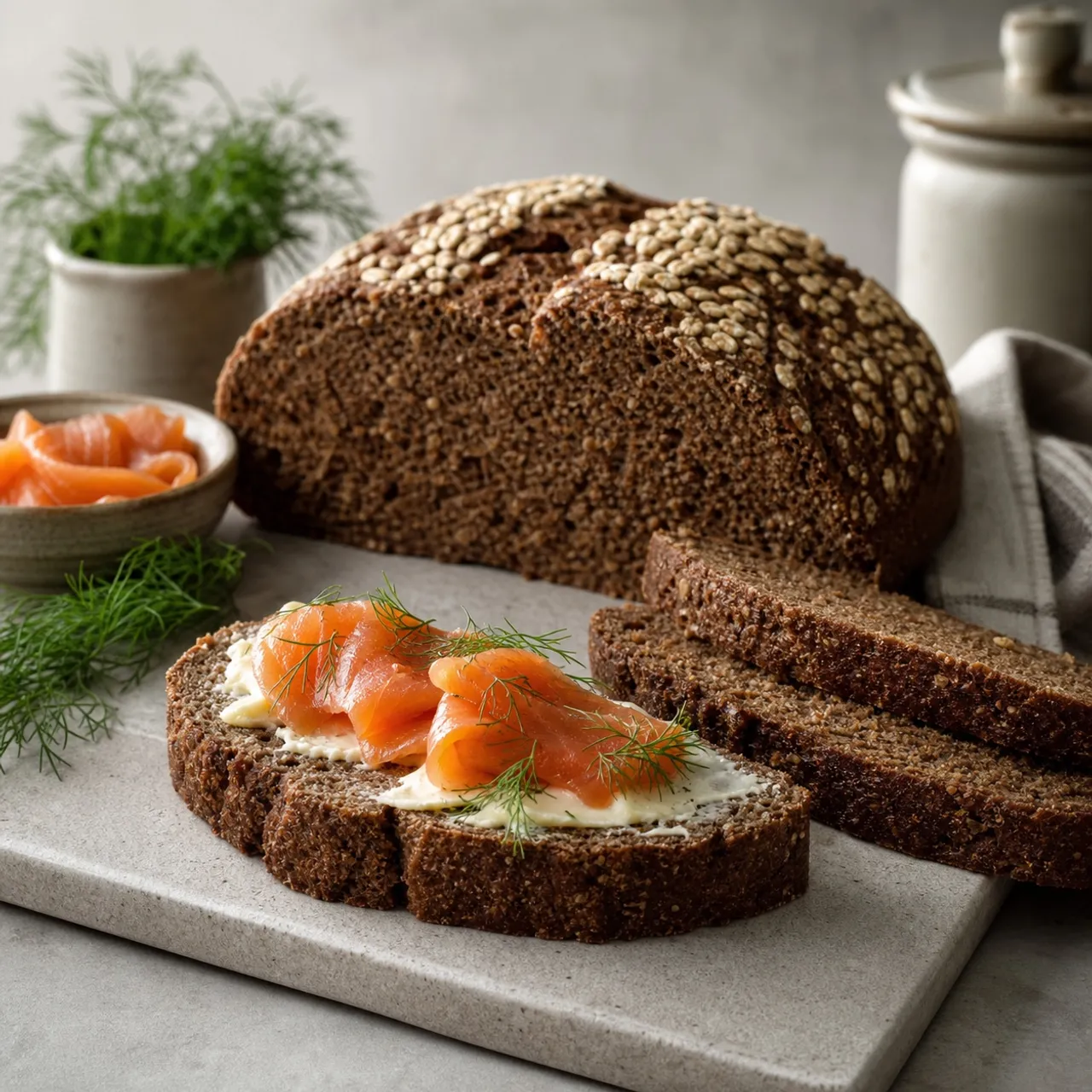
Iceland's dense, dark rye bread — slow-baked for 24 hours in geothermal heat or a pot, emerging moist, malty, and slightly sweet; extraordinary under smoked butter or cured fish.
Contains common allergens
In the app, Listahan checks these against your household automatically.
Instructions
7 steps- 1
Grease a tall, lidded loaf pan or a large metal container that can withstand slow, low heat.
- 2
In a large bowl, whisk together the rye flour, all-purpose flour, baking soda, and salt.
- 3
Warm the syrup slightly to loosen it, then whisk it into the buttermilk until smooth.
- 4
Pour the wet ingredients into the dry and stir until you have a thick, smooth, pourable batter, with no dry pockets remaining.
- 5
Pour into the prepared pan, cover tightly with the lid or foil, and bake at 200 F for 10 to 12 hours (traditionally buried near a geothermal hot spring, or simmered in a covered pot of gently simmering water on the stovetop for the same time).
- 6
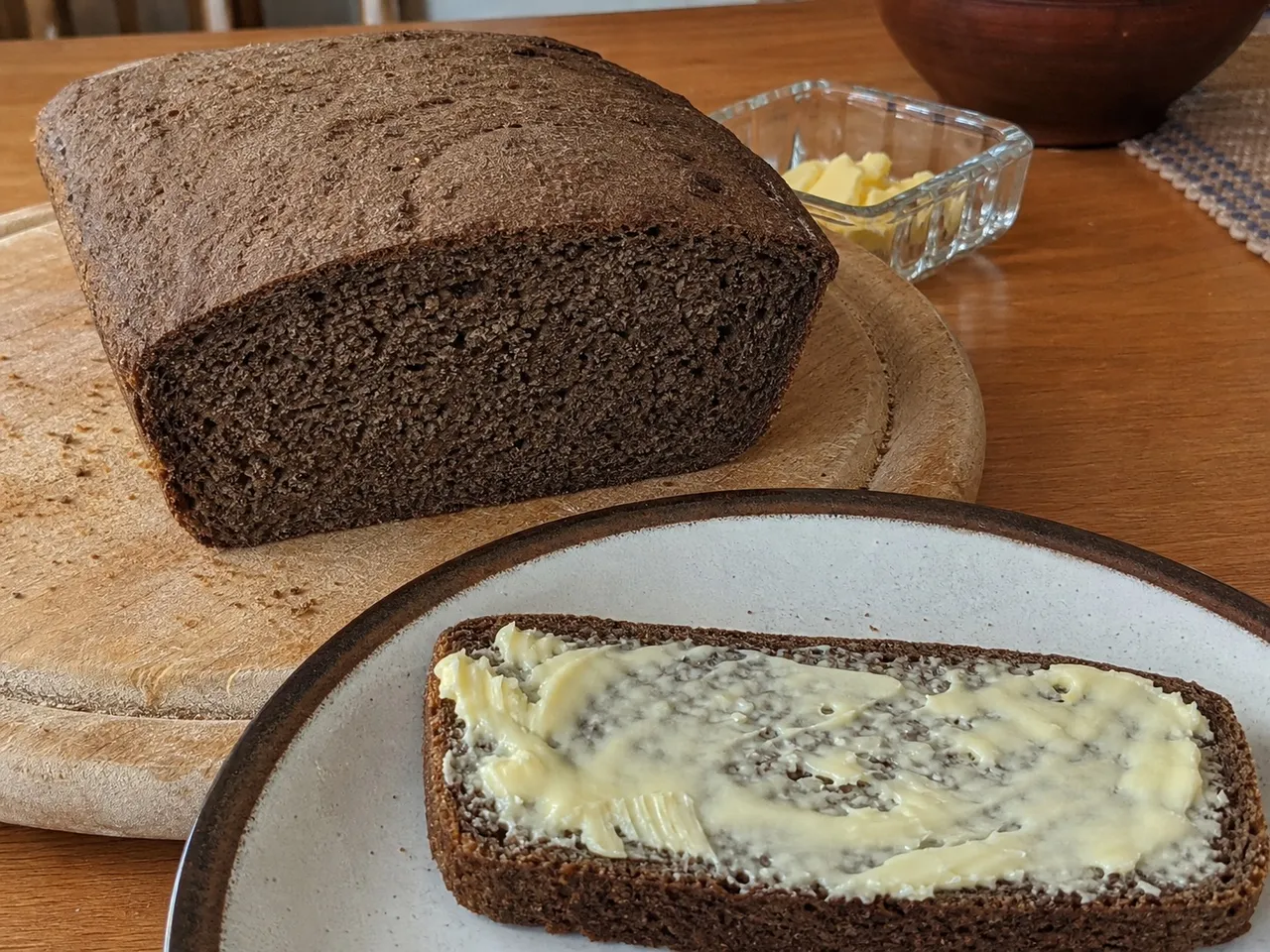
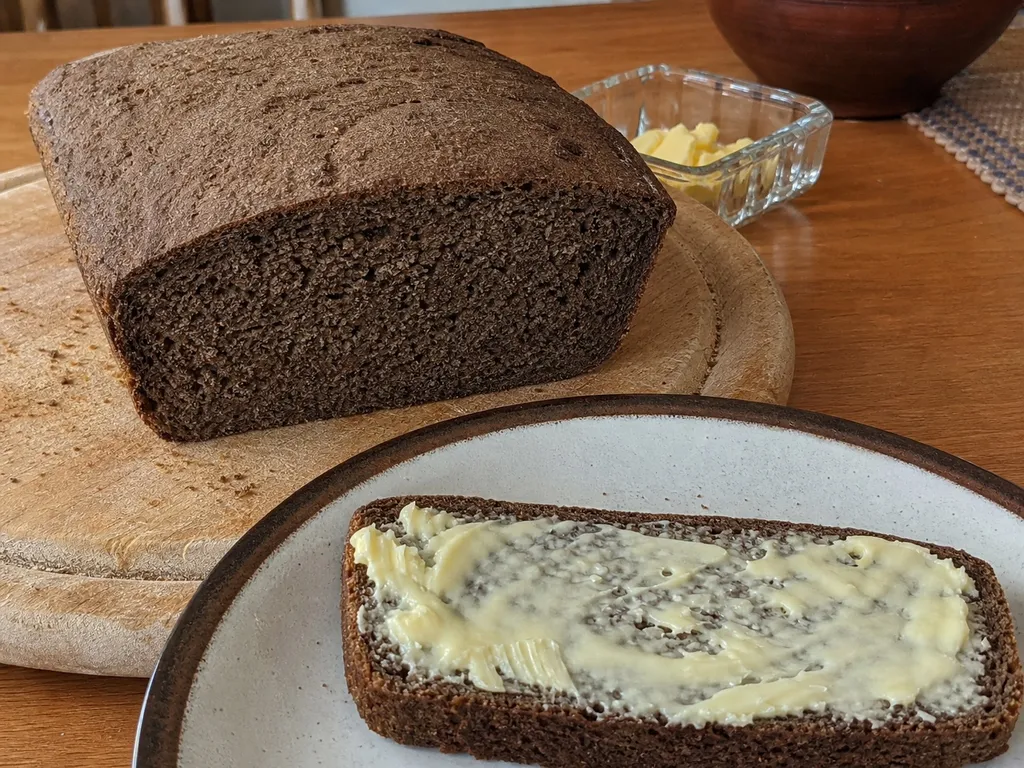
Remove and let cool completely in the pan before turning out, the loaf will be dense, moist, and dark, with a deep malty sweetness.
- 7
Slice thin and serve with salted butter, or with cured or smoked fish for a classic Icelandic open sandwich.
 Images are for illustrative purposes only, may be inaccurate, and do not guarantee the presence or absence of specific ingredients.
 Listahan Family Score™
63/100
Works for many families
Score reflects how well this recipe fits a typical busy household. In the app, your Family Score is personalized to your household's allergens, kids, and pantry.
Nutrition
per serving380
Calories
10 g
Protein
80 g
Carbs
2 g
Fat
Estimated per serving. Actual values depend on the brands and portions you use.
Listahan cooking guide
Chef notes & practical guide
Technique notes, ingredient swaps, serve-alongside ideas, storage guidance, and equipment for this recipe.
Cultural context
Rúgbrauð is Iceland's dense, dark rye bread, traditionally leavened without yeast and famously baked for a full day using the island's geothermal heat, with pots of batter once buried in hot ground near hot springs. The home version recreates that all-day gentle heat in a low oven or slow cooker instead of volcanic ground.
Listahan note
This version keeps the method true to the original: a thick rye-and-syrup batter baked low and slow in a covered container for hours rather than baked quickly like a conventional loaf, so the crumb comes out moist, dense, and faintly sweet.
Technique cues
- The batter should be thick and pourable, more like a heavy cake batter than a kneaded bread dough. Rye has little gluten, so there is nothing to knead here.
- Cover the pot or tin tightly before the long bake. The steam trapped inside is what keeps the crumb moist instead of drying into a dense brick.
- A very low, steady oven temperature matters more than exact timing. The loaf is meant to steam-bake gently for many hours, not brown quickly like a standard bread.
Kitchen flow
- Parallel prep
- Grease and line the baking pot while mixing the batter, since there is no rising or kneading time to fill in between steps.
- Make-ahead
- This bread practically requires make-ahead timing: bake it the night before you want to serve it, since the bake itself runs many hours.
- Leftover move
- Slice it thin and serve with butter and a piece of cured or smoked fish, the classic Icelandic pairing.
- Cleanup rhythm
- Let the baking pot cool before washing; the dense, syrupy batter releases more easily once it is not fresh out of the oven.
Ingredient brief
Role, handling, and swap guidance for each key ingredient.
Rye flour
Bread base
Purpose: Rye's low gluten content and dense character give rúgbrauð its dark, moist, tightly packed crumb rather than an airy wheat loaf.
Handling: Mix with the syrup and buttermilk into a thick, almost pourable batter rather than a kneaded dough.
Adaptation: A mix of rye and whole wheat flour lightens the crumb slightly but drifts from the traditional all-rye texture.
Buttermilk
Leavening and tang
Purpose: Its acidity reacts with the baking soda to lift the dense batter and adds a mild tang that balances the sweet syrup.
Handling: Whisk it in at room temperature so it blends smoothly into the thick rye batter.
Adaptation: A mix of milk with a spoonful of lemon juice or vinegar, rested briefly, approximates the same acidity. It still contains dairy, so it does not make the loaf dairy-free.
Dark syrup
Sweetener and color
Purpose: It gives the loaf its signature deep brown color, malty sweetness, and moist crumb.
Handling: Stir it in until fully dissolved before the long, slow bake.
Adaptation: Dark treacle or golden syrup both work; molasses gives a more bitter, robust edge.
Baking soda
Riser
Purpose: It reacts with the buttermilk's acidity to lift the dense rye batter, since there is no yeast or kneading involved.
Handling: Whisk it into the dry rye flour before adding the wet ingredients so it distributes evenly.
Adaptation: There is no real substitute; it is what allows this un-kneaded batter to rise at all.
Covered baking pot or tin
Slow-bake vessel
Purpose: Baking the batter in a covered pot or tin at very low heat for many hours mimics the traditional method of burying it in geothermally warmed ground, giving the bread its moist, gently steamed texture.
Handling: Pour the batter into a well-greased, covered pot or loaf tin and set it in a very low oven overnight.
Adaptation: A slow cooker set on low can replicate the steady all-day heat if you would rather not run the oven overnight.
Technique notes
- Do not rush the bake time. Pulling the loaf early leaves a gummy, underset center even if the top looks done.
- Grease the pot generously, since the sticky, syrup-rich batter can cling stubbornly to bare metal or glass.
- Let the loaf cool completely, ideally overnight, before slicing; it firms up and slices far more cleanly once fully cooled.
Ingredient swaps
- Slow cooker route
- Bake the batter in a greased, covered heatproof container set inside a slow cooker on low for the same long stretch; it mimics the steady all-day heat without running the oven overnight.
- Syrup swap
- Dark treacle or golden syrup both work in place of a Nordic dark syrup; molasses gives a more bitter, robust edge.
- Buttermilk backup
- A mix of milk and a spoonful of lemon juice or vinegar, rested for a few minutes, approximates buttermilk's tang and acidity. This still contains dairy, so it does not make the loaf dairy-free.
Serve alongside
- Butter
- Sliced smoked lamb (hangikjot)
- Cured or smoked salmon
- Pickled herring
- Icelandic coffee
- Skyr drink
- Sparkling water
Serving suggestions only — check pairings for your household's allergens.
Storage & reheating
- Wrap cooled rúgbrauð tightly and refrigerate for up to a week; it stays moist thanks to the syrup and dense crumb.
- Serve at room temperature or lightly toasted; this bread is not typically warmed through like a fresh loaf.
- Freeze whole or sliced and wrapped well; thaw at room temperature before serving.
Equipment
- Covered baking pot, loaf tin, or heatproof container with a lid
- Mixing bowl
- Whisk
- Aluminum foil (if the container has no lid)
Make this household-aware
Listahan Pro checks this recipe against your household's allergens, finds pantry-aware swaps, builds the shopping list, and helps you plan the week around it.
Plan it in Listahan
Add Rúgbrauð to your week, check it against your household's allergens, and build the shopping list automatically.
More Nordic recipes
 Nordic Lens Verified Images are for illustrative purposes only, may be inaccurate, and do not guarantee the presence or absence of specific ingredients.
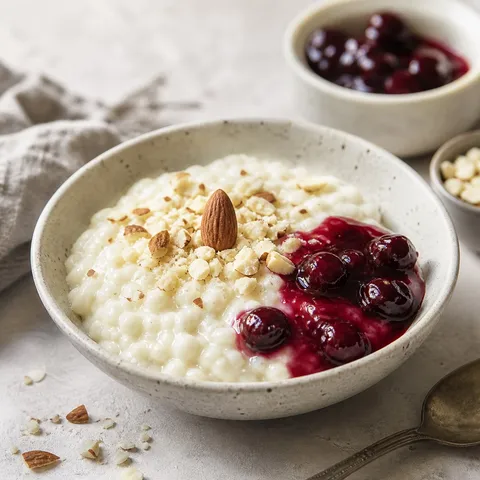
 Risalamande
A creamy Danish cold rice pudding folded with whipped cream and chopped almonds, served with a glossy warm cherry sauce on Christmas Eve.
 Nordic Lens Verified Images are for illustrative purposes only, may be inaccurate, and do not guarantee the presence or absence of specific ingredients.
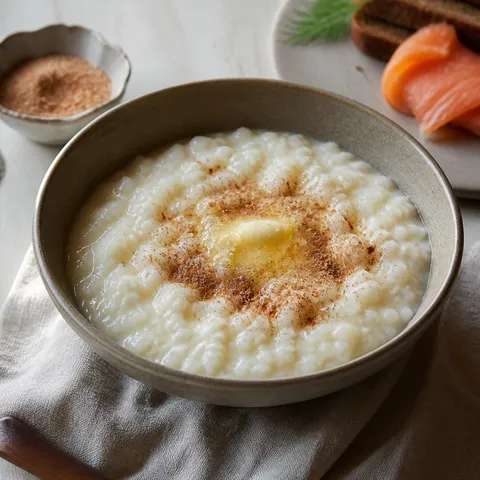
 Risgrynsgröt
Creamy Nordic rice porridge, slow-cooked until thick and comforting, scented with cinnamon and served with a pat of melting butter — Christmas morning in a bowl.
 Nordic Lens Verified Images are for illustrative purposes only, may be inaccurate, and do not guarantee the presence or absence of specific ingredients.
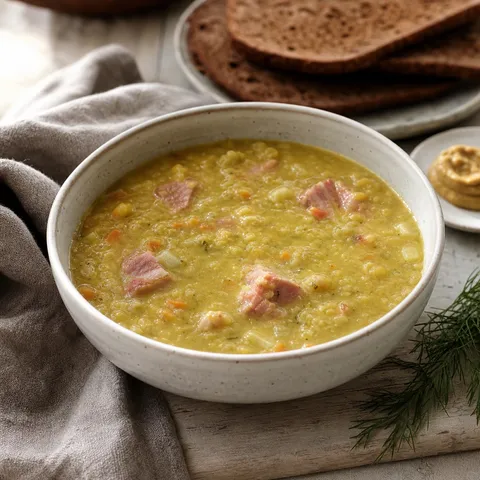
 Hernekeitto
Finland's beloved Thursday pea soup — yellow split peas simmered with smoky ham until thick and hearty, traditionally served with a shot of Finnish mustard and pancakes.