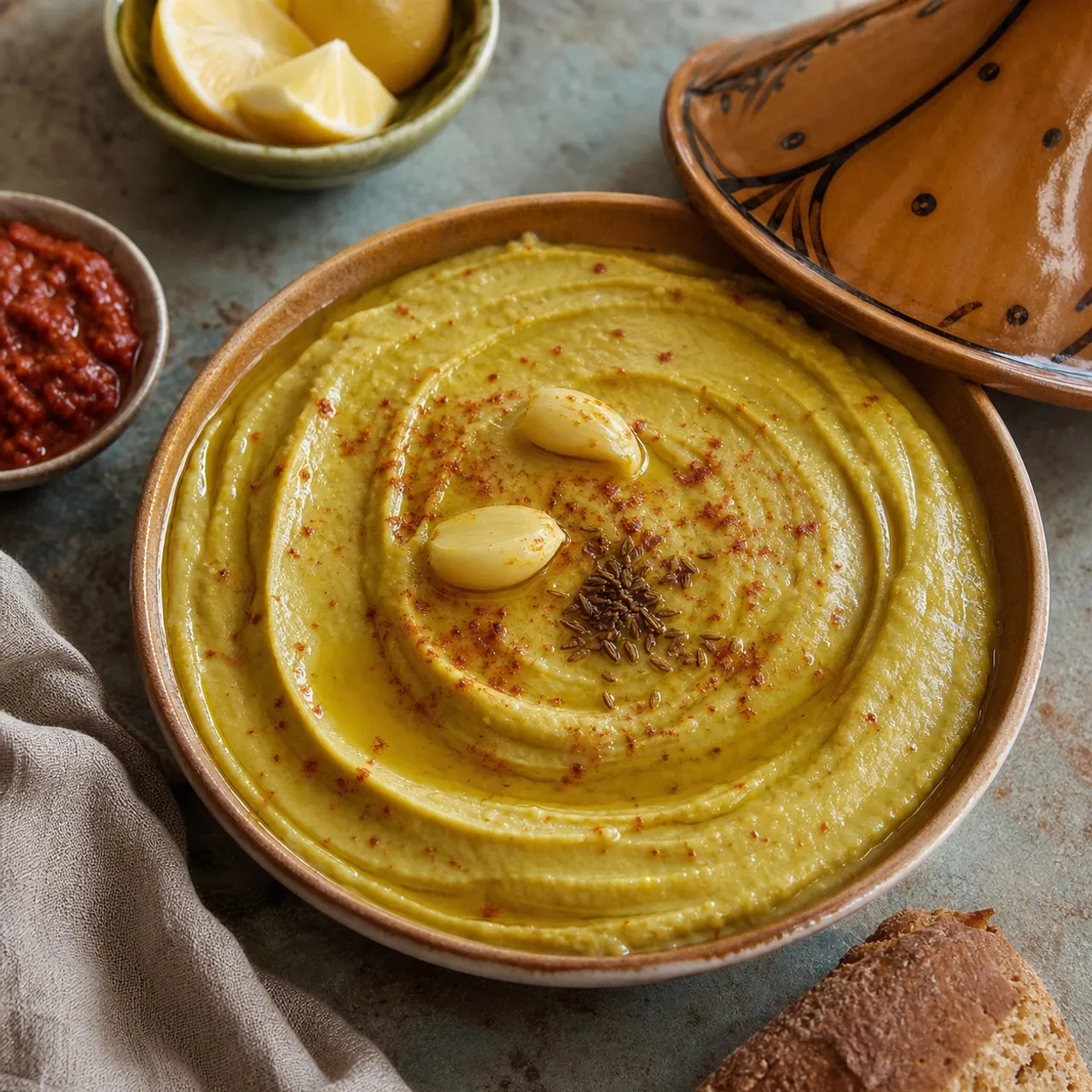
 North African Images are for illustrative purposes only, may be inaccurate, and do not guarantee the presence or absence of specific ingredients.
 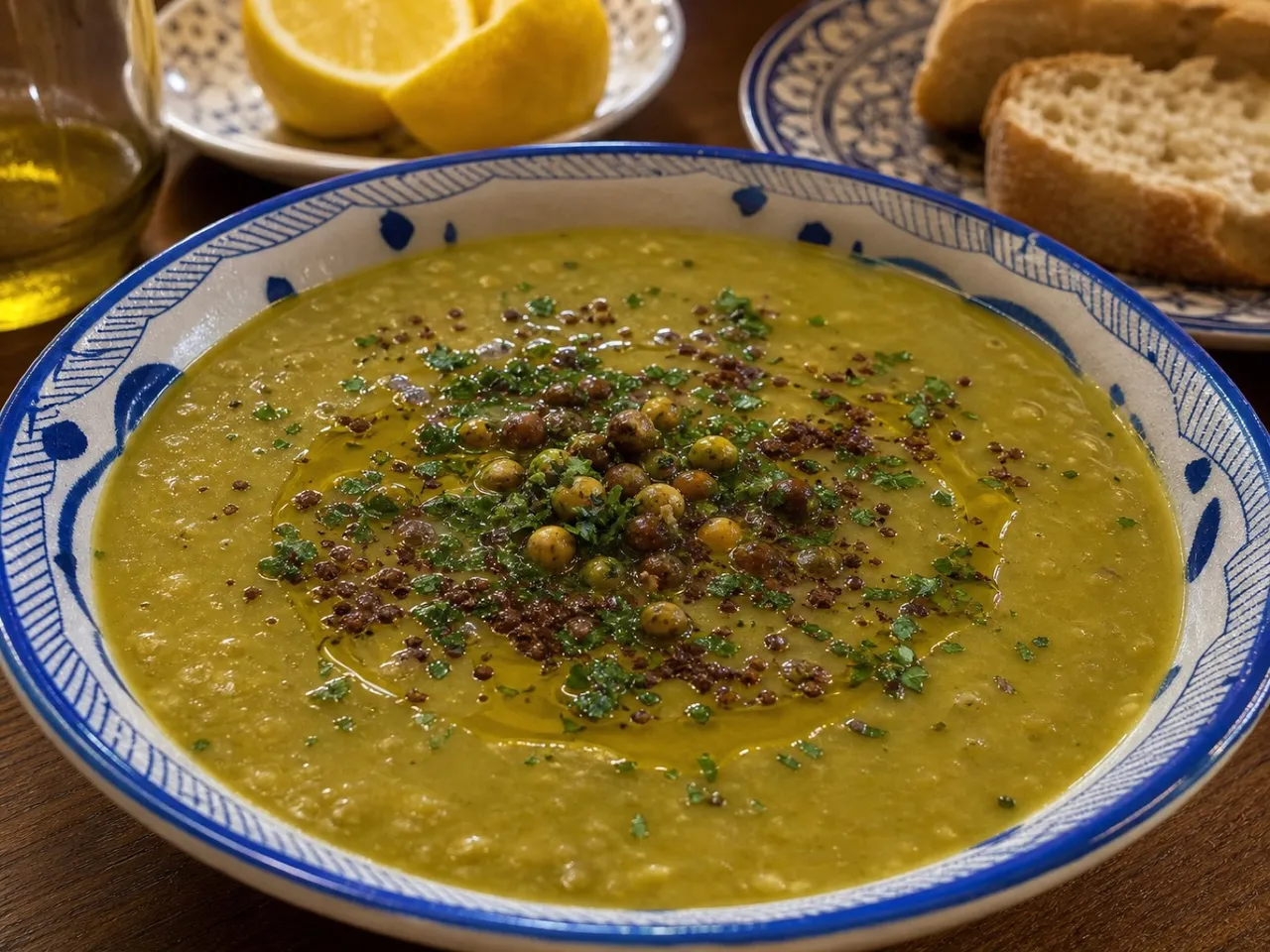 Serving Images are for illustrative purposes only, may be inaccurate, and do not guarantee the presence or absence of specific ingredients.
 Bissara
Pureed dried fava beans silkened with olive oil, cumin, and paprika — Morocco's earthy, nourishing winter dip sold steaming at street stalls at dawn.
No common allergens detected
Based on this recipe's ingredient list. Always verify with your own brands and labels.
Good to know
- One-pot
Matched from this dish's own ingredients and timing. Browse more: one-pot dinners
Instructions
5 steps- 1
Rinse and Boil: Rinse the split fava beans well. Place in a large pot with 6 cups of water, the whole garlic cloves, and a pinch of salt. Bring to a boil.
- 2
Skim the Foam: Skim off any white foam that rises to the top. Reduce heat to low, cover slightly, and simmer for 45-60 minutes until the beans break apart completely.
- 3
Blend: Remove from heat. Use an immersion blender to puree the soup until completely smooth and velvety. If it's too thick, add a little hot water.
- 4
Season: Stir in the cumin, paprika, and half of the olive oil. Simmer for 5 more minutes.
- 5
Garnish and Serve: Ladle into bowls. Drizzle generously with the remaining extra virgin olive oil, a sprinkle of cumin, paprika, and a squeeze of fresh lemon juice.
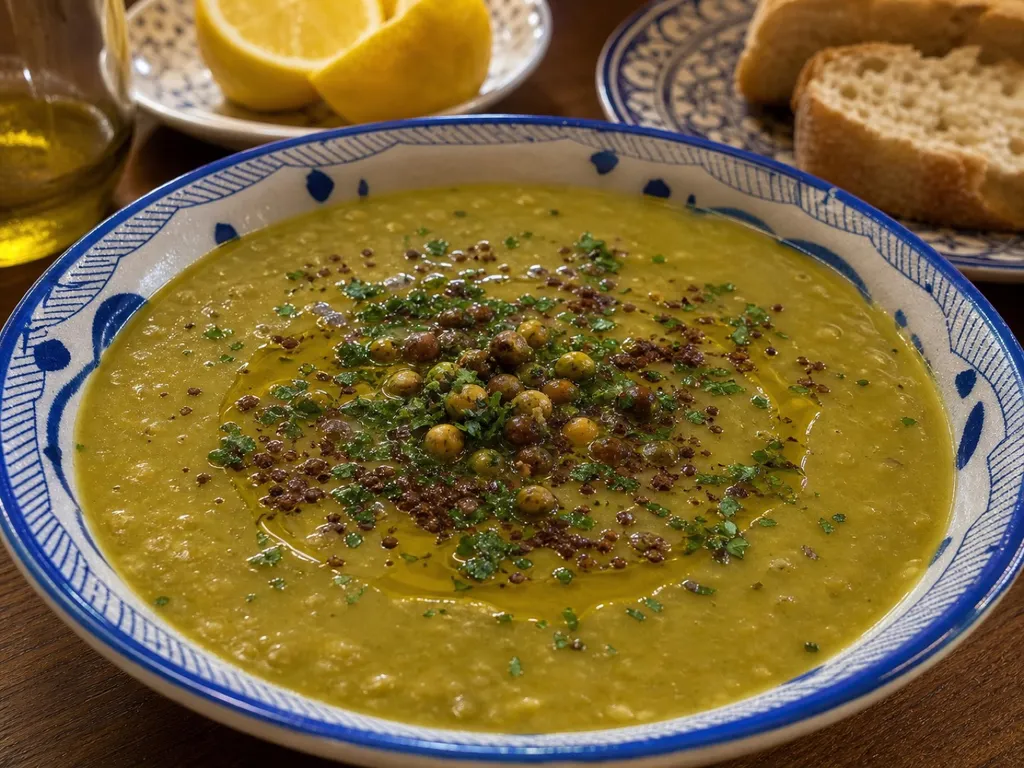 Images are for illustrative purposes only, may be inaccurate, and do not guarantee the presence or absence of specific ingredients.
 Listahan Family Score™
73/100
Good fit for most families
Score reflects how well this recipe fits a typical busy household. In the app, your Family Score is personalized to your household's allergens, kids, and pantry.
Nutrition
per serving135
Calories
1 g
Protein
3 g
Carbs
14 g
Fat
Estimated per serving. Actual values depend on the brands and portions you use.
Listahan cooking guide
Chef notes & practical guide
Technique notes, ingredient swaps, serve-alongside ideas, storage guidance, and equipment for this recipe.
Cultural context
Bissara is a thick, hummus-like puree of dried fava beans or split peas that has been eaten in Morocco since at least the medieval period, when it was the standard sustenance of laborers and travelers in the mountain regions around Fes and Marrakesh. It is sold from street-side pots in northern Moroccan cities like Chefchaouen and Tetouan, ladled into bowls with olive oil, cumin, and paprika, and scooped with khobz bread. Unlike its Egyptian cousin ful medames, Bissara is fully pureed into a smooth, dippable consistency.
Listahan note
This version cooks the fava beans with whole garlic cloves that are then pureed directly into the beans, so the garlic flavor becomes mild and sweet throughout rather than raw and sharp at the finish.
Technique cues
- Split fava beans and split peas both dissolve naturally into a smooth puree if cooked long enough without any blender required; the key is to cook them covered at a gentle simmer, not a rolling boil, which causes the exterior to break down before the interior softens evenly.
- Cumin is the primary top-note spice in Bissara and is added twice: once while cooking for background depth, and again as a fresh finish on the drizzled olive oil garnish for the aromatic punch that hits you on first taste.
- The consistency should be thicker than soup but pourable enough to make a well for olive oil at the center of the bowl; adjust with the reserved cooking water rather than fresh water, as the starchy bean liquid maintains the flavor level and helps the puree stay velvety.
Kitchen flow
- Parallel prep
- Bissara is nearly a one-pot recipe; while the beans simmer, squeeze the lemon and measure the garnish spices so the finishing is instant once the puree is ready.
- Make-ahead
- Bissara keeps and reheats beautifully; make the full batch up to 3 days ahead and stir in reserved cooking water when reheating to restore consistency.
- Leftover move
- Thin leftover Bissara further with broth to make a warm, thick soup; stir in a handful of fresh spinach and serve with a fried egg on top.
- Cleanup rhythm
- One pot for the beans and one small skillet for blooming the garnish spices in oil; the rest is bowls and a ladle.
Ingredient brief
Role, handling, and swap guidance for each key ingredient.
2 cups dried split fava beans (or split peas)
starchy base and protein
Purpose: Split fava beans are the traditional ingredient and give Bissara its distinctly earthy, slightly bitter flavor; split peas are milder and more widely available as a close substitute.
Handling: Rinse and pick over for debris, then add directly to the pot without pre-soaking; split varieties hydrate and cook in 30-40 minutes.
Adaptation: Yellow split peas produce a milder, golden-colored Bissara when fava beans are unavailable; the texture is nearly identical.
4 cloves garlic (peeled and whole)
aromatic depth
Purpose: Whole garlic cloves cooked in the pot become soft and mellow during the simmer, pureed into the beans to create a gentle sweetness rather than raw sharpness.
Handling: Add whole and peeled at the start; they will soften completely and blend seamlessly into the final puree.
Adaptation: Roasted garlic (a half-head, squeezed out) adds an even deeper, caramelized sweetness if you prefer less assertive garlic flavor.
1 tbsp ground cumin
signature spice
Purpose: Cumin is the defining flavor of Bissara; used generously it ties together the earthiness of the beans and the grassy quality of the olive oil.
Handling: Add half during cooking and reserve the other half for toasting in warm olive oil as a garnish drizzled over the finished bowl.
Adaptation: A small amount of caraway can be blended with cumin for a more Tunisian-leaning version.
1 tsp paprika
color and mild sweetness
Purpose: The red paprika dusted over the finished bowl provides a visual contrast to the pale puree and adds a mild, sweet pepper note.
Handling: Reserve for garnish, warming briefly in olive oil before drizzling so the paprika blooms without burning.
Adaptation: Smoked paprika adds a pleasantly campfire-like depth; hot paprika for those who want heat.
1/4 cup extra virgin olive oil
richness and garnish
Purpose: A generous pour of good olive oil into the center of the bowl is not optional decoration; it provides the fat that makes each bite feel complete rather than dry.
Handling: Reserve the best-quality oil you have for finishing rather than using it during cooking, where nuance would be lost.
Adaptation: Argan oil is the traditional Moroccan finishing oil and adds a distinctive nutty, slightly grassy flavor if you can find it.
Technique notes
- Blend or mash the cooked beans while they are still hot; cold fava puree stiffens and requires more liquid to smooth out, making the consistency harder to control.
- Reserve at least 2 cups of the starchy cooking liquid before draining; it is the best tool for thinning the puree to the right consistency and also adds flavor.
- Bloom the garnish paprika in olive oil in a small pan for 30 seconds just before serving and drizzle it over the bowl immediately; it separates and loses its visual pop if it sits.
Ingredient swaps
- Vegan direction
- The dish is naturally vegan; no substitutions needed.
- Gluten-free direction
- Naturally gluten-free; serve with certified GF flatbread or corn tortillas for scooping.
- Legume variety
- Yellow split peas give a milder, creamier result; green split peas produce a slightly more robust, grassier flavor.
Serve alongside
- warm khobz bread or pita for scooping
- Moroccan marinated olives and preserved lemon
- simple cucumber salad with cumin vinaigrette
- mint tea
- freshly squeezed orange juice
Serving suggestions only — check pairings for your household's allergens.
Storage & reheating
- Refrigerate in a sealed container for up to 4 days; the puree will thicken in the fridge.
- Reheat gently over low heat with a splash of water or broth, stirring frequently to prevent sticking to the bottom of the pot.
- Freeze for up to 2 months in a sealed bag; thaw overnight and reheat with extra liquid as it thickens significantly when frozen and thawed.
Equipment
- medium heavy pot
- stick blender or stand blender for pureeing
- small skillet for blooming garnish spices
- ladle for serving
Make this household-aware
Listahan Pro checks this recipe against your household's allergens, finds pantry-aware swaps, builds the shopping list, and helps you plan the week around it.
Plan it in Listahan
Add Bissara to your week, check it against your household's allergens, and build the shopping list automatically.
More North African recipes
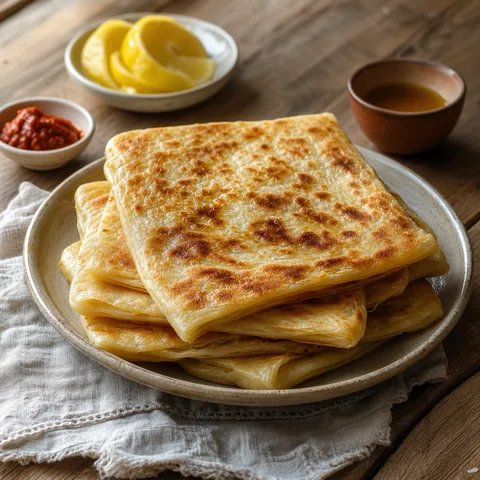 North African Lens Verified Images are for illustrative purposes only, may be inaccurate, and do not guarantee the presence or absence of specific ingredients.
 Msemmen
Layered and folded semolina flatbread cooked on a griddle until the outside crisps and the inside stays wonderfully chewy — perfect with honey or harissa.
 North African Lens Verified Images are for illustrative purposes only, may be inaccurate, and do not guarantee the presence or absence of specific ingredients.
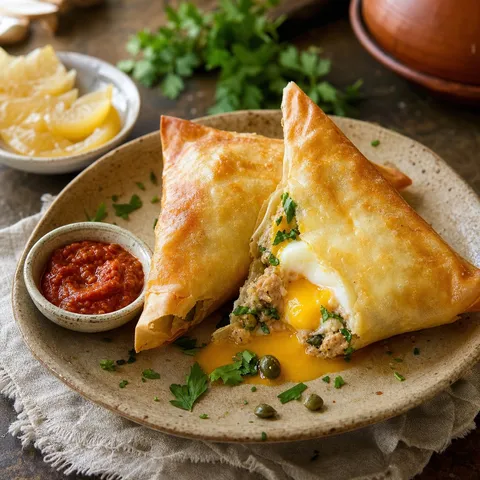
 Brik
Crispy paper-thin pastry folded around a whole egg, tuna, and parsley then flash-fried until golden — Tunisia's beloved street snack, eaten fast before the yolk escapes.
 North African Lens Verified Images are for illustrative purposes only, may be inaccurate, and do not guarantee the presence or absence of specific ingredients.
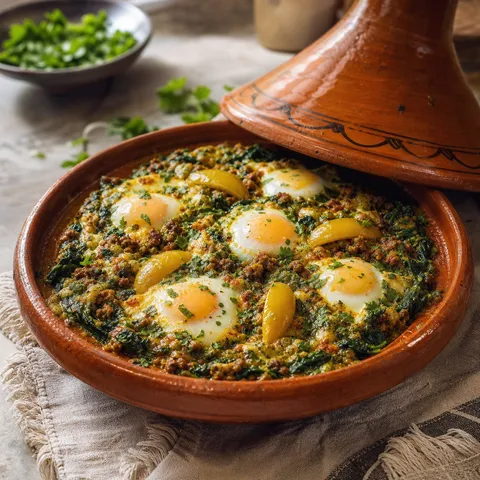
 Tajine El Bey
Tunisia's grand layered bake of spiced lamb, eggs, and cheese baked in a deep crust — a celebration dish with silky, complex layers in every slice.