 North African Images are for illustrative purposes only, may be inaccurate, and do not guarantee the presence or absence of specific ingredients.
  Serving Images are for illustrative purposes only, may be inaccurate, and do not guarantee the presence or absence of specific ingredients.
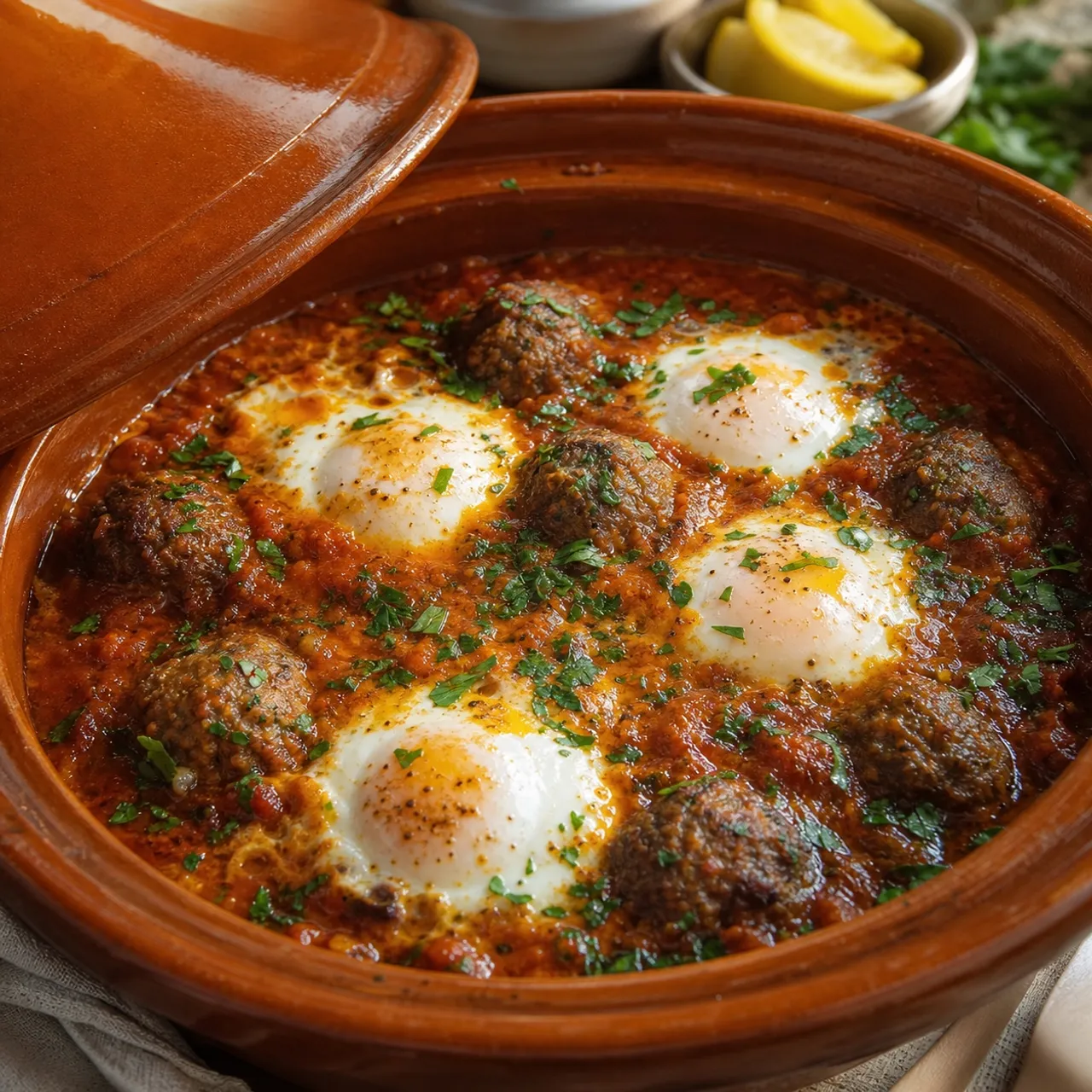
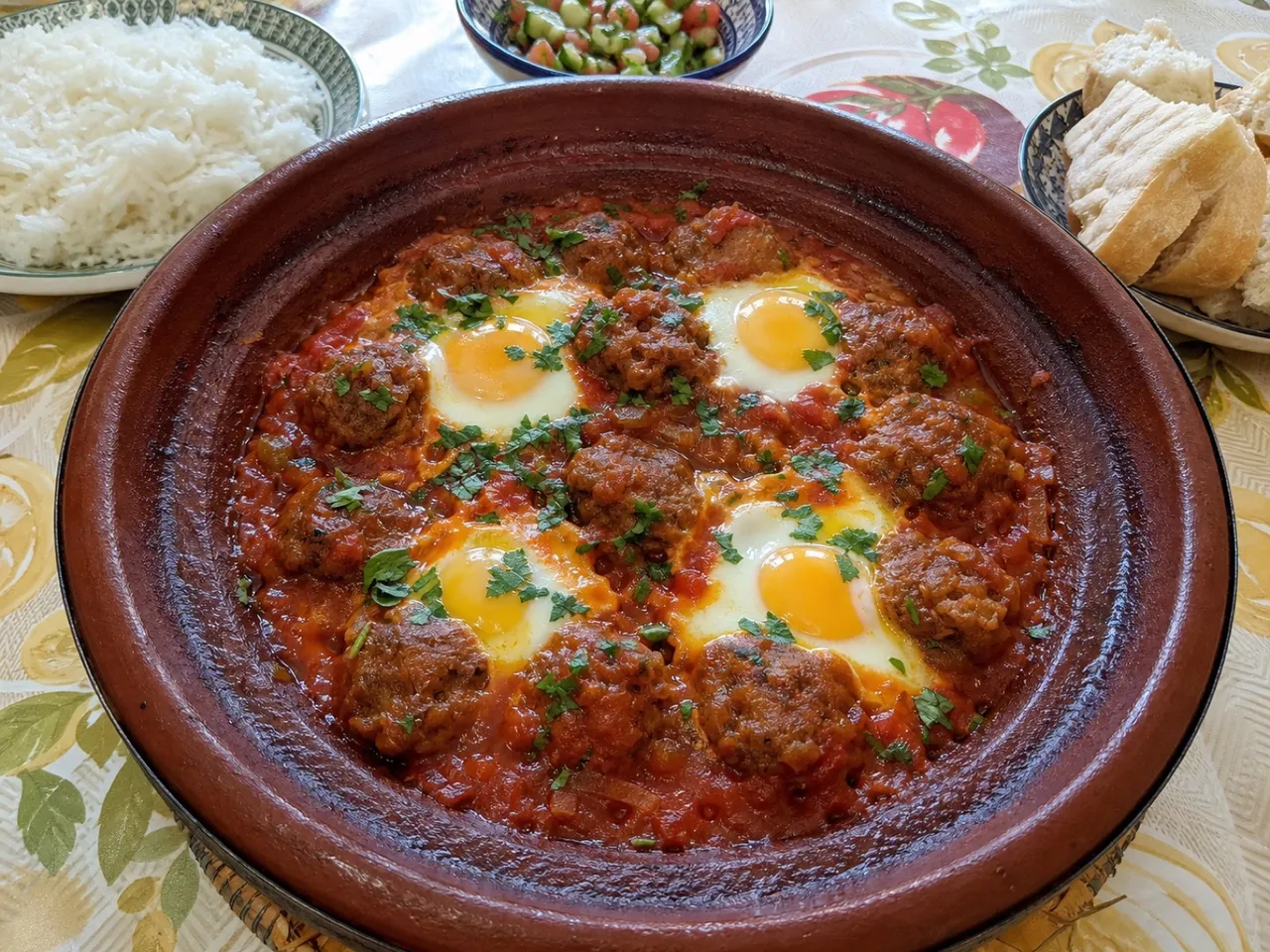
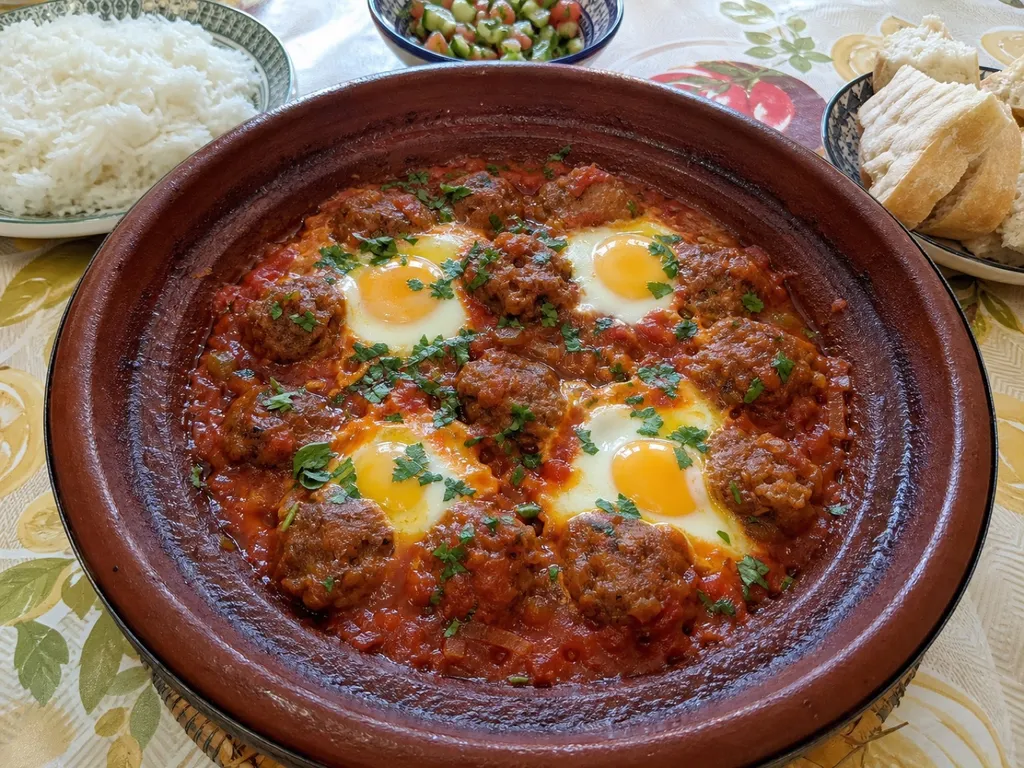
 Kefta Mkaouara
Spiced lamb and beef meatballs simmered in a sweet-sharp tomato tagine with cracked eggs — a crowd-pleasing Moroccan dish that is pure comfort in a pot.
Contains common allergens
In the app, Listahan checks these against your household automatically.
Good to know
- One-pot
Matched from this dish's own ingredients and timing. Browse more: one-pot dinners
Instructions
5 steps- 1
Mix Kefta: In a bowl, combine the ground meat with half of the chopped herbs, half of the grated onion, half the paprika and cumin, salt, and pepper. Mix well.
- 2
Form Meatballs: Roll the meat mixture into small, bite-sized meatballs (about 1 inch in diameter).
- 3
Prepare Sauce: In a tagine or wide skillet, heat olive oil. Add the remaining grated onion, crushed tomatoes, remaining spices, and herbs. Simmer for 10 minutes until thick.
- 4
Cook Meatballs: Drop the meatballs into the bubbling tomato sauce. Cover and simmer for 15 minutes until the meatballs are cooked through.
- 5
Add Eggs: Crack the eggs directly over the meatballs and sauce. Cover and simmer for another 5 minutes until the eggs are poached. Serve hot with bread.
 Images are for illustrative purposes only, may be inaccurate, and do not guarantee the presence or absence of specific ingredients.
 Listahan Family Score™
67/100
Works for many families
Score reflects how well this recipe fits a typical busy household. In the app, your Family Score is personalized to your household's allergens, kids, and pantry.
Nutrition
per serving530
Calories
51 g
Protein
12 g
Carbs
30 g
Fat
Estimated per serving. Actual values depend on the brands and portions you use.
Listahan cooking guide
Chef notes & practical guide
Technique notes, ingredient swaps, serve-alongside ideas, storage guidance, and equipment for this recipe.
Cultural context
Kefta Mkaouara, sometimes called Moroccan meatballs in tomato sauce with eggs, is a beloved tagine from Moroccan household cooking, particularly associated with the city of Marrakesh. It belongs to the tradition of slow-cooked tagines where the sauce and protein build flavor together in the same vessel; the eggs are cracked in at the end and poached in the tomato broth in the same manner as Tunisian Ojja or Turkish menemen. The dish is eaten communally from the tagine with bread, making it a meal that brings people around a shared table.
Listahan note
This version grates the onion into the ground meat rather than adding it separately to the sauce, so the kefta balls stay moist and well-seasoned throughout the long simmer without needing a binder like egg or bread.
Technique cues
- Grating raw onion directly into the ground meat and kneading the mixture for 2-3 minutes distributes moisture evenly through the kefta; this produces meatballs that stay tender and juicy rather than dense and dry even after 20 minutes of simmering in the sauce.
- The combination of cumin and paprika must be added to both the kefta mixture and the tomato sauce base; seasoning only one layer produces a dish where the meat and sauce taste like separate components rather than a unified tagine.
- Fresh herbs in both the meat mixture and as a finish over the eggs are what gives Kefta Mkaouara its bright, lively character; dried parsley and dried cilantro are not substitutes here because the dish relies on their fresh, green contrast against the rich tomato-and-meat base.
Kitchen flow
- Parallel prep
- Mix and roll the kefta first and refrigerate on a tray; start the tomato sauce in the pan, and once the sauce is simmering, add the chilled kefta directly so they hold their shape better.
- Make-ahead
- Roll and refrigerate the raw kefta up to 24 hours ahead; the sauce can also be made a day ahead and refrigerated separately, then assembled and simmered together 20 minutes before eating.
- Leftover move
- Leftover kefta and sauce make a filling for a wrap or flatbread sandwich with a spoonful of harissa and fresh herbs; reheating the sauce alone to a simmer and adding fresh eggs produces a second meal.
- Cleanup rhythm
- The entire dish cooks in one tagine or skillet; the only additional item is the mixing bowl for the kefta, which rinses clean while dinner is cooking.
Ingredient brief
Role, handling, and swap guidance for each key ingredient.
1 lb ground beef or lamb
protein and kefta structure
Purpose: Ground lamb gives a deeper, slightly gamey flavor traditional to Moroccan kefta; ground beef is milder and more accessible, and an 80/20 fat ratio keeps the balls moist during the simmer.
Handling: Combine with the grated onion, herbs, and spices and knead by hand for 2-3 minutes to develop a cohesive, slightly sticky mixture that holds its shape when rolled.
Adaptation: Half lamb and half beef is the classic blend; ground turkey can substitute for a leaner version but needs an extra tablespoon of olive oil in the mixture to compensate for reduced fat.
1/2 cup fresh parsley and cilantro (finely chopped)
herb seasoning and freshness
Purpose: Fresh herbs are mixed into the kefta themselves rather than added only as garnish, distributing a bright, grassy flavor through every bite of meat.
Handling: Chop very finely so the herbs incorporate evenly into the meat mixture without leaving large pockets that make the kefta uneven when pressed into balls.
Adaptation: Flat-leaf parsley alone works for those who dislike cilantro; the flavor will be cleaner and less citrusy but still excellent.
3 cups crushed tomatoes
sauce base and poaching liquid
Purpose: Crushed tomatoes provide the thick, pourable liquid the kefta simmer in; they also serve as the medium for poaching the eggs at the end.
Handling: Season the tomato base with the same spices used in the kefta so the sauce and meat taste unified; simmer uncovered for 10 minutes before adding the meatballs to concentrate the flavor.
Adaptation: 4 large ripe tomatoes, grated or blended, can replace canned crushed tomatoes in summer; the sauce will need a slightly longer simmer to thicken.
4 eggs
protein finish and richness
Purpose: The eggs poached in the tomato sauce at the end add a rich, creamy counterpoint to the spiced kefta and create the final distinctive visual of the dish.
Handling: Nestle the eggs between the kefta balls already in the sauce and cover with a lid; cook 4-5 minutes for runny yolks.
Adaptation: For a lighter version, skip the eggs entirely; the dish stands fully on its own without them.
1 tbsp cumin
warm earthy backbone
Purpose: Cumin appears in both the kefta mixture and the sauce base, acting as the thread that unifies the seasoning of both components into one coherent dish.
Handling: Measure the full tablespoon and split evenly between the meat and the sauce.
Adaptation: No close substitute for cumin in this context; reduce the amount if a milder result is preferred.
Technique notes
- Chill the rolled kefta in the refrigerator for 30 minutes before adding them to the sauce; cold meatballs hold their round shape in the simmering tomato liquid, while room-temperature ones can flatten on the bottom.
- Do not stir the kefta once they are in the sauce; use a gentle shake of the pan or a spoon to turn them once at the halfway point, but stirring breaks them apart.
- The eggs should go in off-center so each bowl receives one intact egg; add them simultaneously by cracking each into a small cup first, then sliding all four in at once so they finish cooking at the same time.
Ingredient swaps
- Gluten-free direction
- The dish is naturally gluten-free without any breadcrumb binder in the kefta; serve over rice or with corn tortillas instead of bread.
- Dairy-free option
- As written, the dish is beef or lamb, herbs, onion, tomato, and egg — no dairy ingredient in that list.
- Leaner protein
- Use 90/10 ground turkey plus 1 tablespoon olive oil kneaded into the mixture; add an extra pinch of cumin to compensate for the milder flavor of turkey.
Serve alongside
- warm khobz bread for dipping in the sauce
- simple green salad with cumin-lemon dressing
- steamed couscous with a knob of butter
- mint tea
- still water with lemon wedges
Serving suggestions only — check pairings for your household's allergens.
Storage & reheating
- Refrigerate kefta and sauce together for up to 3 days; the eggs will have set fully but the sauce and kefta improve in flavor overnight.
- Reheat gently on the stovetop over low heat with a splash of water; high heat breaks down the kefta.
- Freeze the kefta and sauce without eggs for up to 2 months; thaw overnight and add fresh eggs when reheating.
Equipment
- wide heavy skillet or clay tagine with a lid
- medium mixing bowl for kefta mixture
- small cups for cracking eggs
- wooden spoon or silicone spatula
Make this household-aware
Listahan Pro checks this recipe against your household's allergens, finds pantry-aware swaps, builds the shopping list, and helps you plan the week around it.
Plan it in Listahan
Add Kefta Mkaouara to your week, check it against your household's allergens, and build the shopping list automatically.
More North African recipes
 North African Lens Verified Images are for illustrative purposes only, may be inaccurate, and do not guarantee the presence or absence of specific ingredients.
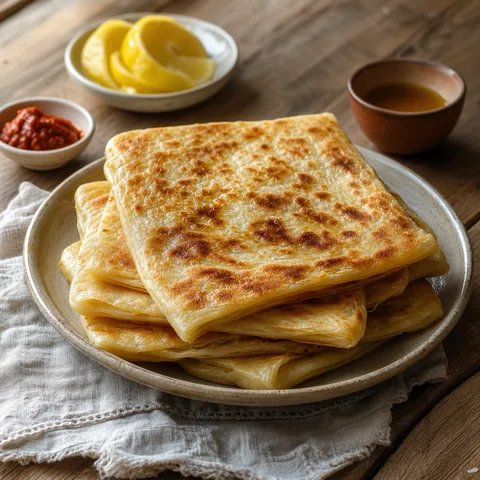
 Msemmen
Layered and folded semolina flatbread cooked on a griddle until the outside crisps and the inside stays wonderfully chewy — perfect with honey or harissa.
 North African Lens Verified Images are for illustrative purposes only, may be inaccurate, and do not guarantee the presence or absence of specific ingredients.
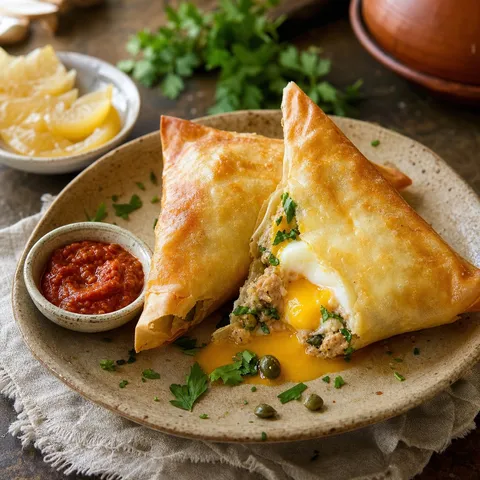
 Brik
Crispy paper-thin pastry folded around a whole egg, tuna, and parsley then flash-fried until golden — Tunisia's beloved street snack, eaten fast before the yolk escapes.
 North African Lens Verified Images are for illustrative purposes only, may be inaccurate, and do not guarantee the presence or absence of specific ingredients.
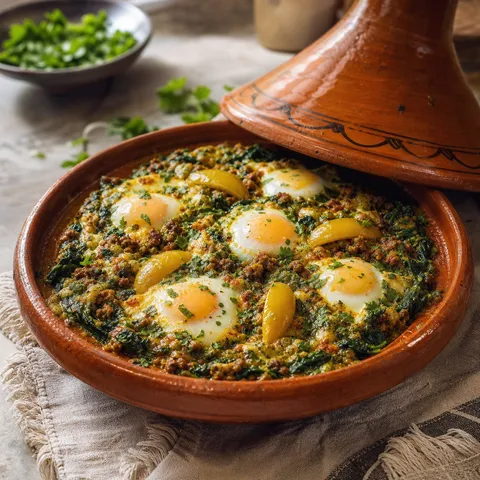
 Tajine El Bey
Tunisia's grand layered bake of spiced lamb, eggs, and cheese baked in a deep crust — a celebration dish with silky, complex layers in every slice.