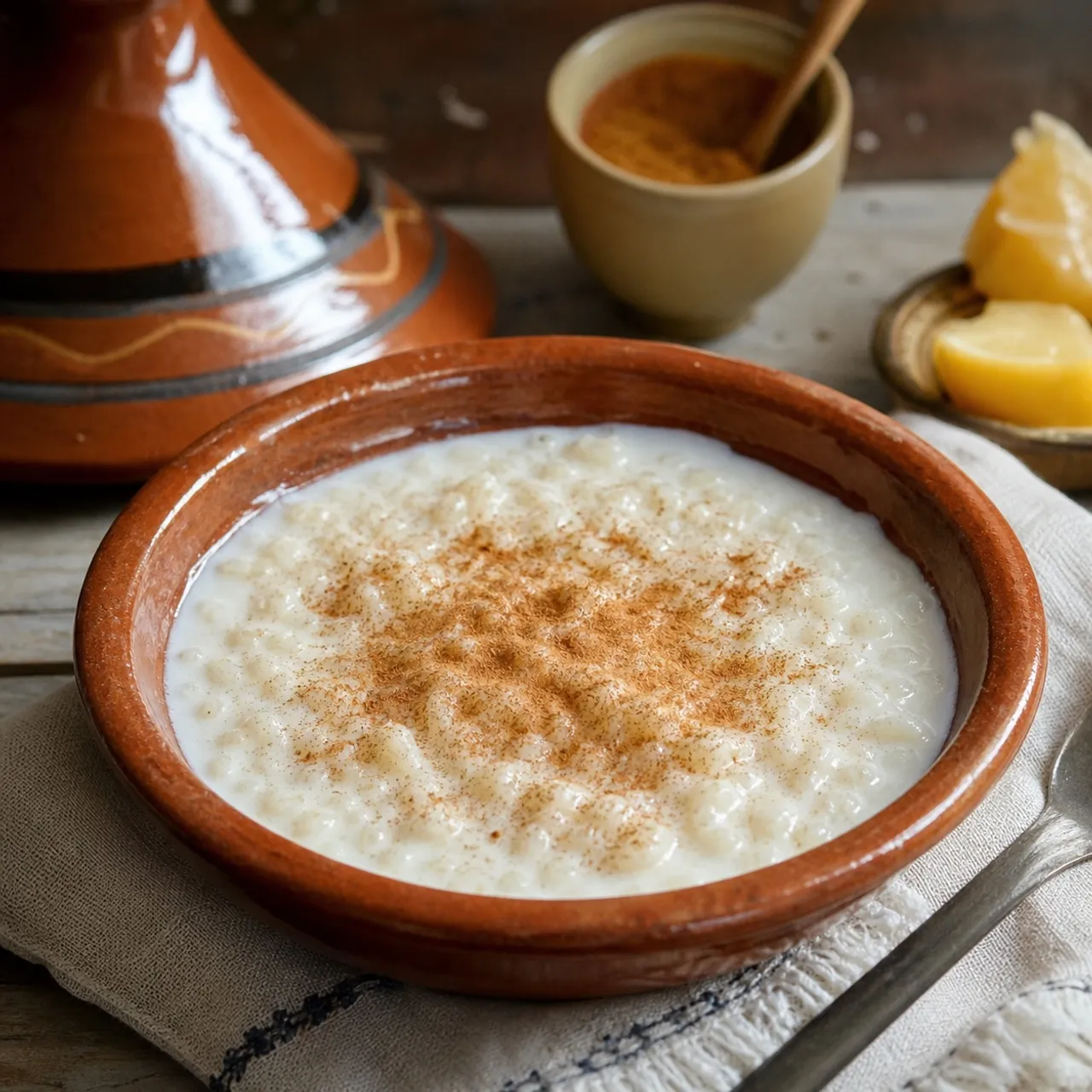
 North African Images are for illustrative purposes only, may be inaccurate, and do not guarantee the presence or absence of specific ingredients.
 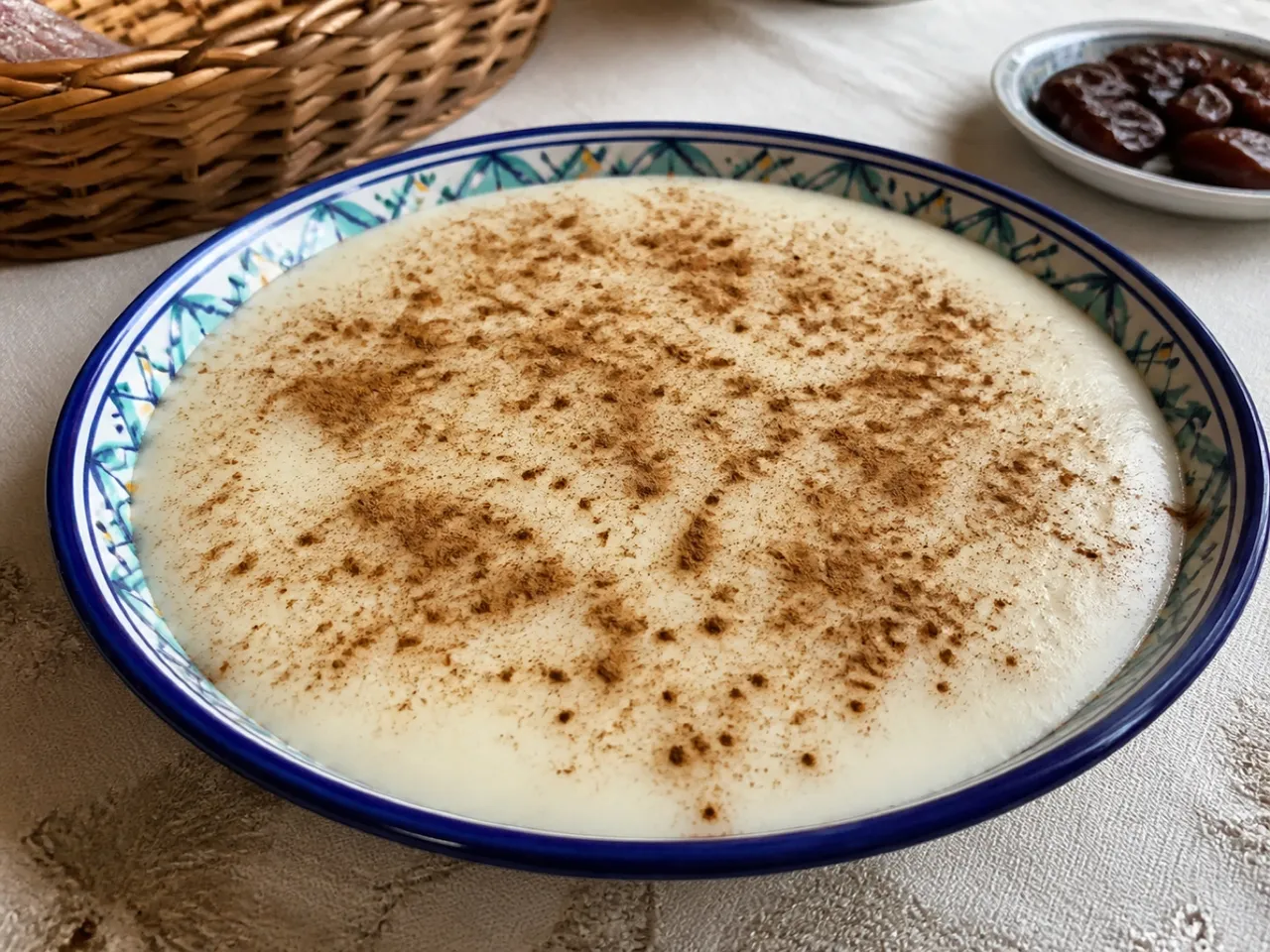 Serving Images are for illustrative purposes only, may be inaccurate, and do not guarantee the presence or absence of specific ingredients.
 Roz Bel Laban
Silky Egyptian rice pudding perfumed with rose water and vanilla, chilled until creamy and cool — the simple, beloved dessert found on every family table.
Contains common allergens
In the app, Listahan checks these against your household automatically.
Good to know
- One-pot
Matched from this dish's own ingredients and timing. Browse more: one-pot dinners
Instructions
7 steps- 1
Simmer the rinsed rice in the water in a covered saucepan until the water is absorbed and the rice is very soft, about 15 minutes.
- 2
Add the milk and sugar to the rice, bring to a gentle simmer, and cook uncovered, stirring often, until the rice grains begin to break down and the milk thickens slightly, about 15 minutes.
- 3
Stir in the cornstarch slurry and continue cooking, stirring constantly, until the pudding coats the back of a spoon, about 5 minutes.
- 4
Remove from the heat and stir in the rose water and vanilla.
- 5
Pour into individual serving bowls or ramekins and let cool to room temperature.
- 6
Cover and refrigerate until fully chilled and set, at least 2 hours.
- 7
Scatter chopped pistachios over each bowl just before serving.
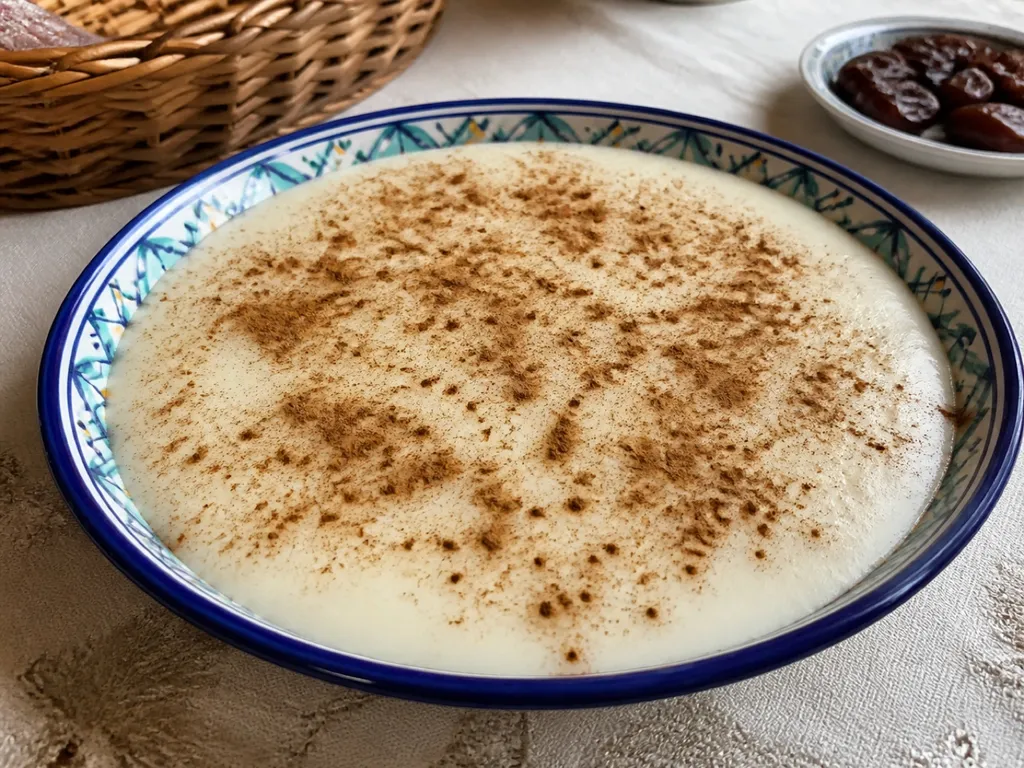 Images are for illustrative purposes only, may be inaccurate, and do not guarantee the presence or absence of specific ingredients.
 Listahan Family Score™
79/100
Good fit for most families
Score reflects how well this recipe fits a typical busy household. In the app, your Family Score is personalized to your household's allergens, kids, and pantry.
Nutrition
per serving275
Calories
10 g
Protein
40 g
Carbs
8 g
Fat
Estimated per serving. Actual values depend on the brands and portions you use.
Listahan cooking guide
Chef notes & practical guide
Technique notes, ingredient swaps, serve-alongside ideas, storage guidance, and equipment for this recipe.
Cultural context
Roz bel laban (rice with milk) is Egypt's most beloved home dessert — a stovetop rice pudding made by cooking short-grain rice in whole milk until the grains dissolve into a thick, ivory cream, then sweetened and scented with vanilla or mastic. The dish appears across the Arab world in nearly identical forms, reflecting its roots in the Ottoman empire's dairy-rich dessert tradition which spread from Istanbul through the Levant, Egypt, and North Africa during the 16th to 19th centuries. In Egyptian homes it is a childhood comfort food, served warm in winter and chilled in summer, topped with a dusting of cinnamon or a spoonful of toasted coconut.
Listahan note
This version cooks the rice slowly in whole milk over low heat, stirring frequently, until it reaches the thick, pourable-cream consistency that Egyptians call 'muqaththaf' — no cream of wheat shortcut, just patient stirring.
Technique cues
- The slow stovetop method — starting the rice in cold whole milk and cooking over medium-low heat — allows the rice starch to release gradually into the milk, thickening it from within without the need for cornstarch or cream; high heat causes the milk to scorch and stick to the bottom of the pot in a way that cannot be rescued.
- Mastic (Arabic gum) is the traditional Egyptian flavoring for roz bel laban and creates a uniquely elastic, slightly resinous flavor that vanilla cannot replicate; it must be ground with a pinch of sugar in a mortar before adding to the hot pudding because it will clump irretrievably if added whole to the liquid.
- The pudding thickens significantly as it cools — pull it off the heat when it is noticeably thinner than the desired final texture, as what looks loose and soupy in the pot will set to a thick, creamy consistency by the time it reaches the table or the fridge.
Kitchen flow
- Parallel prep
- Grind the mastic while the pudding simmers so it is ready to add when the pudding is done; prepare serving bowls or a large shallow serving dish for pouring.
- Make-ahead
- Roz bel laban is best made 4 to 6 hours ahead and served chilled; pour into the serving dish while still warm, cover with plastic wrap pressed directly onto the surface to prevent a skin from forming, and refrigerate.
- Leftover move
- Leftover roz bel laban that has thickened further overnight can be thinned with a splash of warm milk stirred in gently; serve with fresh strawberries or a drizzle of honey rather than just cinnamon for a different presentation.
- Cleanup rhythm
- Fill the pot with cold water and a splash of white vinegar immediately after pouring out the pudding — soaking in hot water sets the milk proteins to the pot walls, while cold water with vinegar releases them easily.
Ingredient brief
Role, handling, and swap guidance for each key ingredient.
Rice
starch base and thickener
Purpose: Short-grain rice (Egyptian, sushi, or Arborio) releases its starch more readily than long-grain varieties as it cooks, which is the mechanism that thickens the milk into a creamy pudding without any added starch or eggs.
Handling: Rinse the rice once and add directly to cold milk in the pot — starting in cold liquid rather than boiling liquid gives the grains time to soften evenly and release starch gradually before the milk reaches temperature.
Adaptation: Thai glutinous rice produces an even creamier, more viscous pudding; long-grain basmati will not release enough starch and will result in thin, watery pudding with intact rice grains.
milk
cooking liquid and cream base
Purpose: Whole full-fat milk is the cooking medium that absorbs the rice starch and transforms into the creamy pudding; the fat content of whole milk is necessary for the final silky texture.
Handling: Use whole milk directly from the fridge — no need to warm it first; stir frequently in the first 10 minutes as the pot comes to temperature to prevent any rice from sticking to the bottom.
Adaptation: Full-fat oat milk or canned coconut milk can produce a dairy-free version; coconut milk creates a notably different flavor profile (pleasant but distinctly tropical rather than neutral and creamy).
sugar
sweetener
Purpose: Sugar added toward the end of cooking (not the beginning) prevents the milk proteins from tightening and affecting the texture as the pudding cooks; the amount should be restrained — roz bel laban is mildly sweet, not dessert-sweet by Western standards.
Handling: Add the sugar only in the last 5 minutes of cooking so it dissolves without affecting the cooking process.
Adaptation: Condensed milk can replace sugar and a portion of the fresh milk for a richer, more indulgent version, though it raises the sweetness level significantly.
mastic
traditional flavoring
Purpose: Ground mastic gum gives roz bel laban its distinctly Egyptian character — a faintly piney, resinous, slightly floral note that is entirely unlike any other flavoring and unmistakable to anyone who has eaten the dish in Egypt.
Handling: Freeze the mastic beads for 10 minutes before grinding — cold mastic grinds to a powder without sticking; combine with a pinch of sugar in a mortar and pound until completely powdered before stirring into the hot pudding.
Adaptation: Pure vanilla extract or a scraping of vanilla bean is the most common substitute in households outside the Middle East; rose water is another option that shifts the flavor profile to more floral.
Technique notes
- Use a wide, heavy-bottomed saucepan rather than a tall narrow pot so the milk surface area is large and evaporation is even — a narrow pot concentrates the heat at the bottom and makes scorching much more likely.
- Stir with a wooden spoon reaching all the way to the corners and edges of the pot every 2 to 3 minutes throughout cooking; the rice grains that settle to the bottom corners are the first to stick and scorch, and a scorch flavor will spread through the entire batch.
- A thin skin will form on the surface of the pudding as it cools — in Egyptian tradition this skin is a treat, not a flaw; if your household prefers it absent, press a sheet of plastic wrap directly onto the warm pudding surface before refrigerating to prevent skin formation.
Ingredient swaps
- Dairy-free option
- Full-fat oat milk or canned coconut milk (not the refrigerator carton variety) produces a rich, creamy pudding; oat milk gives the most neutral flavor while coconut milk adds a tropical note.
- Reduced-sugar direction
- Reduce the sugar by up to half and compensate with an extra teaspoon of vanilla extract or a few drops of rose water — the pudding's creaminess provides sweetness even without much added sugar.
- Stovetop to oven method
- After an initial 10-minute stovetop simmer, transfer the pot to a 300F oven uncovered for 45 minutes, stirring once at the halfway point — this hands-off method reduces constant stirring and produces an equally creamy result.
Serve alongside
- fresh strawberries or sliced peaches on the side in summer
- toasted shredded coconut sprinkled on top
- a small cup of strong Arabic coffee to follow
- hot cardamom tea
- cold hibiscus tea (karkade) served alongside
- cold fresh orange juice
Serving suggestions only — check pairings for your household's allergens.
Storage & reheating
- Refrigerate covered (with plastic pressed to the surface) for up to 4 days; the pudding thickens further in the fridge and may need a stir and a splash of milk to loosen.
- Do not reheat roz bel laban — it is typically served chilled or at room temperature; if you prefer it warm, stir over low heat with a splash of milk until it loosens to serving consistency.
- Roz bel laban does not freeze well — the rice grains become hard and the pudding separates into a grainy liquid upon thawing; make only what will be consumed within 4 days.
Equipment
- wide heavy-bottomed saucepan (3-quart or larger)
- wooden spoon for frequent stirring
- mortar and pestle for grinding mastic
- shallow serving bowl or individual ramekins for presentation
Make this household-aware
Listahan Pro checks this recipe against your household's allergens, finds pantry-aware swaps, builds the shopping list, and helps you plan the week around it.
Plan it in Listahan
Add Roz Bel Laban to your week, check it against your household's allergens, and build the shopping list automatically.
More North African recipes
 North African Lens Verified Images are for illustrative purposes only, may be inaccurate, and do not guarantee the presence or absence of specific ingredients.
 Msemmen
Layered and folded semolina flatbread cooked on a griddle until the outside crisps and the inside stays wonderfully chewy — perfect with honey or harissa.
 North African Lens Verified Images are for illustrative purposes only, may be inaccurate, and do not guarantee the presence or absence of specific ingredients.
 Brik
Crispy paper-thin pastry folded around a whole egg, tuna, and parsley then flash-fried until golden — Tunisia's beloved street snack, eaten fast before the yolk escapes.
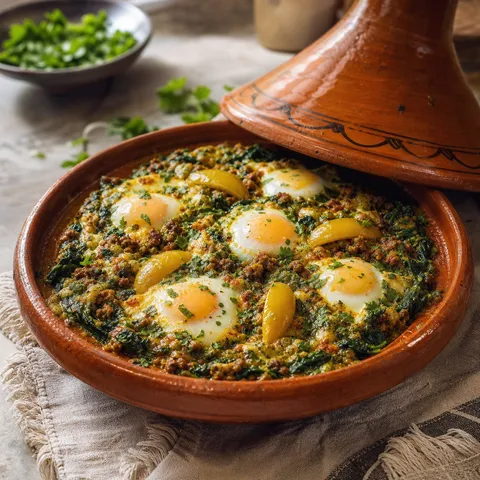 North African Lens Verified Images are for illustrative purposes only, may be inaccurate, and do not guarantee the presence or absence of specific ingredients.
 Tajine El Bey
Tunisia's grand layered bake of spiced lamb, eggs, and cheese baked in a deep crust — a celebration dish with silky, complex layers in every slice.