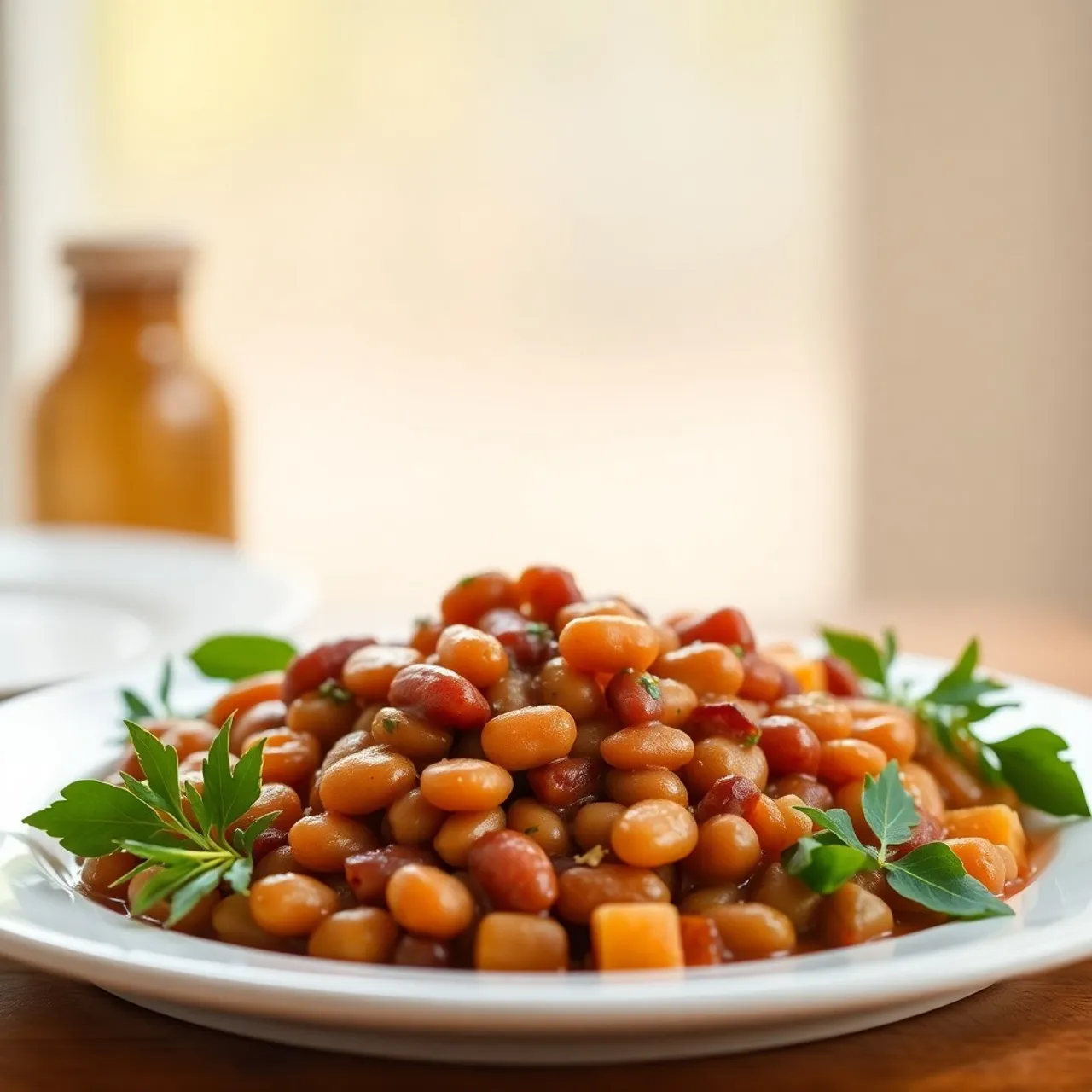
 North American Images are for illustrative purposes only, may be inaccurate, and do not guarantee the presence or absence of specific ingredients.
 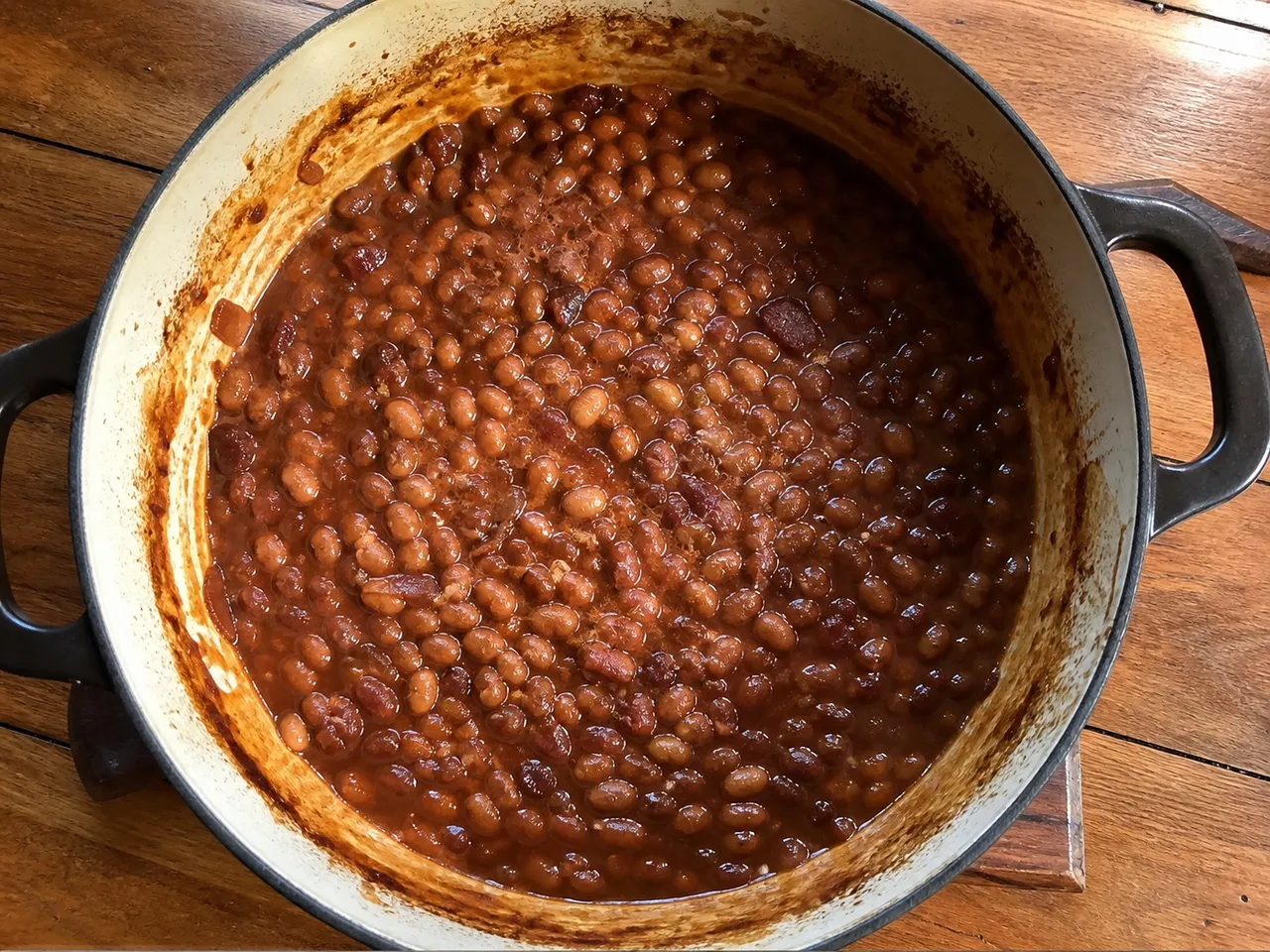 Serving Images are for illustrative purposes only, may be inaccurate, and do not guarantee the presence or absence of specific ingredients.
 Baked Beans
A dish containing beans, sometimes baked but usually stewed, in a sauce.
Contains common allergens
In the app, Listahan checks these against your household automatically.
Good to know
- One-pot
Matched from this dish's own ingredients and timing. Browse more: one-pot dinners
Instructions
6 steps- 1
Preheat the oven to 325°F (160°C).
- 2
In a large Dutch oven or oven-safe pot, cook the chopped bacon over medium heat until crispy and the fat has rendered, about 8-10 minutes.
- 3
Add the finely diced onion to the bacon fat and sauté for 5 minutes until soft and translucent.
- 4
Stir in the drained navy beans, dark brown sugar, molasses, ketchup, Dijon mustard, and apple cider vinegar. Stir well to combine all ingredients evenly.
- 5
Bring the bean mixture to a gentle simmer on the stove.
- 6
Cover the pot with a lid and transfer to the preheated oven. Bake for 1.5 to 2 hours, uncovering for the last 30 minutes, until the sauce is deeply caramelized, thick, and syrupy. Let stand for 10 minutes before serving.
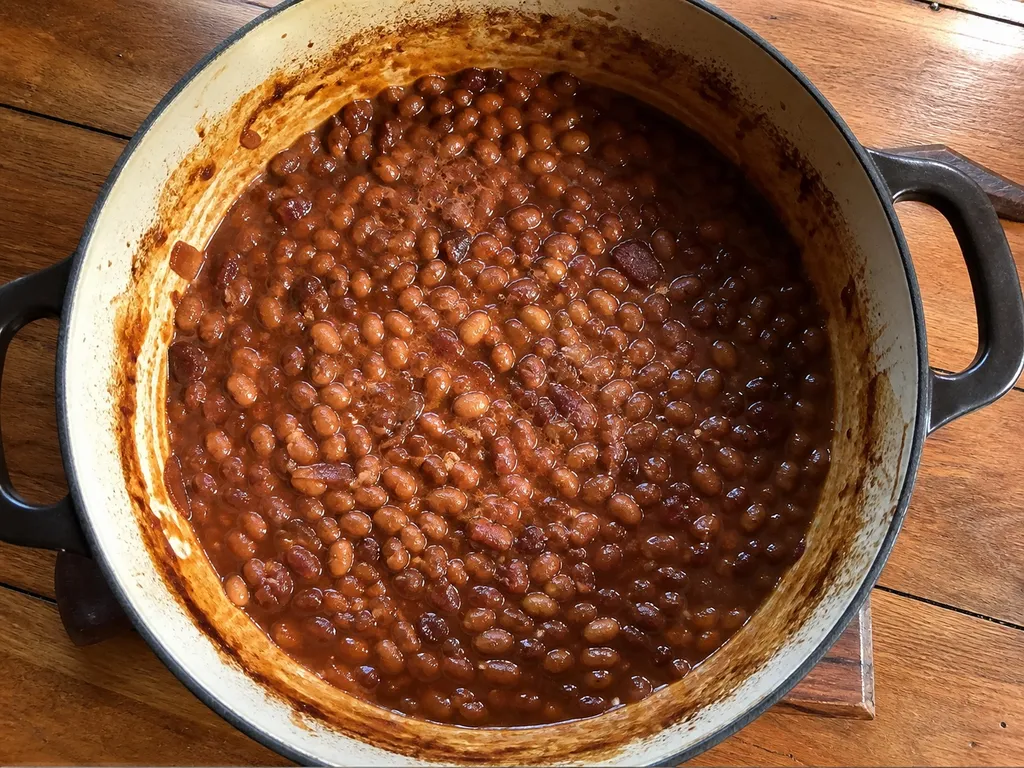 Images are for illustrative purposes only, may be inaccurate, and do not guarantee the presence or absence of specific ingredients.
 Listahan Family Score™
79/100
Good fit for most families
Score reflects how well this recipe fits a typical busy household. In the app, your Family Score is personalized to your household's allergens, kids, and pantry.
Nutrition
per serving290
Calories
7 g
Protein
49 g
Carbs
8 g
Fat
Estimated per serving. Actual values depend on the brands and portions you use.
Listahan cooking guide
Chef notes & practical guide
Technique notes, ingredient swaps, serve-alongside ideas, storage guidance, and equipment for this recipe.
Cultural context
Baked beans trace their roots to Native American cooking, where beans were slow-cooked in earthenware pots with bear fat and maple syrup. New England colonists adapted the technique using salt pork and molasses, and the long Saturday bake became a practical solution since the beans could sit in the communal oven overnight and feed a family through the Sabbath. The version that spread across North America picked up bacon, ketchup, and brown sugar as the dish moved south and west through the 19th and 20th centuries.
Listahan note
This version builds the flavor base in a single Dutch oven, starting with bacon fat and softened onion before the beans go in. The low-and-slow oven time lets the sauce thicken and the smoke deepen without any babysitting.
Technique cues
- A 325 degree oven is not a shortcut temperature; it lets the beans absorb the sauce slowly without the sugars scorching on the bottom of the pot.
- Dark brown sugar and molasses work together here because molasses alone can turn bitter with long cooking, while brown sugar gives a cleaner sweetness to balance it.
- Leave the lid off for the last 30 minutes of baking so the surface caramelizes into a slightly set glaze rather than staying soupy.
Kitchen flow
- Parallel prep
- Render the bacon and soften the onion while the oven preheats; the sauce ingredients can be whisked together in the same window.
- Make-ahead
- Cook fully, cool, and refrigerate up to 3 days. The sauce thickens further overnight and the flavor improves.
- Leftover move
- Spoon cold baked beans onto a toasted English muffin with a fried egg for a fast savory breakfast.
- Cleanup rhythm
- One Dutch oven for everything; soak immediately after serving since the sugar sauce hardens if left to dry.
Ingredient brief
Role, handling, and swap guidance for each key ingredient.
thick-cut bacon
Smoke and fat base
Purpose: Rendered bacon fat coats the pot and builds a smoky, savory backbone that canned beans alone cannot provide.
Handling: Chop into half-inch pieces before cooking so they render evenly and stay in every bite.
Adaptation: Smoked turkey or diced ham hock keeps the smoke without pork; add a teaspoon of smoked paprika to reinforce the flavor.
navy beans
Main body
Purpose: Small and starchy, navy beans absorb the sauce and hold their shape through the long bake without turning to mush.
Handling: Rinse canned beans well to remove excess sodium before adding to the pot.
Adaptation: Great Northern beans or cannellini beans work well; cannellini will be slightly creamier.
unsulfured molasses
Depth and color
Purpose: Molasses gives baked beans their characteristic dark color and bitter-sweet complexity that plain brown sugar cannot replicate.
Handling: Measure molasses with a lightly oiled spoon so it slides out cleanly.
Adaptation: Sorghum syrup is a closer flavor match than blackstrap molasses, which can turn too bitter over long cooking.
dark brown sugar
Sweetness
Purpose: Adds a rounded caramel sweetness and helps the sauce set into a glaze during the uncovered bake.
Handling: Pack it firmly into the measuring cup so the ratio stays balanced.
Adaptation: Light brown sugar works but produces a milder, less complex result.
apple cider vinegar
Acid and balance
Purpose: Cuts through the sweetness of the sugar and molasses so the sauce tastes round rather than cloying.
Handling: Add it with the other sauce ingredients rather than stirring in at the end for better integration.
Adaptation: White wine vinegar works; avoid balsamic, which will darken the color and add unwanted fruit notes.
Dijon mustard
Emulsifier and sharpness
Purpose: Brings a mild heat and helps bind the sauce so it coats the beans instead of separating into a thin liquid.
Handling: Whisk it into the sauce mixture before adding to the pot so it distributes evenly.
Adaptation: Yellow mustard is milder and sweeter; dry mustard powder adds sharpness without extra liquid.
Technique notes
- Do not rush the bacon rendering; you want the fat fully liquid and the pieces genuinely crispy so they hold texture through the long bake.
- Taste the sauce before the beans go into the oven, not after. Once baked, sweetness and salt are hard to correct without another 30 minutes.
- If the sauce looks too thick after the uncovered bake, stir in a few tablespoons of hot water. If it looks thin, give it 10 more minutes uncovered.
Ingredient swaps
- Gluten-free direction
- All ingredients in this recipe are naturally gluten-free; verify ketchup and mustard labels as some brands add malt vinegar or modified starch.
- Vegetarian direction
- Skip the bacon and saute onion in 2 tablespoons of neutral oil; add 1 teaspoon of smoked paprika and a few drops of liquid smoke to approximate the depth.
Serve alongside
- Pulled pork sandwiches
- Grilled hot dogs on a potato bun
- Simple green coleslaw
- Skillet cornbread
- Iced sweet tea
- Cold lager
- Lemonade over ice
Serving suggestions only — check pairings for your household's allergens.
Storage & reheating
- Refrigerate in a sealed container for up to 4 days; the sauce will thicken considerably when cold.
- Reheat on the stovetop over low heat, stirring in a splash of water or broth to loosen the sauce back to serving consistency.
- Freeze in portions for up to 3 months; thaw overnight in the refrigerator and reheat gently.
Equipment
- Dutch oven or heavy oven-safe pot with a lid
- Wooden spoon or silicone spatula for scraping the fond
- Box grater or chef knife for chopping bacon
- Measuring spoons and a small whisk for the sauce
Make this household-aware
Listahan Pro checks this recipe against your household's allergens, finds pantry-aware swaps, builds the shopping list, and helps you plan the week around it.
Plan it in Listahan
Add Baked Beans to your week, check it against your household's allergens, and build the shopping list automatically.
More North American recipes
 North American Lens Verified Images are for illustrative purposes only, may be inaccurate, and do not guarantee the presence or absence of specific ingredients.
 Soft Pretzels
Chewy golden mall-style pretzels with a salty crust, brushed in butter.
 North American Lens Verified Images are for illustrative purposes only, may be inaccurate, and do not guarantee the presence or absence of specific ingredients.
 Gumbo
A Louisiana-style gumbo of chicken thighs and Andouille sausage simmered with okra, the Cajun holy trinity, and a dark roux, served over rice.
 North American Lens Verified Images are for illustrative purposes only, may be inaccurate, and do not guarantee the presence or absence of specific ingredients.
 New York Cheesecake
A dense, ultra-creamy baked cheesecake with a buttery graham cracker crust and a faintly tangy, melt-in-your-mouth filling.