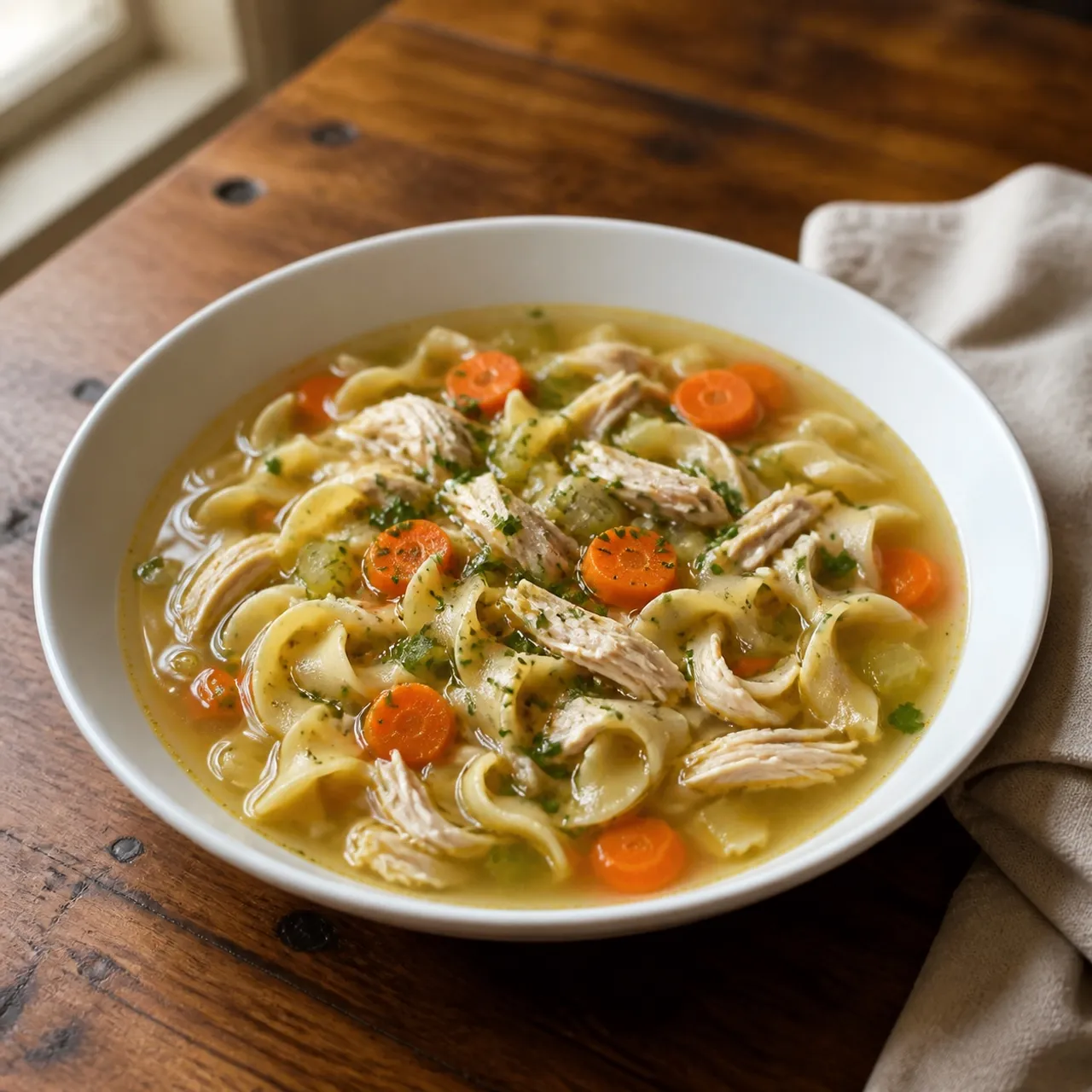
 North American Images are for illustrative purposes only, may be inaccurate, and do not guarantee the presence or absence of specific ingredients.
 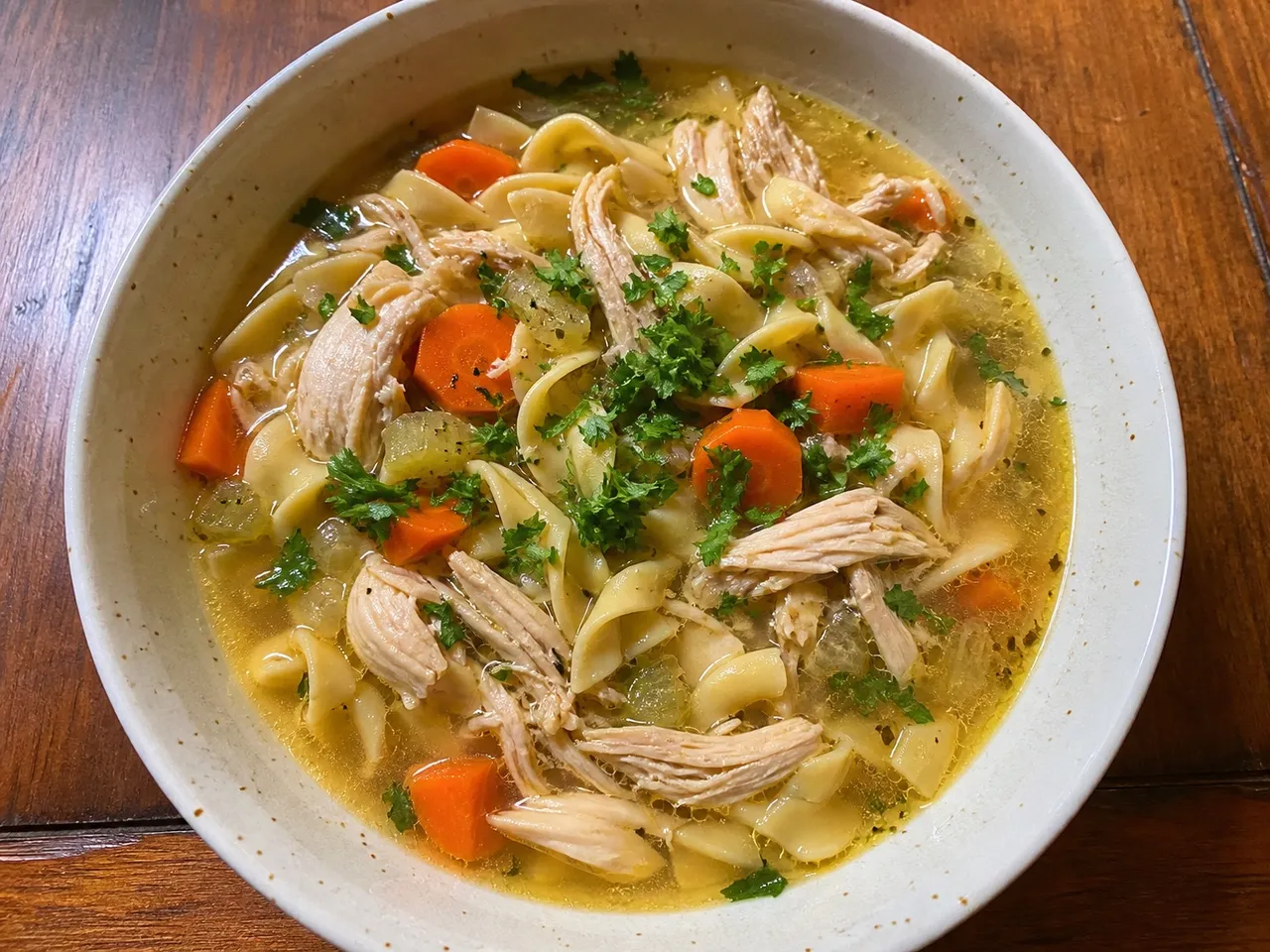 Serving Images are for illustrative purposes only, may be inaccurate, and do not guarantee the presence or absence of specific ingredients.
 Chicken Noodle Soup
A comforting soup made with chicken broth, chicken pieces, noodles, and vegetables.
Contains common allergens
In the app, Listahan checks these against your household automatically.
Good to know
- One-pot
Matched from this dish's own ingredients and timing. Browse more: one-pot dinners
Instructions
6 steps- 1
In a large soup pot or Dutch oven, heat 1 tablespoon of olive oil over medium heat. Add the diced onion, carrots, and celery.
- 2
Sauté the vegetables for 5-7 minutes until the onions become translucent and the carrots begin to soften.
- 3
Pour in the chicken broth and bring the soup to a rolling boil over high heat.
- 4
Once boiling, stir in the wide egg noodles. Reduce the heat to a steady simmer and cook for 7-8 minutes, or until the noodles are tender but not mushy.
- 5
Stir in the shredded cooked chicken and heat through for 2 minutes.
- 6
Remove the pot from the heat, stir in the freshly chopped parsley, and season with salt and freshly cracked black pepper to taste. Serve steaming hot in deep bowls.
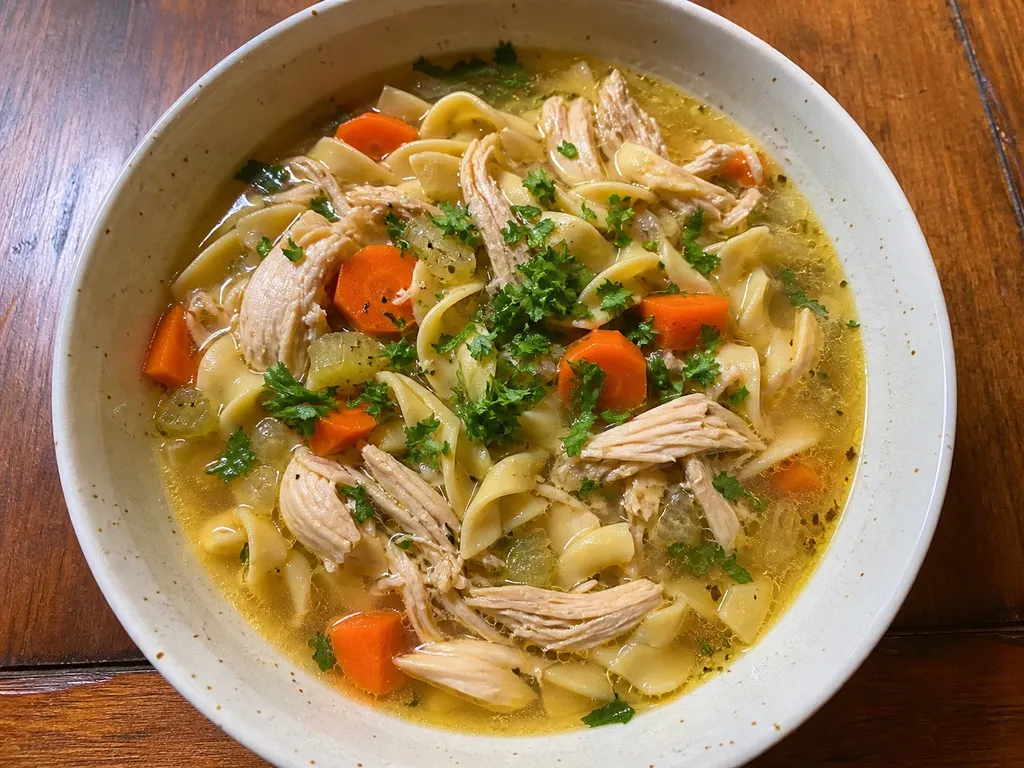 Images are for illustrative purposes only, may be inaccurate, and do not guarantee the presence or absence of specific ingredients.
 Listahan Family Score™
73/100
Good fit for most families
Score reflects how well this recipe fits a typical busy household. In the app, your Family Score is personalized to your household's allergens, kids, and pantry.
Nutrition
per serving515
Calories
44 g
Protein
67 g
Carbs
8 g
Fat
Estimated per serving. Actual values depend on the brands and portions you use.
Listahan cooking guide
Chef notes & practical guide
Technique notes, ingredient swaps, serve-alongside ideas, storage guidance, and equipment for this recipe.
Cultural context
Chicken soup has been a cross-cultural restorative for centuries, but the American version with egg noodles took its current shape in the early 20th century as Eastern European Jewish immigrants brought their tradition of golden chicken broth to a wider audience. The canned version launched by Campbell's in 1934 made it a pantry staple, but home-cooked versions built on good broth have always been in a different category. The soup remains the default American comfort food through illness, cold weather, and family gatherings alike.
Listahan note
This version uses good store-bought broth as its foundation, so the quality of the broth is the single most important buying decision you make; the vegetables and noodles support it rather than carry it.
Technique cues
- Sauteing the mirepoix before adding the broth builds a layer of sweetness that flat-added raw vegetables never achieve; do not skip this step even when in a hurry.
- Add the egg noodles in the final 8 minutes and watch them carefully; overcooked noodles turn to mush and make the broth cloudy and starchy.
- If making ahead, cook the noodles separately and add them per bowl at serving time so they do not absorb all the broth while sitting in the fridge.
Kitchen flow
- Parallel prep
- Dice all vegetables before heating the pot; the saute goes fast once you start and there is no time to stop and chop.
- Make-ahead
- Make the soup base without noodles up to 3 days ahead and store; cook noodles fresh in the reheated broth the day you serve.
- Leftover move
- Add a handful of frozen peas or spinach to leftover soup when reheating for a quick nutritional boost without starting over.
- Cleanup rhythm
- One pot and one cutting board; rinse the pot immediately after serving while the residual heat makes it easy to clean.
Ingredient brief
Role, handling, and swap guidance for each key ingredient.
high-quality chicken broth
Flavor foundation
Purpose: The broth is the soup; a watery or flat broth cannot be rescued by the other ingredients, so this is the one place to spend more.
Handling: Taste the broth before adding it and note the salt level; seasoning at the end will depend entirely on how salty the broth already is.
Adaptation: Homemade stock made from a rotisserie chicken carcass makes an unmistakably better soup if you have 45 minutes to simmer it.
cooked chicken breast
Main protein
Purpose: Pre-cooked chicken means it only needs to warm through in the broth, preventing the rubbery texture that comes from overcooking raw chicken in a quick soup.
Handling: Shred by hand into irregular pieces rather than dicing; uneven shreds hold more broth and have a better mouthfeel.
Adaptation: Rotisserie chicken thigh meat adds more richness and is nearly impossible to overcook.
wide egg noodles
Body and comfort element
Purpose: Wide egg noodles have enough surface area to hold broth on the spoon and a soft chew that feels substantial without being heavy.
Handling: Add directly to the simmering soup and stir once to prevent sticking; check at 7 minutes and pull when just tender.
Adaptation: Orzo or small pasta shapes work well; reduce cooking time by 2 minutes and taste frequently.
carrots
Sweetness and color
Purpose: Carrots add gentle sweetness that rounds out the saltiness of the broth and provide visual brightness in the bowl.
Handling: Slice into coins of even thickness so they all cook at the same rate during the saute.
Adaptation: Parsnip can replace half the carrot for a slightly earthier, more complex flavor.
celery
Aromatic backbone
Purpose: Celery contributes the green herbal note that distinguishes chicken noodle soup from a simple broth-and-noodle bowl.
Handling: Include a few of the celery leaves if available; they add extra herbal flavor to the broth.
Adaptation: Celery root (celeriac) diced small gives a more concentrated celery flavor if regular celery is unavailable.
Technique notes
- Season the soup only at the very end; broth reduces as it simmers, so adding salt early can make the finished soup too salty.
- A squeeze of fresh lemon juice at the table brightens every bowl and makes the chicken flavor more vivid without tasting acidic.
- The parsley goes in at the last minute off the heat; cooking it kills the fresh flavor that is the soup's finishing note.
Ingredient swaps
- Gluten-free direction
- Use certified gluten-free rice noodles or small rice pasta; check the broth label as some brands contain wheat.
- Lower-sodium direction
- Use low-sodium or homemade broth and add salt only after tasting the finished soup.
- Vegetarian direction
- Substitute good vegetable broth and use chickpeas instead of chicken; add a parmesan rind while simmering for umami depth.
Serve alongside
- Oyster crackers
- Crusty sourdough bread
- Simple green salad with vinaigrette
- Buttered saltine crackers
- Hot herbal tea
- Sparkling water with lemon
- Dry white wine such as Pinot Grigio
Serving suggestions only — check pairings for your household's allergens.
Storage & reheating
- Refrigerate the soup (noodles separate if possible) in a sealed container for up to 4 days.
- Reheat gently on the stovetop over medium heat; add a splash of broth or water to loosen if the noodles have absorbed liquid.
- Freeze the broth and chicken without noodles for up to 3 months; add fresh noodles when reheating from frozen.
Equipment
- Large soup pot or Dutch oven (at least 6 quarts)
- Chef's knife and cutting board for uniform vegetable cuts
- Ladle for serving
- Slotted spoon for checking noodle doneness
Make this household-aware
Listahan Pro checks this recipe against your household's allergens, finds pantry-aware swaps, builds the shopping list, and helps you plan the week around it.
Plan it in Listahan
Add Chicken Noodle Soup to your week, check it against your household's allergens, and build the shopping list automatically.
More North American recipes
 North American Lens Verified Images are for illustrative purposes only, may be inaccurate, and do not guarantee the presence or absence of specific ingredients.
 Soft Pretzels
Chewy golden mall-style pretzels with a salty crust, brushed in butter.
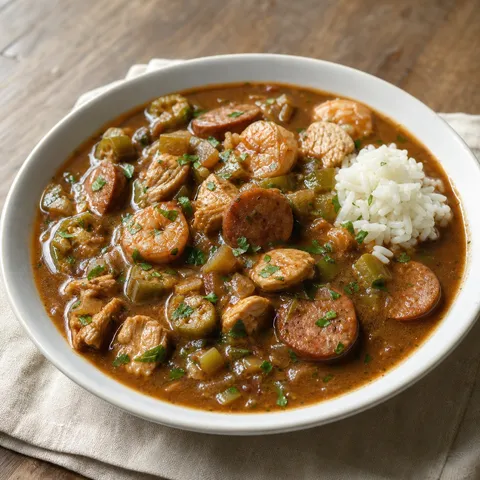 North American Lens Verified Images are for illustrative purposes only, may be inaccurate, and do not guarantee the presence or absence of specific ingredients.
 Gumbo
A Louisiana-style gumbo of chicken thighs and Andouille sausage simmered with okra, the Cajun holy trinity, and a dark roux, served over rice.
 North American Lens Verified Images are for illustrative purposes only, may be inaccurate, and do not guarantee the presence or absence of specific ingredients.
 New York Cheesecake
A dense, ultra-creamy baked cheesecake with a buttery graham cracker crust and a faintly tangy, melt-in-your-mouth filling.