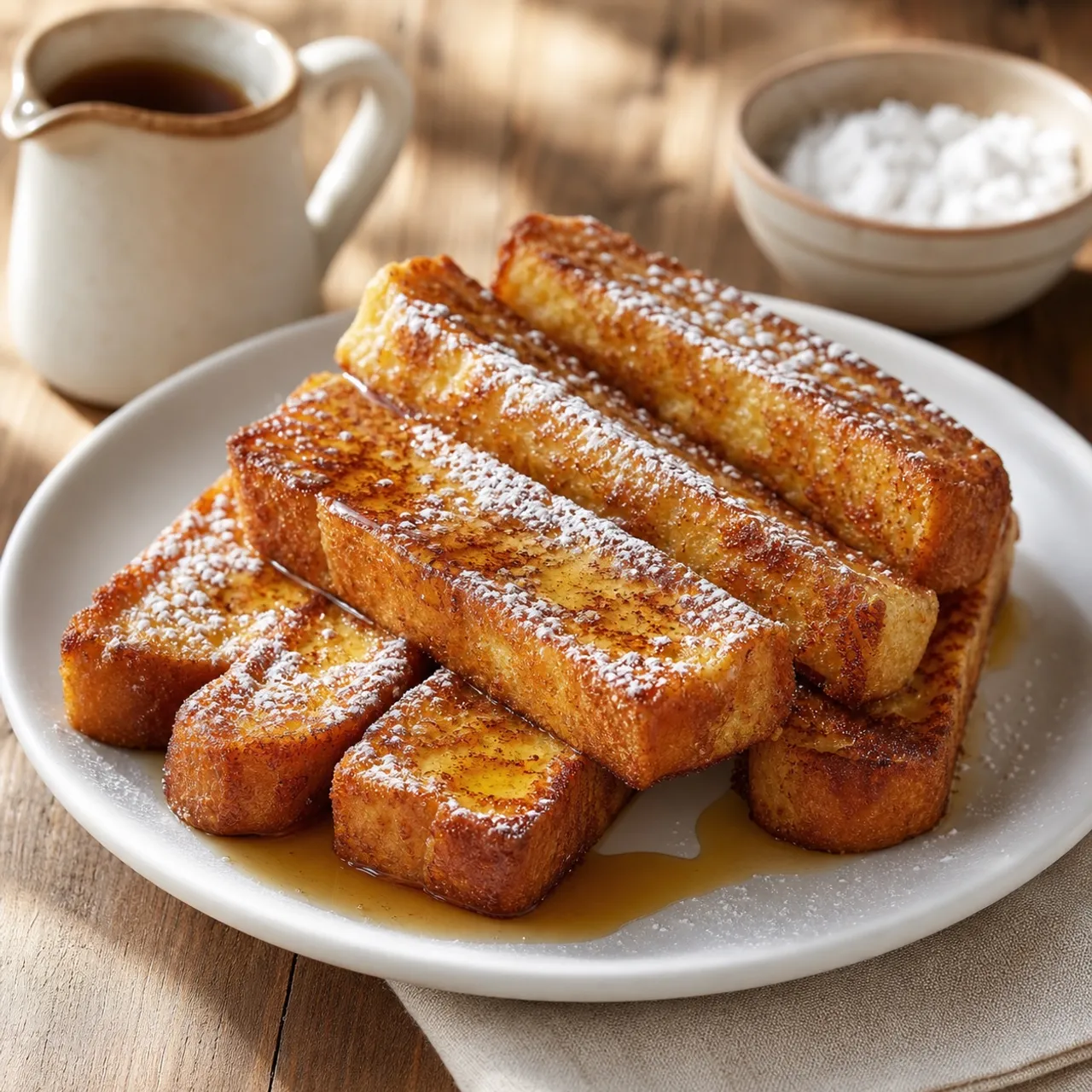
 North American Images are for illustrative purposes only, may be inaccurate, and do not guarantee the presence or absence of specific ingredients.
 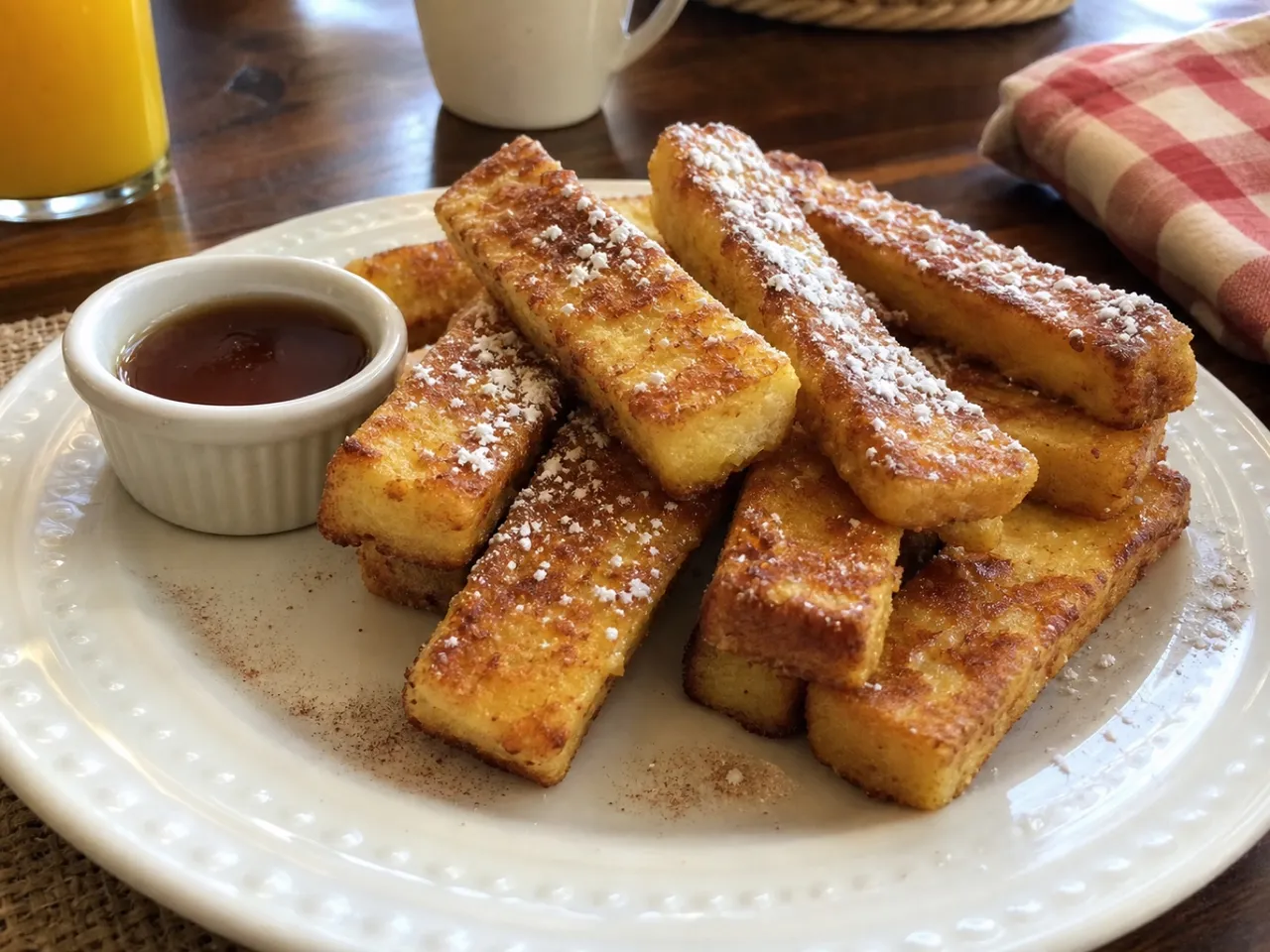 Serving Images are for illustrative purposes only, may be inaccurate, and do not guarantee the presence or absence of specific ingredients.
 French Toast Sticks
Thick bread sticks soaked in cinnamon custard and griddled — perfect for dipping in syrup.
Contains common allergens
In the app, Listahan checks these against your household automatically.
Good to know
- Ready in under 30 minutes
Matched from this dish's own ingredients and timing. Browse more: 30-minute meals
Instructions
6 steps- 1
Make the Custard: Whisk the eggs, milk, vanilla, and cinnamon in a shallow dish.
- 2
Soak: Dip the bread sticks briefly in the custard, turning to coat (don't oversoak).
- 3
Heat the Pan: Melt butter on a griddle over medium heat.
- 4
Griddle: Cook the sticks, turning, for 2-3 minutes until golden on all sides.
- 5
Dust: Dust with powdered sugar.
- 6
Serve: Serve warm with maple syrup for dipping.
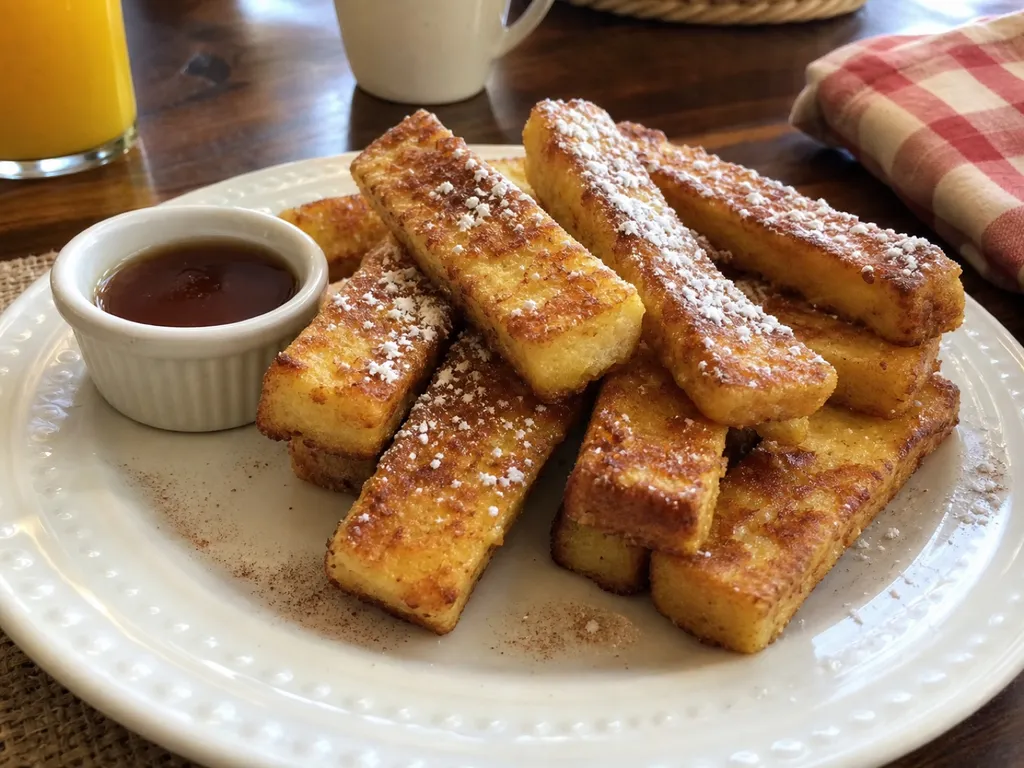 Images are for illustrative purposes only, may be inaccurate, and do not guarantee the presence or absence of specific ingredients.
 Listahan Family Score™
79/100
Good fit for most families
Score reflects how well this recipe fits a typical busy household. In the app, your Family Score is personalized to your household's allergens, kids, and pantry.
Nutrition
per serving55
Calories
0 g
Protein
0 g
Carbs
6 g
Fat
Estimated per serving. Actual values depend on the brands and portions you use.
Listahan cooking guide
Chef notes & practical guide
Technique notes, ingredient swaps, serve-alongside ideas, storage guidance, and equipment for this recipe.
Cultural context
French toast itself is a centuries-old technique for using stale bread by soaking it in an egg mixture before cooking, documented in European cookbooks as far back as the 14th century. The sticks format is an American fast-food and school-cafeteria adaptation from the 1980s, engineered for dipping, finger-eating, and batch production, and later adopted by home cooks for weekend breakfasts with children.
Listahan note
This version uses brioche or Texas toast for a rich custard that soaks in deeply, cuts the bread thick enough to stay soft in the center, and cooks on a buttered griddle for even golden color on all sides.
Technique cues
- Brioche and Texas toast have enough fat and density to hold the custard without falling apart; thin sandwich bread turns mushy and tears during cooking.
- Soak the sticks briefly, about 10 to 15 seconds per side, rather than long-soaking; over-soaked bread does not cook through in the center before the outside browns.
- A griddle or wide nonstick pan at medium heat gives the most even color; high heat browns the outside before the custard inside has time to set.
Kitchen flow
- Parallel prep
- Mix the custard while the griddle heats; the 3 to 4 minutes of preheating is exactly long enough to whisk and cut the bread.
- Make-ahead
- Cook a full batch, cool on a rack, and freeze in a single layer; reheat in a toaster oven at 180C for 5 minutes on school mornings.
- Leftover move
- Leftover cooked sticks reheat well in a toaster oven; serve with a small bowl of yogurt instead of syrup for a less sweet version.
- Cleanup rhythm
- Wipe the griddle between batches with a folded paper towel held by tongs to remove any egg residue before it scorches on the next batch.
Ingredient brief
Role, handling, and swap guidance for each key ingredient.
6 thick slices brioche or Texas toast
Main body
Purpose: Enriched bread with a tight, moist crumb absorbs the custard without falling apart and develops a golden exterior that a lean bread cannot match.
Handling: Cut into three even sticks per slice and let them sit out for 10 minutes so the surface is slightly dry and more receptive to the custard.
Adaptation: Thick-cut challah is an excellent substitute with a similar enriched crumb; standard sandwich bread works but gives a softer, less structured result.
3 large eggs and 180ml milk
Custard base
Purpose: The egg-milk ratio determines how rich and custardy the interior becomes; too much milk makes it watery, too little makes it egg-forward and rubbery.
Handling: Whisk thoroughly until the yolks and whites are fully combined; streaks of egg white on the pan surface look unappetizing when cooked.
Adaptation: Half-and-half in place of milk gives a richer custard; plant-based milk works but produces a less creamy result.
1 tsp vanilla extract and 1 tsp cinnamon
Flavor base
Purpose: Vanilla and cinnamon are the classic American French toast flavors that make the dish recognizable rather than tasting like plain cooked egg.
Handling: Add to the custard and whisk until the cinnamon is evenly distributed so it does not clump on one stick.
Adaptation: Cardamom can replace some of the cinnamon for a more aromatic, less familiar flavor; orange zest adds brightness without sweetness.
2 tbsp butter
Cooking fat
Purpose: Butter browns at a lower temperature than oil and creates the golden, slightly nutty crust that is characteristic of well-made French toast.
Handling: Swirl the butter and let it foam, then settle, before adding the bread; adding bread while the butter is still foaming means the surface is wet.
Adaptation: Clarified butter or ghee tolerates slightly higher heat and does not brown as quickly, giving more control over color.
Technique notes
- Keep the heat at medium throughout; butter burns quickly and once the pan is too hot, the exterior chars before the custard inside cooks.
- Do not move the sticks for the first 90 seconds after placing them on the griddle; they need time to set on one side before they can be turned without tearing.
- Dust with powdered sugar right before serving rather than during cooking; sugar added to the hot pan burns and makes the pan sticky.
Ingredient swaps
- Dairy-free direction
- Use full-fat oat milk or coconut milk in place of dairy milk, and vegan butter for cooking; the custard is slightly less rich but still works.
- Egg-free direction
- Replace the egg-milk custard with a mixture of 240ml plant milk, 2 tbsp cornstarch, and 1 tbsp ground flaxseed; the result is softer and less custardy.
Serve alongside
- Fresh berry compote warmed on the stovetop
- Crispy bacon strips
- Soft scrambled eggs
- Maple latte or cinnamon coffee
- Fresh-squeezed orange juice
- Cold whole milk for the classic diner pairing
Serving suggestions only — check pairings for your household's allergens.
Storage & reheating
- Refrigerate cooked sticks in a sealed container for up to 2 days; they soften overnight but reheat acceptably.
- Reheat in a toaster oven at 180C for 4 to 5 minutes, which restores some surface crispness that the microwave destroys.
- Freeze cooled sticks in a single layer, then bag; reheat from frozen in a toaster oven at 180C for 7 to 8 minutes.
Equipment
- Wide nonstick skillet or griddle for even heat distribution
- Shallow dish wide enough to lay sticks flat for soaking
- Wire rack for cooling or holding cooked sticks without steam-softening the underside
Make this household-aware
Listahan Pro checks this recipe against your household's allergens, finds pantry-aware swaps, builds the shopping list, and helps you plan the week around it.
Plan it in Listahan
Add French Toast Sticks to your week, check it against your household's allergens, and build the shopping list automatically.
More North American recipes
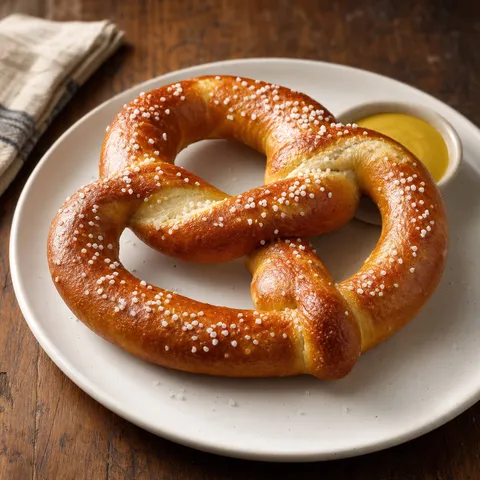 North American Lens Verified Images are for illustrative purposes only, may be inaccurate, and do not guarantee the presence or absence of specific ingredients.
 Soft Pretzels
Chewy golden mall-style pretzels with a salty crust, brushed in butter.
 North American Lens Verified Images are for illustrative purposes only, may be inaccurate, and do not guarantee the presence or absence of specific ingredients.
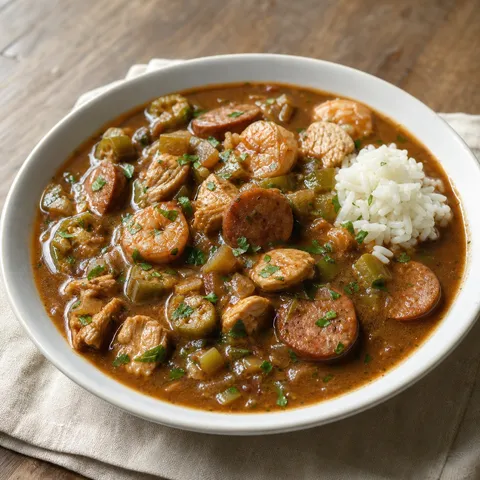
 Gumbo
A Louisiana-style gumbo of chicken thighs and Andouille sausage simmered with okra, the Cajun holy trinity, and a dark roux, served over rice.
 North American Lens Verified Images are for illustrative purposes only, may be inaccurate, and do not guarantee the presence or absence of specific ingredients.
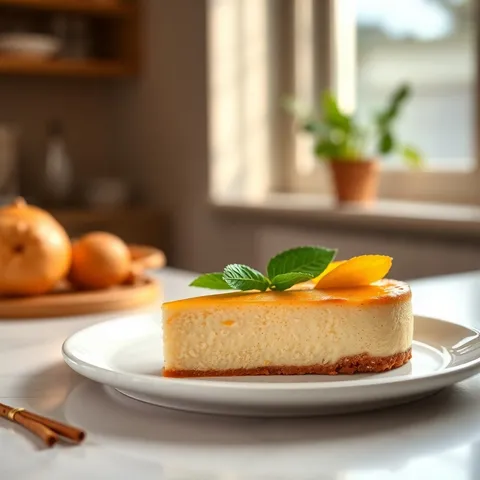
 New York Cheesecake
A dense, ultra-creamy baked cheesecake with a buttery graham cracker crust and a faintly tangy, melt-in-your-mouth filling.