 Sauces & Dressings Images are for illustrative purposes only, may be inaccurate, and do not guarantee the presence or absence of specific ingredients.
  Serving Images are for illustrative purposes only, may be inaccurate, and do not guarantee the presence or absence of specific ingredients.
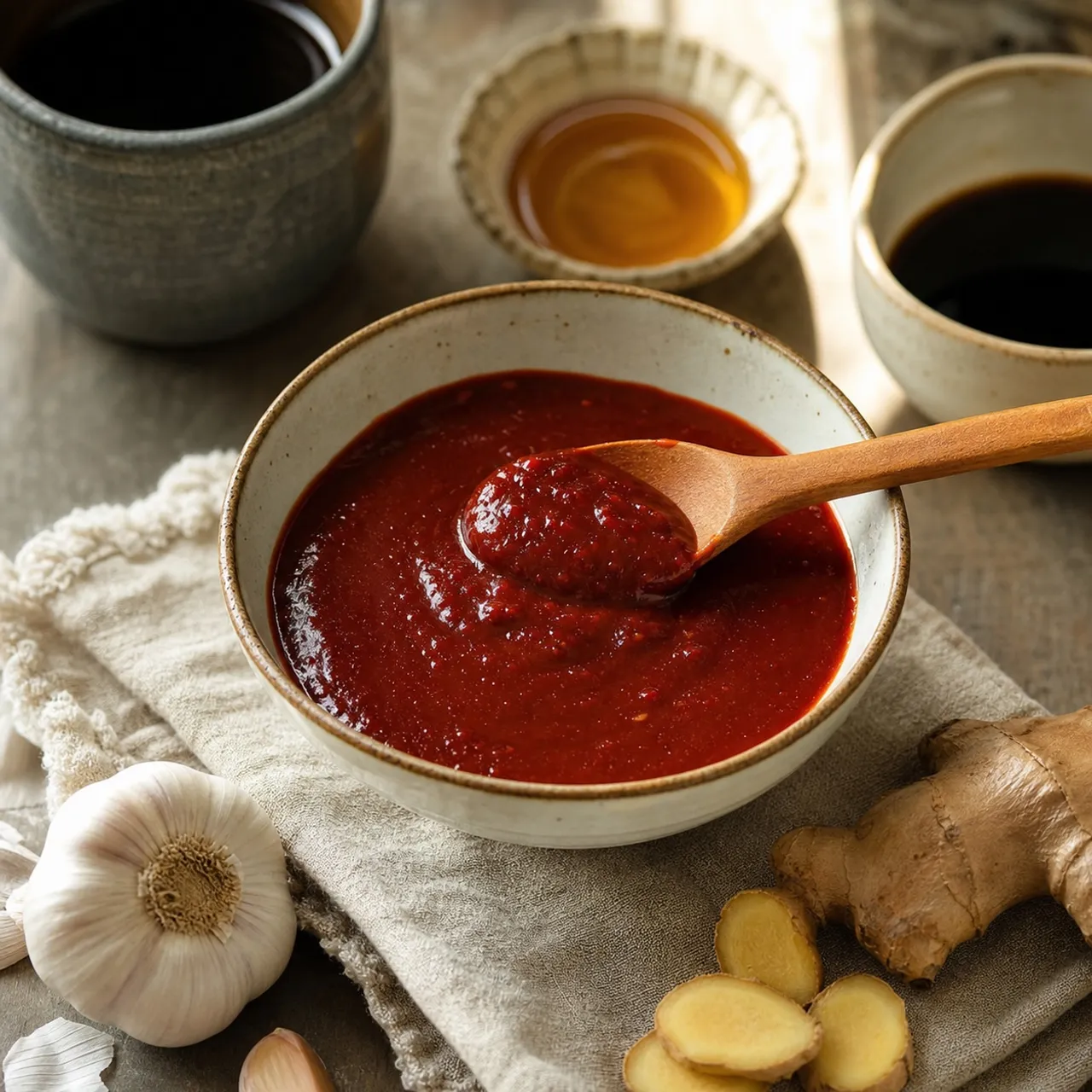
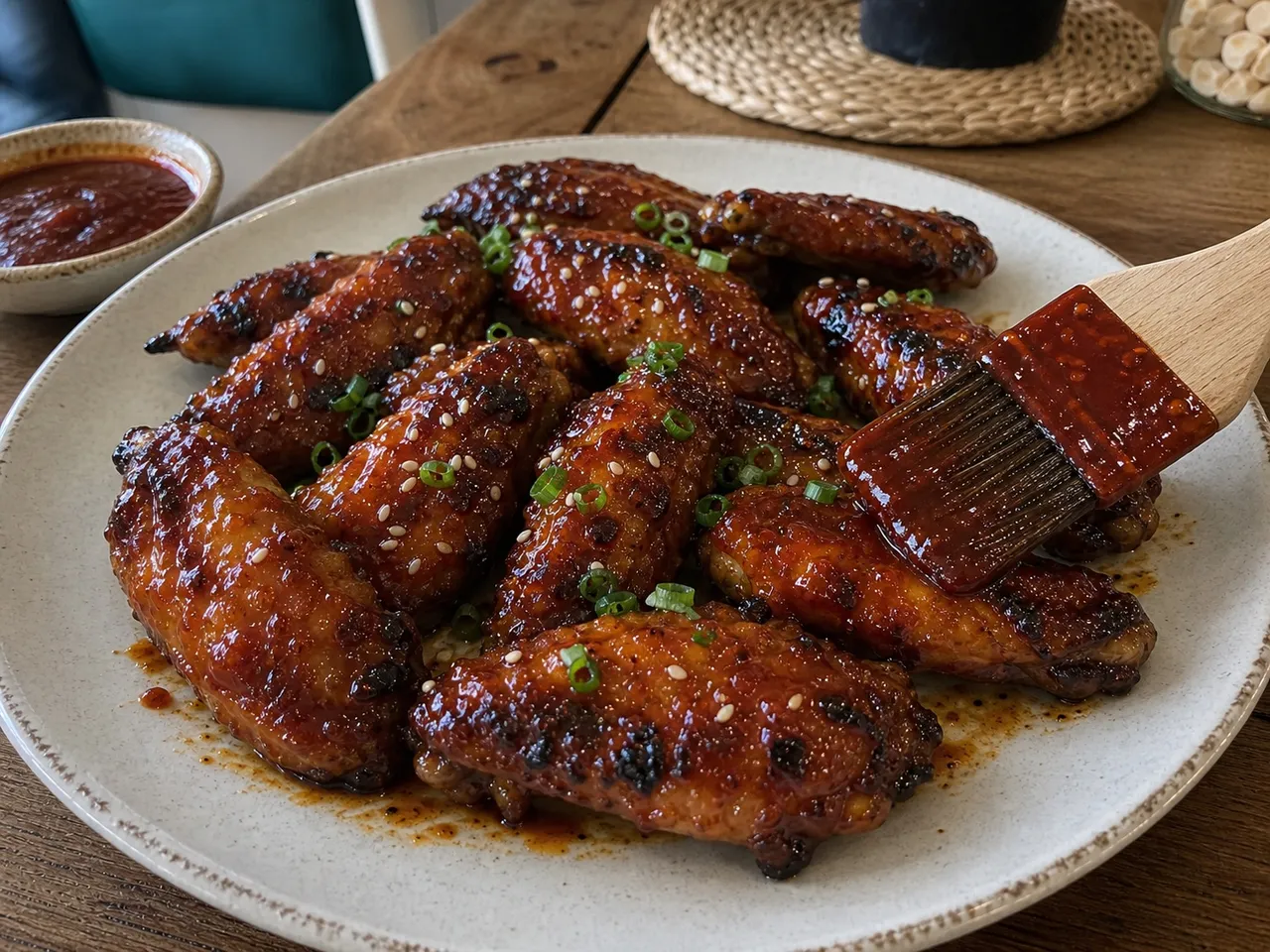
 Gochujang Glaze
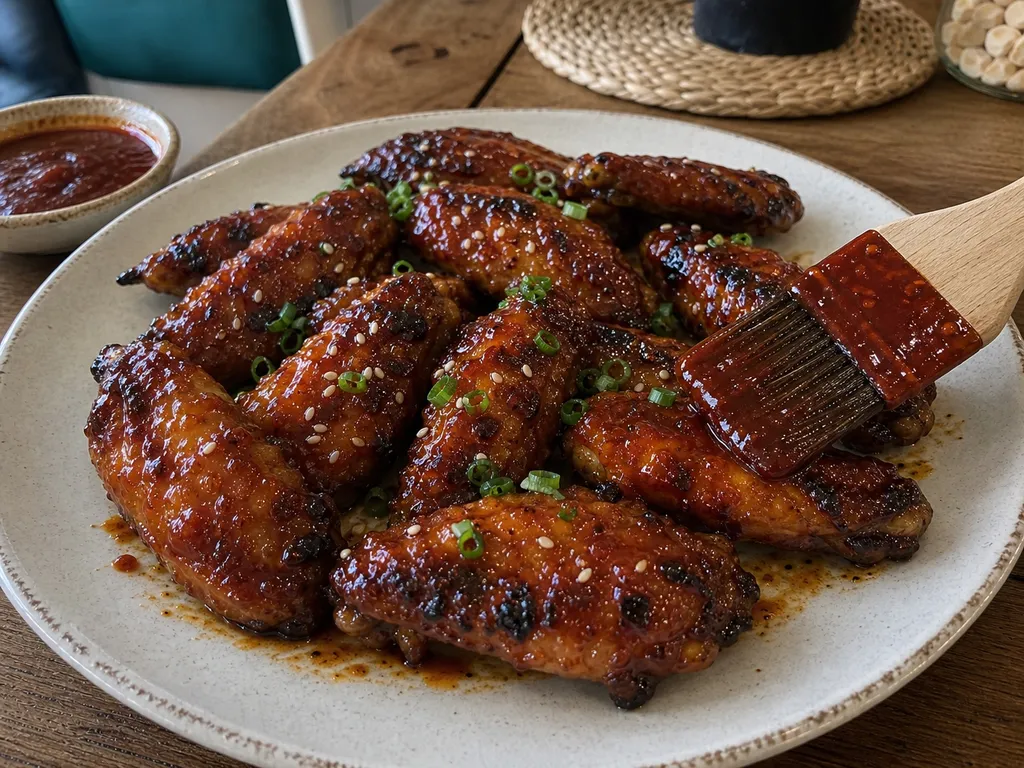
A sweet, spicy, and umami-rich Korean glaze of gochujang, soy, and honey for grilled chicken wings, pork, and roasted vegetables.
Contains common allergens
In the app, Listahan checks these against your household automatically.
Good to know
- One-pot
- Ready in under 30 minutes
Matched from this dish's own ingredients and timing. Browse more: one-pot dinners30-minute meals
Instructions
5 steps- 1
Whisk the gochujang, honey, soy sauce, and rice vinegar together in a small saucepan.
- 2
Add the sesame oil, garlic, and ginger, stirring to combine.
- 3
Warm over medium-low heat, stirring constantly, until the glaze loosens and turns glossy, about 4 minutes.
- 4
Simmer for 1 to 2 minutes more until slightly thickened, taking care not to scorch it.
- 5
Remove from the heat and brush over grilled or roasted foods while warm.
 Images are for illustrative purposes only, may be inaccurate, and do not guarantee the presence or absence of specific ingredients.
 Listahan Family Score™
66/100
Works for many families
Score reflects how well this recipe fits a typical busy household. In the app, your Family Score is personalized to your household's allergens, kids, and pantry.
Nutrition
per serving85
Calories
1 g
Protein
15 g
Carbs
3 g
Fat
Estimated per serving. Actual values depend on the brands and portions you use.
Listahan cooking guide
Chef notes & practical guide
Technique notes, ingredient swaps, serve-alongside ideas, storage guidance, and equipment for this recipe.
Cultural context
Gochujang is a fermented Korean chile paste made from red chile powder, glutinous rice, fermented soybeans, and salt, aged for months in earthenware crocks. It has been a cornerstone of Korean cooking for centuries, prized for a flavor that is at once spicy, sweet, and deeply savory from the fermentation. Turning it into a glaze, loosened with sweetness and acid, is a modern way to lacquer it onto grilled and roasted foods.
Listahan note
This version balances the funky heat of gochujang with honey and rice vinegar so it brushes on as a glossy, sticky glaze. It is built thick enough to cling to chicken wings or salmon without sliding off.
Technique cues
- Simmer the glaze briefly until it thickens and turns glossy, because reducing it concentrates the flavor and gives the lacquered shine that brushing on raw paste cannot.
- Apply the glaze in the last few minutes of cooking, since its sugars scorch quickly over direct high heat and can turn bitter if added too early.
- Balance the heat with both sweetness and acid by tasting as you go, as gochujang brands vary widely in spiciness and saltiness.
Kitchen flow
- Parallel prep
- Whisk the glaze together while your protein comes to room temperature so it is ready to brush on the moment you need it.
- Make-ahead
- Mix the glaze up to a week ahead and keep it in the fridge, since it only deepens in flavor as it sits.
- Leftover move
- Thin leftover glaze with a little water and toss it with roasted vegetables or use it as a dipping sauce for dumplings.
- Cleanup rhythm
- Soak the sticky brush and pan in hot soapy water right away before the sugars set hard.
Ingredient brief
Role, handling, and swap guidance for each key ingredient.
Gochujang
flavor base
Purpose: The fermented chile paste is the soul of the glaze, supplying its spicy, sweet, deeply savory character all at once.
Handling: Whisk it with the liquids to loosen the thick paste into a smooth glaze.
Adaptation: A mix of miso, sriracha, and a pinch of sugar approximates it, though it lacks the deep fermented note.
Honey
sweetness and gloss
Purpose: Honey balances the heat and gives the glaze its sticky, lacquered shine when it reduces.
Handling: Stir it in and let it dissolve fully as the glaze warms.
Adaptation: Maple syrup or brown sugar makes a vegan-friendly version with similar body.
Rice vinegar
acidity
Purpose: A splash of mild vinegar cuts the richness and keeps the sweet, spicy glaze from feeling cloying.
Handling: Add it to the simmer and taste for balance.
Adaptation: Apple cider vinegar works with a slightly fruitier edge.
Soy sauce
savory depth
Purpose: Soy sauce reinforces the salty umami backbone and rounds out the glaze.
Handling: Use a measured amount since gochujang is already salty.
Adaptation: Tamari makes it gluten-free, or coconut aminos lowers the sodium.
Toasted sesame oil
aromatic finish
Purpose: A few drops of sesame oil add a nutty aroma that ties the glaze to its Korean roots.
Handling: Stir it in off the heat so the aroma stays bright.
Adaptation: A sprinkle of toasted sesame seeds gives a similar nuttiness if you are out of the oil.
Technique notes
- Brush on a first coat, let it set, then add a second coat for a layered, lacquered finish with real depth of color.
- Add a little grated fresh ginger and garlic to the simmer for a brighter, more aromatic glaze.
- Finish glazed food under the broiler for a minute to caramelize the surface into a glossy, slightly charred crust.
Ingredient swaps
- Gluten-free direction
- Use a certified gluten-free gochujang and tamari, since standard gochujang and soy sauce both contain wheat.
- Vegan direction
- Swap the honey for maple syrup or brown sugar to keep the glaze plant-based.
- Milder direction
- Cut the gochujang with an extra spoonful of honey and a little ketchup to soften the heat for kids.
Serve alongside
- Steamed short-grain rice
- Quick cucumber kimchi
- Sesame spinach namul
- Grilled scallions
- Korean barley tea
- Crisp lager
- Yuzu soda
Serving suggestions only — check pairings for your household's allergens.
Storage & reheating
- Keep the glaze in a sealed jar in the fridge for up to two weeks, where its flavor continues to mature.
- Warm it gently to loosen before brushing, since it thickens when chilled.
- Freezing is unnecessary given its long fridge life, but it freezes fine for up to three months if needed.
Equipment
- Small saucepan
- Whisk
- Basting brush
- Glass storage jar
Make this household-aware
Listahan Pro checks this recipe against your household's allergens, finds pantry-aware swaps, builds the shopping list, and helps you plan the week around it.
Plan it in Listahan
Add Gochujang Glaze to your week, check it against your household's allergens, and build the shopping list automatically.
More Sauces & Dressings recipes
 Sauces & Dressings Lens Verified Images are for illustrative purposes only, may be inaccurate, and do not guarantee the presence or absence of specific ingredients.
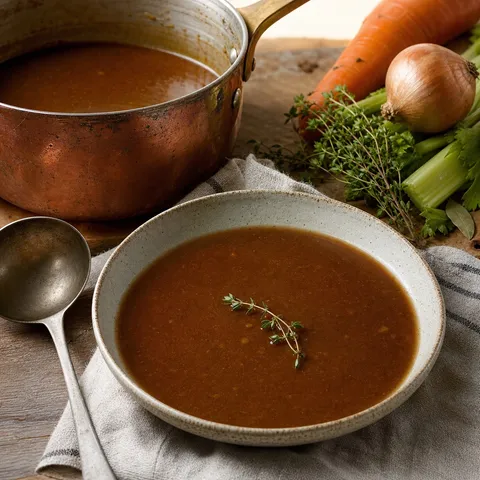
 Espagnole Sauce
A deep brown mother sauce of dark roux, mirepoix, and beef stock that forms the foundation for demi-glace and rich meat sauces.
 Sauces & Dressings Lens Verified Images are for illustrative purposes only, may be inaccurate, and do not guarantee the presence or absence of specific ingredients.
 Hollandaise Sauce
A silky, buttery emulsion brightened with lemon that crowns eggs Benedict, asparagus, and poached fish in golden luxury.
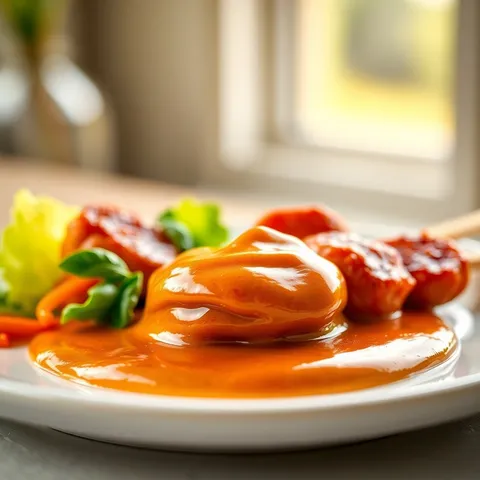 Sauces & Dressings Lens Verified Images are for illustrative purposes only, may be inaccurate, and do not guarantee the presence or absence of specific ingredients.
 Peanut Satay Sauce
A rich, creamy Southeast Asian dipping sauce of peanut butter, coconut milk, and soy with a sweet-spicy lime finish for grilled skewers.