 Soups & Stews Images are for illustrative purposes only, may be inaccurate, and do not guarantee the presence or absence of specific ingredients.
  Serving Images are for illustrative purposes only, may be inaccurate, and do not guarantee the presence or absence of specific ingredients.
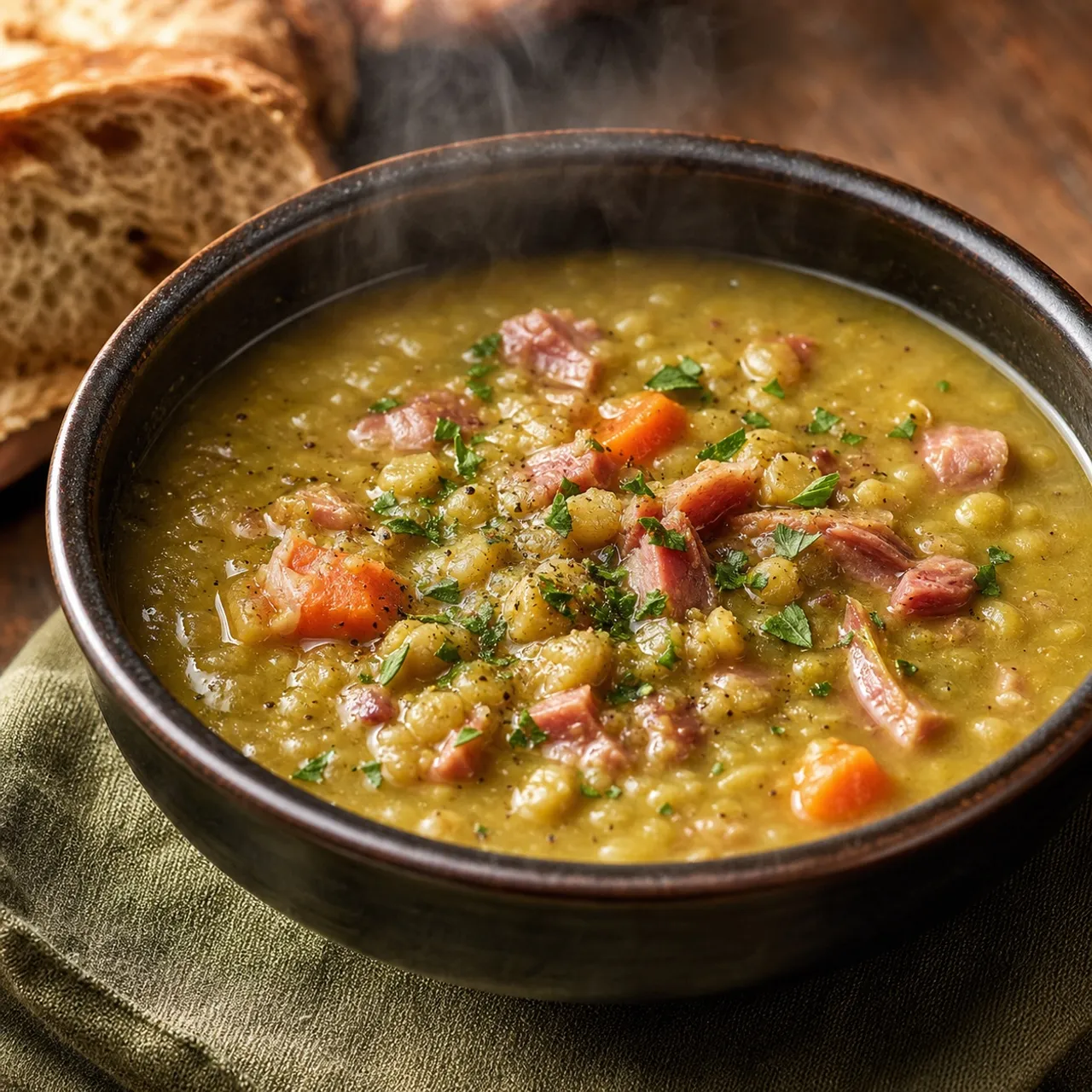
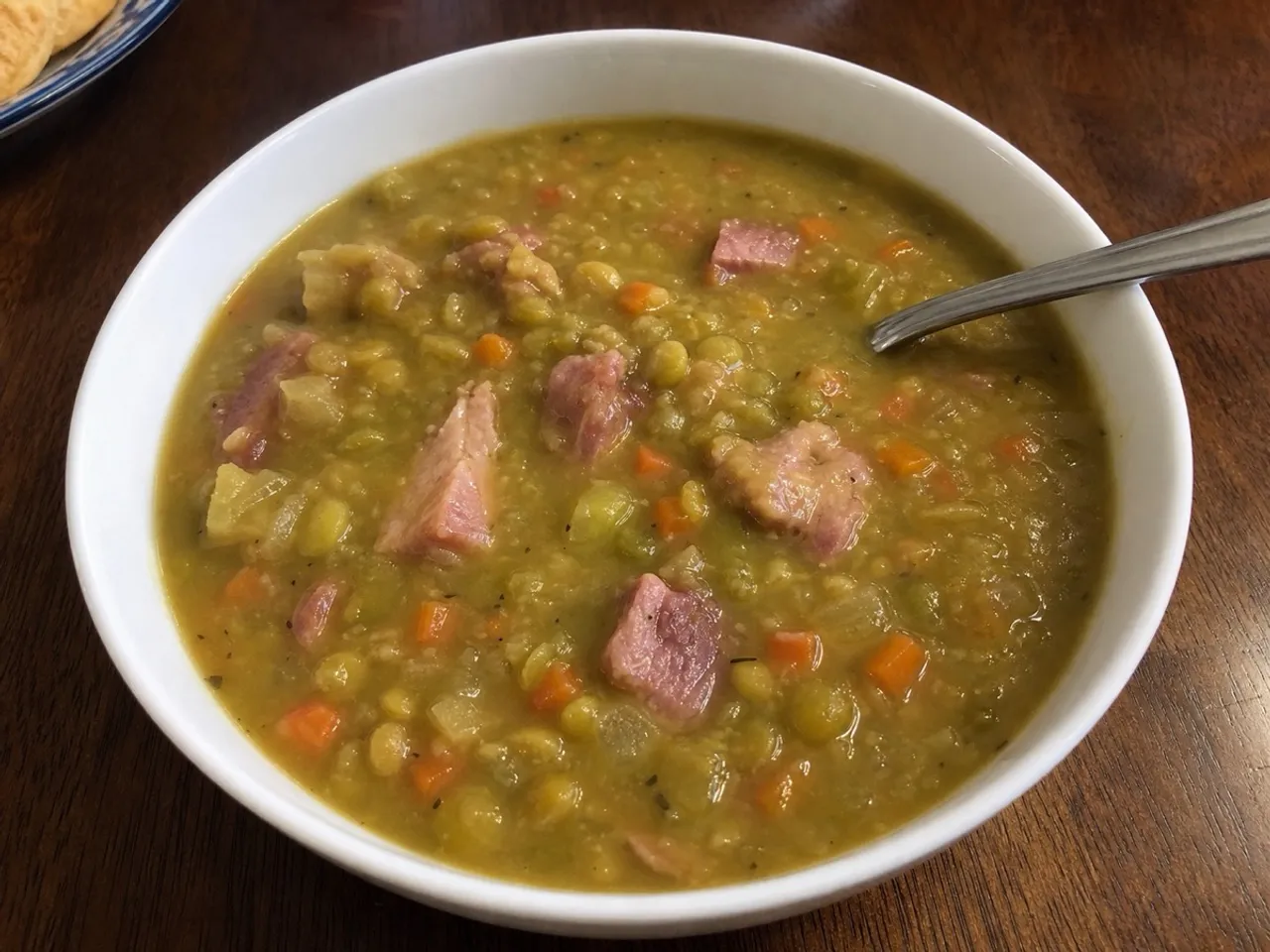
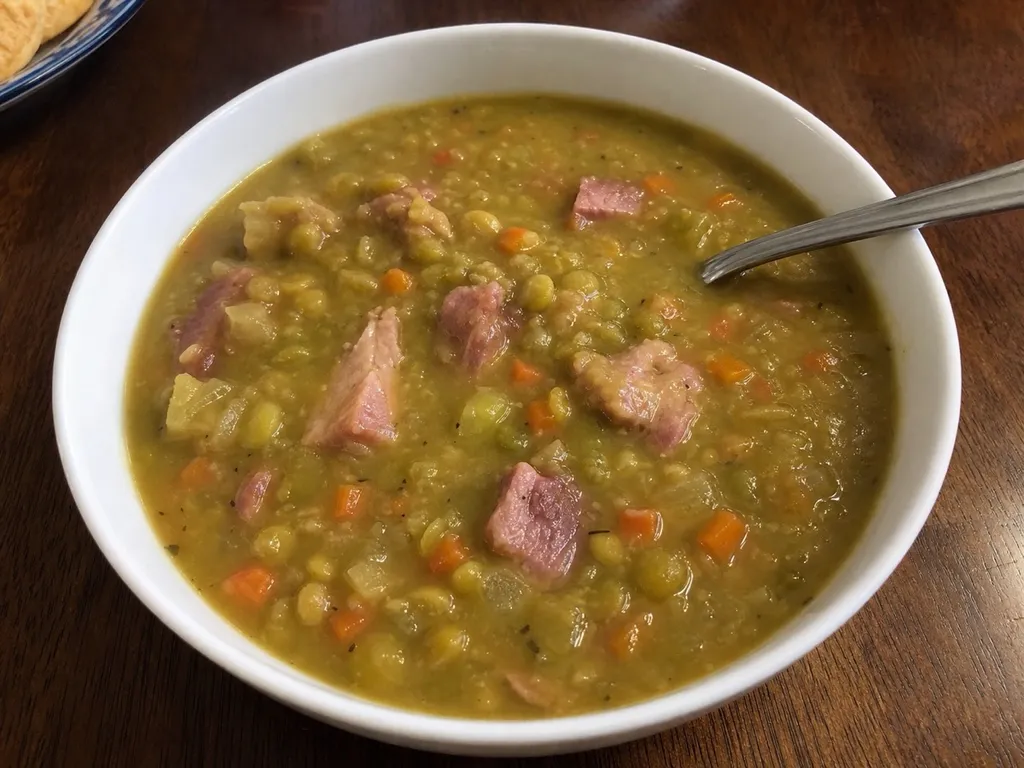
 Split Pea Soup with Ham
A thick, savory soup of dried split peas simmered with a ham bone and vegetables.
Contains common allergens
In the app, Listahan checks these against your household automatically.
Good to know
- One-pot
Matched from this dish's own ingredients and timing. Browse more: one-pot dinners
Instructions
6 steps- 1
Heat olive oil in a large pot and sauté onion, carrots, and celery until softened, about 6 minutes.
- 2
Add garlic and cook 1 minute.
- 3
Stir in split peas, chicken broth, ham bone, bay leaves, and thyme; bring to a boil.
- 4
Reduce heat and simmer, partially covered, 1 hour, stirring occasionally, until peas break down and soup thickens.
- 5
Remove ham bone, shred any meat, and return meat to the pot (or stir in diced ham).
- 6
Remove bay leaves, season with salt and pepper, and serve hot.
 Images are for illustrative purposes only, may be inaccurate, and do not guarantee the presence or absence of specific ingredients.
 Listahan Family Score™
70/100
Good fit for most families
Score reflects how well this recipe fits a typical busy household. In the app, your Family Score is personalized to your household's allergens, kids, and pantry.
Nutrition
per serving165
Calories
12 g
Protein
23 g
Carbs
4 g
Fat
Estimated per serving. Actual values depend on the brands and portions you use.
Listahan cooking guide
Chef notes & practical guide
Technique notes, ingredient swaps, serve-alongside ideas, storage guidance, and equipment for this recipe.
Cultural context
Split pea soup sits in a long line of cold-weather, dried-legume cooking across Europe and North America, where peas could be stored through winter and simmered into a filling meal. The ham bone version reflects a practical kitchen habit: using the smoky, salty meat left on the bone to season the whole pot instead of treating it as waste.
Listahan note
This version keeps the soup sturdy and straightforward: a classic onion-carrot-celery base, enough broth for the peas to fully soften, and a ham bone for depth. The goal is a thick spoon-coating soup, not a thin broth with peas floating in it.
Technique cues
- Rinse the split peas well before they go into the pot; it clears away dusty starch and makes it easier to spot any stray bits from the bag.
- Stir more often as the soup thickens near the end. Split peas can settle on the bottom once they start breaking down.
- Season carefully after the ham has simmered. The broth and ham may already bring plenty of salt, so the final adjustment matters more than early salting.
Kitchen flow
- Parallel prep
- While the onion, carrots, and celery soften, rinse the split peas and measure the broth, bay leaves, and thyme so the pot can be built without pausing.
- Make-ahead
- Cook the soup fully, chill it, and loosen it with a splash of broth or water when reheating because split peas thicken as they rest.
- Leftover move
- Spoon thick leftovers over toasted rye or a baked potato, then add black pepper and a little chopped parsley if you have it.
- Cleanup rhythm
- Rinse the pot as soon as the soup is portioned; dried split pea starch clings tightly once it cools on the sides.
Ingredient brief
Role, handling, and swap guidance for each key ingredient.
Dried split peas
Body and main starch
Purpose: They collapse as they cook, turning the broth into a naturally thick soup without cream or flour.
Handling: Rinse until the water runs mostly clear and discard any damaged peas or small debris.
Adaptation: Yellow split peas work with the same method and give a milder, slightly earthier bowl.
Ham bone or diced cooked ham
Smoky savory base
Purpose: A ham bone seasons the broth slowly and leaves tender bits of meat to stir back in.
Handling: Nestle the bone into the liquid so it is mostly submerged, then shred any attached meat after simmering.
Adaptation: Diced cooked ham is faster and cleaner to handle, though the soup will have a little less body than a bone-simmered pot.
Yellow onion, carrots, and celery
Vegetable foundation
Purpose: This trio gives the soup sweetness, aroma, and enough texture to keep it from tasting flat.
Handling: Dice them evenly so they soften at the same pace before the peas and broth are added.
Adaptation: Leek can replace part of the onion for a softer flavor, while extra carrot makes the soup slightly sweeter.
Chicken broth
Cooking liquid
Purpose: It gives the peas a savory base while the ham contributes smoke and salt during the simmer.
Handling: Bring it to a full boil before lowering the heat so the peas start cooking evenly.
Adaptation: A lighter broth gives a cleaner pea flavor; a richer broth makes the finished soup taste more stew-like.
Garlic
Aromatic lift
Purpose: Garlic fills in the gap between the sweet vegetables and the smoky ham.
Handling: Cook it for only about a minute after the vegetables soften so it perfumes the oil without browning hard.
Adaptation: A small pinch of garlic powder can stand in, but add it with the thyme so it hydrates in the broth.
Bay leaves and dried thyme
Herbal background
Purpose: They add a quiet savory note that keeps the soup from tasting only of peas and ham.
Handling: Remove the bay leaves before serving, and crush the dried thyme lightly between your fingers as it goes in.
Adaptation: A little dried marjoram can replace thyme if you want a rounder, less woodsy flavor.
Technique notes
- Drop to a lazy, barely-bubbling simmer once the peas go in. A hard boil scorches the bottom of the pot before the peas fully break down.
- Partially cover the pot so steam can escape while still keeping enough liquid for the peas to soften.
- If the soup gets thicker than you like, loosen it gradually with hot broth or water; adding too much at once can flatten the seasoning.
Ingredient swaps
- No ham bone path
- Use diced cooked ham and add it near the end so it stays tender instead of drying out during the full simmer.
- Lighter salt direction
- Use a less salty broth and wait until the end to add salt, since the ham will season the pot as it cooks.
- Smoother texture
- Blend a few cups of the finished soup and stir it back in for a creamier bowl while keeping some diced vegetables and ham pieces.
- Thicker stew style
- Simmer uncovered for the last 10 to 15 minutes, stirring often, until the peas tighten into a hearty scoopable texture.
Serve alongside
- Buttered rye toast
- Cheddar scallion biscuits
- Apple-cabbage slaw
- Roasted Brussels sprouts
- Dry hard cider
- Black tea with lemon
- Amber lager
Serving suggestions only — check pairings for your household's allergens.
Storage & reheating
- Refrigerate in a shallow sealed container so the thick soup cools evenly and portions cleanly.
- Reheat gently on the stovetop or in the microwave with a splash of broth or water, stirring until the texture loosens.
- Freeze in flat containers, thaw overnight, and whisk or stir firmly as it reheats to bring the peas back together.
Equipment
- Large heavy-bottomed pot or Dutch oven
- Wooden spoon or heatproof spatula
- Colander for rinsing split peas
- Tongs for lifting the ham bone
Make this household-aware
Listahan Pro checks this recipe against your household's allergens, finds pantry-aware swaps, builds the shopping list, and helps you plan the week around it.
Plan it in Listahan
Add Split Pea Soup with Ham to your week, check it against your household's allergens, and build the shopping list automatically.
More Soups & Stews recipes
 Soups & Stews Lens Verified Images are for illustrative purposes only, may be inaccurate, and do not guarantee the presence or absence of specific ingredients.
 Broccoli Cheddar Soup
A creamy, cheesy soup packed with tender broccoli florets and shredded carrot in a smooth cheddar base.
 Soups & Stews Lens Verified Images are for illustrative purposes only, may be inaccurate, and do not guarantee the presence or absence of specific ingredients.
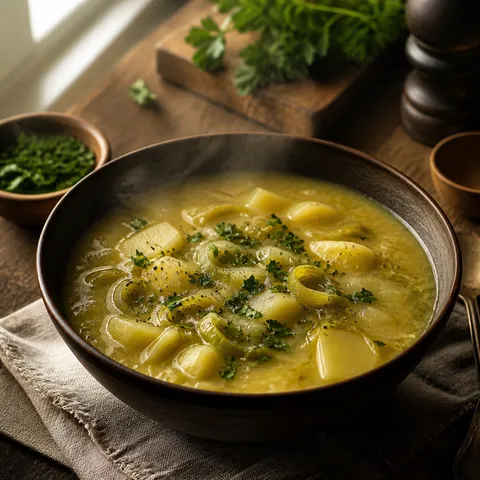
 Potato Leek Soup
A silky, buttery blended soup of leeks and potatoes finished with cream.
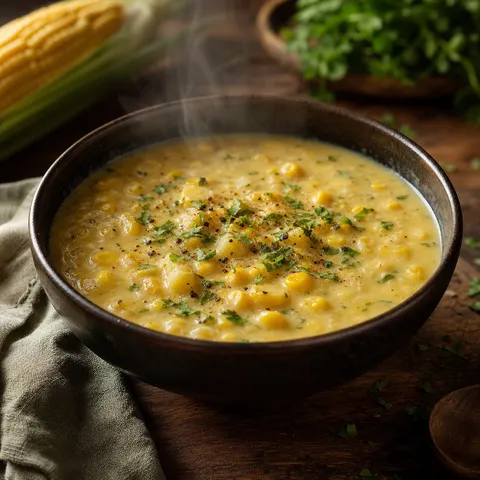 Soups & Stews Lens Verified Images are for illustrative purposes only, may be inaccurate, and do not guarantee the presence or absence of specific ingredients.
 Corn Chowder
A creamy, comforting chowder bursting with sweet corn, potatoes, and smoky paprika.