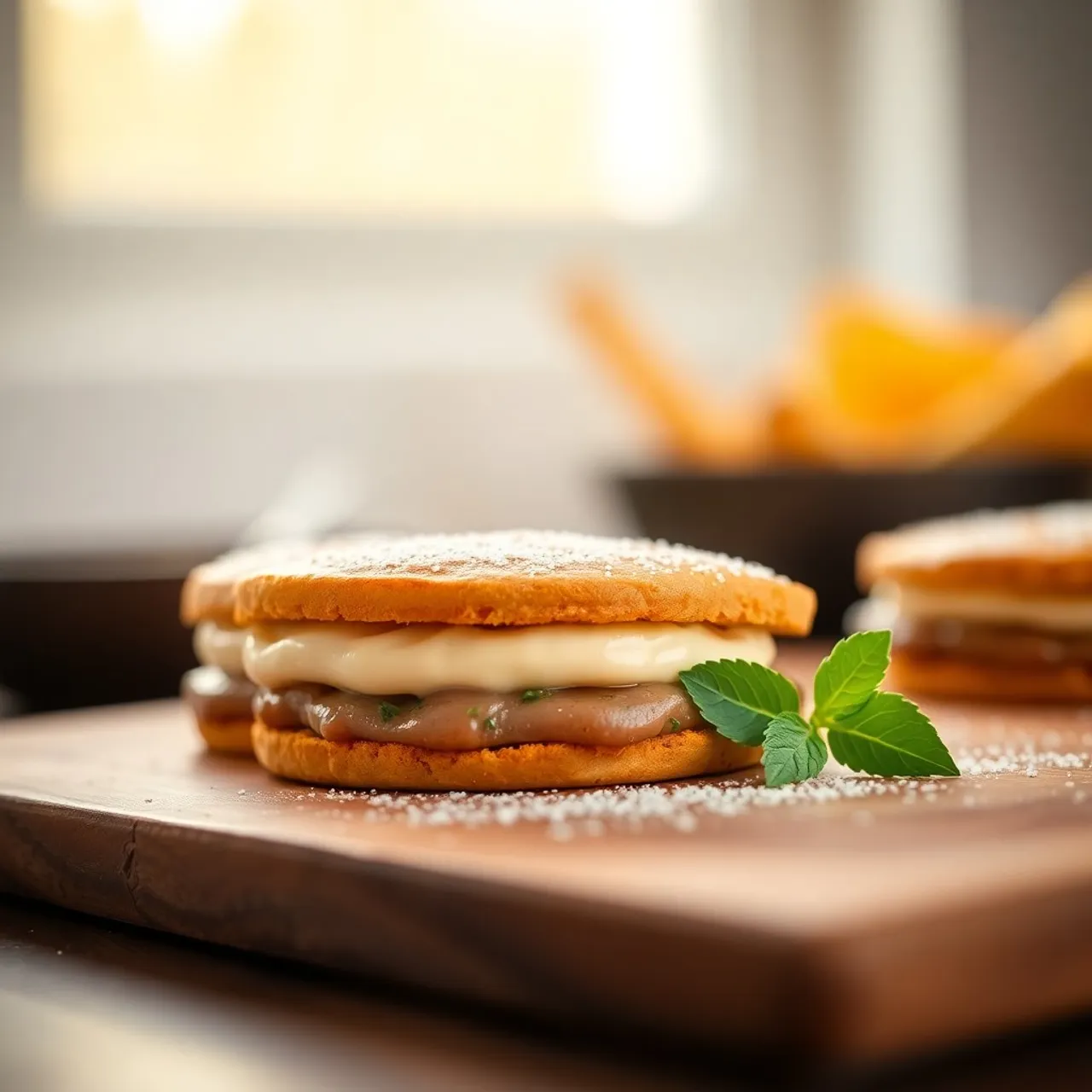
 South American Images are for illustrative purposes only, may be inaccurate, and do not guarantee the presence or absence of specific ingredients.
 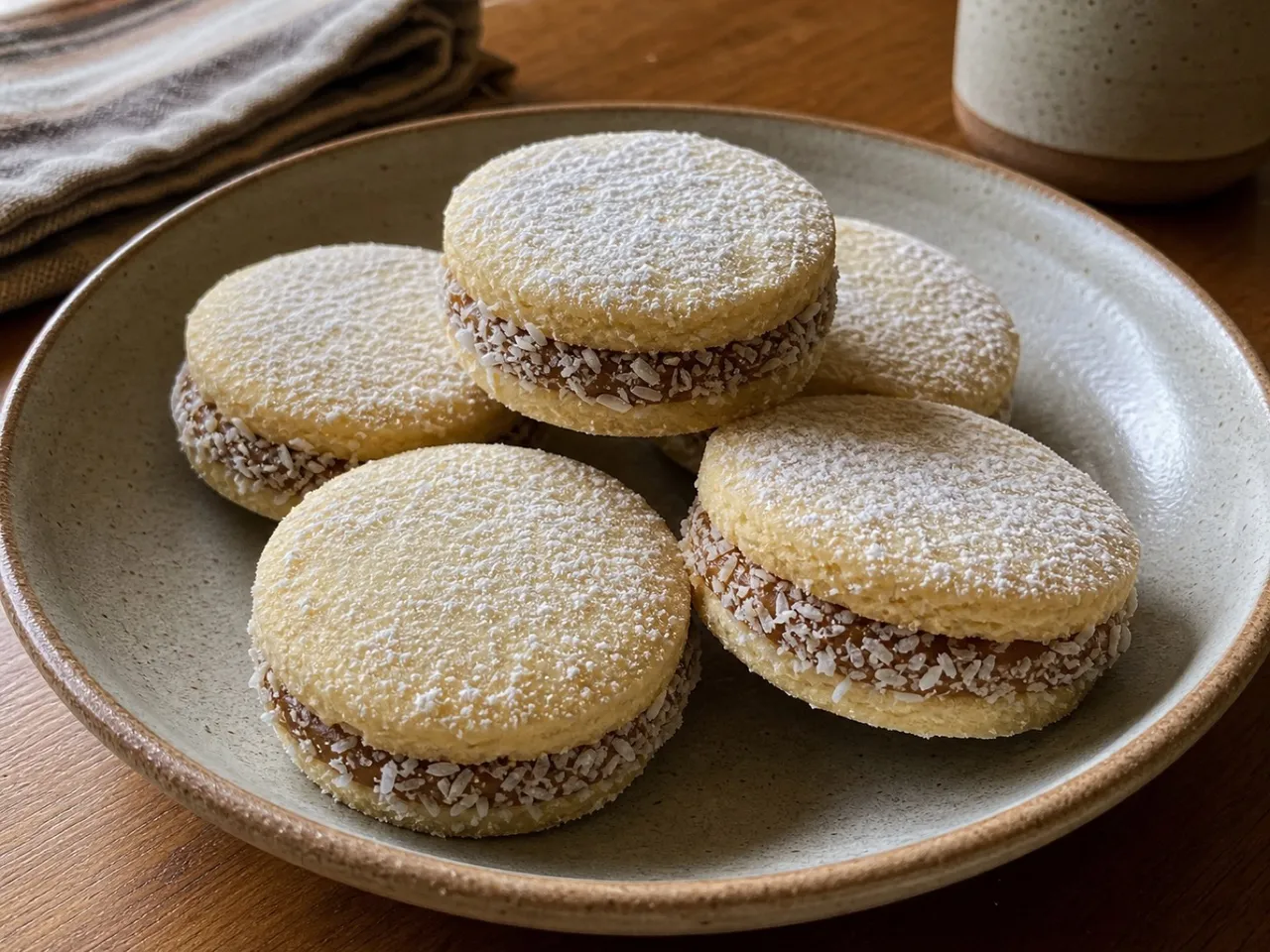 Serving Images are for illustrative purposes only, may be inaccurate, and do not guarantee the presence or absence of specific ingredients.
 Alfajores
South America's most beloved sandwich cookie — two melt-in-your-mouth shortbread rounds hugging a thick layer of dulce de leche, dusted in powdered sugar.
Contains common allergens
In the app, Listahan checks these against your household automatically.
Instructions
6 steps- 1
Cream the butter: In a large bowl, beat the softened butter and sugar until light, fluffy, and pale in color.
- 2
Add wet ingredients: Beat in the egg yolks one at a time, followed by the vanilla extract.
- 3
Make the dough: Sift together the cornstarch, flour, and a pinch of salt. Gently fold this into the butter mixture until a soft dough forms. Do not overmix. Wrap and chill for 30 minutes.
- 4
Roll and cut: Roll the dough out to 1/4-inch thickness on a surface lightly dusted with cornstarch. Cut into 2-inch circles.
- 5
Bake: Place on a parchment-lined baking sheet and bake at 350°F (175°C) for 10-12 minutes. The cookies should remain pale and not brown. Let cool completely.
- 6
Assemble: Spread a generous tablespoon of thick dulce de leche onto the flat side of one cookie. Top with another cookie to make a sandwich. Roll the sticky edges in shredded coconut.
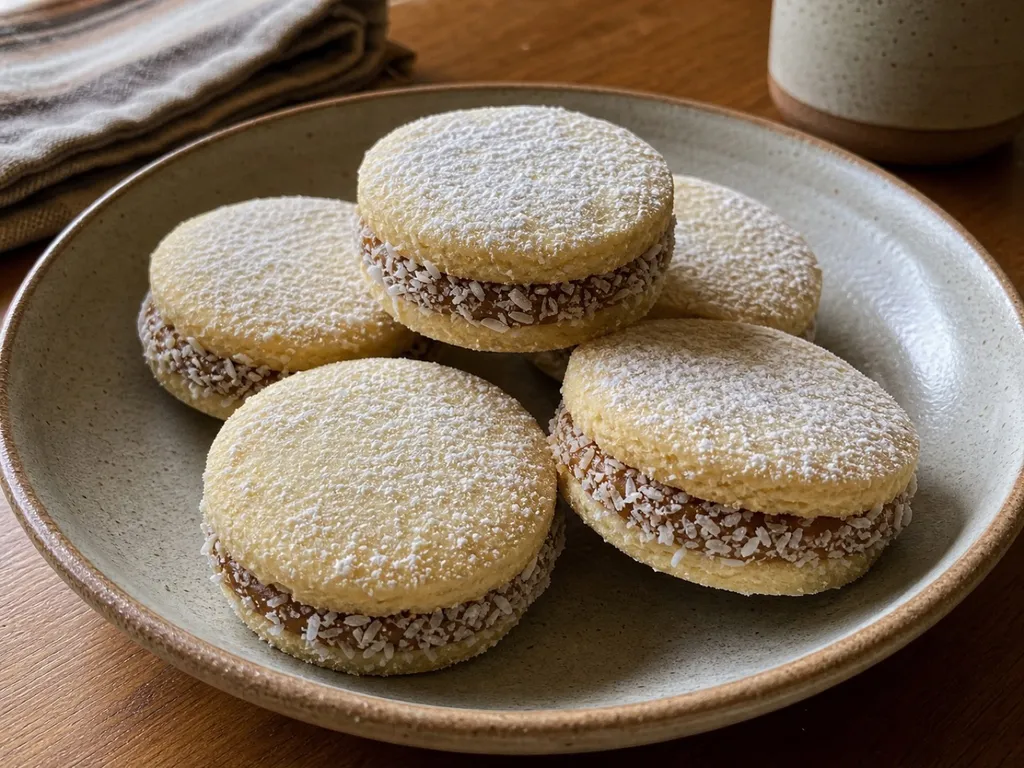 Images are for illustrative purposes only, may be inaccurate, and do not guarantee the presence or absence of specific ingredients.
 Listahan Family Score™
74/100
Good fit for most families
Score reflects how well this recipe fits a typical busy household. In the app, your Family Score is personalized to your household's allergens, kids, and pantry.
Nutrition
per serving320
Calories
3 g
Protein
47 g
Carbs
13 g
Fat
Estimated per serving. Actual values depend on the brands and portions you use.
Listahan cooking guide
Chef notes & practical guide
Technique notes, ingredient swaps, serve-alongside ideas, storage guidance, and equipment for this recipe.
Cultural context
Alfajores are a sandwich cookie found across several South American countries, most closely associated with Argentina, built on a crumbly cornstarch-heavy shortbread that owes its delicate, almost powdery texture to using cornstarch rather than flour as the primary dry ingredient.
Listahan note
This version keeps the cookies pale rather than browned in the oven, since alfajores are meant to stay a light, uncolored crumb rather than developing the golden edges typical of most butter cookies.
Technique cues
- Cornstarch outweighs flour in the dry ingredients, which gives the baked cookie its especially delicate, almost melt-in-the-mouth crumb rather than a standard shortbread's firmer bite.
- Using only egg yolks, not whole eggs, adds richness and helps bind the dough without introducing the extra moisture that egg whites would add.
- The cookies are baked specifically to stay pale, not browned, since color here signals overbaking rather than doneness, unlike most cookies where golden edges are the target.
- Letting the baked cookies cool completely before filling matters, since a warm cookie melts the dulce de leche filling and loses the tidy separation between cookie and filling layers.
Kitchen flow
- Parallel prep
- While Alfajores is in the oven, measure out any garnish or topping — like the dulce de leche — so it's ready the moment the bake finishes cooling.
- Make-ahead
- Alfajores's dough or batter (built around dulce de leche) can usually be made a day ahead and refrigerated, then baked fresh — many doughs actually improve with an overnight rest.
- Leftover move
- Leftover Alfajores freezes well — wrap individual portions tightly and thaw at room temperature, or crumble it over ice cream for a quick second life. This one leans on the dulce de leche. Plan around the bake; that's the slow part.
- Cleanup rhythm
- Soak the mixing bowl and beaters for Alfajores right away — sugar and butter residue hardens fast once it cools. This one leans on the dulce de leche. The bake step is what sets the pace here.
Ingredient brief
Role, handling, and swap guidance for each key ingredient.
1.5 cups cornstarch
Flavor support
Purpose: cups cornstarch supports the balance of Alfajores and should taste integrated.
Handling: Prep before heat is high so the cooking step can move without rushing.
Adaptation: Use the closest fresh equivalent and expect a modest shift in flavor or texture.
1 cup all-purpose flour
Structural base
Purpose: cup all-purpose flour defines the shape and texture of the dish.
Handling: Measure before heating and break up clumps so the mix distributes evenly.
Adaptation: Use a certified gluten-free alternative when needed and expect a small texture change.
1/2 cup unsalted butter at room temp
Richness and texture
Purpose: cup unsalted butter at room temp rounds the texture and helps the dish feel complete.
Handling: Prep before heat is high so the cooking step can move without rushing.
Adaptation: Use unsweetened dairy-free alternatives only where they still provide enough fat and body.
1/2 cup granulated sugar
Sweetness and aroma
Purpose: cup granulated sugar adds aroma, sweetness, or warmth without needing extra garnish.
Handling: Measure before heating and break up clumps so the mix distributes evenly.
Adaptation: Use the closest fresh equivalent and expect a modest shift in flavor or texture.
3 egg yolks
Main protein or body
Purpose: egg yolks gives Alfajores its main substance and carries the seasoning.
Handling: Prep before heat is high so the cooking step can move without rushing.
Adaptation: Use an egg-free substitute only when binding or glazing is not the main structure.
Technique notes
- A generous, thick layer of dulce de leche between two cookies is standard rather than a thin spread, since the filling is as central to the dish as the cookie itself.
- Rolling the sticky, exposed edge of the filling in shredded coconut after sandwiching is a traditional finishing touch that also gives the cookie's side some texture.
- Alfajores soften slightly in texture after a day, which many consider an improvement rather than a loss of freshness, since the layers meld together.
Ingredient swaps
- Gluten-free direction
- Replace the all-purpose flour with a certified gluten-free 1:1 flour blend or gluten-free noodles/breadcrumbs — check that any other packaged ingredients here are labeled gluten-free too. This one leans on the dulce de leche.
- Dairy-free direction
- Swap the unsalted butter at room temp for a neutral dairy-free butter and a full-fat plant milk (oat or coconut give the closest richness) — the texture shifts slightly but the dish holds together. This one leans on the dulce de leche.
- Egg-aware direction
- Replace the egg yolks with a flax or chia egg (1 tbsp ground seed + 3 tbsp water, rested 5 minutes) for binding, best when eggs are there for binding rather than structure or rise. This one leans on the dulce de leche.
- Nut-aware direction
- Skip the nut garnish or use toasted seeds (sunflower or pumpkin) instead. This one leans on the dulce de leche.
Serve alongside
- Fresh berries
- Citrus fruit salad
- Mint leaves
- Black coffee
- Hot tea
- Sparkling water with lemon
Serving suggestions only — check pairings for your household's allergens.
Storage & reheating
- Store covered for 3 to 4 days, refrigerated when dairy, eggs, custard, or fresh fruit are involved.
- Reheat gently only when warmth improves the texture.
- Freeze sturdy baked portions up to 2 months; avoid freezing delicate fresh toppings.
Equipment
- Mixing bowls
- Baking dish or pan
- Cooling rack
Make this household-aware
Listahan Pro checks this recipe against your household's allergens, finds pantry-aware swaps, builds the shopping list, and helps you plan the week around it.
Plan it in Listahan
Add Alfajores to your week, check it against your household's allergens, and build the shopping list automatically.
More South American recipes
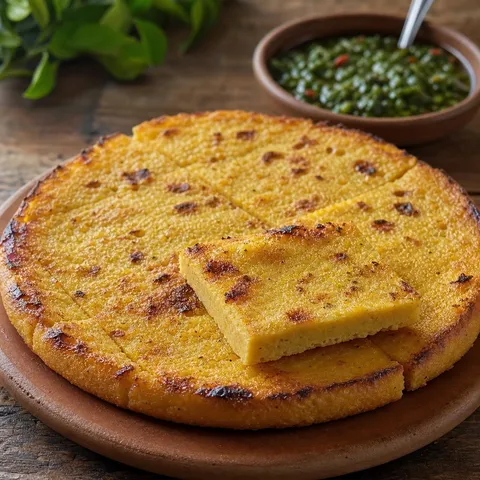 South American Lens Verified Images are for illustrative purposes only, may be inaccurate, and do not guarantee the presence or absence of specific ingredients.
 Fainá
Buenos Aires's thin chickpea flatbread, baked until golden and fragrant — simple, crispy-edged, and traditionally eaten layered right on top of a pizza slice.
 South American Lens Verified Images are for illustrative purposes only, may be inaccurate, and do not guarantee the presence or absence of specific ingredients.
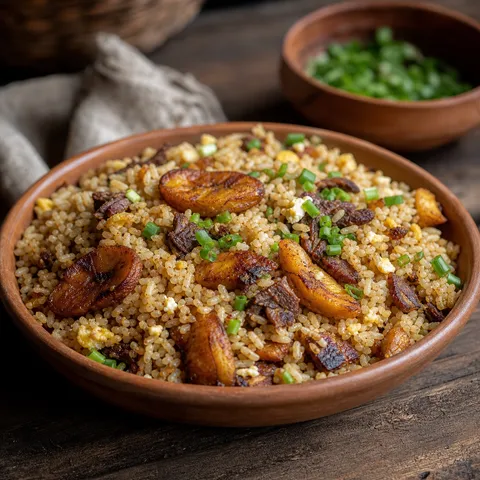
 Majadito
Bolivia's rustic one-pot comfort — dried charque beef simmered down with rice, tomato, and spices into a savory, fragrant dish topped with a fried egg.
 South American Lens Verified Images are for illustrative purposes only, may be inaccurate, and do not guarantee the presence or absence of specific ingredients.
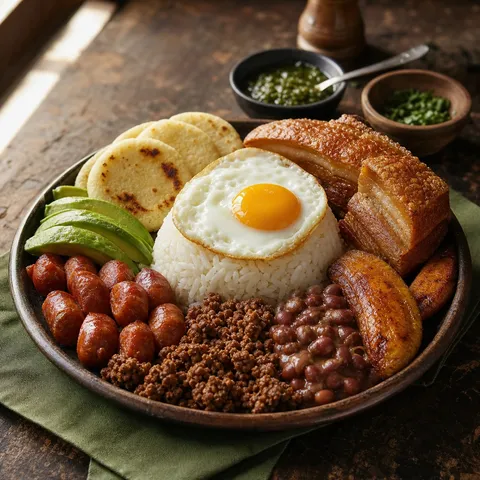
 Bandeja Paisa
Colombia's legendary tray of abundance — red beans, white rice, chicharrón, chorizo, fried egg, plantains, and avocado all piled high for a satisfying feast.