 Spanish Images are for illustrative purposes only, may be inaccurate, and do not guarantee the presence or absence of specific ingredients.
  Serving Images are for illustrative purposes only, may be inaccurate, and do not guarantee the presence or absence of specific ingredients.
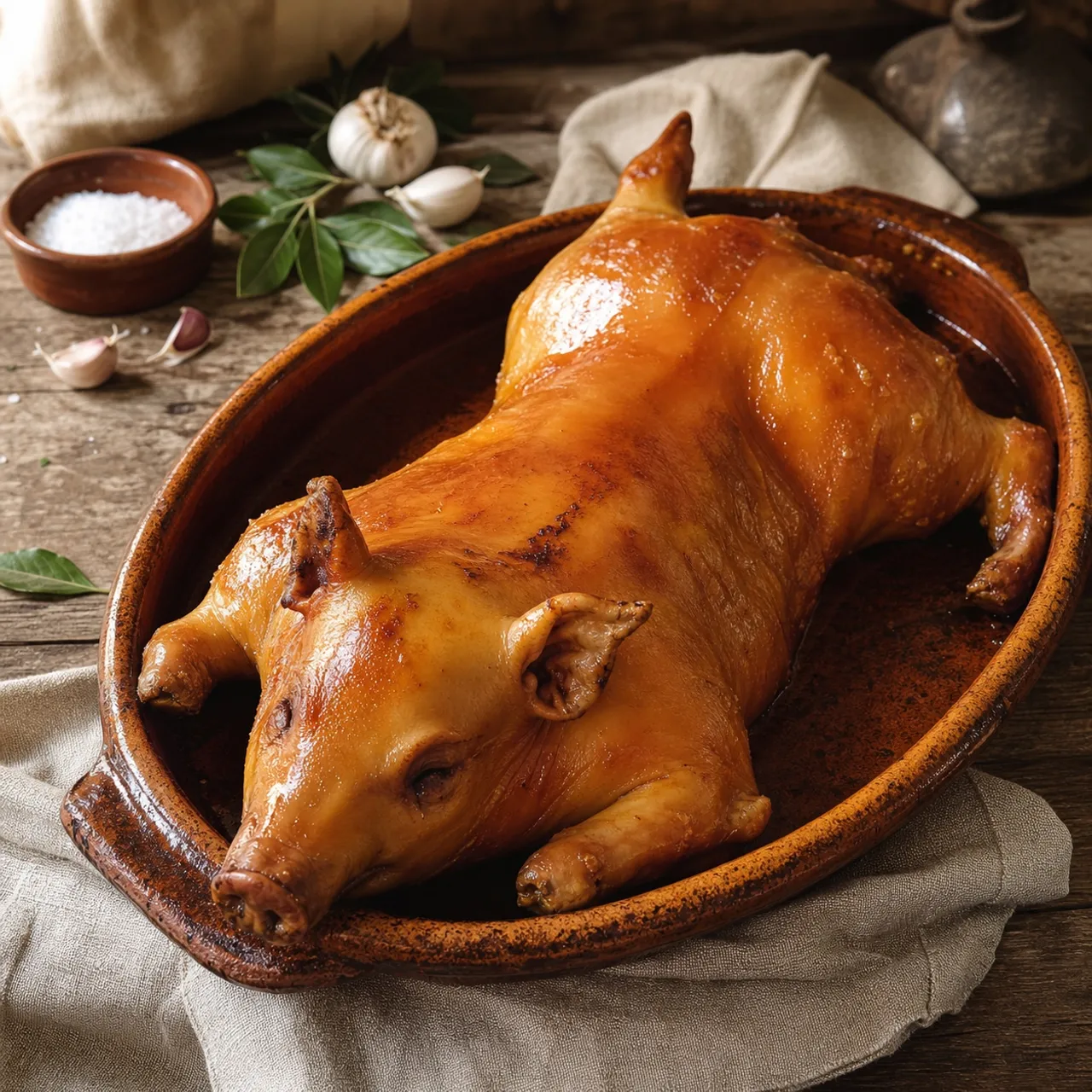
 Cochinillo Asado
Castile's celebrated whole roast suckling pig — skin crackles like glass, meat beneath impossibly tender, slow-roasted in a wood-fired oven for hours.
No common allergens detected
Based on this recipe's ingredient list. Always verify with your own brands and labels.
Good to know
- Crispy
Matched from this dish's own ingredients and timing. Browse more: crispy recipes
Instructions
6 steps- 1
Prepare the Pig: Split the suckling pig along the spine and lay it flat, skin-side down, in a large clay roasting dish. Rub the flesh side all over with crushed garlic and a little of the salt; tuck the bay leaves underneath.
- 2
Add Water: Pour the water into the base of the dish (not over the skin) to keep the meat moist and gently steam it from below. Place skin-side up.
- 3
First Roast (Tender Meat): Roast at 160°C (320°F) for about 90 minutes, basting the meat occasionally with the pan juices. The skin should stay pale at this stage.
- 4
Prick and Grease: Remove from the oven. Prick the skin all over with a fork to release fat, then rub the softened lard evenly over the entire skin and sprinkle with the remaining sea salt.
- 5
Crackle the Skin: Raise the oven to 200°C (400°F) and roast for a further 40-50 minutes until the skin turns deep golden and crackles like glass. Brush with the vinegar in the last 10 minutes for extra crisp blistering.
- 6
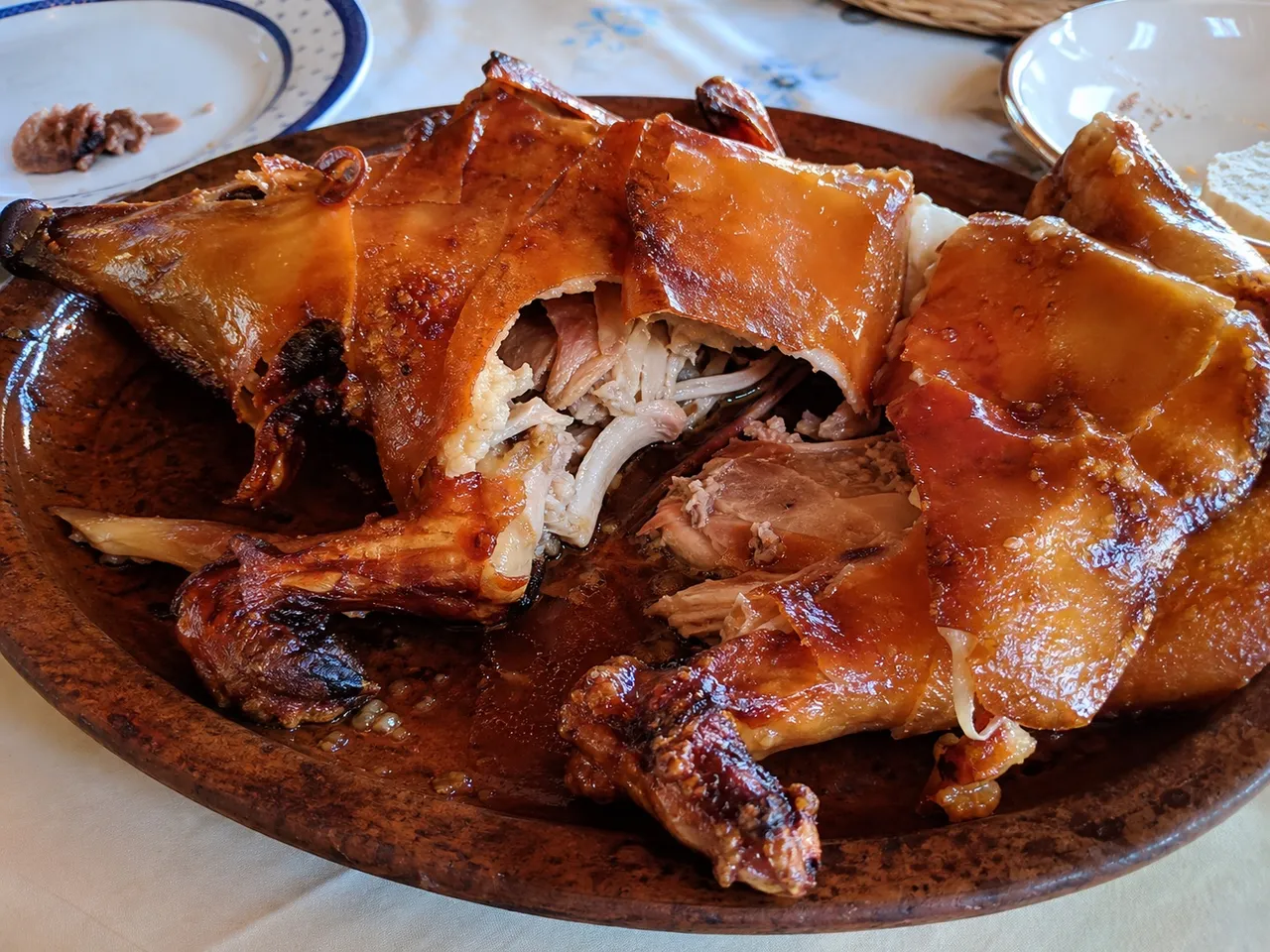
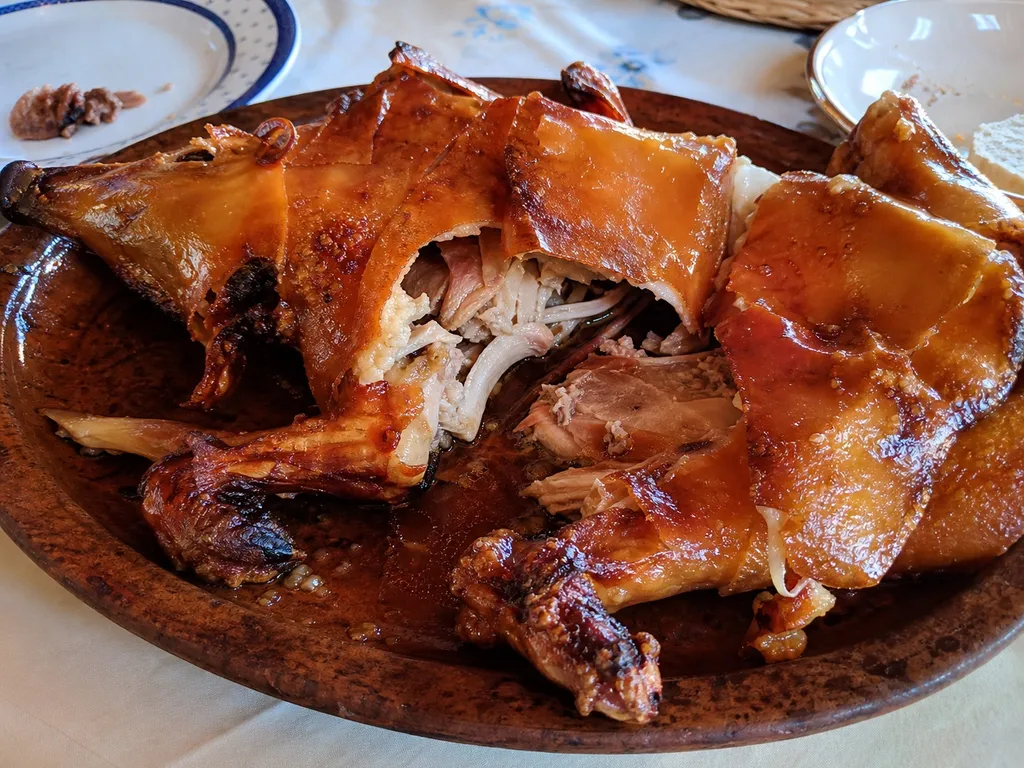
Rest and Carve: Check that the meat pulls away from the bone with no resistance and the skin is shatteringly crisp. Rest for 15 minutes, then carve — traditionally with the edge of a plate — and serve immediately.
 Images are for illustrative purposes only, may be inaccurate, and do not guarantee the presence or absence of specific ingredients.
 Listahan Family Score™
70/100
Good fit for most families
Score reflects how well this recipe fits a typical busy household. In the app, your Family Score is personalized to your household's allergens, kids, and pantry.
Nutrition
per serving115
Calories
0 g
Protein
0 g
Carbs
13 g
Fat
Estimated per serving. Actual values depend on the brands and portions you use.
Listahan cooking guide
Chef notes & practical guide
Technique notes, ingredient swaps, serve-alongside ideas, storage guidance, and equipment for this recipe.
Cultural context
Cochinillo asado, roast suckling pig, is the iconic dish of Segovia and Castile, where a young milk-fed piglet is slow-roasted in a wood oven until the skin turns to glass-thin crackling and the meat is so tender it is traditionally carved with the edge of a plate. It dates to centuries-old Castilian roasting houses and remains a celebratory centerpiece. The dish is defined by the contrast of shatteringly crisp skin and silky meat.
Listahan note
This version roasts the pork low and slow with just water, salt, and lard, then blasts the heat at the end to crisp the skin into crackling. It is built as a special-occasion roast that rewards a patient oven over fancy technique.
Technique cues
- Roast skin-side down first in a little water so the meat steams tender, then flip and crank the heat to crisp the skin.
- Keep the skin bone-dry and rub it with lard or oil before the final blast, since any moisture stops it from turning to crackling.
- Prick the skin all over so the fat renders out and the surface bubbles into the signature glass-like crisp.
Kitchen flow
- Parallel prep
- Salt and dry the skin and set up the roasting pan with water and aromatics the night before so the roast goes straight into the oven.
- Make-ahead
- Salt the meat and air-dry the skin uncovered in the fridge overnight, which is the single best thing you can do for crackling.
- Leftover move
- Shred leftover roast pork into tacos, fold into fried rice, or pile onto crusty rolls with mustard.
- Cleanup rhythm
- Deglaze the roasting pan with hot water while warm to lift the rendered fat and make a quick jus, which also cleans the pan.
Ingredient brief
Role, handling, and swap guidance for each key ingredient.
Suckling pig (or pork roast)
The centerpiece
Purpose: A young milk-fed cut gives the silky tender meat and thin skin that make cracking possible.
Handling: Pat the skin completely dry and score or prick it to help fat render.
Adaptation: A bone-in pork shoulder or belly roast gives a home-friendly version with similar crackling potential.
Lard
Skin-crisping fat
Purpose: Rubbed over the skin, lard helps it blister into crackling and adds rich flavor.
Handling: Smear over the dry skin before the high-heat finishing stage.
Adaptation: Olive oil works for the rub, though lard gives the most authentic crackling.
Coarse salt
Seasoning and crackling aid
Purpose: Salt seasons the meat and draws moisture from the skin, helping it crisp.
Handling: Rub generously over the skin and into the cavity well before roasting.
Adaptation: Any coarse salt works; flaky finishing salt at the end adds a final crunch.
Water
Steaming liquid
Purpose: A shallow layer of water in the pan keeps the meat moist and tender during the slow roast.
Handling: Pour into the roasting pan under the meat, topping up if it evaporates.
Adaptation: A light white wine or broth can replace the water for extra flavor in the drippings.
Bay leaf and garlic
Aromatic seasoning
Purpose: They perfume the roasting liquid and the meat with a gentle Castilian background note.
Handling: Tuck into the cavity and the roasting water.
Adaptation: Thyme or rosemary can join or replace the bay; garlic is worth keeping.
Technique notes
- Air-drying the skin uncovered in the fridge overnight is the key to truly shattering crackling.
- Tent the meat with foil if the skin is crisping faster than the meat is cooking, then remove for the final crisp.
- Rest the roast loosely tented for fifteen minutes before carving so the juices settle, but serve the crackling hot for maximum crunch.
Ingredient swaps
- Home-cook direction
- Use a bone-in pork shoulder or belly, which is far easier to source and still delivers tender meat and crackling.
- Lard-free direction
- Rub the skin with olive oil instead of lard; you lose a little richness but still get crisp skin.
- Lower-sodium direction
- Salt the skin for crackling but go lighter inside the cavity, leaning on garlic and bay for flavor.
Serve alongside
- Roasted potatoes in pan drippings
- A bitter escarole salad
- Pickled piquillo peppers
- Crusty bread
- A robust Ribera del Duero red
- A dry Spanish rose
- Sparkling water with lemon
Serving suggestions only — check pairings for your household's allergens.
Storage & reheating
- Store the cooled meat separately from the crackling in airtight containers in the fridge for up to three days. Reheat the meat gently with a splash of jus, and re-crisp the skin briefly under a hot broiler so it shatters again. The cooked meat freezes for up to two months, though the crackling is best fresh.
Equipment
- A large roasting pan
- A sharp paring knife or pricking tool for the skin
- A meat thermometer
- Sturdy carving knife and fork
Make this household-aware
Listahan Pro checks this recipe against your household's allergens, finds pantry-aware swaps, builds the shopping list, and helps you plan the week around it.
Plan it in Listahan
Add Cochinillo Asado to your week, check it against your household's allergens, and build the shopping list automatically.
More Spanish recipes
 Spanish Lens Verified Images are for illustrative purposes only, may be inaccurate, and do not guarantee the presence or absence of specific ingredients.
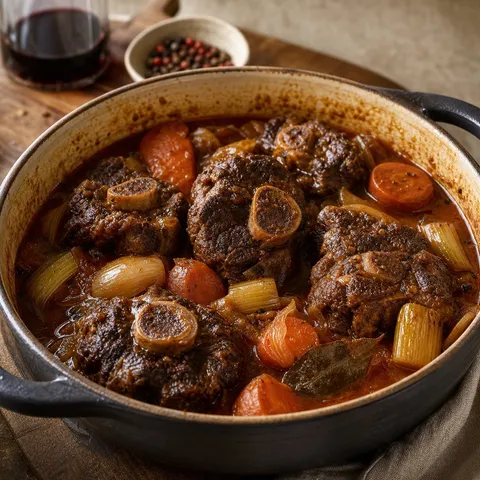
 Rabo de Toro
Oxtail slow-braised for hours with red wine, vegetables, and cloves until the meat falls from the bone in a deeply savoury, velvety Andalusian stew.
 Spanish Lens Verified Images are for illustrative purposes only, may be inaccurate, and do not guarantee the presence or absence of specific ingredients.
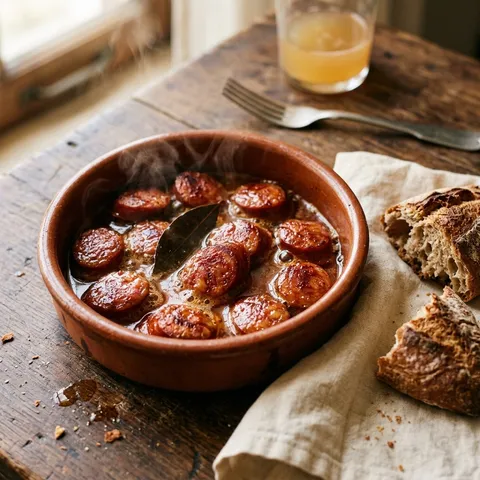
 Chorizo a la Sidra
Sliced Spanish chorizo simmered in dry Asturian cider until the sauce is tangy, smoky, and gloriously red — a quick tapas that pairs beautifully with beer.
 Spanish Lens Verified Images are for illustrative purposes only, may be inaccurate, and do not guarantee the presence or absence of specific ingredients.
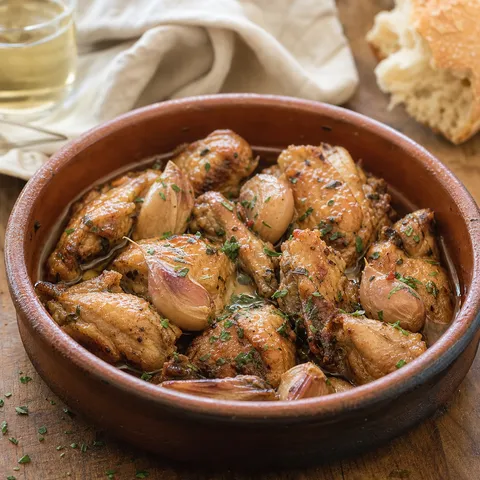
 Pollo al Ajillo
Chicken pieces braised in white wine and a generous amount of garlic until the sauce is sticky, fragrant, and impossible to resist mopping up.