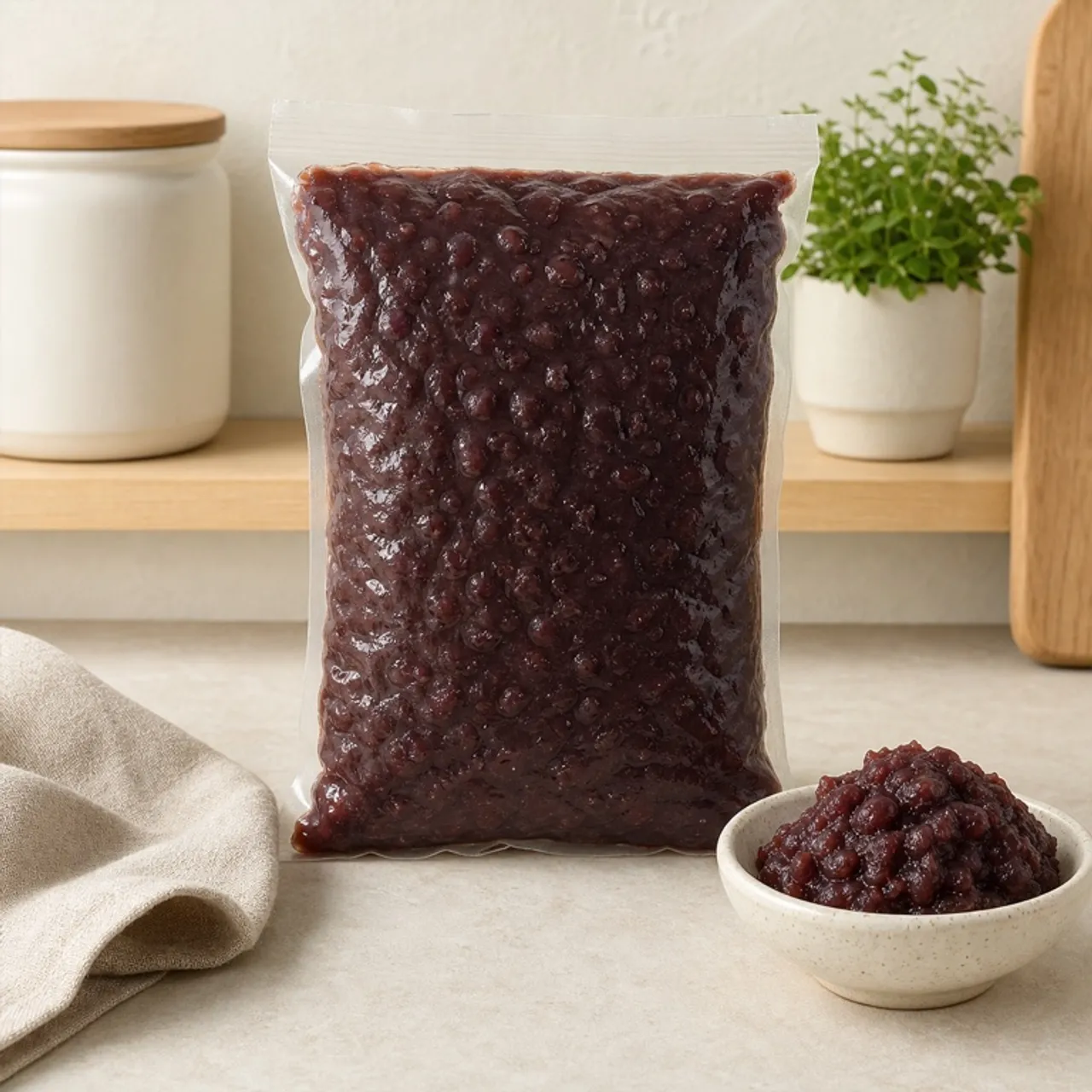
 Food Lens Images are for illustrative purposes only, may be inaccurate, and do not guarantee the presence or absence of specific ingredients.
 Food Lens · Recipe ingredients
Anko
Earthy, sweet, and gently mineral with a subtle nuttiness from the azuki bean. The sweetness is full but not cloying when well-made, with a clean finish. Smooth koshian has a more refined, almost chocolatey depth; tsubuan retains more of the bean's natural vegetal character. Aroma is warm and faintly grain-like.
Lens VerifiedAnko is sweet red bean paste made from azuki beans cooked down with sugar until thick, smooth or textured, and deeply flavored. It is the soul of East Asian confectionery — the filling inside mochi, dorayaki, taiyaki, manjū, and countless other wagashi (traditional Japanese sweets). Its flavor is earthy, sweet, and subtly mineral, with a richness that pairs naturally with matcha, sesame, and plain rice dough.
Where it comes from
Anko traces its origins to East Asian azuki cultivation spanning over a millennium, with its role as a confectionery filling formalized during Japan's Heian period and refined across centuries of wagashi tradition.
Varieties — Tsubuan is chunky paste with whole or partially whole beans, favored for its textural character. Koshian is smooth paste with skins strained out, producing a silkier, more refined product. Shiroan is white bean paste made from white kidney beans or navy beans, with a milder, creamier flavor used in delicate wagashi. Ogura-an is a combination of smooth paste and whole beans for contrast.
Red beans hold auspicious symbolism across East Asia — their red color is associated with good fortune and celebration. Sekihan (rice cooked with azuki beans) is served at Japanese celebrations including New Year and birthdays. In Korea, sweet red bean paste (danpat) fills hotteok pancakes and tteok rice cakes. In China, dòushā fills mooncakes and tang yuan.
In a modern kitchen — Western pastry chefs have embraced anko as a sophisticated filling and flavor agent, pairing it with chocolate, citrus, and tropical fruits. Reduced-sugar versions have grown in popularity as the earthy, mineral quality of the bean itself becomes more prominent. Anko is also appearing in savory-leaning applications — swirled into compound butters or paired with aged cheeses as a condiment.
Buying it
For ready-made anko, look for products with a short ingredient list: azuki beans, sugar, and optionally a pinch of salt. Check that color is a deep, warm reddish-brown — pale or orange-tinted paste may indicate immature beans or under-cooking. Canned versions are convenient; refrigerated tubs from Japanese grocery stores are often fresher and less sweet.
Storing it
Unopened anko keeps in the pantry, but it's highly perishable once opened — transfer to an airtight container, refrigerate, and use within about a week, or freeze in portions for longer storage.
Keeps about 1 year in the pantry.
Out of anko? Good swaps
General cooking guidance — always check the labels on the products you use. Listahan’s allergen checks run automatically when you plan a recipe in the app. Not medical advice.
Recipes that use anko
Common questions about anko
Is anko vegan?
Anko is generally plant-based and suitable for a vegan diet, but brands differ — confirm on the label.
What can I use instead of anko?
Good swaps include , , , . Each behaves a little differently — see the swaps above for notes, and always check labels for allergens.
How do I store anko?
Unopened anko keeps in the pantry, but it's highly perishable once opened — transfer to an airtight container, refrigerate, and use within about a week, or freeze in portions for longer storage. It keeps about 1 year in the pantry.
More recipe ingredients
See all


Make anko about your kitchen — with Listahan Pro
Everything above is free, forever. Pro adds the Household Lens — the same food, seen for your family:
-
Checked for each member
Flags anko per person against your household's allergies and school rules — not just a generic "contains" tag.
-
Pantry-aware
Knows whether you already have it, what is running low, and the best swap from what is in your kitchen tonight.
-
What it costs near you
A real price from the Presyo community index, so you can plan the budget — not guess.
-
Your household memory
Who likes it, plus your own private notes — brand, where you keep it, who skips it.
Allergen safety is always free — Pro adds the automation, never the safety.
Cook with anko — safely
Plan a recipe in Listahan and the household allergen check runs automatically — every plan, every swap, every lunchbox. Safety is never paywalled.