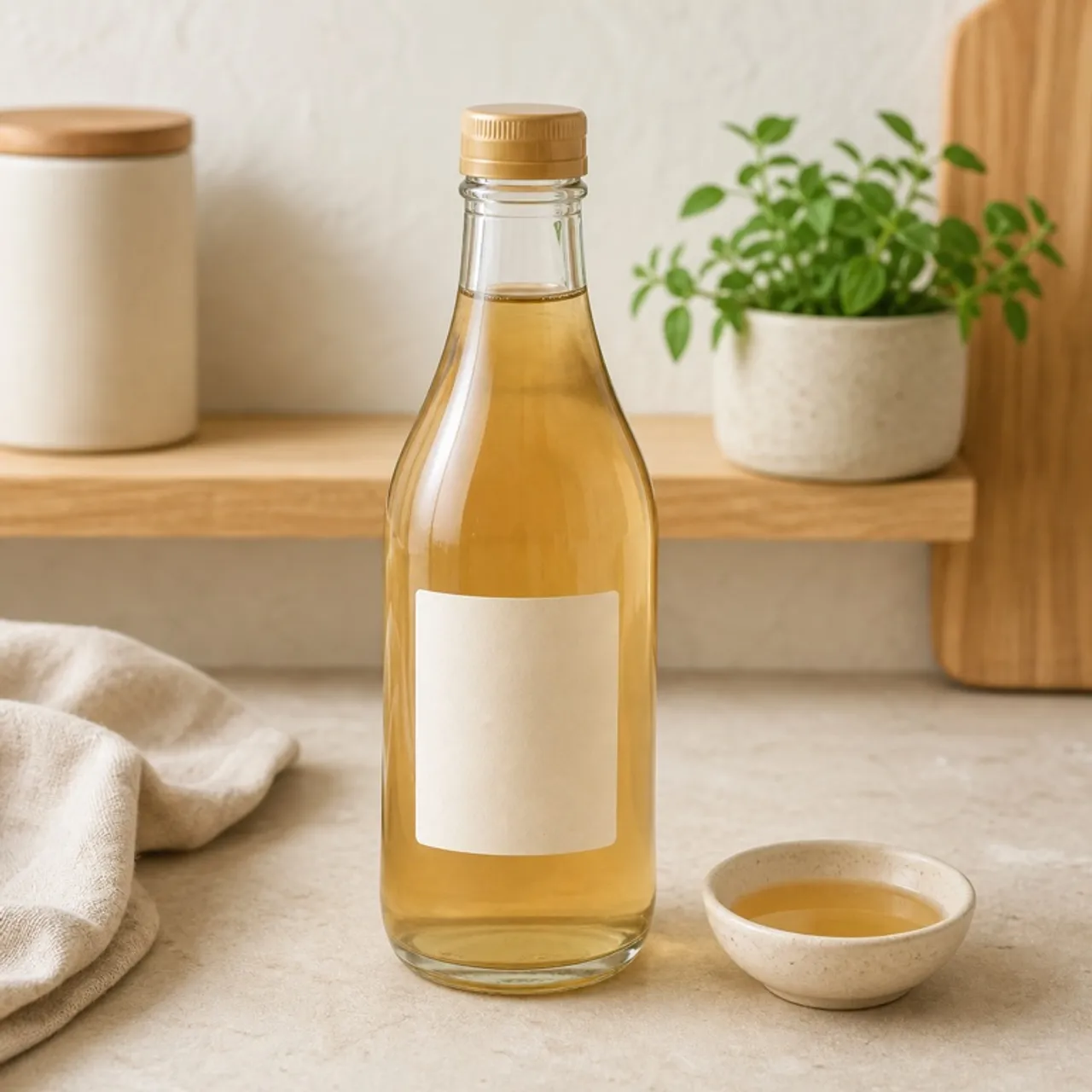
 Food Lens Images are for illustrative purposes only, may be inaccurate, and do not guarantee the presence or absence of specific ingredients.
 Food Lens · Recipe ingredients
Cane Vinegar
Mild, gently sour, and slightly sweet with a faint molasses or brown sugar undertone; far less harsh than white distilled vinegar, with a clean finish that doesn't overpower other ingredients.
Lens VerifiedCane vinegar is produced by fermenting the juice of sugar cane into alcohol and then into acetic acid, yielding a distinctly mellow, slightly sweet vinegar with far less sharpness than white distilled vinegar. Its gentle acidity and subtle molasses-like undertone make it an indispensable pantry staple in Philippine cooking, where it forms the backbone of the country's beloved souring tradition. It is one of the defining flavors of Filipino cuisine.
Where it comes from
Cane vinegar has been made in the Philippines and across sugar cane-growing Southeast Asia for centuries, with the Ilocos region of northern Luzon developing a distinct artisanal tradition of clay-pot fermentation that endures today.
Varieties — Philippine sukang maasim (general cane vinegar) and sukang iloko (from Ilocos, with a stronger, more complex flavor from clay pot fermentation) are the most celebrated varieties. Southeast Asian cane vinegars also appear in Thai and Vietnamese cooking under different names.
In the Philippines, vinegar (suka) culture is as varied and celebrated as wine regions in Europe — different provinces produce distinct vinegars tied to local fermentation traditions. Sukang iloko from the Ilocos region is prized as a premium condiment and exported internationally.
In a modern kitchen — Chefs outside the Philippines have begun reaching for cane vinegar to temper braises and sauces where white wine vinegar would be too sharp. Its sweetness makes it especially compatible with coconut milk-based dishes and fatty pork preparations.
Buying it
Look for Philippine brands like Datu Puti, Marca Piña, or artisanal sukang iloko in Asian grocery stores. The vinegar should be pale gold to amber in color; darker versions have a stronger, more complex flavor. Avoid heavily diluted versions that list water as the first ingredient.
Storing it
Store cane vinegar tightly capped in a cool, dark pantry spot; its acidity keeps it shelf-stable indefinitely without refrigeration. A cloudy layer or sediment (sometimes called 'mother') is harmless and can be strained out if you prefer.
Keeps about 1 year in the pantry.
Out of cane vinegar? Good swaps
General cooking guidance — always check the labels on the products you use. Listahan’s allergen checks run automatically when you plan a recipe in the app. Not medical advice.
Recipes that use cane vinegar
Common questions about cane vinegar
Is cane vinegar vegan?
Cane Vinegar is generally plant-based and suitable for a vegan diet, but brands differ — confirm on the label.
What can I use instead of cane vinegar?
Good swaps include , , . Each behaves a little differently — see the swaps above for notes, and always check labels for allergens.
How do I store cane vinegar?
Store cane vinegar tightly capped in a cool, dark pantry spot; its acidity keeps it shelf-stable indefinitely without refrigeration. A cloudy layer or sediment (sometimes called 'mother') is harmless and can be strained out if you prefer. It keeps about 1 year in the pantry.
More recipe ingredients
See all


Make cane vinegar about your kitchen — with Listahan Pro
Everything above is free, forever. Pro adds the Household Lens — the same food, seen for your family:
-
Checked for each member
Flags cane vinegar per person against your household's allergies and school rules — not just a generic "contains" tag.
-
Pantry-aware
Knows whether you already have it, what is running low, and the best swap from what is in your kitchen tonight.
-
What it costs near you
A real price from the Presyo community index, so you can plan the budget — not guess.
-
Your household memory
Who likes it, plus your own private notes — brand, where you keep it, who skips it.
Allergen safety is always free — Pro adds the automation, never the safety.
Cook with cane vinegar — safely
Plan a recipe in Listahan and the household allergen check runs automatically — every plan, every swap, every lunchbox. Safety is never paywalled.