 Food Lens Images are for illustrative purposes only, may be inaccurate, and do not guarantee the presence or absence of specific ingredients.
 Food Lens · Recipe ingredients
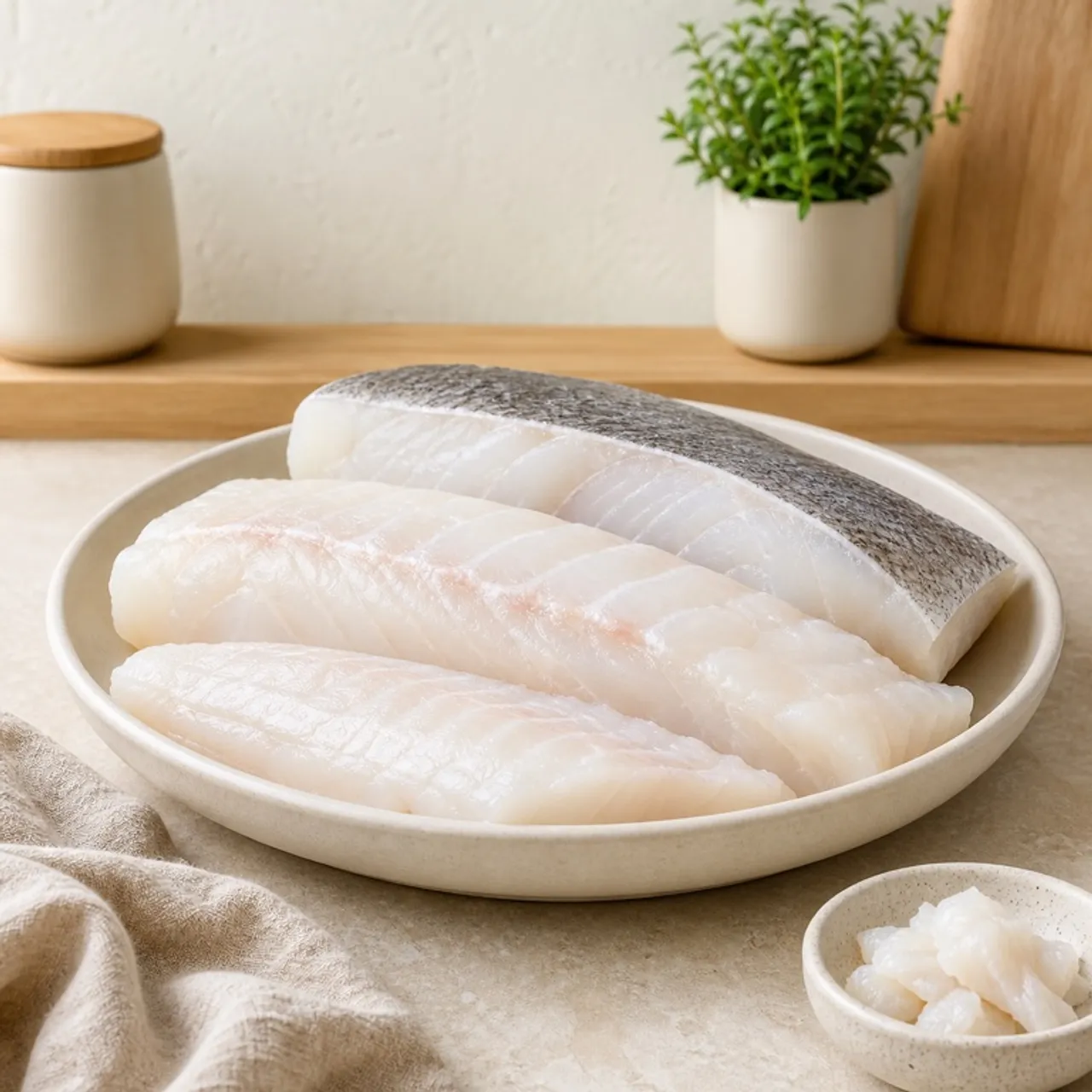
Cod Fillets
Mild, clean, and slightly sweet with a firm yet tender flake. The flavor is neutral enough to carry bold seasonings while remaining distinctive. Skin-on fillets develop a lightly crispy layer when pan-seared.
Lens VerifiedCod fillets are thick, flaky cuts from Atlantic or Pacific cod, one of the most historically significant food fish in the world. Their mild, clean flavor and firm white flesh make them extraordinarily versatile, adapting to frying, baking, poaching, and salt-curing with equal ease. Cod built the economies of New England and northern Europe, and remains a cornerstone of countless national cuisines today.
Where it comes from
Atlantic cod has been harvested from the cold waters of the North Atlantic since at least the 10th century, when Norse and Basque fishermen pioneered long-distance salt-cod trade routes.
Varieties — Fresh fillets come skinless or skin-on; salt cod (bacalao, baccalà) is the dried and preserved form requiring soaking before use. Thick center-cut loins are prized for their even thickness and meatiness.
Salt cod enabled Catholic populations across Europe to observe meatless Fridays and Lent before refrigeration existed. In Portugal, it is said there are 365 ways to cook bacalhau — one for every day of the year. In New England, codfish cakes were a Saturday-night staple.
In a modern kitchen — Sustainability certifications (MSC) are increasingly important when buying cod; Alaska pollock and Pacific cod are generally considered better-managed stocks. Air-frying cod fillets has become popular for achieving a crispy crust with less oil.
Buying it
Fresh fillets should be firm, moist, and translucent with a clean sea smell — never fishy or ammonia-tinged. Look for bright white flesh without browning at the edges. Frozen cod should be tightly wrapped with no ice crystals inside the package.
Storing it
If this is salt-dried cod, keep it in its packaging in a cool, dry pantry — well-salted cod keeps for months unrefrigerated. Before cooking, soak and rinse it in several changes of cold water, refrigerated, to remove excess salt.
Keeps about 2 days in the fridge.
Out of cod fillets? Good swaps
General cooking guidance — always check the labels on the products you use. Listahan’s allergen checks run automatically when you plan a recipe in the app. Not medical advice.
Recipes that use cod fillets
Common questions about cod fillets
What can I use instead of cod fillets?
Good swaps include , , , . Each behaves a little differently — see the swaps above for notes, and always check labels for allergens.
How do I store cod fillets?
If this is salt-dried cod, keep it in its packaging in a cool, dry pantry — well-salted cod keeps for months unrefrigerated. Before cooking, soak and rinse it in several changes of cold water, refrigerated, to remove excess salt. It keeps about 2 days in the fridge.
More recipe ingredients
See all


Make cod fillets about your kitchen — with Listahan Pro
Everything above is free, forever. Pro adds the Household Lens — the same food, seen for your family:
-
Checked for each member
Flags cod fillets per person against your household's allergies and school rules — not just a generic "contains" tag.
-
Pantry-aware
Knows whether you already have it, what is running low, and the best swap from what is in your kitchen tonight.
-
What it costs near you
A real price from the Presyo community index, so you can plan the budget — not guess.
-
Your household memory
Who likes it, plus your own private notes — brand, where you keep it, who skips it.
Allergen safety is always free — Pro adds the automation, never the safety.
Cook with cod fillets — safely
Plan a recipe in Listahan and the household allergen check runs automatically — every plan, every swap, every lunchbox. Safety is never paywalled.