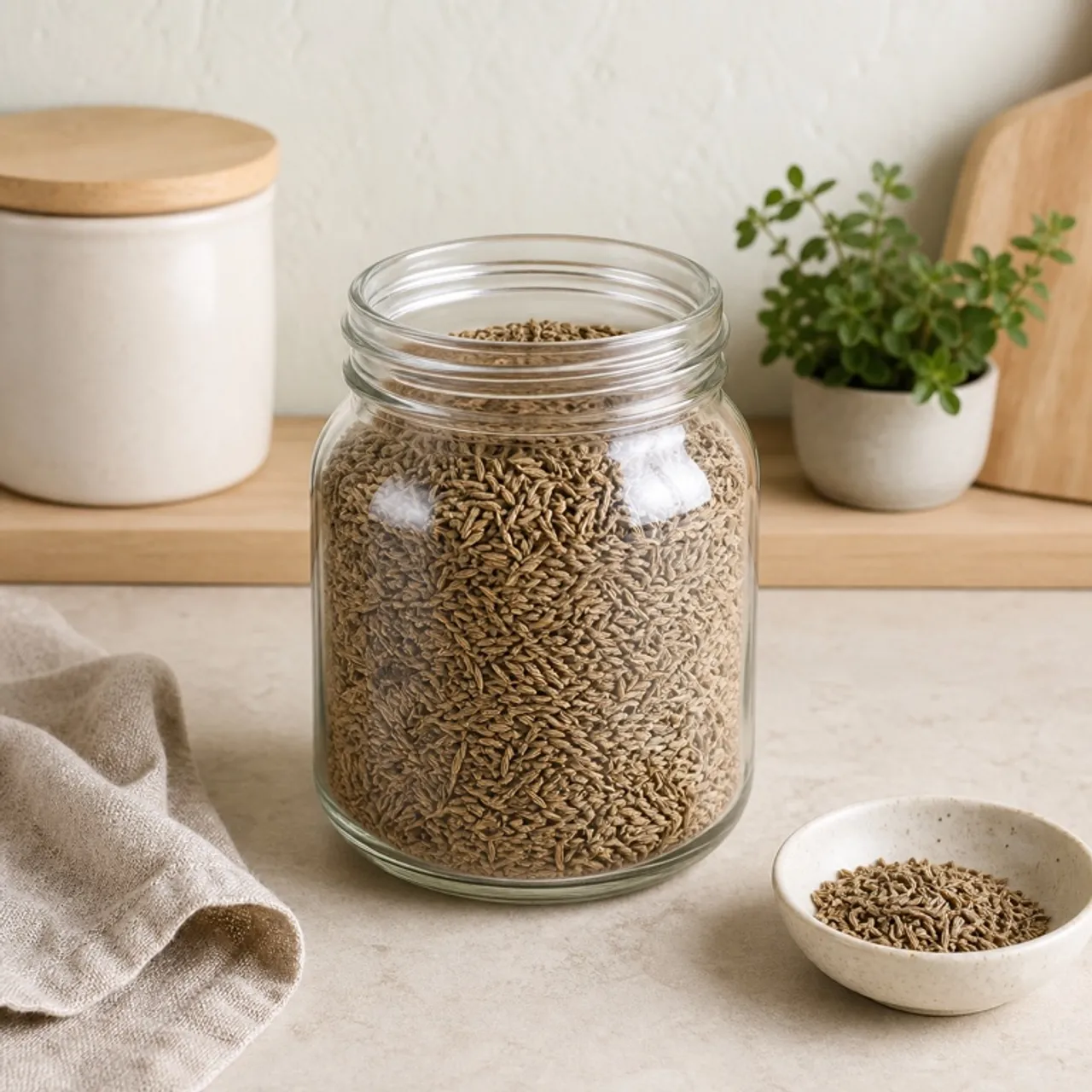
 Food Lens Images are for illustrative purposes only, may be inaccurate, and do not guarantee the presence or absence of specific ingredients.
 Food Lens · Recipe ingredients
Cumin Seeds
Warm, earthy, and distinctly nutty with a citrusy undertone and a slight bitterness; toasted seeds are dramatically more aromatic and complex than raw.
Lens VerifiedCumin seeds are the dried fruit of the Cuminum cyminum plant, one of the most widely used spices in the world, with a warm, earthy, slightly nutty and citrusy flavor that is foundational to Indian, Middle Eastern, Mexican, North African, and Central Asian cooking. Whole seeds are toasted before grinding or used whole in tempering (tadka).
Where it comes from
Cumin seeds were found in ancient Egyptian tombs, and the spice appears in ancient Greek, Roman, and Sanskrit texts. Trade routes carried cumin from the Middle East to South Asia, where it became absolutely central to Indian cooking under the name 'jeera.' Spanish colonization carried cumin to the Americas, where it became foundational to Mexican and Tex-Mex cooking. Today, cumin is one of the most universally sold spices in North America, available everywhere from corner stores to specialty shops.
Varieties — Common cumin (Cuminum cyminum) is the familiar tan seed used worldwide. Black cumin (kalonji, Nigella sativa) is a different plant entirely — earthy and onion-like. 'Black cumin' sometimes also refers to shahi jeera (royal cumin, Bunium persicum), a finer, dark, more aromatic seed prized in North Indian biryanis. These are distinct ingredients.
Jeera rice — basmati rice tempered in ghee with whole cumin seeds — is perhaps the most requested Indian restaurant accompaniment, demonstrating how a single properly bloomed seed transforms simple rice into something aromatic and satisfying.
In a modern kitchen — Toast whole cumin seeds in a dry pan over medium heat for 60–90 seconds until fragrant and slightly darkened before grinding — toasting transforms their flavor from raw and grassy to warm and complex. Ground cumin from the store loses potency quickly; buy in smaller quantities and replace regularly.
Buying it
Whole cumin seeds are at every South Asian grocery store (often in large bags at excellent value), Middle Eastern markets, and the spice aisle of mainstream supermarkets. Ground cumin is universally available. For best flavor, buy whole seeds and grind as needed.
Storing it
Keep whole seeds in a sealed container away from light and heat. Whole seeds hold their aroma far longer than ground — toast and grind just before using.
Keeps about 1 year in the pantry.
Out of cumin seeds? Good swaps
- Caraway seeds — Related family; slightly more anise-like flavor. Use 3/4 the amount — particularly usable in Middle Eastern recipes.
- Ground cumin (for whole seeds) — Use 1/2 tsp ground per 1 tsp whole seeds; add early in cooking without the tempering step.
General cooking guidance — always check the labels on the products you use. Listahan’s allergen checks run automatically when you plan a recipe in the app. Not medical advice.
Recipes that use cumin seeds
Common questions about cumin seeds
Is cumin seeds vegan?
Cumin Seeds is generally plant-based and suitable for a vegan diet, but brands differ — confirm on the label.
What can I use instead of cumin seeds?
Good swaps include Caraway seeds, Ground cumin (for whole seeds). Each behaves a little differently — see the swaps above for notes, and always check labels for allergens.
How do I store cumin seeds?
Keep whole seeds in a sealed container away from light and heat. Whole seeds hold their aroma far longer than ground — toast and grind just before using. It keeps about 1 year in the pantry.
More recipe ingredients
See all


Make cumin seeds about your kitchen — with Listahan Pro
Everything above is free, forever. Pro adds the Household Lens — the same food, seen for your family:
-
Checked for each member
Flags cumin seeds per person against your household's allergies and school rules — not just a generic "contains" tag.
-
Pantry-aware
Knows whether you already have it, what is running low, and the best swap from what is in your kitchen tonight.
-
What it costs near you
A real price from the Presyo community index, so you can plan the budget — not guess.
-
Your household memory
Who likes it, plus your own private notes — brand, where you keep it, who skips it.
Allergen safety is always free — Pro adds the automation, never the safety.
Cook with cumin seeds — safely
Plan a recipe in Listahan and the household allergen check runs automatically — every plan, every swap, every lunchbox. Safety is never paywalled.