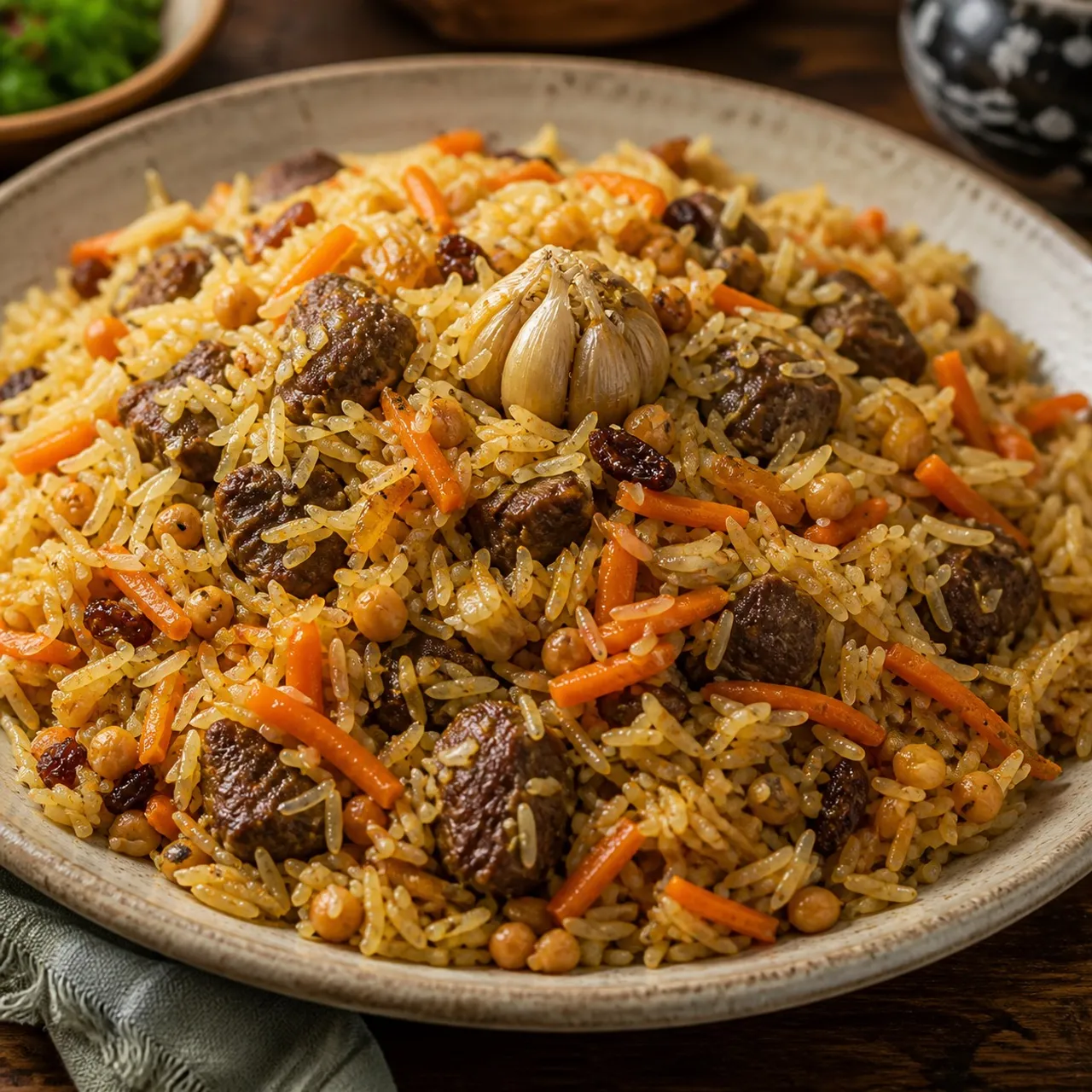
 Eastern European Images are for illustrative purposes only, may be inaccurate, and do not guarantee the presence or absence of specific ingredients.
 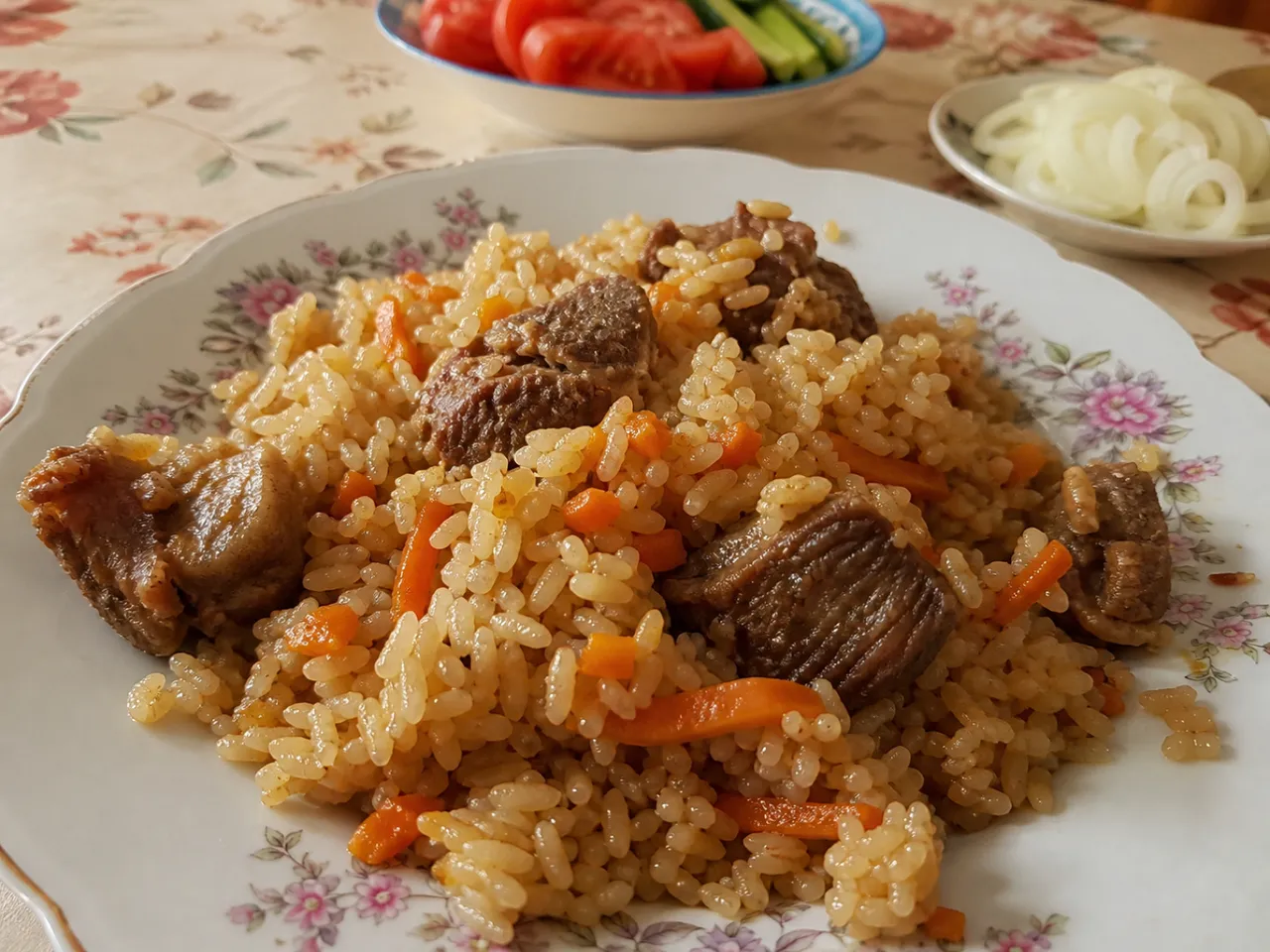 Serving Images are for illustrative purposes only, may be inaccurate, and do not guarantee the presence or absence of specific ingredients.
 Plov
Fragrant Uzbek rice pilaf slow-cooked with tender lamb, sweet carrots, and whole garlic in a cast-iron kazan — deeply aromatic, rich, and the pride of Central Asian cooking.
No common allergens detected
Based on this recipe's ingredient list. Always verify with your own brands and labels.
Good to know
- One-pot
Matched from this dish's own ingredients and timing. Browse more: one-pot dinners
Instructions
8 steps- 1
Heat the oil in a heavy kazan or Dutch oven over high heat until shimmering.
- 2
Sear the lamb chunks in batches until deeply browned on all sides, then remove and set aside.
- 3
Add the onions to the same pot and cook, stirring, until softened and golden, about 8 minutes.
- 4
Return the lamb to the pot, add the carrots, and cook without stirring for a few minutes to let them soften slightly on the bottom.
- 5
Stir in the cumin, coriander, and salt, then add water or broth to just cover the meat and vegetables. Nestle the whole garlic head into the mixture, bring to a simmer, cover, and cook 45 minutes until the lamb is tender.
- 6
Remove the garlic head and set aside. Spread the rinsed rice evenly over the meat and vegetables without stirring, then add enough hot water to sit about 3/4 inch above the rice.
- 7
Bring to a boil, then reduce heat to low, nestle the garlic back on top, cover tightly, and cook undisturbed for 20 to 25 minutes until the rice is tender and liquid is absorbed.
- 8
Let rest off the heat for 10 minutes, then fluff gently from the bottom up to distribute the meat and carrots through the rice before serving with the whole roasted garlic cloves.
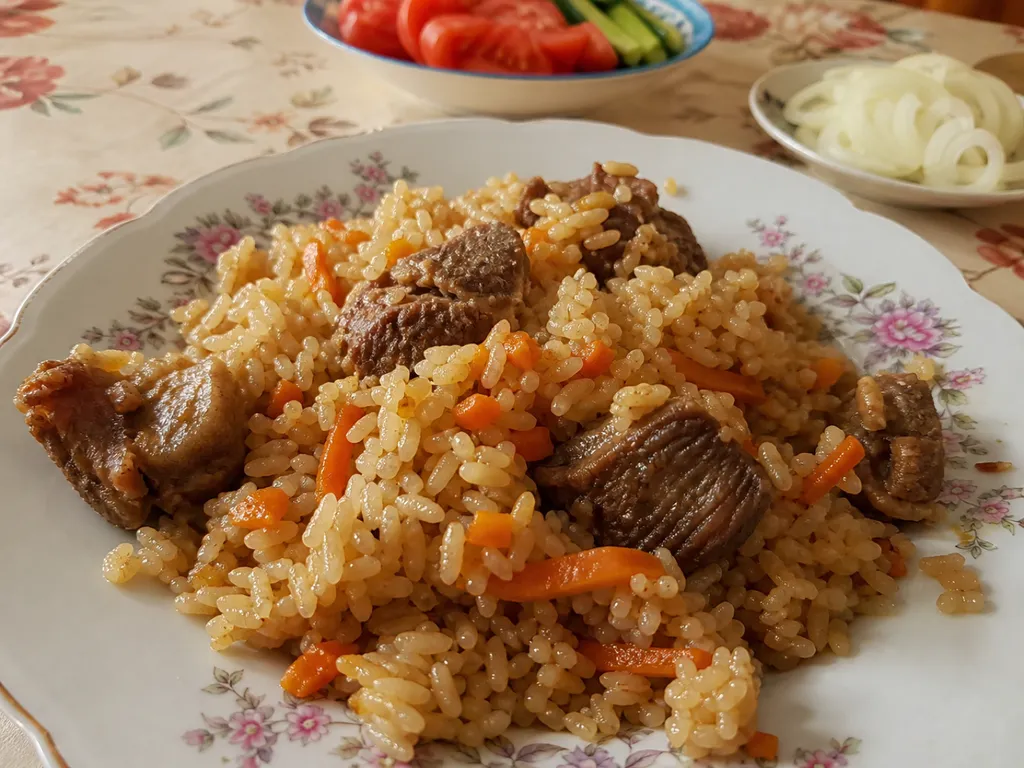 Images are for illustrative purposes only, may be inaccurate, and do not guarantee the presence or absence of specific ingredients.
 Listahan Family Score™
69/100
Works for many families
Score reflects how well this recipe fits a typical busy household. In the app, your Family Score is personalized to your household's allergens, kids, and pantry.
Nutrition
per serving680
Calories
37 g
Protein
88 g
Carbs
18 g
Fat
Estimated per serving. Actual values depend on the brands and portions you use.
Listahan cooking guide
Chef notes & practical guide
Technique notes, ingredient swaps, serve-alongside ideas, storage guidance, and equipment for this recipe.
Cultural context
Plov is the Central Asian rice pilaf — a festive, one-pot celebration dish that is the national food of Uzbekistan and is cooked across Kazakhstan, Tajikistan, and Kyrgyzstan for weddings, funerals, and any gathering large enough to justify the ceremony of its preparation. Traditional plov is made outdoors in a massive cast-iron kazan over a wood fire, with lamb fat rendered first and then layered with lamb meat, yellow onions, matchstick carrots, and rice that absorbs all the fragrant cooking fat. The proportions and sequence are rigid in Uzbek tradition — disrupting the order of addition is considered as serious a cooking error as undercooking the rice.
Listahan note
This version uses a standard Dutch oven on the stovetop rather than a wood-fire kazan, and lamb shoulder rather than the harder-to-find fattier tail-fat cuts, making it achievable on any weeknight while keeping the essential technique intact.
Technique cues
- Render the fat and sear the meat in a very hot, very dry pot before any other addition — the goal is deep browning on every surface of the lamb, which provides the color and complexity that carries through the entire dish.
- The carrots must be cut into long julienne strips, not grated or diced; they collapse gradually into the rice during cooking and large pieces provide both visual appeal and textural contrast that fine grates cannot.
- After adding the rice and water, do not stir again until the dish is done — the steam trapped under the tight lid cooks the rice through from the bottom up, and stirring breaks the structure and produces gluey, uneven grains.
Kitchen flow
- Parallel prep
- Soak the rice in salted water while you slice the onions, julienne the carrots, and cut the lamb so everything is ready when the pot is hot.
- Make-ahead
- Plov reheats beautifully — make a full batch and reheat covered in a low 300 F oven with a splash of water for 20 minutes; the flavors improve overnight in the refrigerator.
- Leftover move
- Fry cold plov in a hot oiled pan with an egg beaten in and crumbled flatbread; the rice crisps into an Uzbek-inflected hash that is a genuinely satisfying second meal.
- Cleanup rhythm
- The crunchy rice crust that forms at the bottom of the pot (tah-dig style) is considered a prize — serve it separately; cleaning the pot is easiest by soaking in warm water for 10 minutes while still warm.
Ingredient brief
Role, handling, and swap guidance for each key ingredient.
lamb shoulder
primary meat
Purpose: Shoulder has the fat content and connective tissue that bastes the rice with rich lamb flavor during the long steaming stage and becomes tender without drying out.
Handling: Cut into 2-inch cubes and pat dry thoroughly before searing so moisture does not cause steaming instead of browning in the hot oil.
Adaptation: Beef chuck works well and is more accessible for those who find lamb too assertive; chicken thighs can substitute but reduce total cooking time by 20 minutes.
yellow onion
aromatic base
Purpose: Onion cooked until deeply caramelized in the lamb fat provides a sweet, rich underpinning that balances the savory, fatty lamb without any single flavor dominating.
Handling: Slice into thin half rings and cook in the hot fat until they begin to turn amber before adding the meat — this step takes patience but is where much of the flavor base is built.
Adaptation: Red onion caramelizes more quickly and produces a slightly sweeter base; shallots can be used for a more delicate result.
carrots
sweetness and color
Purpose: Large yellow or orange carrots cut into long matchsticks provide color, a gentle sweetness that offsets the savory lamb, and a structural element that contrasts with the soft rice.
Handling: Julienne by hand into roughly 2-inch sticks a quarter inch thick; mandoline sticks are too thin and will dissolve into the rice completely during cooking.
Adaptation: Yellow carrots are preferred in Uzbek plov for their lower sugar content and less vivid color, but orange carrots are perfectly authentic in home cooking.
long-grain or devzira rice
core starch
Purpose: Long-grain rice absorbs the fat and aromatics during steaming without clumping, producing the separate, glossy grains that define a properly made plov.
Handling: Rinse thoroughly in cold water at least 3 times until the water runs clear, then soak in salted water for 30 minutes to allow even absorption during cooking.
Adaptation: Basmati rice is an excellent substitute with a fragrant quality that complements the lamb; avoid short-grain or sushi rice, which becomes sticky and clumped.
cumin seeds
primary spice
Purpose: Whole cumin seeds toasted in the fat early in the process give plov its most identifiable aroma and flavor note, permeating the entire dish from inside the fat that coats every grain of rice.
Handling: Add whole to the hot fat before the onions and listen for the sputtering that signals they are toasting; 30 to 45 seconds is enough before adding aromatics.
Adaptation: Ground cumin can be substituted but add it with the carrots rather than in the hot fat, as ground spices burn in oil much faster than whole seeds.
Technique notes
- The whole garlic heads buried whole in the rice at the water-adding stage soften to a sweet, spreadable roasted consistency during the steam and are served alongside the finished plov for diners to squeeze over their portions.
- The exact water-to-rice ratio for plov is 1:1.2 by volume for long-grain rice — less water than standard pilaf because the steam doing the work is trapped rather than evaporated, and too much water produces soggy, broken grains.
- Wrap the lid tightly with a kitchen towel before placing it on the pot for the final steam phase — the cloth absorbs condensation and prevents it from dripping back down onto the rice, which would create wet spots in an otherwise perfectly fluffy surface.
Ingredient swaps
- Gluten-free direction
- Plov contains no gluten as written; verify any spice blends used to ensure no wheat-based fillers are included.
- Dairy-free direction
- The fat here is rendered lamb tail fat or vegetable oil rather than butter, and no milk or cream is used. Check any stock or spice blend you add.
- Leaner direction
- Use chicken thighs skinned to reduce the total fat contribution, and replace half the oil with additional chicken stock added with the water at the rice stage.
Serve alongside
- fresh tomato and onion salad (achichuk)
- warm non flatbread
- pickled cabbage or turnips
- hot green tea (traditional Uzbek pairing)
- cold lager
Serving suggestions only — check pairings for your household's allergens.
Storage & reheating
- Plov keeps refrigerated for up to 4 days in an airtight container and is one of those dishes that genuinely improves on the second day as the spices and lamb fat continue to permeate the rice. Reheat in a covered pot over low heat with a splash of water to restore moisture, or in a 300 F oven for 20 minutes. Not recommended for freezing as the rice can become mealy upon thawing.
Equipment
- Dutch oven or heavy-bottomed pot with a tight-fitting lid for proper steam containment
- kitchen towel for wrapping the lid during the final steam
- sharp knife or mandoline for julienning carrots
Make this household-aware
Listahan Pro checks this recipe against your household's allergens, finds pantry-aware swaps, builds the shopping list, and helps you plan the week around it.
Plan it in Listahan
Add Plov to your week, check it against your household's allergens, and build the shopping list automatically.
More Eastern European recipes
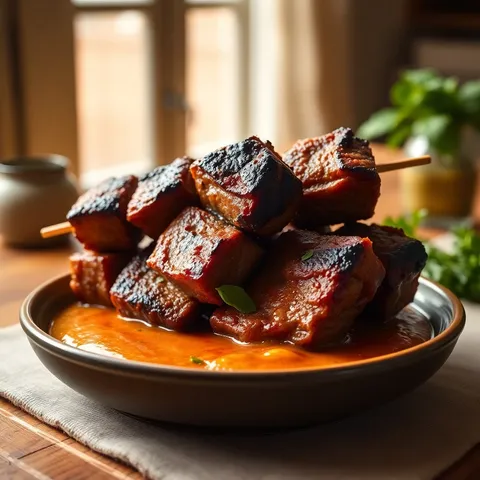 Eastern European Lens Verified Images are for illustrative purposes only, may be inaccurate, and do not guarantee the presence or absence of specific ingredients.
 Shashlik
Smoky, charred cubes of marinated lamb or pork threaded on skewers and grilled over embers — Central Asia's festive open-fire classic, fragrant with onion and spice.
 Eastern European Lens Verified Images are for illustrative purposes only, may be inaccurate, and do not guarantee the presence or absence of specific ingredients.
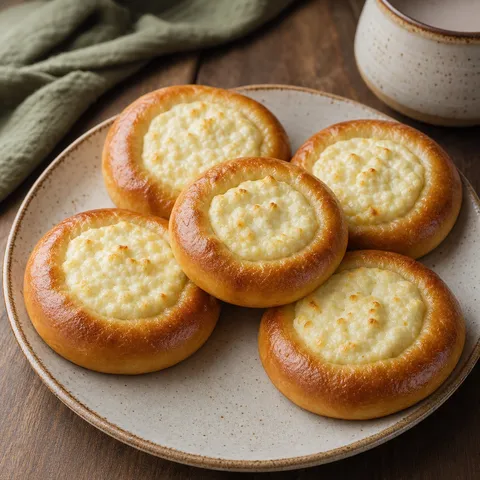
 Vatrushka
Soft, pillowy Russian buns filled with a sweetened quark or farmer's cheese center — lightly golden and gently sweet, perfect alongside tea or coffee.
 Eastern European Lens Verified Images are for illustrative purposes only, may be inaccurate, and do not guarantee the presence or absence of specific ingredients.
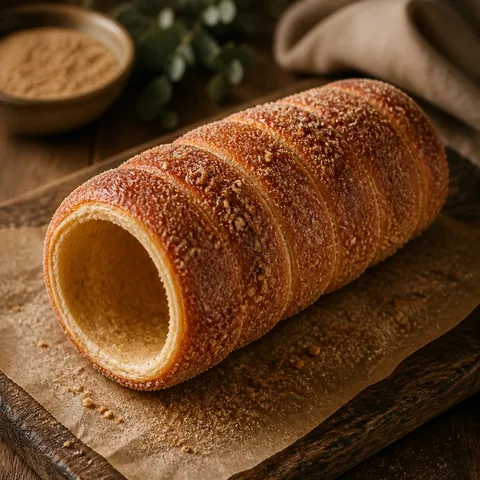
 Kurtosh Kalach
Hungary's iconic chimney cake — sweet yeast dough spiraled around a spit, rolled in cinnamon sugar, and roasted until the outside caramelizes into a crackly, warm shell.